

In the rapidly evolving landscape of paid advertising, the transition from manual campaign management to machine-led automation has been nothing short of seismic. Today, artificial intelligence serves as the backbone of the modern marketing stack, processing billions of data points to optimize bids, target audiences, and identify patterns that even the most seasoned data scientists might overlook. However, this transition has introduced a persistent friction point: while algorithms excel at efficiency, they often struggle with the nuance of brand identity.
As of May 2026, Google has moved to bridge this gap with the introduction of "AI Brief," a feature designed to harmonize machine intelligence with human strategic intent. By allowing advertisers to provide direct, plain-language guidance to Google’s AI systems, the platform aims to ensure that high-performance ads remain fundamentally aligned with a company’s voice, values, and market positioning.
The Core Philosophy: Why AI Brief Was Necessary
For years, the promise of automation was "set it and forget it." Yet, as Google moved toward increasingly black-box systems like Performance Max and AI Max, many advertisers found themselves frustrated by messaging that, while effective at driving clicks, felt "off-brand."
The fundamental challenge is that AI models prioritize conversion probability above all else. If an algorithm determines that a specific, aggressive tone drives more sales for a luxury brand, it will use that tone—even if it undermines the brand’s carefully cultivated reputation for exclusivity and understated elegance. AI Brief is Google’s answer to this "alignment problem." It serves as a guardrail, acting as a bridge between the advertiser’s brand guidelines and the machine’s creative output.
Chronology of the Development
The development of AI Brief represents a critical pivot point in Google’s roadmap for 2026 and beyond:
- Pre-May 2026: Advertisers struggled with limited control over the creative output generated by automated campaigns, often relying on "Asset Groups" that felt restrictive.
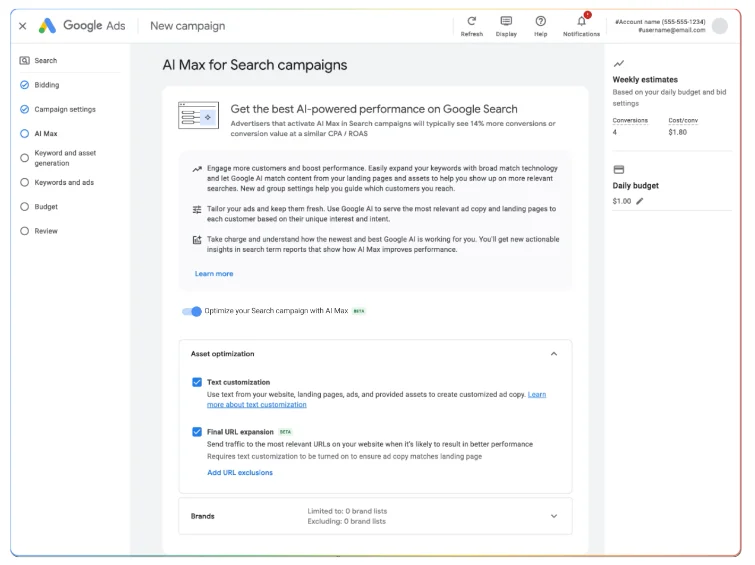
- May 2026: Google officially announces AI Brief at the Google Marketing Live event, framing it as a solution for advertisers to inject brand-specific context into AI Max campaigns.
- Late 2026 (Ongoing): The feature begins its phased rollout for AI Max for Search (English-only), with a transition plan to migrate existing text guidelines into the new interface.
- Future Roadmap: Google has confirmed that the functionality will extend to Performance Max and AI Max for Shopping, effectively standardizing "creative briefing" across all major automated campaign types.
Understanding AI Brief: How It Functions
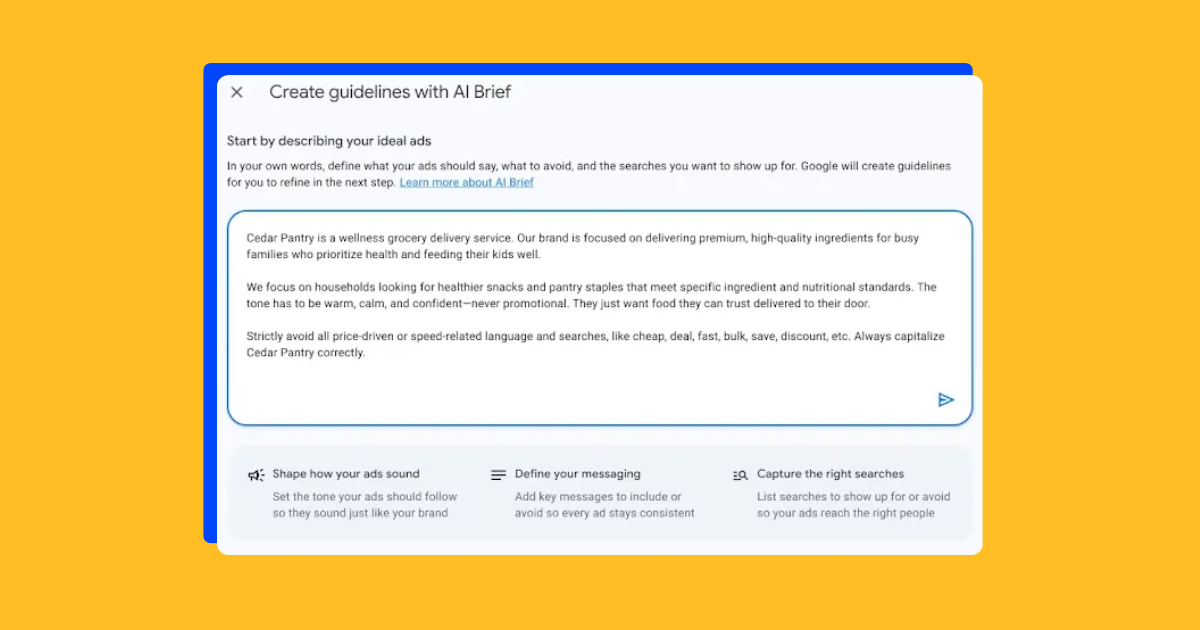
At its heart, AI Brief is a sophisticated prompting interface. It allows advertisers to input specific, actionable instructions that guide the AI’s behavior. Instead of merely providing assets, the advertiser acts as a "creative director."
The Input Architecture
The tool is structured to capture the essential pillars of a brand strategy:
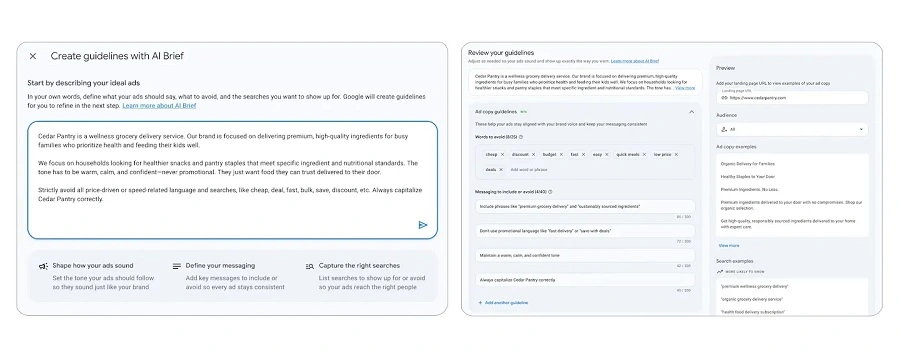
- Ideal Ad Definition: A free-text field where advertisers define the "who, what, and why" of their campaign. This acts as the North Star for the AI’s creative generation.
- Constraint Setting: A dedicated area for "words to avoid." This is a crucial feature for maintaining compliance, particularly in regulated industries like finance or healthcare, where certain phrasing can lead to legal or brand-reputation risks.
- Messaging Parameters: Users can include or exclude specific long-form messaging. This allows brands to ensure that their core value propositions are always emphasized while potentially off-putting or irrelevant content is filtered out.
The Role of Context
Unlike traditional keyword targeting, which relies on rigid matches, AI Brief informs the AI’s "intent understanding." It guides the system on which user queries to prioritize and which audiences to engage, ensuring that the messaging served to those users is consistent with the advertiser’s strategic intent.
Supporting Data: The Shift in Search Behavior
The necessity for AI Brief is driven by a fundamental change in how consumers use search engines. Over the last decade, search queries have shifted from short, fragmented keywords ("shoes cheap") to long, conversational, intent-heavy sentences ("what are the best running shoes for flat feet that are under 100 dollars").
As users have become more comfortable speaking to their devices, Google has improved its ability to understand the context behind these queries. However, the machine’s ability to interpret intent does not guarantee it understands the brand. Industry data suggests that while automation leads to a 15-20% average improvement in conversion efficiency, the risk of "brand drift"—where the ad copy loses its unique identity—increases when human oversight is removed. AI Brief aims to reclaim that identity without sacrificing the 15-20% efficiency gain.
Official Stance and Strategic Implications
Google’s messaging regarding AI Brief is careful to frame it as a tool for "augmentation" rather than "automation replacement." In official documentation, Google emphasizes that AI Brief is not a substitute for core search fundamentals:
- No Replacement for Smart Bidding: AI Brief does not interfere with the auction-time bidding process.
- Complementary to Keyword Strategy: While it influences targeting, it does not replace the foundational need for robust keyword and audience signals.
- Not a Landing Page Substitute: The tool focuses on ad-level messaging; the quality and relevance of the destination site remain the advertiser’s responsibility.
The "Machine Manager" Shift
The industry is currently witnessing a transition where the role of the "Campaign Manager" is evolving into that of a "Machine Manager." The proficiency of an advertiser in 2027 will not be judged by their ability to write every individual ad, but by their ability to craft the most effective brief for the AI. This requires a synthesis of classic copywriting skills and modern prompt engineering.
Potential Limitations and Risks
Despite the benefits, AI Brief is not a panacea. Advertisers must approach this tool with a critical eye:
- Over-Prompting: Just as with any LLM (Large Language Model), providing too many conflicting instructions can lead to "model hallucination" or, more commonly, diluted performance. If the brief is too restrictive, the AI may struggle to find any ad combinations that satisfy the constraints, leading to lower impression share.
- The "Black Box" Persistence: Even with a brief, the AI’s internal decision-making process remains opaque. Advertisers still face the challenge of testing whether the brief is actually moving the needle in the desired direction.
- Creative Stagnation: If a brand relies too heavily on a single brief, they may inadvertently limit the AI’s ability to test and discover new, high-converting creative angles that the human team hadn’t considered.
Best Practices for Implementation
For those ready to integrate AI Brief into their workflows, consider these strategies to maximize success:
- Treat it Like a Brief: Imagine you are handing a project to a new copywriter. Be specific about tone, audience, and goal, but allow the machine some creative room to optimize based on performance data.
- Start with "Guardrails" First: Begin by using the "words to avoid" and "brand constraints" features. Ensuring the AI doesn’t say the wrong thing is often more important than forcing it to say a specific thing.
- Iterate Based on Data: If you see that your AI-generated ads are drifting from your brand voice, refine your brief. Think of it as a living document that should be updated as your campaign goals evolve.
- Monitor Search Terms: Keep a close watch on the search terms your ads are matching to. If the brief is causing the AI to drift into irrelevant territory, tighten the "audience engagement" parameters.
Conclusion: The Future of Advertising
The introduction of AI Brief signals a maturing of the AI-led advertising era. We have moved past the "hype" phase, where brands were willing to let the machine do whatever it wanted in exchange for performance. We are now in the "integration" phase, where human strategic oversight is being re-introduced to ensure that automation serves the brand, not just the algorithm.
As we look toward 2027 and beyond, the most successful advertisers will be those who master the art of the brief. By combining the vast, data-driven power of Google’s AI with the nuanced, strategic direction of human brand experts, businesses can achieve the best of both worlds: the efficiency of automation and the consistency of a well-defined brand identity. The machine is the engine, but with AI Brief, the advertiser is finally back in the driver’s seat.