As the last remnants of Halloween candy disappear from store shelves, a paradox emerges in the retail landscape: the holiday season is expanding, yet the average consumer’s wallet is contracting. For brands, this 2026 season represents a high-stakes environment where the window of opportunity is wider than ever, but the competition for every cent of consumer discretionary spending has reached a fever pitch.
According to the Sprout Social Q3 2026 Pulse Survey, the defining characteristics of this year’s shopping season are rooted in three pillars: the delicate art of campaign timing, a heightened sense of price sensitivity driven by economic anxiety, and the rapid migration of gift discovery to social media platforms.
The Chronology of Consumption: When Does the Season Actually Start?
The debate over when holiday marketing should begin has long plagued brand managers. However, the 2026 data reveals a nuanced reality: consumers do not necessarily want holiday "noise" in the summer, but they are increasingly receptive to "holiday utility."
The August-September Awareness Window
Nearly half of all consumers (49%) state that campaigns launched as early as August make them more likely to purchase, with 19% reporting a significant increase in intent. Yet, when asked for their preferred window for full-scale holiday messaging, only 21% opt for August or September. Half of the respondents prefer the traditional October-November window, and 12% demand that brands wait until December.
The takeaway for marketers is clear: there is a distinct difference between "all-in" holiday saturation and subtle product discovery. The most successful brands are utilizing August and September as a "soft launch" period. During these months, the objective is not to push tinsel and jingle bells, but to build awareness and consideration.

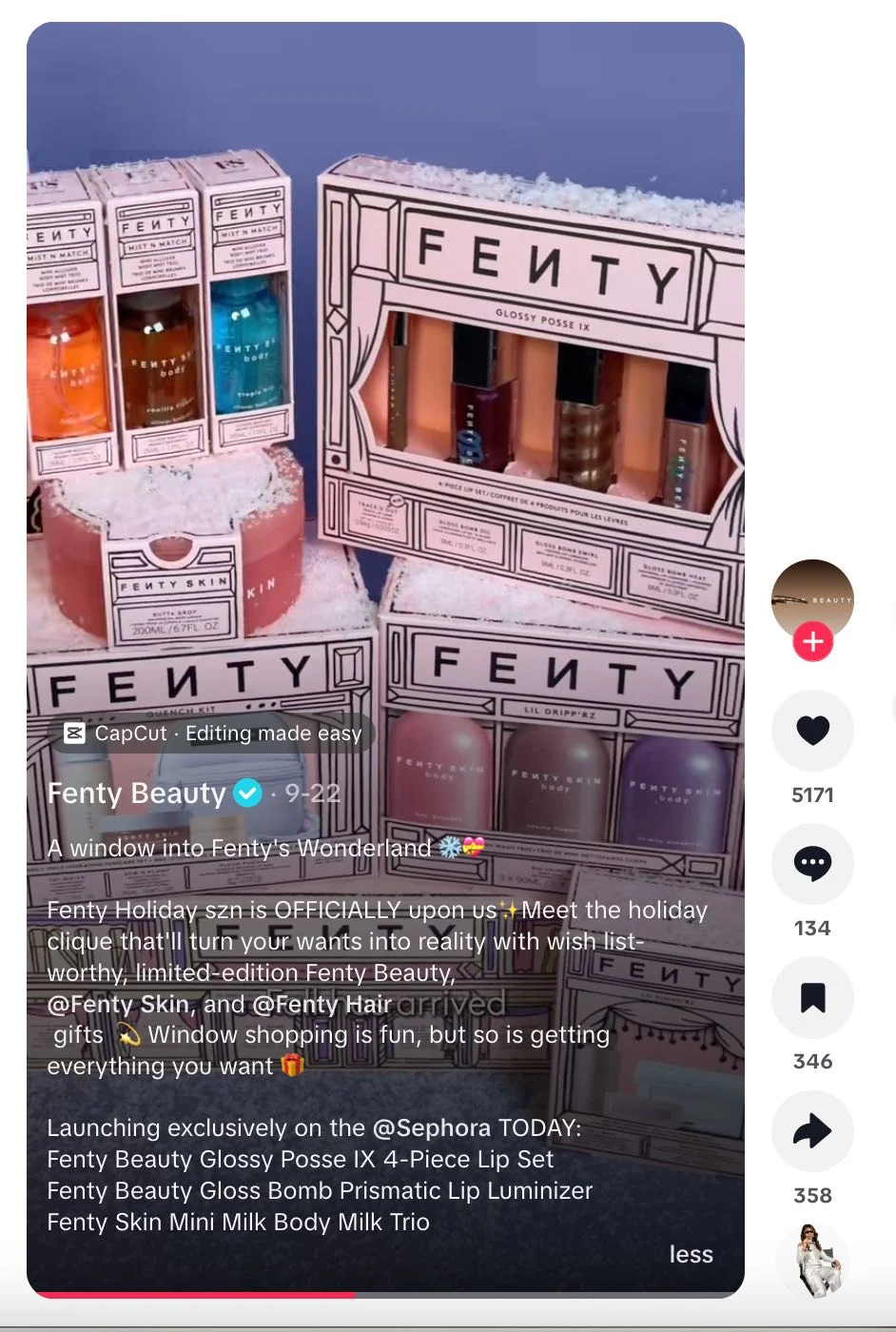
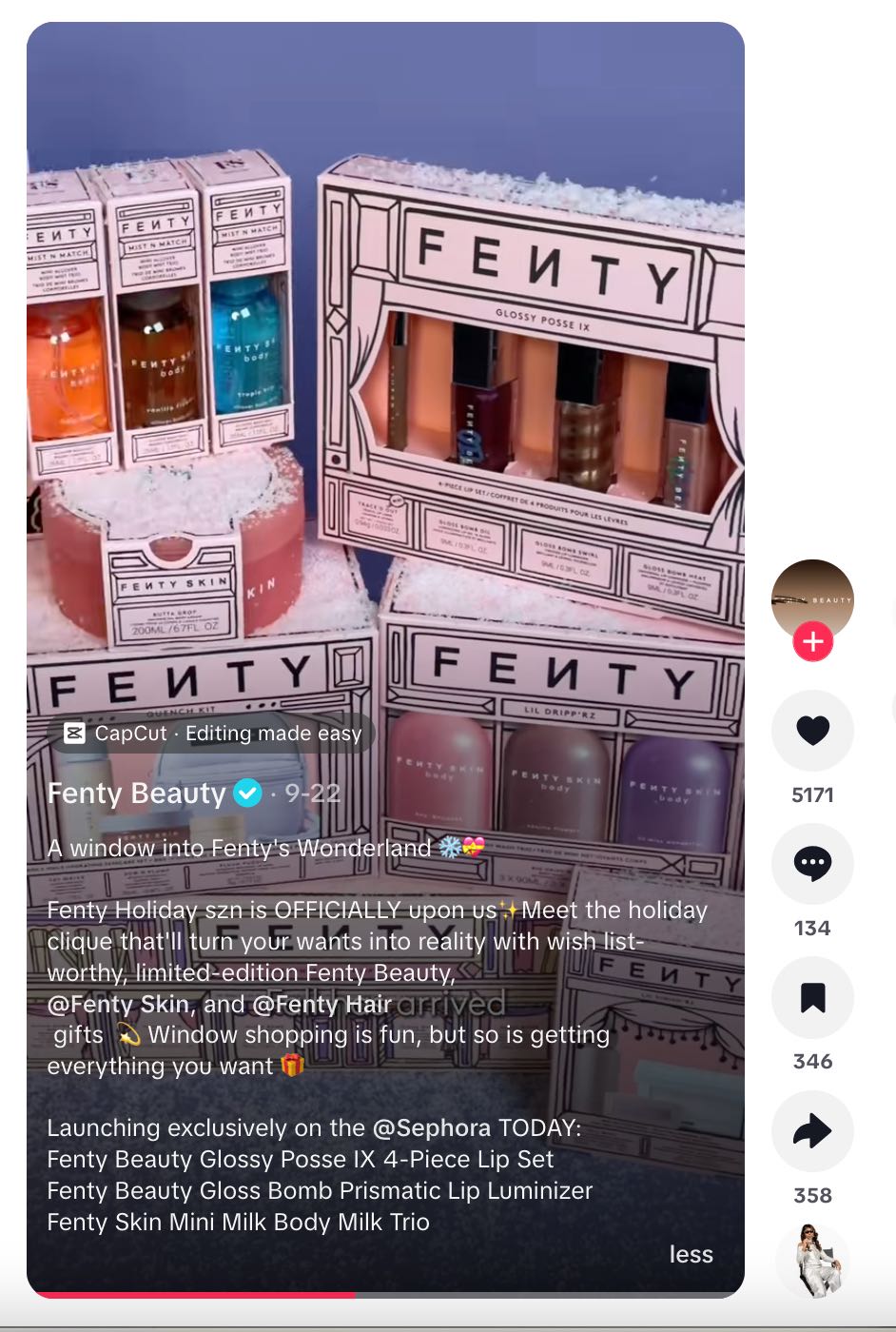
Brands like Fenty Beauty have mastered this cadence. By launching their limited-edition holiday collection in September, they provided a preview that generated over 100,000 views and 5,000 likes on TikTok, effectively seeding desire before the peak shopping frenzy. By the time October arrives, these brands can transition into high-intensity promotional campaigns, having already identified which products resonate most with their audience.
The Gen Z Multiplier
Timing is not a monolith; it is heavily segmented by age. Younger consumers, particularly Gen Z, are far more amenable to early-bird marketing, with 66% stating that August campaigns increase their likelihood to buy. This demographic is driving the "extended season," proving that for brands targeting younger cohorts, the traditional Q4 start date is increasingly obsolete.
Economic Headwinds: Tariffs and the Price Sensitivity Index
Beneath the veneer of festive cheer lies a palpable economic anxiety. The 2026 shopping season is being shaped by concerns over tariffs, inflation, and the rising cost of living.
The Tariff Factor
A significant 36% of shoppers are intentionally starting their holiday shopping earlier this year specifically to get ahead of potential tariff-related price hikes. Another 27% report that while they haven’t changed their timing, they are deeply concerned about the price of goods. In total, 63% of the holiday shopping public is actively factoring economic instability into their purchasing strategy.
Shrinking Budgets and Value Propositions
Perhaps most concerning for retailers is the downward trend in spending expectations. Over half (56%) of consumers expect to reduce their total holiday spend this year. Only 30% of shoppers indicate they are immune to these economic pressures and plan to maintain their usual spending levels.
This climate of frugality does not necessarily demand that brands engage in a "race to the bottom" on price. Instead, it requires a pivot toward demonstrating value. Consumers are scrutinizing purchases more closely, looking for longevity, versatility, and quality. Brands that can articulate why a product is a worthwhile investment—rather than just a seasonal whim—will capture a larger share of the wallet.
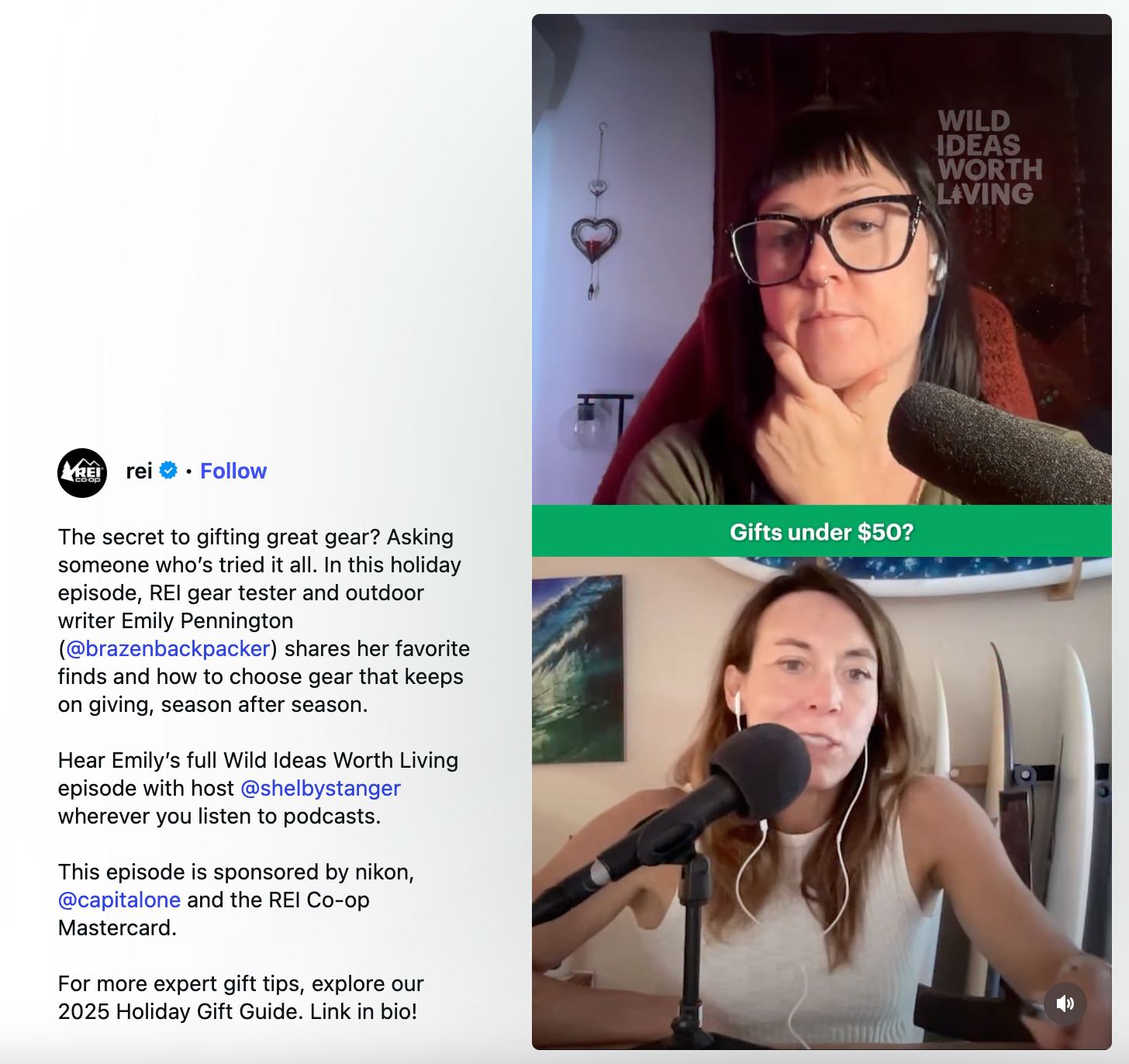
Strategic discounting remains the most potent tool in the arsenal. Promo codes, whether shared directly by the brand or through influencer partners, act as the primary purchase driver for 30% of consumers. Furthermore, retailers who organize gift guides by price point—as demonstrated by REI’s successful "under $50" expert pick campaigns—are winning by making the discovery process seamless for the budget-conscious shopper.
The Social Media Frontier: Where Discovery Meets Intent
The days when physical stores were the primary arena for gift inspiration are fading. In 2026, social media has officially reached parity with in-store browsing. Approximately 46% of consumers now turn to social platforms to discover gifts, mirroring the percentage that plans to walk the aisles of brick-and-mortar retailers.
The Growth of Social Discovery
The momentum of social discovery is accelerating. Compared to the 2025 season, 28% of consumers plan to increase their reliance on social media for gift ideas, with 50% expecting to maintain their current high usage. This creates a massive opportunity for brands to intercept shoppers during the "awareness" phase of the buyer journey.
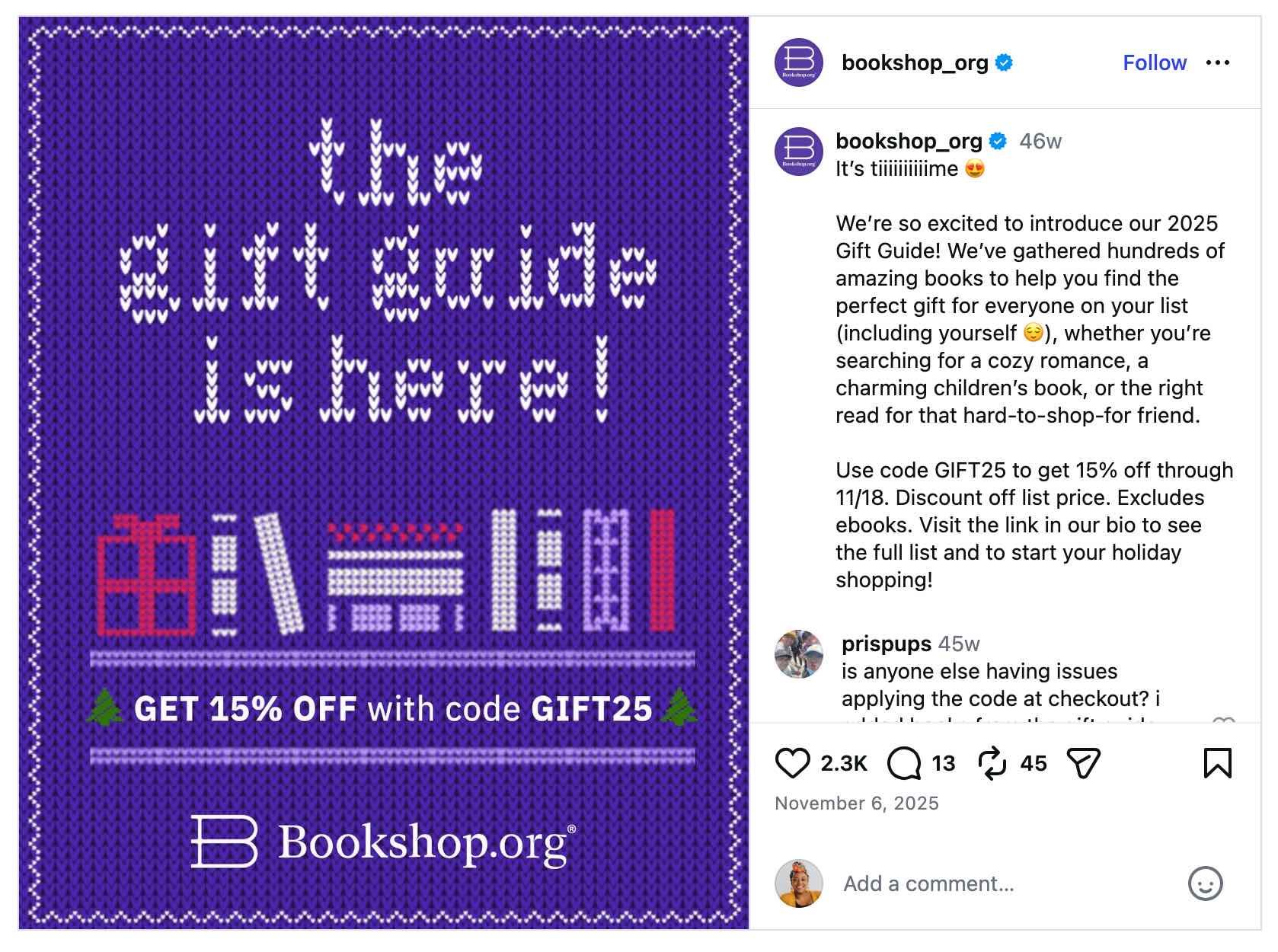
Content that is organized by specific recipient categories, interests, or occasions simplifies the customer experience. Bookshop.org’s 2025 campaign, which leveraged Instagram to provide curated reading lists paired with limited-time discounts, stands as a prime example of how to convert "window shoppers" into active buyers by providing clear, organized pathways to purchase.
Purchase Triggers: The Hierarchy of Influence
What forces a user to stop scrolling and make a transaction? The data points to a multi-layered approach:
- Promo Codes: 30% of purchase decisions are triggered by discounts.
- Product in Action: 28% of shoppers are influenced by video content showing the item being used.
- Original Brand Content: 26% of consumers find brand-led creative content compelling.
- User-Generated Content (UGC): 22% of shoppers are swayed by the endorsements of non-influencer users.
To succeed, brands must move beyond a monolithic content strategy. A balanced diet of promotional posts, educational product videos, and authentic creator partnerships provides the social proof necessary to close the sale. Paid partnerships, such as those seen on TikTok where creators walk viewers through complex gift sets, provide the depth and context that static images lack.
The Evolution of Social Commerce and Customer Care
The gap between "social media" and "sales channel" has effectively closed. The 2026 consumer expects a seamless transition from discovering a product in a feed to completing the purchase without leaving the app.
Frictionless Purchasing
Currently, 57% of consumers are open to buying products directly within social apps. This includes a robust segment of repeat social shoppers and a growing group of first-time users. For brands, this necessitates a rigorous audit of their social commerce infrastructure. Are product links working? Is the inventory data real-time? Is the return policy easily accessible within the app interface? Every point of friction at this stage is a lost sale.
The New Customer Service Desk
Perhaps the most significant change is the expectation of high-level customer service via social platforms. More than a quarter of consumers (27%) intend to use social media for customer service inquiries at a higher frequency than in previous years.
Social media teams are no longer just content creators; they are the front-line support staff. Whether it is a query about shipping timelines, sizing, or product availability, these interactions are often the final hurdle before a conversion. Brands that fail to integrate their social inboxes with their inventory and logistics systems will find themselves overwhelmed as holiday traffic peaks. Effective "social customer care" requires clear workflows, rapid response times, and the ability to provide accurate, real-time data to frustrated or curious shoppers.
Strategic Implications for 2026
As the industry looks toward the peak of the 2026 holiday season, the mandate for marketers is clear: adapt or lose relevance. The data suggests a three-pronged strategy for the final stretch:
- Strategic Cadence: Use the late-year window to build awareness and test content, but save the aggressive, high-pressure promotional spend for the October-November sweet spot.
- Value-First Messaging: In an era of tariff anxiety and cost-of-living concerns, emphasize quality, longevity, and clear value tiers. Utilize price-based gift guides to help consumers navigate their own budget constraints.
- Seamless Social Integration: Treat your social media presence as a holistic ecosystem. This means ensuring the path to purchase is frictionless and that the social inbox is as well-staffed and prepared as any traditional customer service center.
The 2026 holiday season will be won by those who recognize that the modern consumer is more informed, more price-sensitive, and more social-native than ever before. By meeting them with the right message, at the right time, and on the platforms where they already spend their digital lives, brands can navigate the economic headwinds and secure their place in the holiday shopping cart.