In the fast-paced world of digital marketing, the technical specifications of your ad creative are often the silent determinants of your campaign’s success. As Meta continues to evolve its ecosystem, understanding the precise requirements for Facebook (Meta) ads is no longer just a technical checkbox—it is a foundational element of your brand’s visual strategy.
Whether you are a seasoned social media manager or a small business owner navigating the Meta Business Suite for the first time, this comprehensive guide provides the definitive technical roadmap to ensuring your advertisements render perfectly across every placement, from the ubiquitous News Feed to the immersive, full-screen experience of Reels.

Main Facts: The Anatomy of a High-Performing Meta Ad
At the core of Meta’s advertising engine lies a commitment to visual quality. Because the platform serves billions of users across a fragmented landscape of devices—ranging from high-resolution desktop monitors to compact mobile screens—adherence to recommended dimensions is critical.
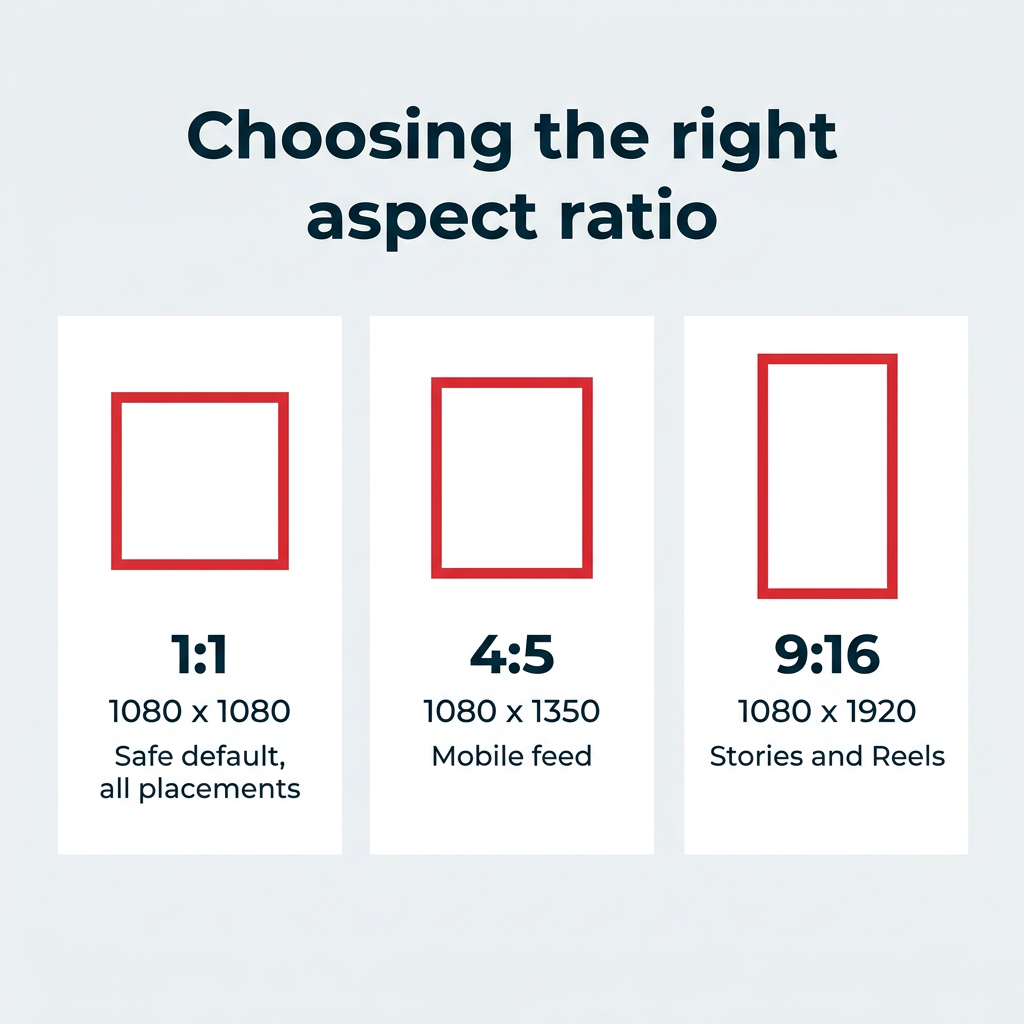
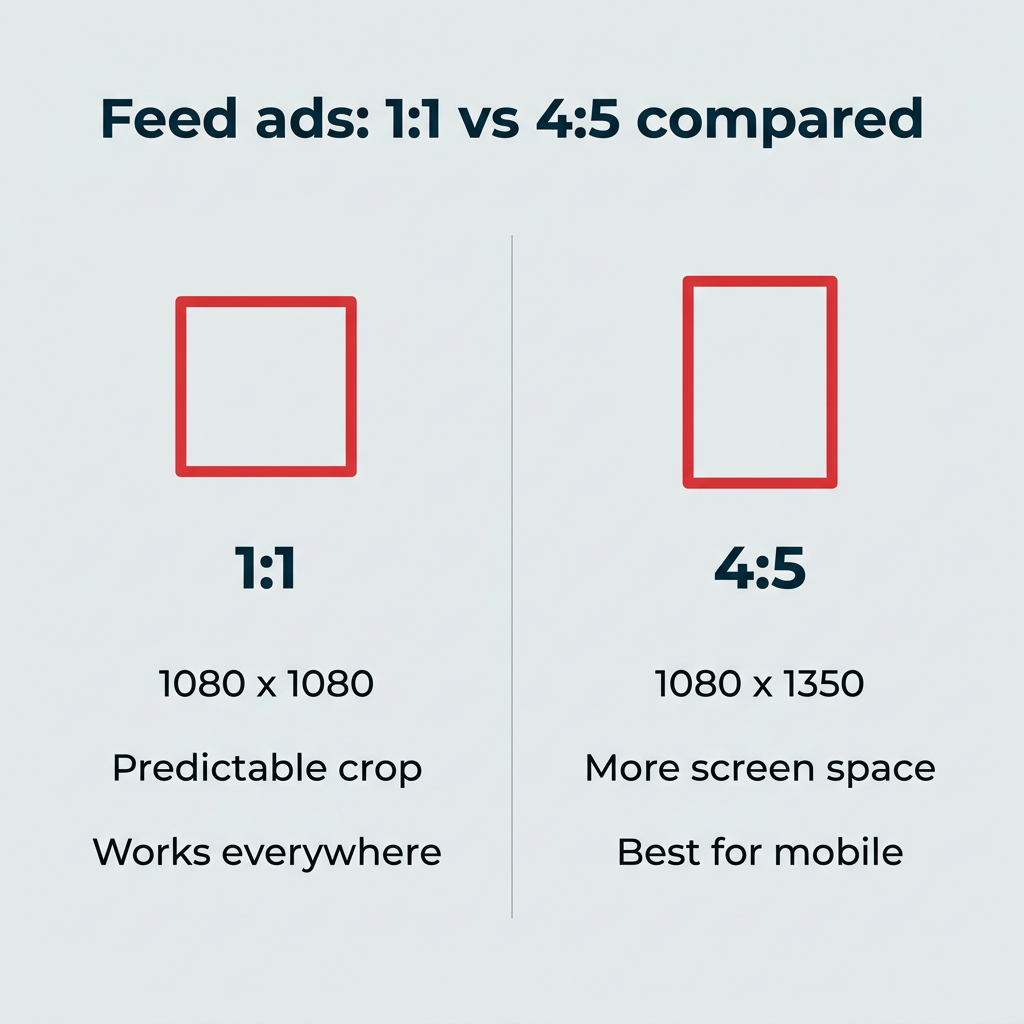
The industry-standard "golden rule" for Meta ads is the 1080 x 1080 pixel square (1:1 aspect ratio). This format is the universal language of the platform, offering compatibility across the Feed, Marketplace, Search Results, and the Right Column. However, relying solely on this format can leave "real estate" on the table. For mobile-first campaigns, which account for the vast majority of engagement, vertical formats such as 4:5 (1080 x 1350 px) and 9:16 (1080 x 1920 px) are essential for dominating the screen and minimizing distractions from competing content.

Universal Technical Guidelines
Before preparing your assets, keep these fundamental parameters in mind:
- File Types: Stick to high-quality PNG or JPG for images, and MP4, MOV, or GIF for video assets.
- File Size Limits: You have a ceiling of 30MB for images and 4GB for video files.
- The "Text" Myth: While Meta removed the restrictive "20% text rule" years ago, internal data consistently shows that advertisements with minimal overlay text perform better, as they feel more native to the user experience.
Chronology: The Evolution of Meta Ad Formats
The history of Facebook advertising is a timeline of increasing immersion. In the early days, ads were relegated to the "Right Column" of a desktop browser—static, easily ignored, and limited in reach.
As mobile adoption exploded, Meta shifted its focus to the "Feed," creating seamless, scrollable ad units that mimicked organic content. This was a paradigm shift in digital marketing; ads were no longer "interstitial" or "banner-based"—they were social.
By 2018, the introduction of Stories brought full-screen, ephemeral vertical video to the forefront, challenging marketers to tell stories in 15 seconds or less. Today, the dominance of Reels and the integration of Advantage+ shopping catalogs represent the final frontier: algorithmic, automated, and hyper-personalized ad experiences that bridge the gap between discovery and immediate checkout.
Supporting Data: Why Dimensions Matter
The importance of using the correct aspect ratio is backed by stark behavioral data. Over 80% of Facebook users access the platform exclusively via mobile devices. On a smartphone screen, a 1:1 image or a 9:16 video occupies a significantly higher percentage of the "viewable field" than a landscape (16:9) image.
When an ad occupies more screen space, the user’s cognitive focus is forced toward your creative. For instance, testing has shown that 4:5 aspect ratio images in the mobile feed often yield higher click-through rates (CTR) compared to landscape alternatives because they push organic posts further down the screen, effectively reducing "scroll-past" behavior.

Furthermore, the rise of Collection Ads—which pull directly from your product catalog—has streamlined e-commerce. By syncing your Shopify or WooCommerce store with Meta, the algorithm automatically selects the best-performing images for your target audience, turning your catalog into a dynamic, "always-on" storefront.
Strategic Placements: A Detailed Breakdown
To ensure your campaign is optimized, you must tailor your creative to the specific "environment" where the ad appears.
1. Feed Ads (The Standard Bearer)
The News Feed remains the engine room of Meta advertising.
- Best Practice: Use 4:5 for mobile to capture attention.
- Safe Zone: Ensure your core message is in the center to prevent it from being obscured by the profile name or CTA button.
2. Stories and Reels (The Immersive Experience)
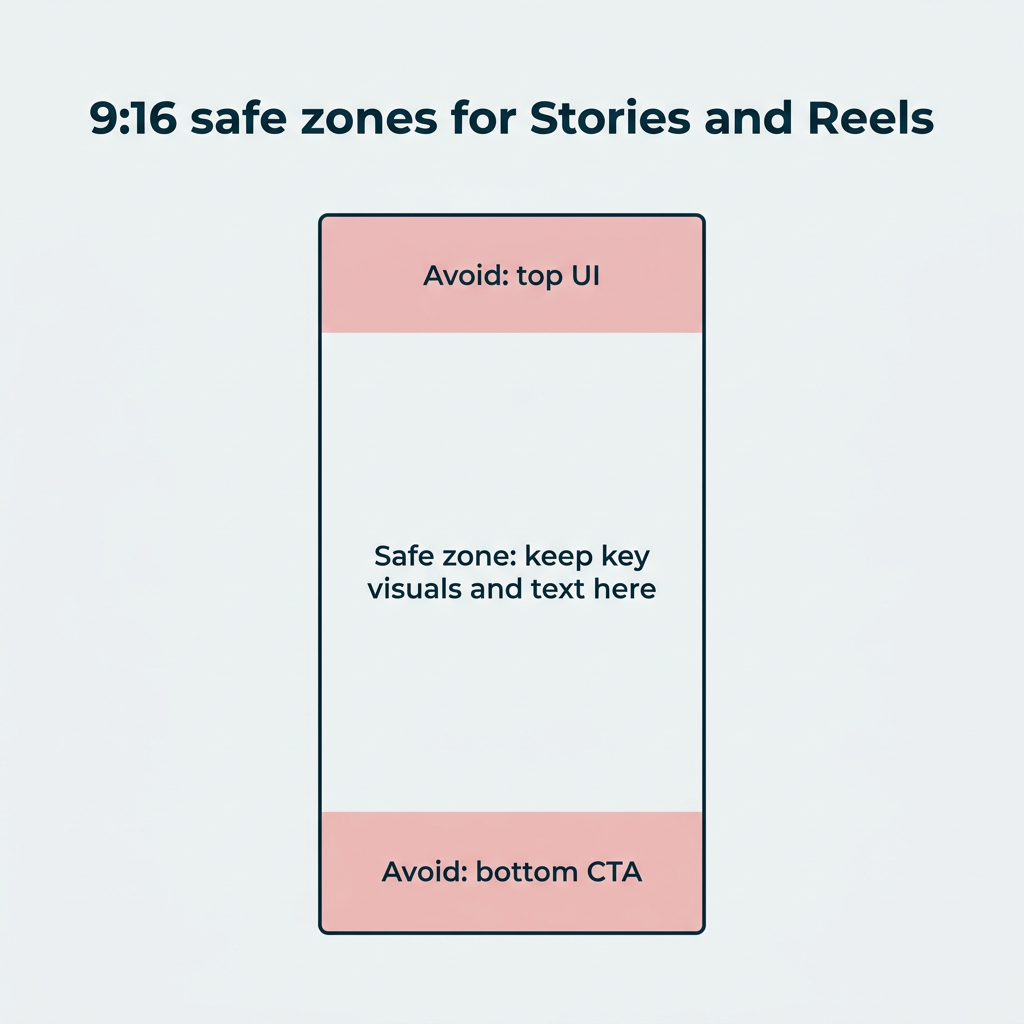
These formats require a 9:16 vertical orientation.

- Crucial Note: Be wary of "UI Overlays." The top and bottom 250px of a 9:16 screen are often covered by user interface elements (like your profile photo or the "Shop Now" button). Keep your primary visuals and text in the center 1080 x 1420 pixel zone to ensure your message is seen.
3. Carousel Ads (The Storyteller)
Carousel ads allow you to display up to 10 images or videos in a single unit. This is the gold standard for e-commerce brands looking to show product variety.
- Pro Tip: Maintain a consistent 1:1 ratio across all cards. If you mix orientations, the carousel will default to the lowest common denominator, potentially causing awkward cropping.
4. In-Stream Video (The Attention Grabber)
These ads appear in the middle of long-form video content. Because they are often non-skippable or skippable after five seconds, your "hook" must be immediate.

- Resolution: 1080 x 1080 or higher (16:9 aspect ratio is also common here).
Official Responses and Algorithmic Implications
Meta’s official stance on ad specs is clear: "Follow the guidelines to ensure broader delivery." When an advertiser uses non-standard dimensions, Meta’s machine learning algorithms often struggle to place the ad in premium slots.
The Advantage+ placement algorithm is designed to automatically optimize your ad’s delivery. If you provide assets that fit multiple formats (e.g., uploading a 1:1 image and a 9:16 video), the system will test which format performs best for a specific user. By providing the full suite of recommended specs, you are essentially giving the AI more "ammo" to reach your target customer. Ignoring these specs is not just a design failure—it is a self-imposed limitation on your campaign’s reach and efficiency.

Implications for Future Campaigns
The landscape of 2026 and beyond will be defined by AI-driven creative. We are moving toward a future where marketers provide the raw assets—high-quality images and product data—and Meta’s AI creates the final ad version on the fly.
However, even in an AI-dominated environment, the "Source of Truth" remains your original file quality. If you upload a pixelated, low-resolution, or poorly cropped asset, the AI will simply propagate that poor quality across millions of impressions.

Checklist for Success:
- Always shoot for the highest resolution: You can always scale down, but you can never scale up without losing quality.
- Audit your UI safe zones: Before finalizing, overlay a template of the Facebook UI on your Reels/Stories assets to ensure no text is cut off.
- Leverage Catalogs: If you are an e-commerce business, stop manually uploading individual ads and start using the Meta Commerce Manager catalog sync. It is the most effective way to ensure your specs are always compliant.
- Test, Measure, Pivot: Use the Meta Ads Manager reporting tools to compare the performance of 1:1 vs. 4:5 assets. Your audience’s behavior is the final authority on what works.
Conclusion
Mastering Facebook ad sizes is a blend of technical precision and creative intent. By respecting the platform’s requirements, you ensure that your brand voice remains clear, professional, and impactful. In an age where digital noise is at an all-time high, the difference between a high-converting ad and a wasted budget often comes down to the pixels. Equip yourself with these specifications, embrace the automation of Meta’s tools, and build campaigns that don’t just reach the screen—they resonate with the viewer.