The promise of a driverless future has long been Tesla’s North Star, but as the company moves toward the deployment of its robotaxi fleet, that vision is colliding with the hard realities of road safety and international regulation. The U.S. National Highway Traffic Safety Administration (NHTSA) has officially opened a defect petition review concerning allegations that Tesla’s autonomous vehicles have been operating at speeds exceeding posted limits within active school zones. While no crashes, injuries, or fatalities have been linked to these specific incidents, the petition underscores a growing anxiety among regulators: when software dictates speed, who is responsible for the margin of error?
This regulatory scrutiny is not isolated to the United States. Across the Atlantic, Tesla’s bid for EU-wide approval of its advanced driver-assistance systems (ADAS) has hit a wall, primarily due to the same fundamental question of how these vehicles interpret and adhere to speed limits. As Tesla attempts to scale its Cybercab and robotaxi infrastructure, the company finds itself navigating a complex, multifaceted challenge that pits its rapid software-driven innovation against the cautious, safety-first mandates of global transport authorities.
The Core Allegation: Speeding in Protected Zones
The NHTSA’s current review is centered on a petition filed on September 23, 2024, which alleges that Tesla’s automated driving systems—specifically those installed in its robotaxi fleet—regularly ignore posted speed limits in sensitive environments. The petition, which triggered an official agency review on October 9, points to three specific video submissions as evidence of the behavior.
The scope of this review covers approximately 1,000 vehicles, including the 2026 model year Robotaxi, the Model Y, and the Cybercab. While the filing highlights no physical damage or harm to pedestrians, the potential for disaster in a school zone is significant enough to warrant federal attention.
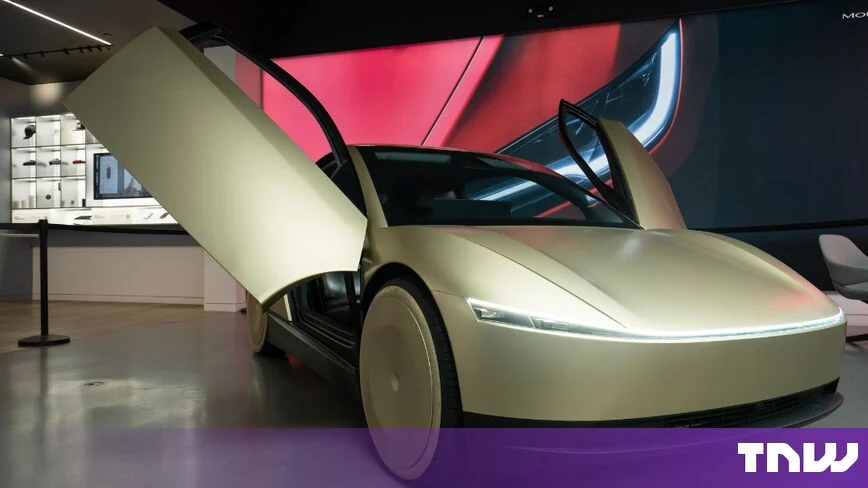
It is important to note that this is not yet a formal investigation. The NHTSA is currently in the "defect petition review" phase—a preliminary stage where the agency assesses whether the claims are substantive enough to warrant a full-scale safety probe. There is no set deadline for this determination, but the inclusion of the Cybercab adds a layer of urgency. The Cybercab, a vehicle designed without steering wheels, pedals, or mirrors, is already under separate federal scrutiny regarding its "self-certification" process. Having the same fleet under two different microscopes signals that the NHTSA is increasingly wary of Tesla’s go-it-alone approach to autonomous vehicle safety.
A Tale of Two Continents: The EU Regulatory Impasse
While the U.S. petition focuses on fully driverless taxis, Europe is grappling with the same manufacturer’s software in the context of supervised driving. The conflict in the European Union centers on the "speed-matching" capabilities of Tesla’s software.
In Brussels, regulators are weighing the safety implications of allowing vehicles to operate at speeds that deviate from local limits. The debate has become highly technical and contentious. Germany has emerged as a particularly vocal skeptic, advocating for a strict mandate that limits automated speed to no more than 10% above the posted limit. Conversely, reports indicate that versions of Tesla’s software approved by Dutch regulators have previously permitted speeds as high as 50% above detected limits.
This disparity has stalled the EU-wide approval process for Tesla’s ADAS. Originally slated for a committee vote in October, the decision was postponed, with a new timeline currently targeting December at the earliest. France and Sweden have joined the chorus of concerned nations, arguing that the lack of a unified, safety-compliant speed policy poses an unacceptable risk to European road users.
The core of the European tension is the definition of "safe assistance." While the U.S. concerns involve cars with no human operator, the European regulators are worried about "automation bias"—the tendency for human drivers to trust the software’s decision-making implicitly, even when that software is pushing the boundaries of legal speed limits.
Supporting Data: The Fragility of Pedestrian Detection
Beneath the technical arguments over speed lies a more profound, systemic issue: the limitations of computer vision. A recent study conducted by King’s College London highlighted a disturbing trend in autonomous perception systems. Upon analyzing eight different pedestrian detection systems, the researchers found that accuracy was nearly 20% higher for adults than for children. Furthermore, performance plummeted significantly in low-light conditions.
This data is critical to the school zone debate. Children are smaller, less predictable, and harder for sensors to classify accurately compared to adults. If an autonomous vehicle is programmed to follow a "speed-first" heuristic—or if its vision system struggles to identify the specific visual cues of a school zone—the margin for error in a high-density pedestrian area becomes razor-thin.
Tesla is not the only company to encounter these challenges. Waymo, widely considered the current industry leader in autonomous operations, has faced its own struggles. The company was subject to an investigation following reports of its vehicles passing stopped school buses. In January of this year, a Waymo vehicle struck a child near a Santa Monica primary school, resulting in minor injuries. These incidents reinforce the reality that regardless of the manufacturer, the transition from simulated testing to real-world deployment in school zones is fraught with peril.
Chronology: The Escalation of Oversight
- September 23, 2024: A petitioner files a request with the NHTSA, providing video evidence alleging that Tesla robotaxis are exceeding speed limits in active school zones.
- October 9, 2024: The NHTSA formally opens a defect petition review, covering 1,000 vehicles, including the Cybercab and the Model Y.
- October 2024: A highly anticipated vote on EU-wide approval for Tesla’s driver-assistance software is postponed due to disagreements over speed-limiting protocols.
- Late 2024 (Ongoing): The NHTSA continues to review the "self-certification" process of the steering-wheel-less Cybercab alongside the new speeding allegations.
- December 2024 (Projected): The earliest possible window for the EU committee to revisit the approval of Tesla’s ADAS, pending consensus on speed-cap parameters.
Implications: Can Innovation Move Faster Than Regulation?
The current situation poses a existential question for the future of Tesla and the wider autonomous vehicle industry: Can the pace of software iteration be reconciled with the slow, deliberate nature of safety regulation?
1. The Cost of "Self-Certification"
Tesla has long championed a model where it verifies the safety of its own systems, arguing that rapid iteration saves more lives in the long run than traditional, drawn-out validation. However, the current inquiries suggest that regulators are losing patience with this approach. If the NHTSA determines that Tesla’s "self-certification" of the Cybercab was insufficient, it could set a legal precedent that forces the entire industry to adopt more rigorous, third-party-verified safety testing, significantly slowing down the rollout of driverless technologies.
2. The Standardization of "Autonomous Speed"
The international friction regarding speed limits suggests that we are heading toward a fragmented regulatory landscape. If Europe mandates a strict 10% speed buffer while the U.S. continues to struggle with enforcement, manufacturers will be forced to develop region-specific software builds. This increases costs and complexity, potentially hindering the global scalability that Tesla and other robotaxi operators rely on for their business models.
3. Ethical Implications of Pedestrian Detection
The King’s College London study acts as a clarion call for transparency. If autonomous systems struggle to detect children, the deployment of these vehicles in school zones should arguably be restricted until the technology reaches a higher threshold of parity across age groups. The industry is currently facing a "scaling paradox"—trying to deploy faster than they can resolve the core edge-case problems that emerge in dense urban environments.
Conclusion: A Turning Point for Autonomy
The scrutiny Tesla faces today is the inevitable result of a company pushing the boundaries of what is technologically possible. The shift from "assisted driving" to "fully autonomous robotaxis" is not merely a technical upgrade; it is a fundamental shift in responsibility from human to machine.
When a driver speeds, they are held accountable by law enforcement. When an autonomous vehicle speeds, the accountability chain is far more complex, involving software developers, data scientists, and the company’s internal safety protocols. As the NHTSA continues its review and the EU approaches its December vote, the outcome will likely define the regulatory "rules of the road" for the next decade.
For Tesla, the task ahead is clear: it must prove that its software is not just faster or more efficient, but that it is fundamentally deferential to the safety of the most vulnerable road users. Until the company can bridge the gap between its ambitious deployment timelines and the cautious requirements of global safety regulators, the road to a driverless future will remain, quite literally, speed-limited.