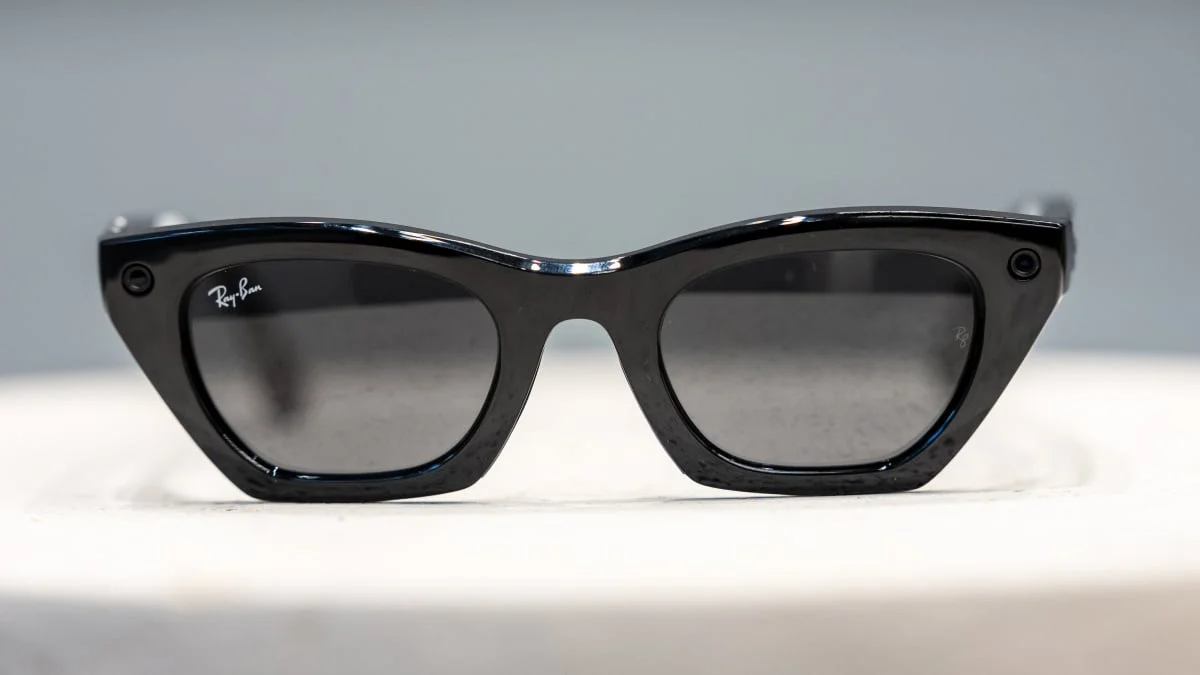
Meta, the parent company of Facebook, Instagram, and WhatsApp, is once again embroiled in a firestorm regarding user privacy. This time, the controversy strikes at the heart of its burgeoning wearable technology division: the Ray-Ban Meta smart glasses. Following widespread user reports and mounting scrutiny, it has been revealed that these AI-integrated spectacles have been capturing audio recordings of private conversations without the user’s explicit consent or the standard "Hey Meta" activation prompt.
This incident marks a critical juncture for Meta, which has spent years attempting to convince the public that its hardware is designed with privacy-first principles. As the company pushes further into the metaverse and AI-driven hardware, these revelations threaten to undermine the trust necessary for the mass adoption of wearable cameras and recording devices.
The Breach: How the Glitch Unfolded
The alarm was first raised by users on social media, most notably within the r/MetaGlasses subreddit. One user provided a harrowing account of their experience, noting that their glasses were recording and transcribing conversations despite the "Hey Meta" wake-word feature being disabled. Perhaps most disturbingly, the user noted that the integrated LED indicator—the white light intended to signal to bystanders that recording is in progress—was actively illuminating during these unauthorized sessions.
The scope of the problem appears to extend beyond a singular hardware defect. The user reported observing the same intrusive behavior across three separate pairs of Ray-Ban Meta smart glasses, spanning both second- and third-generation models. This suggests that the issue was not a localized manufacturing error but rather a systemic flaw, potentially rooted in the device’s firmware or the cloud-based AI processing architecture that Meta employs.
The Reddit thread quickly became a hub for other users who reported similar, unsettling occurrences. For many, the realization that their private, day-to-day interactions were being transcribed and stored by a tech giant without their knowledge has turned the convenience of smart technology into a source of profound anxiety.
A Pattern of Privacy Infractions
This latest incident is far from an isolated occurrence in Meta’s history of data management. To understand the gravity of the situation, one must look at the broader context of Meta’s relationship with user data.
Earlier this year, a separate, deeply troubling investigation revealed that video footage captured by Meta’s smart glasses was being funneled to offshore workers in Kenya for the purpose of data labeling. The goal was to refine Meta’s AI models, but the execution was catastrophic for user privacy. The footage being reviewed by these third-party contractors included highly intimate, and in some cases, compromising moments—including users in their bathrooms. Many of those recorded were entirely unaware that their most private moments were being scrutinized by human eyes on the other side of the world.
These two events—the unauthorized audio recording and the unauthorized manual review of video data—paint a concerning picture of a company that prioritizes rapid AI development over the granular, individual rights of its users.
Chronology of Events
- Initial Launches: Meta introduced its collaboration with Ray-Ban to bring smart glasses to the mass market, emphasizing "privacy by design" and a dedicated LED indicator to ensure bystanders are aware of recordings.
- Early 2024: Investigative reports surface revealing that video data from the glasses was being processed by offshore human contractors, exposing intimate user footage.
- Late 2024/Early 2025: Users begin reporting unauthorized audio recordings on Reddit. The issue is identified across multiple generations of the device.
- The "Hey Meta" Failure: Users confirm that even with voice-activation prompts disabled, the devices were still capturing audio and creating transcripts.
- Public Disclosure: As reports gain traction in tech media, Meta is forced to address the issue publicly.
- Resolution Claims: Meta issues a statement to industry publications, asserting that the glitch has been resolved and that users can manage their voice logs via the companion app.
The Technical and Ethical Implications
The primary value proposition of the Ray-Ban Meta glasses is their seamless integration into daily life. They are meant to be "invisible" tech, yet that very invisibility is what makes them a lightning rod for privacy concerns.
The Problem of Passive Recording
When a device records without a clear trigger, it changes the nature of the relationship between the user and the manufacturer. The core promise of these glasses is that they are user-controlled. When the device initiates recording autonomously, the user loses their agency. If the glasses are recording, are they also uploading that data to Meta’s servers? If so, who has access to that data, and for how long is it retained?
The Failure of the LED Indicator
The white light is the primary "social contract" feature of the device. It is intended to inform people around the wearer that they are being recorded. When the light turns on without the user’s intent, it implies that the software controlling the hardware is operating independently of the user’s physical commands. This creates a scenario where the device itself is a "liar," signaling to the public that a recording is happening when the owner may not even be aware of it.
Official Responses and Corporate Strategy
Meta has been characteristically brief in its response to these reports. A spokesperson for the company stated: "This issue has been resolved. People can manage, review and delete voice logs of their interactions with Meta AI via settings at any time."
However, this response has been widely criticized as insufficient. The company has notably failed to provide a technical explanation for why the bug occurred in the first place. Was it a server-side error? A firmware update gone wrong? A failure in the neural processing unit (NPU) of the glasses? By refusing to disclose the root cause, Meta denies users the transparency needed to regain confidence in the product.
For a company that relies on user data to train its Large Language Models (LLMs) and AI agents, the "trust deficit" is a significant business risk. Meta’s strategy has been to lean heavily into the "AI Assistant" narrative, attempting to make their technology indispensable. But if the technology is perceived as a surveillance tool, its adoption will likely remain limited to early adopters, stifling the company’s long-term ambitions in the wearable space.
The Future of Wearable Surveillance
The broader industry must now grapple with the implications of this incident. Smart glasses are not merely cameras; they are sensory nodes that sit on a person’s face, observing the world. When those nodes fail, the breach is far more personal than a typical data leak of email addresses or passwords.
Privacy advocates have long warned that the miniaturization of sensors would lead to an era of "always-on" surveillance. The Meta incident serves as a primary example of these fears manifesting in reality. If Meta, one of the world’s largest tech companies, cannot prevent its devices from recording without permission, what does this mean for smaller, less-regulated players in the wearable market?
Conclusion: The Path Forward
The "resolution" of this specific bug is merely the first step in a long road toward accountability. Users who own these devices are now faced with a difficult choice: continue using a piece of technology that has proven capable of violating their privacy, or abandon the platform entirely.
For Meta, the mandate is clear. To survive the scrutiny of regulators and the skepticism of the public, the company must shift from a posture of damage control to one of radical transparency. This includes:
- Independent Audits: Allowing third-party security firms to inspect the code and firmware of the Ray-Ban Meta glasses.
- Granular Privacy Controls: Implementing hardware-level kill switches that physically disconnect the microphone and camera, ensuring that software bugs cannot override user intent.
- Data Retention Policies: Providing clear, legally binding timelines for how long audio and video data is stored, and ensuring that no human contractors are ever involved in the review of sensitive, private footage.
As we move toward an increasingly AI-integrated future, the hardware we wear will define the boundaries of our private lives. If companies like Meta want to be the architects of that future, they must prove that they are worthy of the intimacy they are seeking to capture. Until then, the "smart" glasses may be seen by many as little more than a persistent, uninvited witness to their private lives.