In a strategic move to reinforce Canada’s transition to a net-zero economy, federal officials have announced a significant capital infusion into New Brunswick’s energy infrastructure. Tim Hodgson, Canada’s Minister of Energy and Natural Resources, confirmed a combined investment of nearly $270 million aimed at bolstering both the province’s primary hydroelectric asset and its high-voltage transmission capabilities.
The funding package serves as a critical milestone for NB Power, the provincial utility, providing the necessary liquidity to navigate the complex engineering and regulatory landscape required to maintain the Mactaquac Generating Station—the crown jewel of New Brunswick’s renewable energy portfolio—while simultaneously upgrading the stability of the regional power grid.
The Core Investment: Stabilizing a Renewable Cornerstone
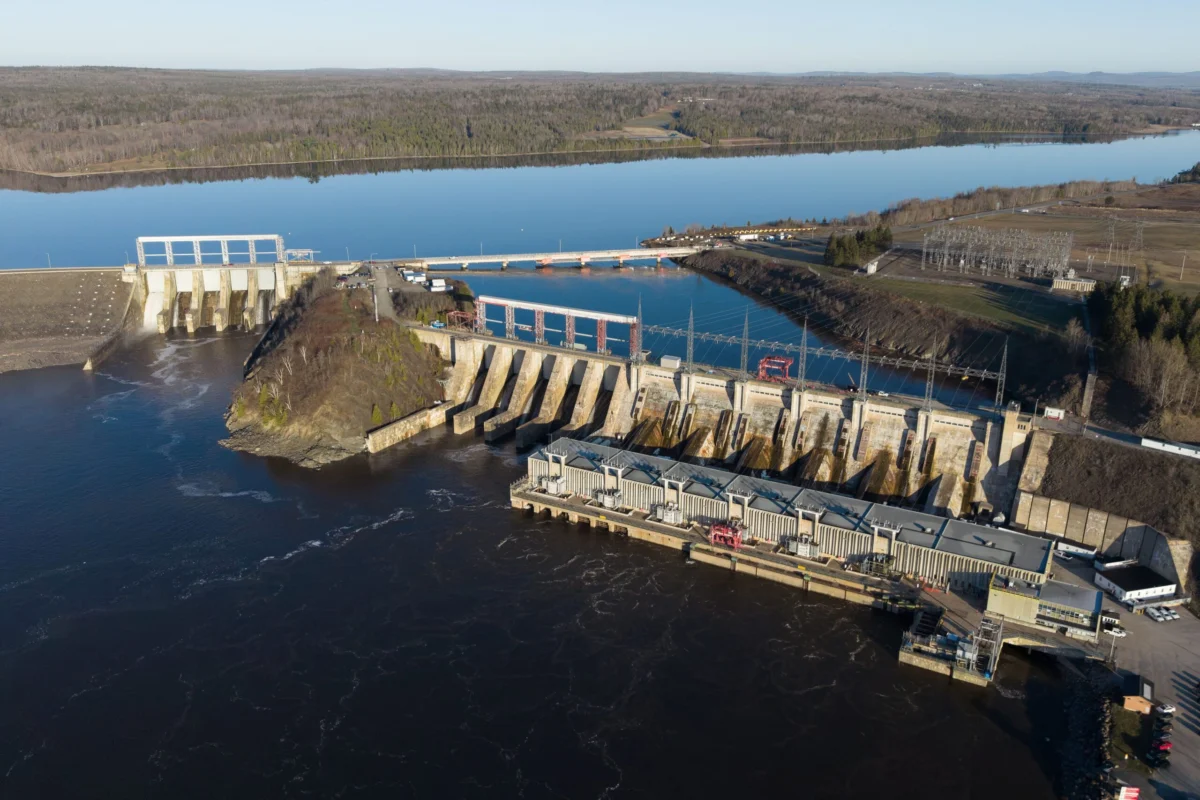
The lion’s share of the announcement—$219 million—comes in the form of a site development loan from the Canada Infrastructure Bank (CIB). This capital is earmarked for the "Mactaquac Life Achievement Project," a long-term initiative designed to address the structural integrity of the 672-megawatt (MW) hydroelectric station.
The Mactaquac Generating Station, situated on the St. John River near Fredericton, has been a pillar of the province’s energy security since its commissioning in 1968. It provides roughly 30% of New Brunswick’s renewable energy requirements and manages 20% of the province’s peak electricity demand. However, the station has faced significant technical challenges over the past two decades.
The facility suffers from an alkali-aggregate reaction, a form of "concrete cancer" where the concrete expands, causing misalignment in critical machinery, including turbines and spillway gates. The CIB loan will fund the rigorous technical studies, environmental regulatory reviews, and essential First Nations engagement required to determine the long-term path for the facility.
Strengthening the Southern Grid
Beyond the Mactaquac project, the federal government has allocated $50 million through Natural Resources Canada to support the Static Synchronous Compensator (STATCOM) project at the Salisbury Terminal. As New Brunswick integrates more intermittent renewable sources—such as wind and solar—into its grid, voltage stability becomes increasingly difficult to maintain. The STATCOM technology acts as a high-speed regulator, providing dynamic reactive power support to ensure the grid remains stable even during sudden fluctuations in supply or demand.
Chronology of the Mactaquac Initiative
The journey to preserve the Mactaquac station has been a decadal endeavor, defined by exhaustive public consultation and scientific rigor.
- 1968: The Mactaquac Generating Station is commissioned on the St. John River, becoming the backbone of the province’s hydroelectric capacity.
- Early 2000s: NB Power engineers identify signs of premature concrete deterioration caused by chemical expansion within the structure.
- 2016: Following years of internal assessment, NB Power formally proposes the "Life Achievement Project." This proposal followed a comprehensive public review process, which included deep-dive engineering analysis and social impact studies.
- 2016–2025: The Canadian Rivers Institute conducts the "Mactaquac Aquatic Ecosystem Study," an independent scientific assessment looking at the environmental implications of the dam’s continued operation versus potential decommissioning.
- 2026: The Government of Canada, through the CIB, announces the $219 million loan, signaling federal commitment to the station’s 100-year lifespan goal.
Technical and Environmental Data
The importance of Mactaquac to the regional energy landscape cannot be overstated. With a capacity of 672 MW, it is a run-of-river station that provides reliable, dispatchable power.
Key Performance Indicators:
- Contribution to Renewables: 30% of New Brunswick’s total renewable energy supply.
- Peak Demand Management: 20% of the provincial load during high-demand periods.
- Lifespan Goal: The Life Achievement Project aims to extend the plant’s operational viability to reach a full 100-year cycle (projected to roughly 2068).
- Interconnectivity: The station provides the "baseload" stability required to balance the influx of intermittent energy from the growing wind sector in the Atlantic provinces.
The project is not merely an engineering challenge; it is a complex balancing act of ecology and infrastructure. The studies conducted by the Canadian Rivers Institute highlight the necessity of maintaining the aquatic ecosystem, ensuring that the dam’s structural rehabilitation does not come at the cost of the river’s health.

Official Responses and Strategic Context
Minister Tim Hodgson emphasized that this investment is part of a broader federal vision to modernize the Canadian power grid. "Our commitment is to ensure that New Brunswickers have access to clean, reliable, and affordable electricity," Hodgson stated during the announcement. "By investing in the Mactaquac station and the Salisbury Terminal, we are securing the backbone of the province’s energy future."
NB Power officials have echoed this sentiment, noting that the CIB loan provides the financial runway necessary to conduct the "due diligence" phase of the rehabilitation. "This is not just about concrete; it is about the long-term economic prosperity of the province," a spokesperson for the utility noted.
The focus on First Nations engagement is a cornerstone of this phase. The project requires collaborative planning with local Indigenous communities, whose traditional territories encompass the St. John River. This engagement is intended to ensure that the rehabilitation project respects treaty rights and incorporates traditional ecological knowledge into the management of the river system.
Implications: A National Electrification Strategy
The $270 million announcement is a direct implementation of the federal government’s Powering Canada Strong: A National Strategy for an Electrified Canadian Economy, launched in May. This national roadmap sets an ambitious goal: to double the capacity of Canada’s electricity grid by 2050.
The Path to 2050
The national strategy aims to address the looming energy crunch caused by the transition away from fossil fuels in the transportation and heating sectors. Key pillars of this strategy include:
- Grid Doubling: Infrastructure expansion to meet the projected rise in electricity consumption as EVs and heat pumps become the standard.
- Cost Mitigation: The federal government estimates that by optimizing grid performance and increasing renewable integration, Canadians could see up to $15 billion in total energy savings by 2050.
- Consumer Impact: The policy explicitly targets the reduction of energy costs for 7 out of 10 Canadian households, aiming to shield consumers from the volatility of global energy markets.
The Regional Ripple Effect
For New Brunswick, the implication of the Salisbury Terminal upgrade is particularly profound. As the province seeks to decarbonize, it must be able to export surplus renewable energy to its neighbors and import power when needed. A stable, high-voltage transmission system is the prerequisite for a regional power market. By strengthening the Salisbury node, NB Power is positioning itself as a central player in the Atlantic Loop—a proposed project to connect the Atlantic provinces with a more robust, clean energy transmission grid.
Conclusion: Securing the Future
The rehabilitation of the Mactaquac Generating Station is more than a maintenance project; it is a vital investment in climate resilience. As Canada marches toward its 2050 net-zero goals, the preservation of existing clean-energy assets is as important as the construction of new ones.
Through the combination of the CIB’s financial support and the technical mandate of the Mactaquac Life Achievement Project, the province of New Brunswick is ensuring that its largest source of carbon-free electricity remains a pillar of its grid for decades to come. With the additional support of the Salisbury Terminal upgrades, the region is well-positioned to integrate the next generation of wind and solar technology, proving that legacy infrastructure can indeed evolve to meet the demands of a modern, electrified economy.
As the project moves into its next phase of regulatory and environmental study, the eyes of the energy sector remain fixed on New Brunswick, watching to see how this complex rehabilitation project sets a blueprint for the rest of Canada.