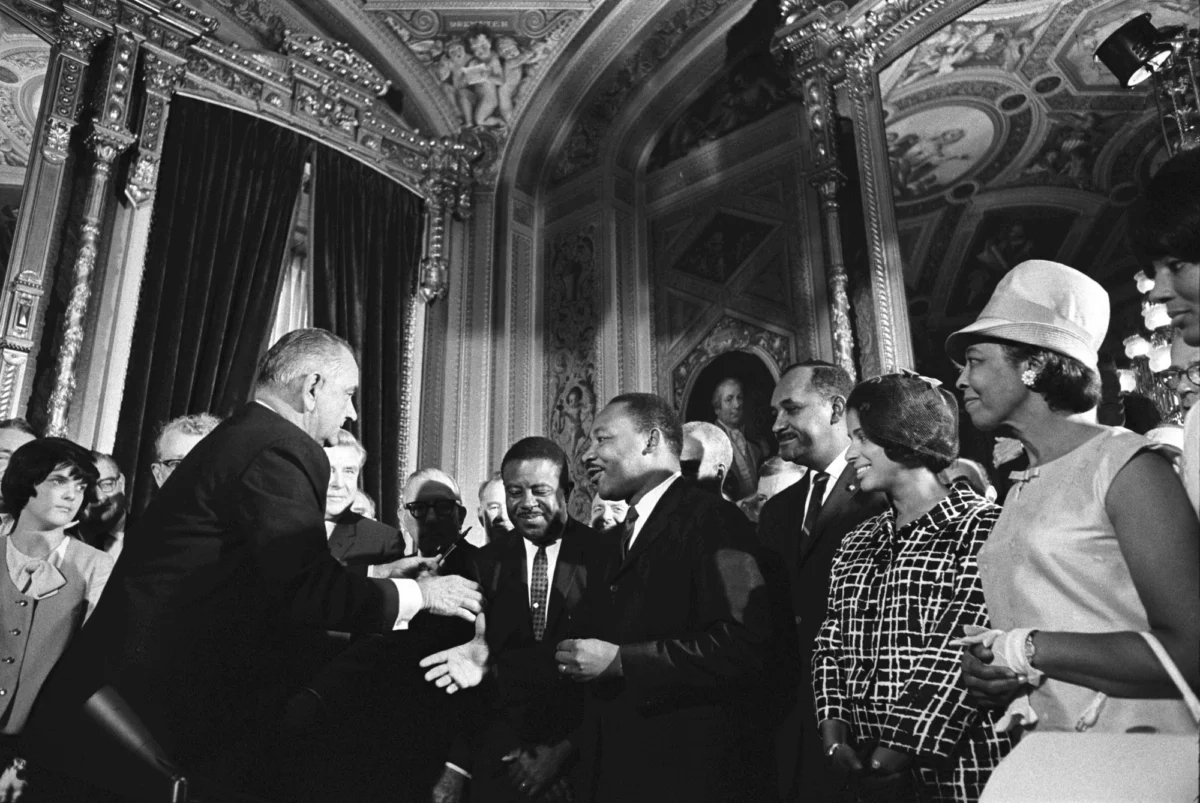
The American electoral landscape is currently engulfed in a constitutional crisis, as the U.S. Supreme Court’s recent decision in Louisiana v. Callais has effectively gutted Section 2 of the 1965 Voting Rights Act. By stripping away protections that once curbed racial gerrymandering, the Court has invited a wave of mid-cycle map-redrawing that threatens to fundamentally alter the composition of the House of Representatives ahead of the 2026 midterms. As state legislatures across the country scramble to carve out new partisan advantages, the bedrock of American democracy—the right to a fair and representative vote—is being tested as never before.
The Core Conflict: A New Era of Map Manipulation
Redistricting, the decennial process of adjusting electoral boundaries based on census data, has long been a weapon in the political arsenal. However, the modern iteration of this practice, fueled by sophisticated data analytics and high-precision mapping software, has turned a standard administrative task into a ruthless political maneuver.
The Supreme Court’s ruling last week was a watershed moment. By restricting Section 2 of the Voting Rights Act, the Court’s six-justice conservative majority has signaled to states with histories of discriminatory voting practices that federal oversight is no longer a barrier to aggressive re-mapping. In essence, the Court has removed the "referee" from the game, allowing dominant parties to dilute minority voting power through the strategic packing and cracking of districts—all outside the traditional 10-year census cycle.

Chronology of a Crisis: From Rhetoric to Reality
The current chaos did not emerge in a vacuum. It is the culmination of months of escalating tension between the executive branch and the judiciary.
- August 2025: Following public calls from President Donald Trump to secure a Republican House majority, the Texas state legislature became the first to proactively adopt a mid-cycle map, projecting a gain of up to five congressional seats.
- Late 2025 – Early 2026: A domino effect ensued. Florida, Missouri, North Carolina, Ohio, and Utah moved to implement similar changes. Conversely, Democratic-led states like California, New York, and New Jersey moved to counterbalance these actions, sparking a national "redistricting race."
- February 2026: The Supreme Court signaled its tolerance for this trend by allowing California to implement a map designed to bolster the Democratic majority.
- April 29, 2026: The Court issued its ruling in Louisiana v. Callais, effectively formalizing the removal of federal barriers to mid-decade redistricting.
- May 2026: Immediate fallout occurred, with governors and legislatures in Louisiana, Alabama, and Mississippi initiating emergency sessions to redraw maps before the November 4 general election.
The Data: Shifting Demographics and Political Volatility
The rationale behind these aggressive map shifts is rooted in a fear of electoral loss. Current data suggests that the Republican Party, despite its control of the executive branch, is facing a severe headwind. The cost of living, specifically rising grocery prices and surging fuel costs stemming from the administration’s foreign policy, has driven the President’s disapproval rating to a historic 62 percent.
Polling data from multiple reputable sources confirms the precariousness of the current GOP position. A recent NPR/PBS/Marist survey shows Democrats leading by 10 points on the generic congressional ballot. Similarly, projections from analysts like Nate Silver confirm a significant swing toward Democratic candidates.

However, the GOP’s reliance on these new maps is a high-stakes gamble. In Texas, the strategy hinges on the assumption that Latino voters will remain loyal to Republican candidates. Recent polling from Florida International University and Unidos U.S. suggests the opposite: a significant "swing left" among Hispanic voters, with 60 percent now indicating a preference for Democratic candidates in the midterms. If these voters feel their interests are being marginalized by the new maps, the very gerrymanders designed to save the GOP could, ironically, accelerate their defeat.
Official Responses and Legal Retaliation
The response to the Supreme Court’s ruling has been a flurry of legal and political action. Voting rights organizations, including the ACLU and the Brennan Center, have launched emergency federal challenges to block these mid-cycle shifts.
In Louisiana, Secretary of State Nancy Landry is currently facing an emergency lawsuit aimed at halting the executive order issued by Governor Jeff Landry, which sought to suspend primary elections to accommodate new maps. Despite the urgency of these appeals, the Supreme Court has already rejected requests for a rehearing, signaling a resolve to keep the current path of redistricting open.

Meanwhile, Democratic leaders are using the issue as a rallying cry. In Alabama, Senator Cory Booker and former Senator Doug Jones have joined local activists to condemn the effort to dismantle majority-Black districts. The rhetoric from these leaders is clear: the current redistricting push is not merely about political strategy—it is a direct attack on the civil rights gains of the 20th century.
Implications for the American Electorate
The implications of this ongoing redistricting war are profound. First, the erosion of the Voting Rights Act threatens to silence minority voices, particularly in the South, where "majority-minority" districts have historically been the only mechanism for ensuring representation for communities of color.
Second, the lack of stability in the electoral process itself is likely to depress voter turnout. When citizens feel that their districts can be changed at the whim of the party in power—effectively choosing their voters rather than being chosen by them—the perceived value of a single vote diminishes.

Finally, the 2026 midterm elections are now set to be a referendum on the nature of American governance. If the Supreme Court continues to facilitate partisan manipulation, the United States risks entering a permanent state of electoral instability.
The Path Forward: Can the Tide Be Turned?
As the nation moves toward November 4, the focus for voting rights advocates has shifted from the courtroom to the ballot box. While legal challenges continue, the primary defense against this gerrymandering wave remains the mobilization of the electorate.
Public protest, as seen in the mass demonstrations at the state capitols of Tennessee and Alabama, indicates that the public is not indifferent to these changes. However, the "chaos" of the current map-redrawing cycle requires more than just local protest; it requires a nationwide movement to demand federal protections for voting rights that cannot be bypassed by state-level legislative maneuvering.

As it stands, the GOP’s attempt to entrench power through mid-decade redistricting is a desperate measure born of declining popularity. Whether this gamble pays off or results in a historic electoral rebuke remains the central question of the 2026 cycle. What is certain is that the American public is watching, and the outcome of this election will determine the future of representative democracy in the United States for a generation to come.
The struggle over the map is not just about lines on a page; it is about the power of the individual voice in a system that seems increasingly intent on silencing it. With the midterms approaching, the ability of voters to overcome these systemic obstacles will be the ultimate test of the democratic spirit.