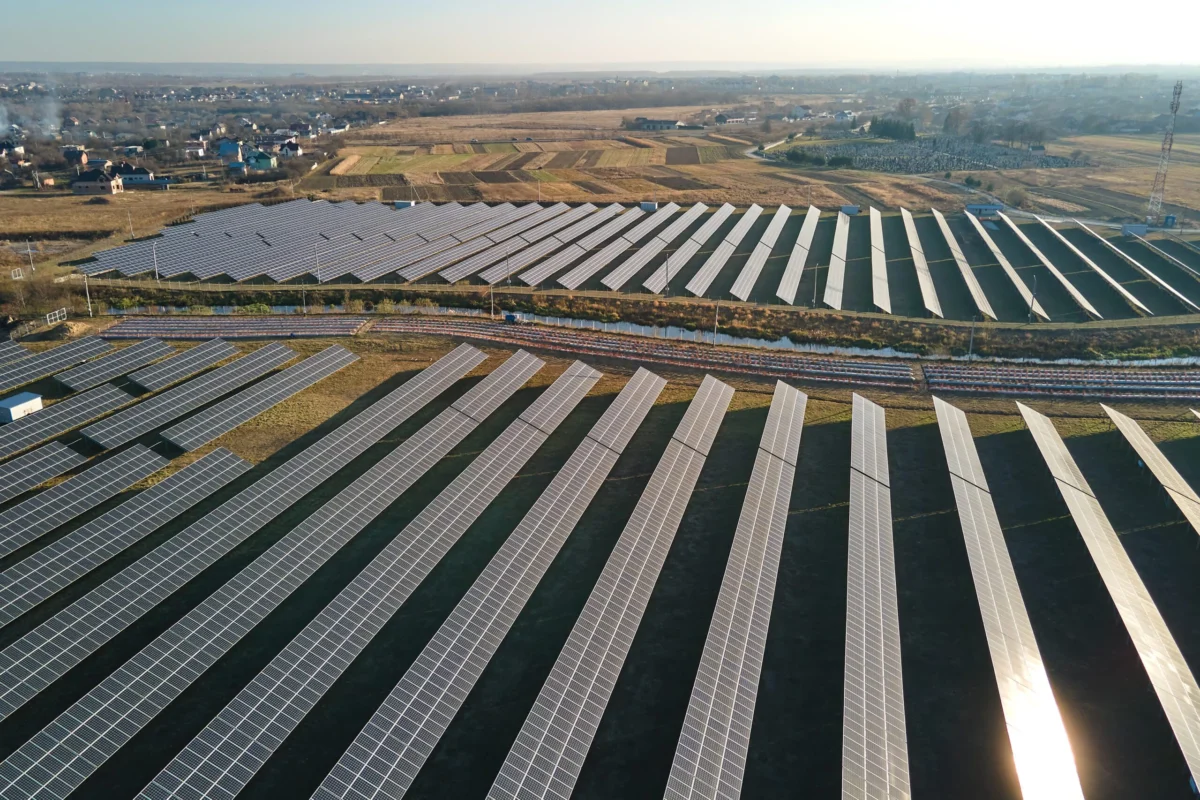

As the global geopolitical landscape shifts—increasingly defined by the dual prisms of national security and rapid technological disruption—the roadmap for the United Nations’ Sustainable Development Goals (SDGs) requires a profound strategic recalibration. As we approach 2026, the era of treating the SDGs as a broad, aspirational checklist is coming to a close. In its place, a new paradigm is emerging: one where capital allocation, prudential oversight, and commercial viability dictate the pace of progress.
For investors, policymakers, and corporate leaders, the challenge for 2026 is not merely to "do good," but to integrate the SDGs into the core of economic resilience. With political commitment currently fragmenting across major economies, market forces—specifically those driven by the clean energy transition and artificial intelligence—have become the primary engines of systemic change.
Main Facts: The New Nexus of Value and Sustainability
The fundamental shift in 2026 is the recognition that sustainability is no longer a peripheral ESG (Environmental, Social, and Governance) exercise. Instead, it is a core component of financial materiality.
The Convergence of Capital and Impact
Market forces are increasingly favoring technologies that have reached "cost parity." Whether in renewable energy, electric mobility, or grid-scale storage, the transition is moving away from a reliance on government subsidies toward self-sustaining commercial readiness. Investors are no longer treating the transition as a binary "policy bet." Instead, they are identifying assets where commercial viability is the primary determinant of near-term value creation.
The Rise of Physical Risk
The financial sector is waking up to the reality of physical climate risk. Infrastructure is inherently long-lived and immobile; therefore, assets like ports, airports, and power grids are now the frontline of climate-induced financial volatility. The data is stark: while average annual damages may appear incremental, the frequency of "tail-risk" events—formerly classified as one-in-200-year catastrophes—is rising. Consequently, resilience is moving from a compliance requirement to a strategic necessity.
Prudential Oversight as a Market Driver
Central banks and financial supervisors are shifting the goalposts. In 2026, climate and nature-related risks are no longer abstract governance topics; they are explicit drivers of credit quality and capital adequacy. Enforcement actions by institutions like the European Central Bank (ECB) confirm that climate risk is being treated as a core prudential criterion. This shift forces a repricing of risk across the banking and corporate sectors, rewarding those with robust management and penalizing those that fail to account for long-term systemic stability.
Chronology: The Evolution Toward 2026 Priorities
- 2015–2020: The Aspirational Phase. The adoption of the SDGs set the global agenda, characterized by high-level political commitments and broad, voluntary disclosure frameworks.
- 2021–2024: The Integration Phase. Investors and regulators began to link sustainability to financial performance, with the rise of standardized reporting (e.g., TCFD, CSRD) and the integration of ESG data into mainstream asset management.
- 2025: The Year of Strategic Narrowing. Market volatility and geopolitical instability highlighted the need for a focused approach, shifting attention away from diffuse goals toward those that offer tangible economic and security dividends.
- 2026: The Operational Realignment. The current year marks a definitive turn toward "decision-useful" metrics. Sustainability is now evaluated through the lens of commercial readiness, prudential stability, and national industrial policy.
Supporting Data: Commercially Ready vs. Policy-Dependent
A crucial taxonomy for 2026 is the distinction between technologies that can stand on their own economic merits and those that require ongoing public support.
| Characteristic | Commercially Ready | Policy-Dependent |
|---|---|---|
| Examples | Onshore wind, solar PV, EVs | Direct air capture, hydrogen, biofuels |
| Investment Signal | Market-driven, organic growth | Regulatory-dependent, subsidy-heavy |
| Risk Profile | Competition and execution | Regulatory volatility, policy shifts |
This table serves as a guide for capital allocation. Investors are increasingly funneling funds into "commercially ready" segments, while treating "policy-dependent" segments with higher risk premiums, demanding robust, government-backed support frameworks before deploying capital.
Official Responses and Global Guidance
Multilateral institutions are adjusting their messaging to reflect this new, more pragmatic reality. The UN Secretary-General’s recent remarks to the General Assembly regarding 2026 priorities emphasize that global development cannot be decoupled from economic stability.
According to guidance from the IISD and the UNDP, the 2026 agenda is heavily focused on the "nexus approach"—the understanding that energy, water, and urban systems are inextricably linked. Policymakers are encouraged to move away from siloed thinking and toward integrated investment strategies that minimize systemic exposure. The message is clear: while rhetoric remains important, capital is increasingly following economics. Organizations are urged to monitor the UNFCCC’s evolving framework, which prioritizes actionable outcomes that protect vulnerable populations while fostering industrial innovation.
Implications: The Strategic Path Forward
The Return of State Ownership
One of the most complex trends of 2026 is the re-emergence of state-directed industrial policy. As governments increase their stakes in critical minerals, defense, and AI, the traditional boundary between public policy and private profit is blurring. For investors, this creates an asymmetry: while state backing can enhance credit security and lower default risks, it often compresses equity upside.
Investors must now perform granular ownership analysis, distinguishing between companies where state objectives align with long-term growth and those where national strategic goals might compromise shareholder returns.
AI as the Catalyst for Decision-Useful Data
Artificial intelligence is transforming the sustainability landscape by enabling the synthesis of vast, unstructured datasets—from satellite imagery to complex supply-chain metadata. However, the true value of AI lies in its ability to process "financially material" disclosures. In 2026, the market is demanding a move away from exhaustive reporting toward a narrower set of metrics that actually influence valuation:
- Credible Decarbonization Targets: Not just goals, but validated transition pathways.
- Asset-Level Resilience Data: Location-specific risk profiles for infrastructure.
- Human Capital Metrics: Turnover and workforce stability as proxies for operational health.
The "Leave No One Behind" Mandate
Despite the focus on commercial viability, the core ethos of the SDGs—the promise to "Leave No One Behind"—remains a strategic imperative. Social dimensions, such as SDG 8 (Decent Work) and SDG 10 (Reduced Inequalities), are not mere social programs; they are fundamental to economic stability. A society that fails to provide equitable opportunity faces increased political risk, which inevitably creates market volatility.
Investors who ignore these factors will find their portfolios increasingly exposed to "social risk" as regulators and consumers alike demand higher standards of corporate responsibility.
Conclusion: A Prudent Framework for 2026
The case for prioritizing SDGs in 2026 is both moral and mathematical. By focusing on SDG 7 (Affordable and Clean Energy) and SDG 13 (Climate Action), organizations can ride the wave of commercial energy transitions. By embedding SDG 9 (Innovation) and SDG 11 (Sustainable Cities), they can build the physical and digital infrastructure necessary to withstand the volatile climate of the coming decades.
The path forward is defined by three pillars:
- Alignment: Ensuring investments match the commercial readiness of technologies.
- Granularity: Utilizing AI and location-specific analytics to manage physical risks.
- Transparency: Demanding decision-useful data that links sustainability to financial performance.
In 2026, the companies and investors that thrive will be those that view the SDGs not as a secondary mandate, but as the foundational framework for value creation in a complex, resource-constrained world. Accurate disclosure is no longer a regulatory nicety—it is an investment imperative. The era of "greenwashing" is ending; the era of sustainable, resilient, and economically grounded strategy has arrived.