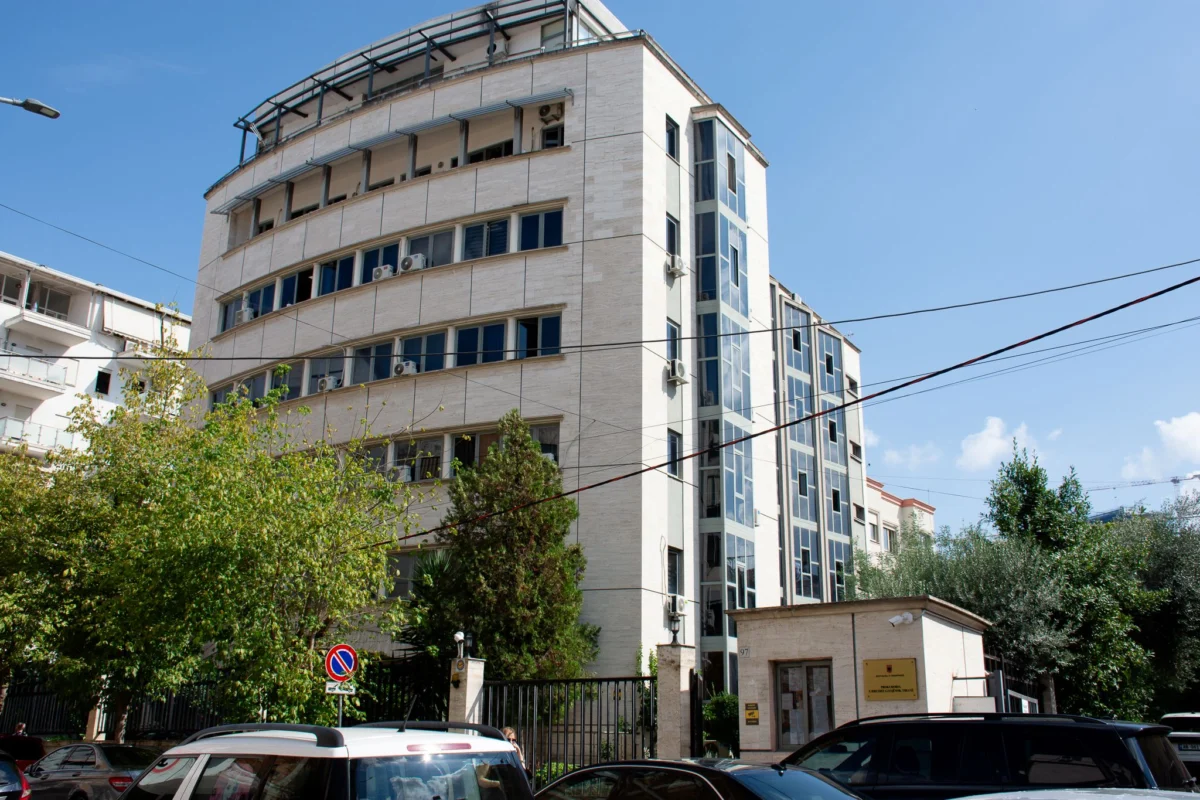
TIRANA, ALBANIA – Amidst escalating public concern over alleged police brutality during recent protests, the Tirana Prosecutor’s Office has initiated only three criminal proceedings concerning injuries sustained by demonstrators. Critically, no police officers are currently under investigation, raising questions about accountability and the thoroughness of the ongoing inquiries.
Data provided by the Tirana Prosecutor’s Office to BIRN (Balkan Investigative Reporting Network) in response to a freedom of information request reveals that investigations have commenced for two specific incidents. The first involves the severe injury of a citizen identified as L.B. during the October 13th protest. L.B. reportedly suffered a fractured leg bone due to alleged excessive force by law enforcement, necessitating surgical intervention the following day.
The second case pertains to the October 16th demonstration held in front of the Ministry of Education. During this protest, a police officer is alleged to have forcefully pushed a young man, M.S., who was reportedly standing peacefully. The force of the push, according to the prosecutor’s office, caused M.S. to fall and hit the pavement, resulting in significant contusions.
Both of these cases have been registered under the criminal offense of "committing arbitrary acts," as stipulated by Article 250 of the Penal Code. This article criminalizes arbitrary actions or orders issued by state officials or public servants during the exercise of their duties, which infringe upon citizens’ freedoms. Such offenses are punishable by a fine or imprisonment for up to seven years.
Despite the registration of these proceedings, no individual police officers have been formally named as suspects. Instead, prosecutors have delegated investigative actions to the judicial police, tasking them with identifying the officers involved and securing relevant evidence.
A Pattern of Under-Investigation?
The limited scope of the current investigations stands in stark contrast to the scale of the recent protests and the numerous allegations of excessive force. The student-led movement, later joined by high school students, has been fueled by widespread dissatisfaction with corruption, a lack of future prospects, and the high cost of living. These demonstrations have, unfortunately, been marred by violent clashes between protesters and law enforcement, leading to property damage.
The Tirana Prosecutor’s Office has also announced that it has initiated a criminal proceeding ex officio (on its own initiative) based on media and social media footage. These visuals, according to the prosecution, depict instances of potentially disproportionate force used by police officers during the protests.
"The Prosecutor’s Office is undertaking actions at the University Hospital of Trauma concerning individuals injured during the protests who are receiving medical treatment," a statement from the prosecution read. "The aim is to clarify the circumstances of the events and document each case."
Further information has also been received from the Police Oversight Agency (AMP), indicating that the prosecution is reviewing other alleged actions by State Police officers.
Official Figures and Human Rights Concerns
In parallel, official figures released by the State Police reveal a significantly larger number of arrests and criminal proceedings. During the nationwide protests, approximately 300 individuals were arrested, including 33 minors. Furthermore, 559 people have faced criminal charges, with 171 of those being minors. This means that out of a total of 859 individuals processed, a staggering one-quarter are minors, underscoring the broad impact of the crackdown on younger segments of the population.
Both the People’s Advocate (Ombudsman) and human rights organizations have documented claims of police violence, physical injuries, and violations of legal safeguards concerning the protection of children. These reports paint a concerning picture of the conduct of law enforcement during the demonstrations, suggesting a potential disconnect between the official narrative and the experiences of those on the ground.
Chronology of Events and Alleged Abuses
The recent wave of protests, which began with university students and later garnered support from high school students, has been a potent expression of public discontent. The underlying grievances are multifaceted, encompassing deep-seated frustration with systemic corruption, a perceived lack of future opportunities for young Albanians, and the escalating cost of living that strains household budgets.
October 13th Protest: This demonstration saw the alleged injury of citizen L.B., who reportedly suffered a fractured leg bone. The Prosecutor’s Office has opened an investigation into this incident, classifying it as "committing arbitrary acts." However, the identity of the specific police officer involved remains unconfirmed, and no officer is currently under investigation.
October 16th Protest: Held outside the Ministry of Education, this protest was marked by an incident where a police officer is alleged to have forcefully pushed a young man, M.S. Media reports and witness accounts suggest that M.S. was not engaged in any provocative action at the time of the incident. The force used resulted in M.S. falling and sustaining significant contusions. This event has also led to a criminal proceeding for "committing arbitrary acts."
Media Footage and Independent Investigations: In addition to these specific reported incidents, the Tirana Prosecutor’s Office has acknowledged the existence of media and social media footage that appears to show possible instances of disproportionate force by police. This has prompted the initiation of a sua sponte (on its own initiative) investigation. The prosecution’s engagement with the University Hospital of Trauma indicates an effort to corroborate these claims by directly interviewing and examining injured individuals.
Police Oversight Agency Referrals: The involvement of the Police Oversight Agency (AMP) suggests that there are ongoing reviews of other alleged misconduct by state police officers, with potential referrals to the prosecution for further action.
Supporting Data and Legal Framework
The legal basis for the ongoing investigations, "committing arbitrary acts" under Article 250 of the Penal Code, carries significant weight. This provision aims to hold accountable those in positions of authority who abuse their power, thereby safeguarding fundamental civil liberties. The prescribed penalties, including imprisonment, underscore the seriousness with which the law regards such transgressions.
However, the absence of named police officers in the current proceedings is a point of concern for civil liberties advocates. While identifying individuals involved in dynamic protest situations can be challenging, the lack of initial suspects may be interpreted as a reluctance to directly confront potential misconduct within the police force.
The statistics from the State Police are particularly striking:
- Total Arrests: 300, including 33 minors.
- Total Criminal Proceedings: 559, including 171 minors.
- Overall Processed Individuals: 859, with minors constituting 25% of this figure.
These numbers indicate a broad sweep of arrests and criminal charges, raising questions about proportionality and whether the actions taken by law enforcement during the protests were always in line with established legal standards. The high number of minors processed is a particularly worrying aspect, demanding careful scrutiny to ensure their rights and well-being are protected throughout any legal proceedings.
Official Responses and Public Scrutiny
The Tirana Prosecutor’s Office has issued statements outlining its actions, emphasizing the initiation of criminal proceedings and the efforts to gather evidence. The involvement of the University Hospital of Trauma and the Police Oversight Agency suggests a multi-pronged approach to addressing the allegations.
However, the pace and scope of these investigations have drawn criticism. Civil society organizations and the People’s Advocate have called for more robust and transparent inquiries, urging the prosecution to move beyond the initial stages and to hold accountable any officers found to have engaged in unlawful conduct.
The public remains keenly interested in the outcome of these investigations. The events of the recent protests have highlighted the delicate balance between maintaining public order and protecting citizens’ rights to assembly and expression. Any perception of impunity for law enforcement misconduct could further erode public trust in state institutions.
Implications for Justice and Civil Liberties
The current situation surrounding the investigations into protest-related injuries in Tirana carries significant implications for the future of justice and civil liberties in Albania. The effectiveness of these probes will be a critical indicator of the state’s commitment to upholding the rule of law and ensuring accountability for all, including those in positions of power.
Accountability Gap: The initial lack of identified police officers under investigation could foster a perception of an accountability gap, where individuals are subjected to harsh measures without clear consequences for those who allegedly inflicted them. This can have a chilling effect on future protests and civic engagement.
Public Trust: The transparency and thoroughness of the ongoing investigations will directly impact public trust in the justice system. If the process is perceived as slow, incomplete, or biased, it could further exacerbate public disillusionment.
Protection of Minors: The high number of minors arrested and criminally processed necessitates a focused approach that prioritizes their best interests, in line with international child protection standards. Ensuring that legal proceedings involving minors are conducted with the utmost care and respect for their rights is paramount.
Strengthening Oversight: The engagement of the Police Oversight Agency is a positive step, but its effectiveness hinges on its independence, resources, and the willingness of the prosecution to act on its findings. Strengthening these oversight mechanisms is crucial for preventing future abuses.
As Albania navigates these challenging times, the eyes of both its citizens and international observers will be on the Tirana Prosecutor’s Office. The ultimate success of these investigations will be measured not only by the number of proceedings opened but by their ability to deliver justice for those who allege they were wronged and to reinforce the fundamental principles of a democratic society. The path forward requires a commitment to rigorous investigation, impartial application of the law, and a clear demonstration that no one is above scrutiny.