
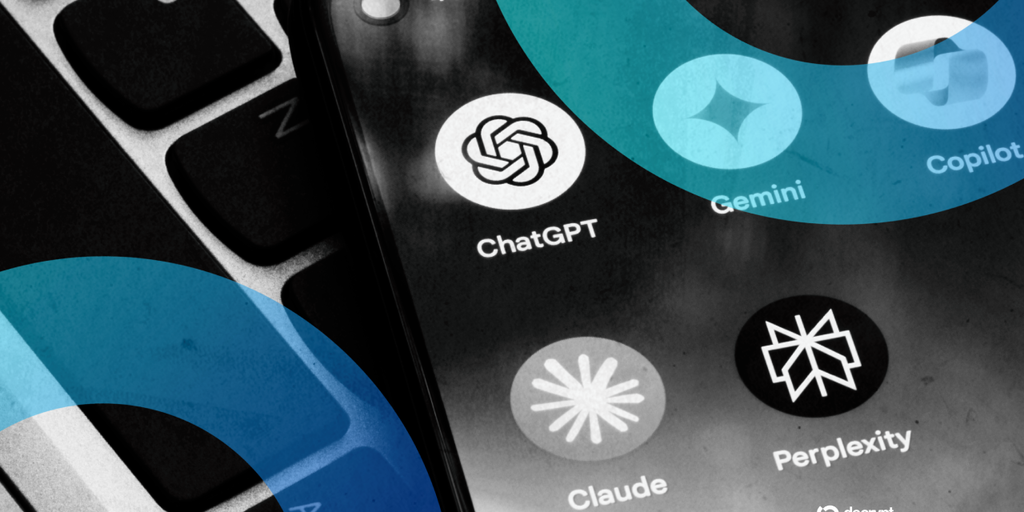
In an increasingly digitized public sector, the tension between leveraging cutting-edge technology and maintaining stringent national security has reached a boiling point in Stockholm. The Swedish Government Offices—the central administrative body supporting the Prime Minister and the Cabinet—have announced a definitive move to restrict staff access to popular generative AI platforms. Starting this week, employees are prohibited from using consumer-grade versions of OpenAI’s ChatGPT and Anthropic’s Claude on government-issued devices.
Instead, civil servants are being directed toward Microsoft’s Copilot, which has been vetted and secured under a formal enterprise agreement. This decision, reported by Sweden’s national public broadcaster Sveriges Radio, marks a significant shift in how European governments are approaching the integration of Large Language Models (LLMs) within sensitive administrative workflows.
The Security Rationale: Why the "Open" Web is a Liability
The impetus for this pivot was communicated directly to staff by Mikael Wettercrantz, the Government Offices’ Director of Digitalisation. In an internal memo posted to the staff intranet, Wettercrantz did not mince words regarding the risks associated with unauthorized AI usage.
"We have seen several examples of problematic use of open AI services," Wettercrantz noted. "The examples concern both the sensitivity of the information that has been entered and how the AI-generated responses have been handled."
The core of the issue lies in the fundamental architecture of consumer AI tools. When an employee interacts with an open-access chatbot, their prompts—often containing sensitive internal data, draft policy proposals, or citizen information—are transmitted to external servers. Because these consumer versions lack bespoke security contracts, the service providers may retain that data for model training or diagnostics. Furthermore, under U.S. law—specifically legislation like the CLOUD Act—federal authorities have the power to compel these technology companies to surrender data held on their servers, regardless of where the data originated.
For the Swedish government, this represents an unacceptable exposure. A formal enterprise agreement, by contrast, provides a legal framework that defines the limits of data processing. It ensures that inputs from government employees are handled in a "walled garden," shielded from the training sets that fuel public AI models.
A Chronology of the European AI Crackdown
Sweden’s move is not an isolated incident; it is part of a broader, accelerating trend across the European Union. The evolution of AI oversight in Europe can be traced through several key milestones:
- March 2023: Italy’s data protection authority, the Garante, becomes the first Western regulator to temporarily ban ChatGPT, citing privacy concerns and the lack of an age-verification mechanism. This move sent shockwaves through the EU, forcing OpenAI to implement significant privacy controls.
- February 2024: The European Parliament takes an even more aggressive stance. Citing an inability to guarantee the security of data processed by third-party LLMs, the Parliament disables access to ChatGPT, Claude, and even Microsoft Copilot across all institutional work devices.
- Late 2024 – 2025: Various Swedish agencies begin to realize the extent of shadow IT within their ranks. The Swedish Tax Agency and the National Board of Institutional Care formalize internal bans on consumer-grade AI.
- Early 2026: Microsoft integrates Anthropic’s Claude models into the Copilot ecosystem. This complicates the security landscape, as "approved" tools now contain the very architecture of the "banned" tools.
- October 2026: The Swedish Government Offices issue their directive, attempting to draw a hard line between "vetted" enterprise tools and "unvetted" open services.
Supporting Data: The Scope of "Shadow AI"
The decision in Stockholm was not born of abstract fear but of empirical observation. Internal audits across various Swedish government bodies have revealed a concerning pattern of "shadow AI"—the use of software by employees without official IT approval or security vetting.
At the Swedish Transport Administration, a comprehensive internal audit recently uncovered that roughly ten different AI services were being utilized by staff in what officials described as a "widespread and risky way." When employees paste classified documents into a free, web-based summarization tool, they inadvertently leak that information to the service provider’s cloud infrastructure.
The risks are twofold:
- Data Leakage: Sensitive information intended for internal eyes becomes part of the training data for a global model, potentially appearing in responses provided to other users across the world.
- Reliability and Hallucination: Government officials relying on AI-generated summaries for decision-making face the danger of "hallucinations," where the AI generates plausible-sounding but entirely false information. Without an enterprise contract that mandates accuracy and accountability, the government has no recourse when these errors occur.
Official Responses and the "Copilot" Paradox
The Swedish Government Offices have defended the choice of Microsoft Copilot by pointing to the "hardened" security settings applied post-review. By establishing a formal contract, the government has negotiated specific data privacy terms that are absent in the free versions of ChatGPT or Claude.
However, the policy contains a notable ambiguity. Microsoft’s Copilot now supports models from Anthropic—the very company that produces the now-restricted "Claude" chatbot. In the European Union, these models are typically disabled by default, requiring administrators to opt-in. When asked whether the Swedish government’s instance of Copilot has these Anthropic models enabled, officials remained tight-lipped.
This creates a peculiar situation: if the government has enabled Claude within their Copilot instance, they are technically using the "banned" technology through an approved interface. This highlights the difficulty of regulating AI based on brand names rather than the underlying technology. It suggests that for the Swedish administration, the "security" of a tool is defined more by the legal contract governing the platform than by the technical capabilities of the AI model itself.
Implications for Public Sector Digitalization
The decision by the Swedish Government Offices carries significant implications for the future of digital governance:
1. The Death of "Consumer Convenience"
The era of civil servants treating AI like a simple Google search is effectively over. The Swedish model sets a precedent that convenience must be subordinate to data sovereignty. Governments are increasingly realizing that if they do not provide a secure, internal AI environment, employees will find their own, less secure solutions.
2. The Rise of "Sovereign AI"
As countries realize that reliance on U.S.-based cloud providers entails inherent legal and security risks, there will be a mounting push for European-developed, open-source models that can be hosted on local servers. While Microsoft Copilot serves as a stopgap, it is unlikely to be the final answer for long-term government infrastructure.
3. The Regulatory Divergence
While the EU is moving toward a unified "AI Act," member states are interpreting these guidelines differently. Sweden is attempting to thread a needle between total prohibition (as seen in the European Parliament) and an open-market approach. By allowing one vendor while blocking others, Sweden is implicitly signaling that it prefers a consolidated, enterprise-managed AI ecosystem.
4. Cultural Shift in Bureaucracy
The most difficult challenge may not be the software, but the culture. Civil servants are under immense pressure to increase productivity, and AI tools are objectively powerful assistants for drafting, summarizing, and data analysis. Restricting access to these tools without providing a viable, equally powerful alternative will lead to frustration and, inevitably, the continued use of shadow AI through personal devices.
Conclusion: A Delicate Balance
The Swedish government’s decision to ban ChatGPT and Claude is a clear indication that the honeymoon phase of generative AI in the public sector has ended. The focus has now shifted from the wonder of what AI can do to the hard reality of what AI risks exposing.
As the Swedish Enforcement Authority and other bodies follow suit, the Swedish government is positioning itself as a leader in "responsible AI" adoption. Yet, by choosing a path of restriction, they face a long-term challenge: how to foster an innovative, AI-augmented bureaucracy without sacrificing the security of the state.
For now, the policy in Stockholm is simple: if you can’t control the data contract, you can’t use the tool. Whether this rigid approach to data sovereignty will stifle the very innovation it seeks to protect remains to be seen. As the technology continues to evolve at breakneck speed, the government’s ability to remain both secure and efficient will depend on its capacity to develop or acquire AI solutions that are not just powerful, but legally and technically bulletproof.