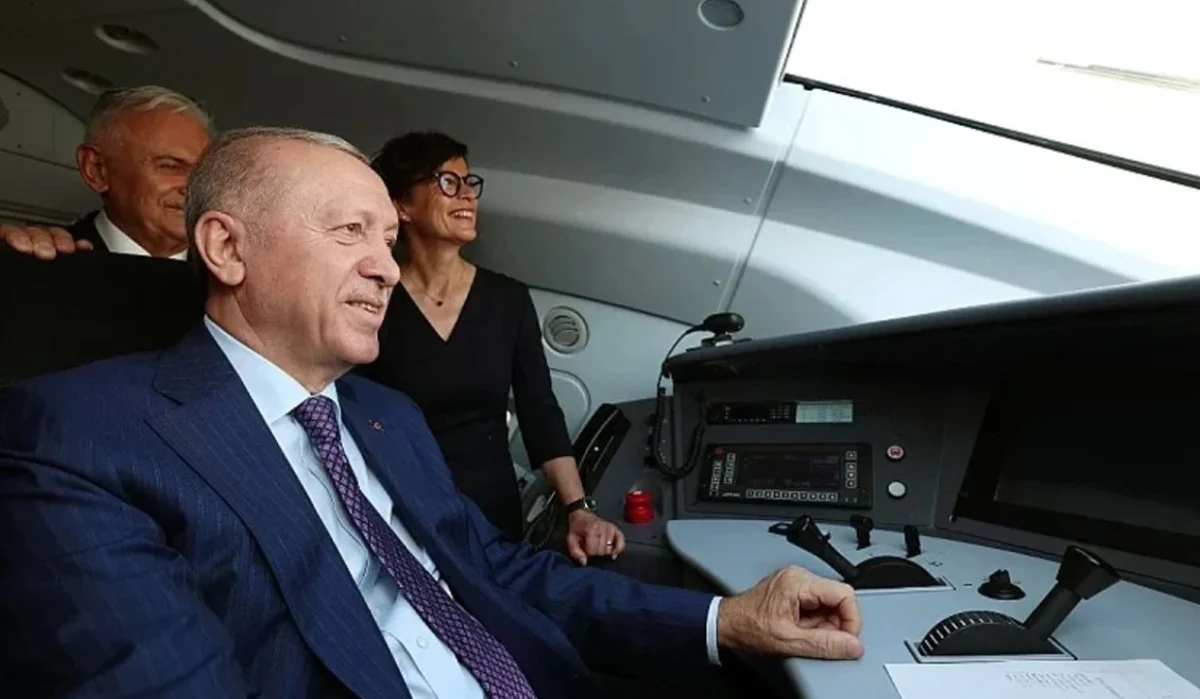
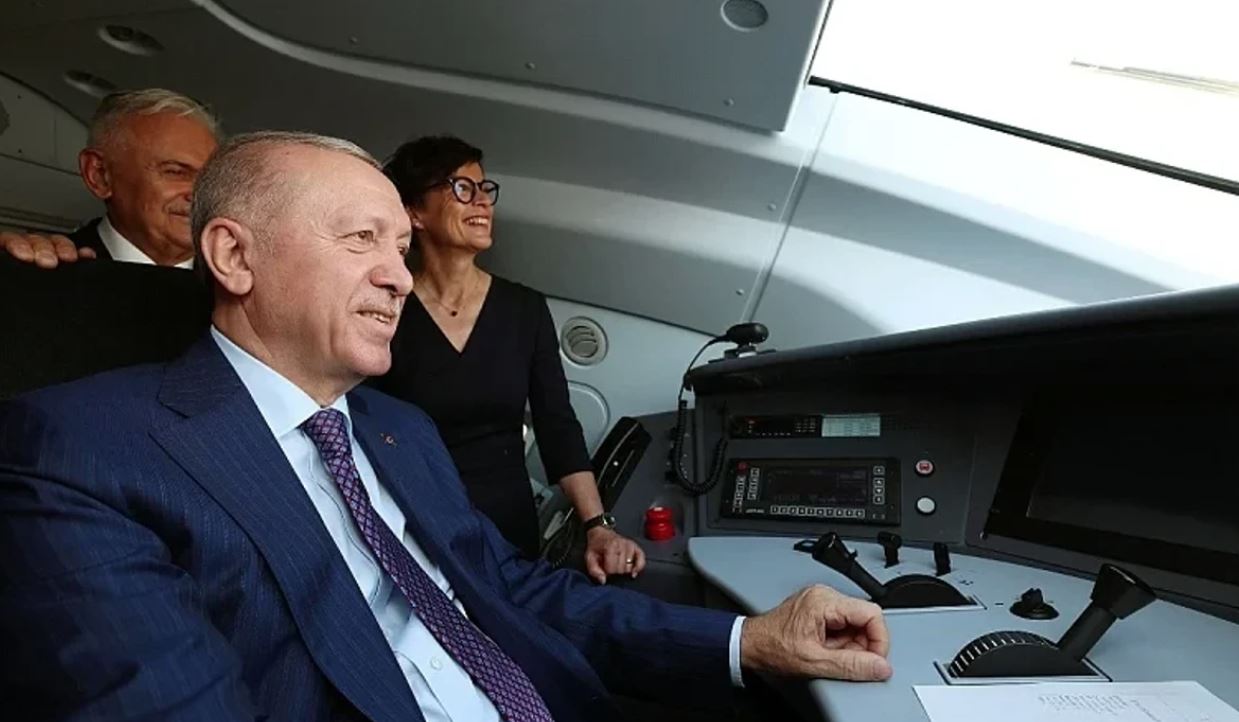
Istanbul, Turkey – October 10, 2026 – In a significant stride towards strengthening its infrastructure and bolstering connectivity with the European Union, Turkey officially inaugurated a crucial new segment of its high-speed railway network on Friday, October 10, 2026. President Recep Tayyip Erdogan personally piloted the inaugural journey of the new line, which connects Istanbul to the Bulgarian border, underscoring the strategic importance Ankara places on this ambitious project.
The ceremonial event saw a convergence of Turkish leadership and European officials, with European Commissioner for Enlargement, Marta Kos, joining President Erdogan in the locomotive’s cabin for the maiden voyage. This joint participation symbolized the collaborative spirit behind the Halkalı–Kapıkule railway project, a venture designed to deepen economic and logistical ties between Turkey and its European neighbours.
The segment inaugurated spans 153 kilometres, linking Çerkezköy to Kapıkule, a critical border crossing with Bulgaria. This new artery is engineered for speeds of up to 200 kilometres per hour, promising a substantial reduction in travel times and a significant boost to both passenger and freight transport across the region. President Erdogan, in his address, highlighted that the full completion of the Halkalı–Kapıkule line would dramatically cut the journey between Halkalı (Istanbul) and Kapıkule from approximately four hours to a mere hour and a half, revolutionizing cross-border logistics and passenger experience.
During the inaugural ride, a moment of light-hearted exchange captured the attention of attendees. Commissioner Kos, seemingly impressed by President Erdogan’s command of the train, playfully inquired if he also knew how to pilot a helicopter. To which the Turkish President, with a confident smile, simply responded, “Yes,” eliciting chuckles and applause from those present, a brief interlude reflecting the positive atmosphere surrounding the landmark event.
This project is not merely an engineering feat but a strategic investment in Turkey’s future as a key transit hub between Asia and Europe, aiming to integrate Turkish industrial powerhouses more seamlessly into European markets and foster greater trade, exports, and tourism.
Chronology of a Vision: The Halkalı–Kapıkule Project
The inauguration of the Çerkezköy-Kapıkule high-speed rail segment marks a pivotal moment in a vision that has been meticulously planned and executed over several years. This ambitious undertaking is part of Turkey’s broader strategy to modernize its railway infrastructure and establish itself as a vital logistical bridge linking continents.
Early Ambitions and Strategic Imperatives
Turkey’s aspirations to develop a modern high-speed rail network date back to the early 2000s, driven by a recognition of the country’s unique geopolitical position at the crossroads of Europe and Asia. The Turkish government, under President Erdogan’s leadership, has consistently prioritized large-scale infrastructure projects as catalysts for economic growth and regional influence. The Halkalı–Kapıkule line was conceived as an essential component of this national vision, specifically designed to enhance connections with the European Union, Turkey’s largest trading partner. The existing railway infrastructure, while functional, often suffered from capacity constraints, lower speeds, and outdated technology, hindering efficient cross-border movement of goods and people. The strategic imperative was clear: to create a modern, high-capacity, high-speed link that would align with European rail standards and facilitate seamless integration.
Inception, Planning, and EU Collaboration
The Halkalı–Kapıkule project moved from conceptualization to concrete planning in the early 2010s. Extensive feasibility studies were conducted to assess the economic viability, environmental impact, and engineering challenges of constructing a new high-speed line through varied terrain. Given the project’s direct link to the European border and its potential to enhance EU-Turkey connectivity, collaboration with the European Union became a cornerstone of its development.
The project officially commenced construction in 2019, following years of preparatory work, detailed design, and securing the necessary financing. The involvement of the EU was not merely financial; it extended to technical expertise, adherence to European standards, and a shared commitment to improving regional transport networks. This partnership underscores a pragmatic approach to cooperation, even amidst sometimes complex political relations between Ankara and Brussels.
Funding Mechanisms and Joint Investment
A distinguishing feature of the Halkalı–Kapıkule project is its joint financing model, a testament to its mutual benefit for both Turkey and the European Union. The total cost of the project is substantial, reflecting the scale and complexity of building a modern high-speed rail line. The European Union has contributed significantly through various instruments, most notably via pre-accession assistance funds, such as the Instrument for Pre-accession Assistance (IPA). These funds are specifically allocated to support candidate and potential candidate countries in their reforms and infrastructure development, bringing them closer to EU standards and policies.
Turkey, through its Ministry of Transport and Infrastructure and the State Railways (TCDD), has matched the EU’s contributions, demonstrating its unwavering commitment to the project. This financial synergy highlights a recognition from both sides that robust infrastructure fosters shared prosperity. The EU’s investment in Turkish infrastructure is seen as a strategic move to improve the efficiency of the Trans-European Transport Network (TEN-T) corridors, of which Turkey is an integral part, facilitating trade and mobility across the wider European continent and beyond.
Construction Milestones and Progress
The construction phase, initiated in 2019, has involved overcoming considerable engineering challenges, including tunnelling through mountainous terrain, constructing numerous bridges, and laying hundreds of kilometres of new track designed for high-speed operation. The project has also incorporated advanced signalling and electrification systems, ensuring compatibility with European networks and enhancing safety and efficiency.
The segment inaugurated on October 10, 2026, represents a significant milestone, marking the completion of a substantial portion of the line. The focus now shifts towards completing the remaining sections, particularly those closer to Istanbul’s urban centre, which often present greater logistical and expropriation challenges. The progress to date demonstrates the capability of Turkish engineering and construction firms, often working in partnership with international counterparts, to deliver large-scale, complex infrastructure projects on time and within budget.
Unlocking Potential: Supporting Data and Economic Impact
The Halkalı–Kapıkule high-speed railway project is more than just a new set of tracks; it is a catalyst for profound economic transformation and enhanced regional connectivity. The supporting data and projected impacts underscore its strategic significance for Turkey and the wider Eurasian region.
Technical Specifications and Enhanced Efficiency
The 153-kilometre Çerkezköy-Kapıkule segment, designed for speeds of up to 200 km/h, represents a leap in railway technology for the region. High-speed rail lines offer distinct advantages over conventional rail:
- Reduced Travel Times: As President Erdogan noted, the full line will cut travel from four hours to 90 minutes. This drastic reduction is crucial for time-sensitive freight and appeals significantly to passengers seeking faster cross-border travel.
- Increased Capacity: Modern high-speed lines can handle a greater volume of both passenger and freight trains, alleviating congestion on existing networks and improving overall logistical efficiency.
- Safety and Reliability: Advanced signalling systems, dedicated tracks, and modern rolling stock contribute to a higher safety record compared to older lines or road transport.
- Environmental Performance: Electric high-speed trains are significantly more energy-efficient and produce fewer emissions per tonne-kilometre or passenger-kilometre compared to road or air transport.
Economic Transformation: Fueling Trade and Industry
The economic ramifications of the Halkalı–Kapıkule line are extensive, impacting various sectors:

- Trade Facilitation: The railway will act as a direct conduit for connecting Turkey’s industrial heartlands – particularly regions around Istanbul, Bursa, and Izmir – with the European single market. Turkish industries such as automotive components, textiles, machinery, and agricultural products will benefit from faster, more reliable, and cost-effective access to European consumers. This enhanced connectivity is expected to significantly streamline supply chains.
- Boost to Exports and Imports: By reducing logistical bottlenecks and costs, the line is projected to stimulate an increase in both Turkish exports to Europe and European imports into Turkey. While specific figures are yet to be fully realized, studies preceding the project estimated a potential double-digit percentage increase in rail freight volumes between Turkey and the EU within the first few years of full operation. This directly contributes to Turkey’s national export targets and balance of trade.
- Logistics and Supply Chains: The Halkalı–Kapıkule line is a critical component of the "Middle Corridor," an ambitious trans-Caspian international transport route connecting China to Europe via Central Asia, the Caspian Sea, Azerbaijan, Georgia, and Turkey. This railway segment reinforces Turkey’s position as a pivotal hub along this route, offering a faster and more efficient alternative to the northern rail corridor through Russia or lengthy sea routes. It provides a robust land bridge for goods moving between Asia and Europe, enhancing resilience and diversification of global supply chains.
- Tourism Development: Beyond freight, the high-speed line offers significant potential for tourism. Istanbul, a global tourist magnet, will become more accessible to European travellers, facilitating cultural exchange and boosting the hospitality sector. Direct, comfortable, and fast train connections can encourage more cross-border tourism, contributing to local economies along the route.
Environmental Benefits: A Sustainable Future
In an era of increasing environmental consciousness, the Halkalı–Kapıkule line offers substantial ecological advantages:
- Reduced Carbon Emissions: Shifting freight and passenger traffic from road and air to electric rail significantly lowers greenhouse gas emissions. Rail transport is inherently more energy-efficient per unit of cargo or passenger.
- Decreased Road Congestion and Accidents: A robust rail network reduces the burden on road infrastructure, leading to less traffic congestion, fewer accidents, and lower maintenance costs for highways.
- Noise Pollution Reduction: Modern high-speed rail, while generating some noise, is generally concentrated along specific corridors, allowing for more effective mitigation strategies compared to widespread road traffic.
Regional Connectivity in a Broader Context
This project is not an isolated development. It integrates into Turkey’s broader strategy of developing a comprehensive high-speed rail network across the country, linking major cities like Ankara, Konya, Izmir, and Sivas. The Halkalı–Kapıkule line extends this network outwards, connecting it directly to the European TEN-T network. This makes Turkey a more attractive partner for international trade and logistics, solidifying its role as a regional economic powerhouse and a key facilitator of East-West connectivity.
Voices from the Podium: Official Responses and Statements
The inauguration ceremony provided a platform for both Turkish and European officials to articulate the strategic importance and future implications of the Halkalı–Kapıkule high-speed railway. Their statements underscored the collaborative spirit and the anticipated benefits of this landmark infrastructure project.
President Erdogan’s Vision: Turkey as a Bridge
President Recep Tayyip Erdogan, known for his emphasis on national development and strategic autonomy, delivered a powerful address that framed the railway as a testament to Turkey’s progress and its crucial role in global connectivity.
"Today, we are not just opening a railway line; we are forging a new bridge between continents, a bridge of commerce, culture, and cooperation," President Erdogan declared, his voice resonating with conviction. "This high-speed railway is a symbol of our nation’s relentless pursuit of modernization and our commitment to becoming a global logistics hub. It is a testament to the Turkish engineering prowess and our vision for a stronger, more connected Turkey."
He reiterated the economic benefits, emphasizing how the line would serve as a vital artery for Turkish industries. "Our industrial centres, from the bustling factories of Kocaeli to the fertile lands of Thrace, will now have faster, more efficient access to European markets. This will undoubtedly boost our exports, attract further investment, and create new job opportunities for our citizens. We anticipate a significant increase in trade volume and a more competitive edge for our products on the international stage."
Erdogan also highlighted the time-saving aspect for travellers, stating, "The reduction in travel time between Halkalı and Kapıkule to just an hour and a half is not merely a convenience; it is a transformation. It brings Europe closer to Turkey, facilitating business, tourism, and people-to-people exchanges. We are building a future where distances are shortened, and opportunities are amplified."
He concluded by acknowledging the partnership with the European Union, stating, "This project, jointly financed by Turkey and the European Union, demonstrates what can be achieved when nations work together towards common goals. It is a tangible outcome of our shared vision for regional prosperity and stability."
Commissioner Kos on EU-Turkey Cooperation: Shared Prosperity
European Commissioner for Enlargement, Marta Kos, represented the European Union at the ceremony, conveying Brussels’ perspective on the project as a critical element of regional integration and a positive example of EU-Turkey cooperation.
"The inauguration of this segment of the Halkalı–Kapıkule high-speed railway is a landmark achievement, not just for Turkey, but for the entire European continent," Commissioner Kos stated, emphasizing the broader European context. "This project is a shining example of how strategic infrastructure investments can foster shared prosperity, enhance connectivity, and strengthen economic ties between the European Union and its key partners."
She underscored the EU’s commitment to supporting Turkey’s infrastructure development, particularly projects that integrate with the Trans-European Transport Network (TEN-T). "The European Union recognizes Turkey’s pivotal role in connecting Europe with Asia. Our financial and technical support for this railway line reflects our steadfast commitment to improving cross-border transport corridors, which are essential for the free flow of goods, services, and people."
Commissioner Kos highlighted the long-term benefits for European businesses and consumers. "Faster and more reliable rail links mean more efficient supply chains for European companies, easier access to Turkish markets, and reduced logistical costs. This project will contribute to the competitiveness of both Turkish and European economies, creating a win-win situation for all."
Addressing the broader political context, she noted, "While the relationship between the EU and Turkey has its complexities, projects like the Halkalı–Kapıkule railway demonstrate the undeniable value of practical cooperation. Infrastructure development is a cornerstone of regional stability and mutual understanding, providing concrete benefits that transcend political differences. It symbolizes our shared interest in a connected, prosperous, and sustainable future."
She also touched upon the environmental aspects, stating, "Investing in modern, electrified rail infrastructure aligns perfectly with the European Green Deal objectives. This railway will help reduce carbon emissions from transport, contributing to our collective efforts to combat climate change and build a more sustainable transport system for generations to come."
The official responses from both leaders painted a picture of mutual benefit and strategic partnership, highlighting the railway as a tangible achievement in the ongoing dialogue and cooperation between Turkey and the European Union.
Beyond the Rails: Long-term Implications and Future Outlook
The Halkalı–Kapıkule high-speed railway is more than a modern transport link; it carries profound long-term implications for geopolitics, economic development, and regional integration, positioning Turkey as an even more critical player on the global stage.

Geopolitical Significance: The Middle Corridor and EU Engagement
The strategic placement of the Halkalı–Kapıkule line at the European gateway of Turkey imbues it with significant geopolitical importance.
- Reinforcing the Middle Corridor: This railway segment is a cornerstone of the "Middle Corridor," a burgeoning alternative trade route that seeks to connect China and Central Asia to Europe, bypassing traditional routes through Russia or via longer sea voyages. By providing a fast and efficient rail link to the EU border, Turkey strengthens its position as the indispensable Western terminus of this corridor. This enhances Turkey’s leverage in international trade and logistics, attracting greater foreign investment and consolidating its role as a Eurasian transit hub.
- EU Accession Path (Indirect Link): While Turkey’s full accession to the European Union remains a complex and often stalled process, infrastructure cooperation projects like this maintain a vital line of engagement and practical collaboration. Such projects demonstrate Turkey’s alignment with European standards and its commitment to regional integration, even if full membership remains distant. They provide a tangible basis for continued dialogue and foster goodwill, keeping open channels for future political rapprochement.
- Regional Stability and Influence: Improved economic connectivity often correlates with enhanced regional stability. By facilitating trade and travel, the railway can foster stronger relationships with neighbouring countries, particularly Bulgaria and other Balkan states. This infrastructure investment enhances Turkey’s soft power and influence within its immediate geographical sphere.
Future Phases and Expansion: Completing the Vision
The inauguration of the Çerkezköy-Kapıkule segment is a significant milestone, but it is not the culmination of the entire Halkalı–Kapıkule project. The complete vision entails connecting the Kapıkule border crossing directly to Halkalı, a major rail hub on the European side of Istanbul.
- Remaining Sections: The subsequent phase will focus on completing the remaining section between Halkalı and Çerkezköy. This segment, approximately 70 kilometres long, presents its own set of challenges, particularly due to the denser urban and suburban areas around Istanbul. This will require careful planning, potentially involving more complex engineering solutions, land acquisition, and integration with existing urban transport networks.
- Integration with Domestic Network: Once fully operational, the Halkalı–Kapıkule line will seamlessly integrate with Turkey’s expanding domestic high-speed rail network. This will allow for direct high-speed train services from cities deep within Anatolia to the European border, significantly enhancing the reach and impact of the entire system.
- Passenger and Freight Prioritization: The line is designed for dual-use, accommodating both high-speed passenger trains and efficient freight services. Future operational planning will involve optimizing schedules and capacity allocation to maximize the benefits for both types of traffic, ensuring that the railway serves both the immediate needs of travellers and the long-term demands of international commerce.
Challenges and Opportunities
While the future outlook is overwhelmingly positive, potential challenges remain. These include the ongoing need for substantial investment in maintenance and upgrades, adaptation to evolving geopolitical landscapes, and ensuring continued financial and technical cooperation with the EU. However, the opportunities far outweigh these hurdles. The Halkalı–Kapıkule railway is poised to:
- Elevate Turkey’s Economic Status: By making Turkey a more attractive location for manufacturing, logistics, and investment.
- Enhance Environmental Sustainability: By promoting greener transport alternatives.
- Strengthen Regional Bonds: By creating tangible links of trade and travel that foster greater understanding and cooperation.
In conclusion, the inauguration of the new high-speed rail segment marks a pivotal moment for Turkey, underscoring its commitment to modern infrastructure and its strategic role in connecting Europe and Asia. The Halkalı–Kapıkule project is a testament to the power of international cooperation, a symbol of progress, and a critical step towards a more integrated, prosperous, and sustainable future for the entire region. It is a railway that truly builds bridges, both literal and metaphorical, across continents and cultures.