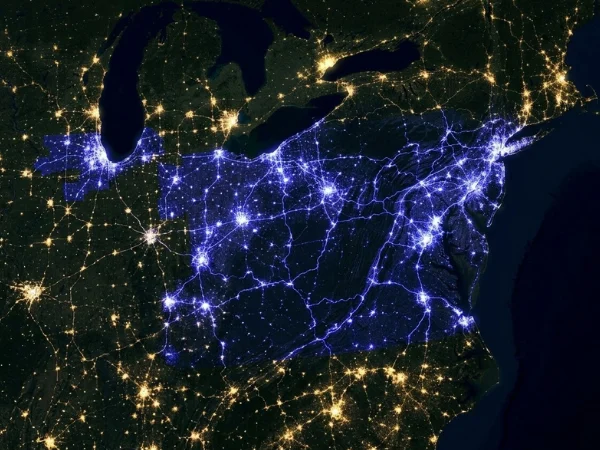
In a move that signals a seismic shift in how hyperscalers approach grid stability and infrastructure, Google has announced a definitive agreement with Voltus to construct a 1-gigawatt (GW) virtual power plant (VPP) within the PJM Interconnection grid. This initiative represents one of the most ambitious deployments of distributed energy resources (DERs) ever undertaken by a technology firm. By aggregating power from thousands of residential and commercial devices, Google is not only securing the electricity needed for its expanding data center footprint but is also pioneering a new model for grid resilience in the United States.
The Core Objective: Solving the Capacity Crunch
As the demand for high-performance computing and artificial intelligence continues to skyrocket, the global energy landscape faces an unprecedented strain. Data centers—the physical backbone of the digital economy—require massive, reliable, and consistent power loads. However, the traditional utility model, which relies on centralized, large-scale generation, is increasingly struggling to keep pace with both the rapid load growth and the complexities of the energy transition.
Google’s 1GW VPP serves as a sophisticated solution to this bottleneck. By tapping into a decentralized network of batteries, smart thermostats, industrial cooling systems, and other flexible loads, the VPP functions as a software-defined power plant. It allows for the instantaneous modulation of energy consumption across a wide geographic footprint. When the PJM grid—the largest regional transmission organization in the U.S.—experiences peak demand, Google’s platform can instruct these distributed assets to shed load or discharge energy, effectively "creating" capacity without the need to build traditional, carbon-intensive power plants.
Chronology of a Strategic Expansion
The road to this 1GW milestone has been characterized by rapid iteration and a "learn-as-you-go" approach.
- 2016: Voltus is founded in San Francisco, with a vision to democratize the energy market by connecting distributed assets to the grid through its "Bring Your Own Capacity" (BYOC) software platform.
- Early 2026: Recognizing the growing tension between energy demand and grid reliability, Google enters into preliminary testing phases with distributed resource management.
- June 2026: The partnership is formally solidified with a 100-megawatt (MW) pilot agreement. This initial phase allowed Google to stress-test the logistics of aggregating disparate assets across the PJM region.
- October 2026: Following the success of the 100MW pilot, Google confirms a tenfold expansion, committing to the 1GW target. This announcement coincides with a broader push for sustainable growth as the tech industry faces increasing scrutiny over its environmental impact.
- Late 2026/Future: Voltus successfully closes a $225 million financing round to scale its infrastructure, with a stated long-term goal of reaching 20GW of total platform capacity by 2030, a roadmap that will be heavily bolstered by the Google partnership.
Supporting Data: The Mechanics of the 1GW VPP
The technical prowess of this agreement lies in the "Bring Your Own Capacity" model. Unlike traditional demand response programs, which were often cumbersome and limited to large industrial players, Voltus’s platform integrates small-scale assets into a unified virtual grid.

To achieve the 1GW mark, the program focuses on several key areas:
- Industrial and Commercial Demand Response: Large-scale refrigeration, HVAC, and manufacturing processes are programmed to throttle usage during peak grid stress.
- Residential Flexibility: Smart thermostats and home energy storage systems are aggregated, allowing for millions of tiny adjustments that, in total, exert a major influence on grid load.
- Efficiency Gains: By utilizing existing assets rather than requiring new infrastructure, the VPP reduces the "energy intensity per unit of compute," a key metric in Google’s internal sustainability reporting.
The financial incentive for participants is clear: by participating in this virtual power plant, home and business owners receive direct economic dividends in the form of lower energy bills and, in many cases, direct cash payments. This turns the average energy consumer from a passive cost-bearer into an active, revenue-generating participant in the electricity market.
Official Responses and Strategic Vision
The leadership involved in this deal underscores the collaborative nature of the modern energy transition.
Dana Guernsey, CEO of Voltus, emphasized the symbiotic relationship between corporate growth and public benefit. "This significant expansion of our work with Google translates data center growth into direct economic benefits for businesses and homes," Guernsey stated. "Through this partnership, we are proud to bring much-needed clean capacity online, at gigawatt scale."
Ellen Zuckerman, Head of Energy Market Development for North & South America at Google, framed the move as a necessity for modern infrastructure. "Distributed energy resources are powerful tools for managing a modern, reliable grid while keeping energy affordable. Expanding our initial commitment tenfold demonstrates our core effort to actively bring our own capacity to the grids that serve us."

For Google, this move is a hedge against the volatility of energy markets. By taking an active role in grid stability, the company is insulating its own operations from the price spikes and brownouts that frequently plague high-demand regions during extreme weather events.
Implications for the Energy Transition
The implications of a 1GW VPP managed by a hyperscaler are profound and ripple across multiple sectors:
1. Reimagining Grid Reliability
Historically, grid operators maintained reliability by firing up "peaker plants"—often gas-fired power plants that remain idle for most of the year. The Google-Voltus model proves that software can replace these carbon-intensive plants. If a tech firm can command 1GW of flexible load, it effectively makes the grid more robust and less reliant on fossil fuels during periods of peak stress.
2. The Decentralization of Energy
This deal marks a decisive shift away from centralized power generation. As more companies follow suit, the energy sector will likely see a proliferation of "prosumers"—entities that both consume and provide power. This decentralization increases the security of the grid, as it is no longer dependent on a handful of large, vulnerable power stations.
3. Economic Empowerment
The "Bring Your Own Capacity" model democratizes access to energy market revenues. Previously, only large industrial players could monetize their flexibility. By aggregating small-scale residential assets, Voltus and Google are creating a new revenue stream for the average consumer, potentially offsetting the rising costs of electricity for households across the PJM region.

4. Setting an Industry Precedent
Google’s leadership in this space sets a benchmark for the rest of the tech industry. As competitors like Amazon (AWS), Microsoft, and Meta face similar challenges regarding the energy demands of AI data centers, the "Google-Voltus model" will likely become the gold standard. We can expect a race to secure similar DER portfolios, which will, in turn, drive more innovation in energy-management software.
5. Challenges and Considerations
Despite the optimism, significant challenges remain. Regulatory hurdles regarding the participation of distributed assets in wholesale markets vary significantly by state and region. Furthermore, there is the technical challenge of latency; ensuring that thousands of individual thermostats and batteries can be triggered in perfect synchronization requires incredibly sophisticated software and cybersecurity measures. Finally, public trust remains a factor—convincing homeowners to allow a third party to "control" their climate or energy usage requires a high level of transparency and data privacy assurance.
Conclusion: A Blueprint for the Future
The announcement of a 1GW virtual power plant is more than a simple procurement deal; it is a fundamental reconfiguration of the relationship between energy consumers and the grid. Google’s transition from a passive buyer of electricity to an active, systemic participant in grid management highlights the reality of the 21st-century energy market.
As we look toward 2030, the success of this partnership will likely serve as the foundational blueprint for how corporations—not just utilities—manage their environmental footprint. By harnessing the latent capacity in the devices already sitting in our homes and offices, we are moving toward a future where the grid is not just a provider of power, but a dynamic, intelligent network that responds to the needs of its users in real-time. For Google, and for the climate, this 1GW investment is a major step toward a more resilient, sustainable, and digitized future.