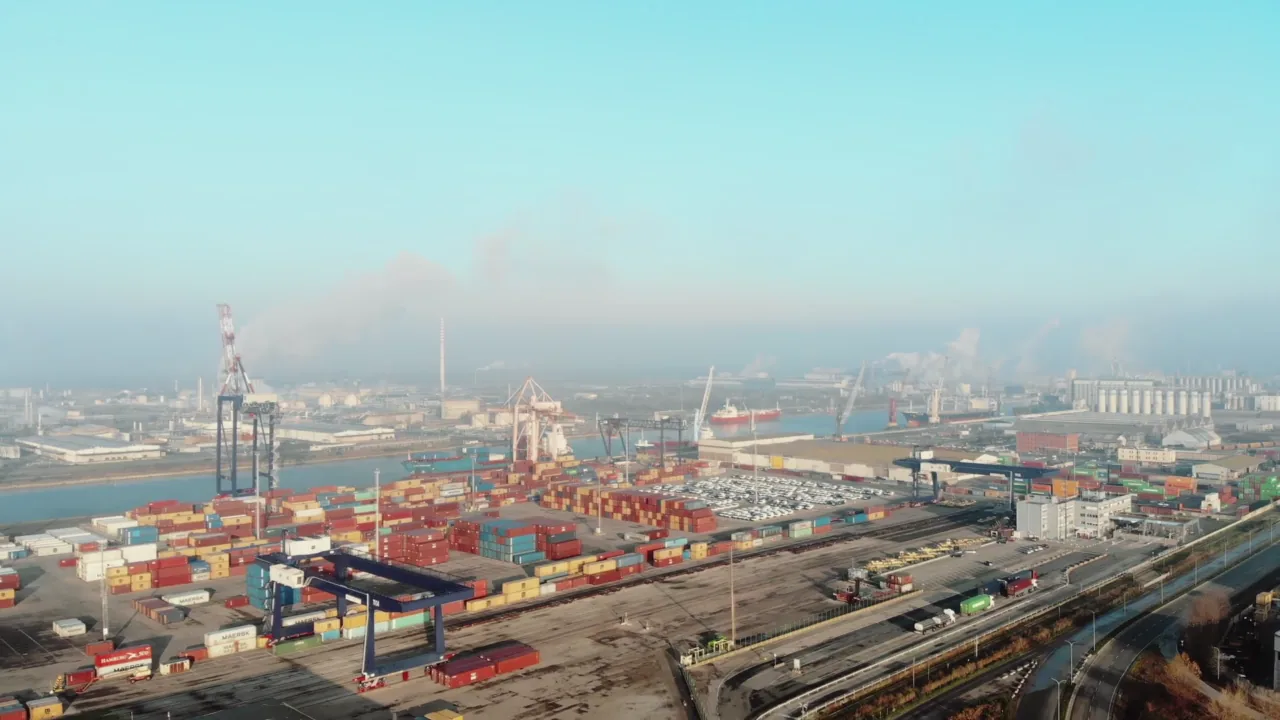
The global maritime logistics sector is navigating a period of recalibration as the latest Drewry World Container Index (WCI) reveals a 2% decline in freight rates, bringing the benchmark to $4,351 per 40ft container. This downward movement, while moderate, underscores the sensitivity of global trade lanes to seasonal fluctuations, regional holiday cycles, and the complex geopolitical variables currently defining the shipping industry. As procurement professionals and supply chain managers monitor these shifts, the data points to a market attempting to find equilibrium amidst a confluence of reduced Chinese manufacturing output and evolving capacity management strategies.
Main Facts: A Market in Flux
The primary driver of the current market volatility is the impact of China’s "Golden Week," a national holiday period that traditionally triggers a systemic slowdown in manufacturing and logistics across the Asia-Pacific region. Factory closures and a resulting lull in export volumes have placed immediate downward pressure on freight rates across critical East-West trade routes.
According to the latest WCI report, the decline is not uniform but reflects specific regional dynamics:
- Transpacific Routes: Rates from Shanghai to Los Angeles saw a 3% contraction, landing at $7,624 per 40ft container, while routes from Shanghai to New York softened by 2% to $10,220.
- Asia-Europe Routes: The Shanghai to Rotterdam corridor experienced a 2% dip to $3,337, while the Shanghai to Genoa route displayed remarkable resilience, holding firm at $3,696 per 40ft container.
For logistics planners, these numbers represent more than just cost fluctuations; they signal a shift in carrier strategy. To mitigate the impact of reduced demand, shipping lines have increasingly turned to "blank sailings"—the cancellation of scheduled port calls—to manage excess capacity and prevent a more precipitous collapse in spot rates.
Chronology of the Downturn: A 13-Week Trajectory
The current market environment on the Asia-Europe trade route is characterized by a prolonged softening of rates. For thirteen consecutive weeks, carriers have struggled to maintain pricing power as the supply of vessel capacity has consistently outpaced demand.
The Mid-Summer Peak
Throughout the summer, the industry grappled with high-interest rates in Western economies, which suppressed consumer demand. Despite this, carriers were buoyed by the necessity of rerouting vessels away from the Red Sea due to ongoing security concerns, effectively absorbing excess capacity by increasing the duration of voyages.
The Golden Week Impact
As the industry moved into October, the Golden Week phenomenon acted as a catalyst for a sharper correction. With factories in China halting production, the volume of outbound cargo plummeted. Shipping lines, anticipating this drop, initiated a series of blank sailings. In the Transpacific, this meant a reduction from eleven blank sailings this week to four planned for the coming week, suggesting a strategic move to reintroduce capacity as the market braces for a post-holiday surge.
The Present Outlook
As of mid-October, the market is in a "wait and see" pattern. Drewry’s analysis suggests that rates are expected to hold steady in the immediate future, though this stability is fragile and highly contingent on how quickly Chinese manufacturing ramps back up to full capacity.
Supporting Data and Capacity Insights
Data from Drewry’s Container Capacity Insight provides a granular look at how carriers are adjusting to these market signals.
Capacity Management Tactics
The strategy of blanking sailings remains the primary lever for carriers. On the Asia-Europe route, the situation is increasingly complex. While next week will see six blank sailings—up from five this week—this reduction in capacity is an attempt to tighten supply to bolster rates. However, the efficacy of this move is being undermined by a critical development: the accelerated resumption of traffic through the Suez Canal.
The Suez Factor
The potential for a faster-than-expected normalization of Suez Canal transits represents the single greatest threat to carrier pricing power. For months, the avoidance of the Suez route forced ships to travel around the Cape of Good Hope, adding significant time to voyages and effectively tightening global vessel supply. Should the Suez route become fully viable again, the influx of available vessel capacity could lead to a significant oversupply, placing further downward pressure on freight rates that have already been trending downward for over three months.
Port Congestion
Compounding the volatility is the persistent issue of port congestion. Current reports indicate that approximately 12% of global container capacity is currently "tied up" due to port bottlenecks. While this congestion initially acted as a floor for freight rates, it is now viewed as an inefficiency that adds costs to the entire supply chain without providing the benefit of increased trade velocity.
Official Responses and Strategic Shifts
Major shipping lines are currently attempting to counter the downward rate trend through the introduction of higher Freight All Kinds (FAK) rates, scheduled for the latter half of October. Whether these rate hikes will gain traction remains a point of intense debate among industry analysts.
Carrier Strategy vs. Market Reality
Carrier executives argue that the cost of maintaining reliable, albeit rerouted, schedules justifies higher premiums. However, shippers—facing their own budgetary pressures—are increasingly resistant to these increases, particularly as data confirms that capacity is becoming more available. The "tug-of-war" between carriers attempting to preserve margins and shippers seeking to optimize costs is the defining conflict of Q4 2024.
The Role of Geopolitical Risk
The Houthi-led security threats in the Red Sea remain a "wild card." Even as the industry monitors Suez transit data, the threat of renewed escalations remains high. Shipping lines are balancing the economic imperative of using the shorter Suez route against the risk to crew and cargo safety. This geopolitical uncertainty means that even if demand recovers, the supply side of the equation could change overnight, leading to sudden spikes in insurance premiums and fuel surcharges.
Implications for the Global Supply Chain
The current state of the container freight market carries significant implications for various stakeholders.
For Procurement Professionals
The primary takeaway is the need for flexibility. With rates fluctuating based on holiday cycles and geopolitical shifts, long-term, fixed-rate contracts may become less attractive compared to hybrid models that incorporate spot-market flexibility. Procurement teams are advised to prioritize visibility over price alone, as the cost of a delayed shipment—resulting from blank sailings or port congestion—far outweighs small fluctuations in freight rates.
For Global Retailers
Retailers looking toward the upcoming holiday shopping season are in a difficult position. While freight rates are lower than they were earlier this year, the volatility in transit times caused by route diversions and port bottlenecks remains a risk to inventory management. "Just-in-time" logistics has become increasingly difficult to execute, forcing many retailers to revert to "just-in-case" inventory stocking, which increases warehousing costs.
For the Future of Global Trade
Looking ahead, the market is likely to remain characterized by high levels of volatility. The interplay between demand-side recovery—such as a potential improvement in US-China trade relations following the holiday period—and supply-side adjustments will dictate the trajectory of the WCI in the final months of the year.
The recovery of the Suez route, combined with the gradual return to normal Chinese export volumes, suggests that the market is moving toward a more normalized, albeit still complex, operating environment. However, until such time as geopolitical risks are mitigated and global trade lanes are fully stabilized, the shipping industry will continue to operate with a high degree of uncertainty, requiring constant vigilance from all participants in the global value chain.
Conclusion: Navigating the Uncertainty
The 2% dip in the Drewry World Container Index serves as a reminder that the global logistics market remains tethered to the pulse of Chinese manufacturing and the unpredictable nature of global security. While the immediate outlook is one of relative stability, the underlying structural changes—ranging from capacity management via blank sailings to the fluctuating viability of the Suez route—suggest that the industry is far from a period of "business as usual." For those tasked with navigating these waters, data-driven decision-making and a robust, multi-faceted logistics strategy remain the only effective defense against the persistent volatility of the modern maritime landscape.