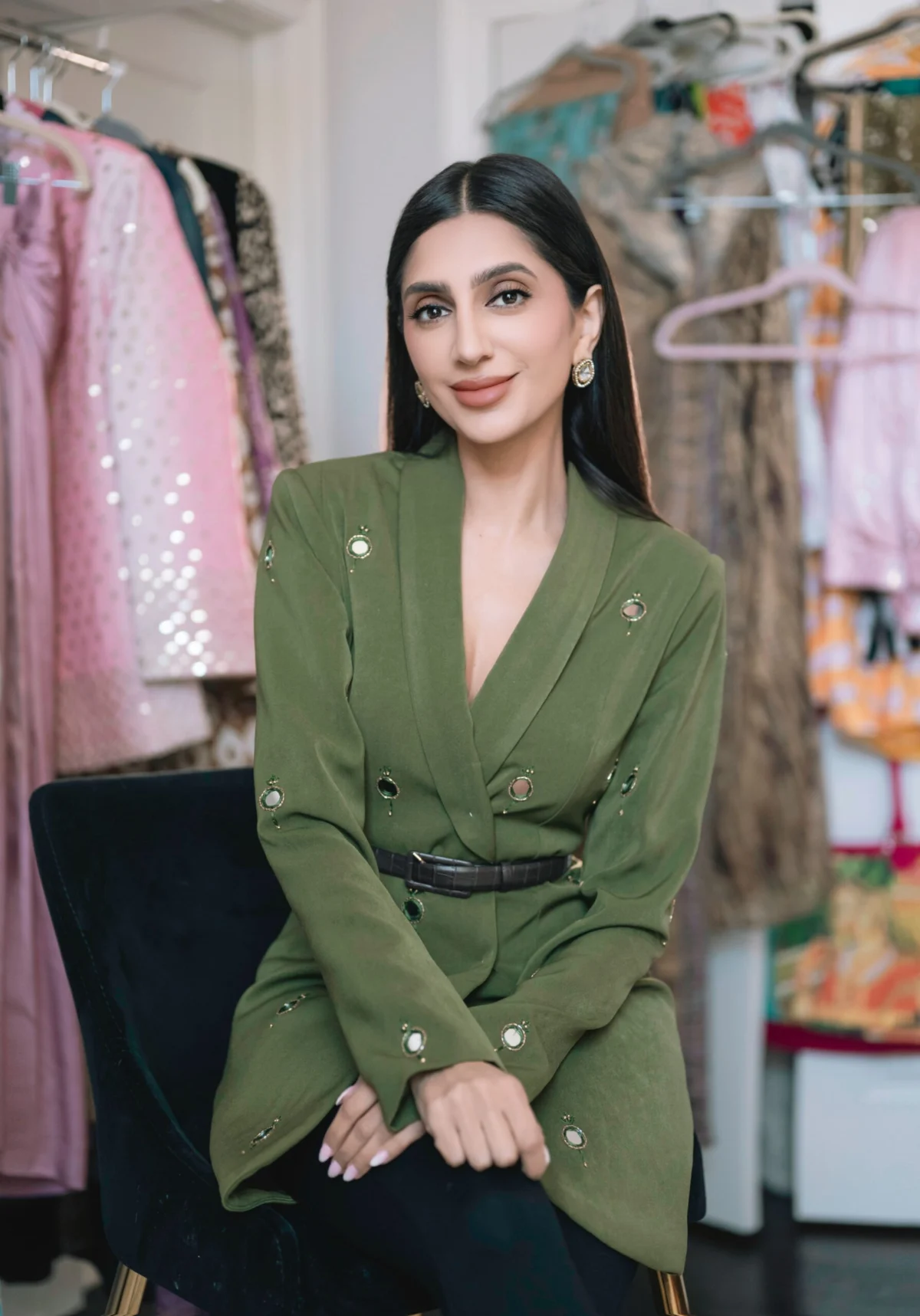
In the competitive landscape of modern fashion, few brands manage to bridge the gap between cultural heritage and contemporary commercial viability with the precision of holiCHIC. Founded by Megha Rao, a former finance sales professional, the brand has transitioned from a bootstrapped passion project into a seven-figure powerhouse. Following a successful $1.5 million seed round in May 2026, the company is now navigating a period of rapid expansion, fueled by partnerships with retail giants like Nordstrom and a strategic eye toward international markets.
Rao’s journey is not merely a story of aesthetic innovation; it is a masterclass in founder-led business development, methodical scaling, and the art of timing.
The Genesis: Cultural Fusion as a Business Model
The origin story of holiCHIC is rooted in the personal identity of its founder. Growing up in Queens, New York, Rao experienced a persistent dissonance between her South Asian heritage and the clothing options available in the Western market.
"I could never quite find clothes that felt like me," Rao recalls. "So I started making them. First for myself, mixing my mother’s saris with denim and leather. Then for friends and family. Then, somehow, a whole community."
This DIY ethos evolved into a refined business model. By deconstructing traditional garments and reimagining them through a lens of modern, Western-influenced design—such as incorporating saris into structured blazers and dresses—Rao tapped into a market segment that valued both cultural expression and high-fashion utility. For nearly a decade, Rao operated as a bootstrapped entrepreneur, leveraging her background in finance sales to maintain discipline over margins and inventory, effectively building a sustainable business before ever considering external capital.
Chronology: A Decade of Steady Growth
The Formative Years (2016–2022)
For the first ten years of its existence, holiCHIC operated without institutional investment. During this period, Rao focused on "product-market fit," a phase she now characterizes as a series of lessons in logistics, manufacturing, and consumer demand. By remaining bootstrapped, the company avoided the pressures of investor-led growth, allowing Rao to cultivate a loyal customer base organically.
The Nordstrom Breakthrough (2023)
The pivotal moment for the brand arrived in 2023. Leveraging her experience in sales, Rao initiated a relentless cold-calling campaign directed at Nordstrom. Her goal was to secure a physical footprint in a major retail environment. Her persistence paid off with a three-day pop-up shop at Nordstrom’s New York Flagship location, strategically timed to coincide with the Diwali festival.
The pop-up surpassed all sales projections, serving as a critical proof-of-concept. This success did more than generate revenue; it granted Rao access to high-level buyers, which ultimately converted the temporary pop-up into a permanent online partnership with the retailer.
The Capital Infusion (2026)
In May 2026, having proven the brand’s scalability, Rao secured $1.5 million in a seed round from a single angel investor. This move marked a departure from her previous bootstrapping strategy, signaling that the company had reached a stage where external resources were required to sustain its momentum. Since the capital injection, the company has reported a 47% increase in sales.
Supporting Data and Market Momentum
The success of holiCHIC is backed by a shift in consumer behavior. Data analysis performed by the company revealed a critical insight: the brand’s growth was no longer confined to the South Asian diaspora. A significant segment of the non-South Asian demographic began purchasing holiCHIC pieces, drawn by the quality, fit, and unique fusion style.
This data provided the rationale for scaling. When Amazon Fashion approached the brand, the existence of the seed funding provided Rao with the operational buffer needed to negotiate and integrate with such a massive platform without compromising the quality of the brand’s core offerings.
Strategic Decisions: The "Single Investor" Philosophy
While many founders seek out venture capital firms or syndicates, Rao opted for a single angel investor. Her reasoning highlights a sophisticated understanding of founder autonomy and the pitfalls of corporate governance.
"Being bootstrapped is a rollercoaster ride," Rao explains. "You have one great month, and then next month there’s a lull, and your profit is eaten up. At the same time, it’s your business. You take inputs from others, but you make the final call."
By limiting her investor pool, Rao avoided the "too many cooks" scenario. A single investor relationship allowed for greater alignment of vision and minimized the administrative burden of managing conflicting strategic opinions. The chosen investor, according to Rao, respects the company’s long-term, steady growth trajectory rather than demanding the hyper-growth often associated with early-stage venture capital.
Operational Roadmap: Investing for Growth
With $1.5 million in capital, the company has shifted its operational focus from survival to aggressive market expansion. Rao’s roadmap for the capital is divided into three primary pillars:
1. Marketing and Influencer Strategy
Rao is prioritizing platforms where visual storytelling is paramount, specifically TikTok Shop and Amazon Fashion. The strategy is to leverage high-engagement influencer marketing to reach the younger demographic that is driving the demand for fusion fashion.
2. Diversification of Product Lines
Understanding that her core customer base often attends events with partners, Rao is doubling down on "holiCHIC Men." The focus here is on achieving the same standard of fit and quality that established the women’s line, essentially aiming to capture a larger share of the "event-wear" market.
3. Geographic Expansion
While the immediate focus remains on solidifying market share in the United States and Canada, the long-term vision is global. Rao has identified the U.K., India, and the Middle East as key target markets for future growth.
Implications for Future Founders
Megha Rao’s trajectory offers several profound lessons for the modern entrepreneur.
The Momentum Rule
Rao’s most poignant advice is: "Don’t raise money to find momentum. Raise money to fuel it."
Many founders view capital as the cure for a lack of growth. Rao’s experience suggests the inverse: capital should only be invited into the business once the growth has already been validated. By waiting until after the Nordstrom success to raise funds, she maintained leverage and equity control that might have been lost in a premature seed round.
The Value of Resilience
The "months and months" of cold calling required to land the Nordstrom deal serves as a reminder that institutional retail partnerships are rarely handed to small brands; they are earned through persistence.
The "Founder-Led" Edge
Rao’s background in finance sales provided her with a distinct advantage in navigating the business side of fashion. Her ability to look at data—and to understand that her audience was diversifying—allowed her to pivot from a "niche cultural brand" to a "lifestyle fusion brand" with confidence.
Conclusion: A New Standard for Fusion Fashion
As holiCHIC enters its next phase of development, it stands as a testament to the power of authentic brand building. By remaining disciplined during her years of bootstrapping, Rao ensured that when the opportunity to scale finally arrived, her foundation was rock solid.
The company is now in a position of strength, balancing the creative requirements of the fashion industry with the rigorous demands of global retail logistics. For founders watching the rise of holiCHIC, the takeaway is clear: success is rarely an overnight phenomenon. It is the result of years of preparation, the courage to cold-call, and the wisdom to know exactly when to accelerate.
As Rao continues to set her sights on global markets, the fashion world will likely see more brands following the "holiCHIC blueprint"—proving that when you create something that feels like you, the rest of the world will eventually find a way to wear it.