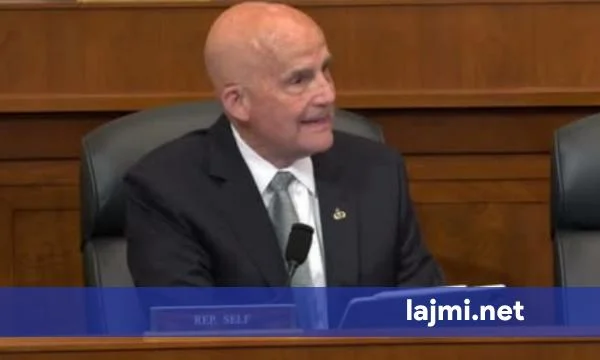
Washington D.C. – In a powerful and unambiguous declaration, Congressman Keith Self (R-TX), Chairman of the House Foreign Affairs Subcommittee on Europe, delivered two potent statements during a pivotal closing session of the U.S. House of Representatives Foreign Affairs Committee. His remarks unequivocally reaffirmed Kosovo’s strategic significance for NATO, regional stability, and the broader national interests of the United States in the Western Balkans. The pronouncements, reported by the "Albanians for America" page, underscored a growing urgency within Washington for the complete Euro-Atlantic integration of the young republic.
Congressman Self, a former military officer with a deep understanding of geopolitical dynamics, characterized Kosovo as "one of the United States’ closest and most loyal European partners." He issued a stark warning regarding the persistent refusal by several NATO member states to formally recognize Kosovo’s independence, asserting that such inaction critically undermines long-term stability in the Balkans and inadvertently strengthens the influence of adversarial powers, most notably Russia. His statements served as a direct challenge to the status quo, urging a more cohesive and decisive Western approach to a region still grappling with unresolved historical tensions.
Drawing upon his direct involvement in the planning of the 1999 NATO intervention against Serbian ethnic cleansing, Congressman Self powerfully articulated Kosovo’s consistent demonstration of commitment to democratic principles, regional security, and multi-ethnic coexistence. This track record, he argued, presents an irrefutable and compelling case for the nation’s full membership in the North Atlantic Treaty Organization. His remarks highlighted the historical debt and strategic imperative that bind the U.S. and NATO to Kosovo’s future.
In a separate, poignant tribute, Congressman Self lauded former Congressman Eliot Engel, declaring him to remain "a hero in Kosovo." He underscored Engel’s profound grasp of Kosovo’s critical role as a "crossroads of stability in the Western Balkans." Self further pointed out a perceived contradiction in current policy: the practice of praising Kosovo’s staunchest allies in Washington while simultaneously failing to provide unwavering support for its complete Euro-Atlantic integration and long-term security. This observation implicitly called for a more consistent and resolute U.S. foreign policy toward the region.
A Legacy of Intervention and Advocacy: Self’s Historical Perspective and Engel’s Enduring Influence
The House Foreign Affairs Committee session provided a significant platform for Congressman Self to articulate a vision for the Western Balkans that is rooted in historical context and forward-looking strategy. As Chairman of the Subcommittee on Europe, Self’s insights carry considerable weight, reflecting not only his personal convictions but also a segment of congressional thought on U.S. engagement in the region.
His reference to the 1999 NATO intervention was particularly resonant. This was a defining moment for the alliance, marking a robust humanitarian intervention aimed at preventing further atrocities and ethnic cleansing perpetrated by Serbian forces under Slobodan Milošević. Self’s direct involvement in the planning stages of this operation imbues his current statements with a unique authority and understanding of the stakes involved. The intervention ultimately led to the establishment of the UN Interim Administration Mission in Kosovo (UNMIK) and paved the way for Kosovo’s eventual declaration of independence in 2008. For Self, the commitment made then must be seen through to its logical conclusion: the full integration of a democratic and sovereign Kosovo into the Western security architecture.
The tribute to Eliot Engel was equally significant. Engel, a former Chairman of the House Foreign Affairs Committee, was a tireless and vocal advocate for Kosovo throughout his distinguished career. His dedication stemmed from a deep moral conviction and an understanding of the strategic importance of a stable and independent Kosovo. Engel’s consistent pressure on successive U.S. administrations to support Kosovo, both politically and financially, earned him legendary status among the Albanian people and solidified the bond between Kosovo and the United States. Self’s acknowledgment of Engel’s legacy serves as a reminder of the enduring bipartisan support for Kosovo in the U.S. Congress, a support that transcends partisan divides and electoral cycles. It implicitly challenged current policymakers to live up to the standard of advocacy set by figures like Engel.
Geopolitical Crossroads: Unpacking Kosovo’s Value and Vulnerabilities
Congressman Self’s statements were not merely rhetorical; they were grounded in a clear assessment of Kosovo’s intrinsic value and the systemic vulnerabilities that continue to plague the Western Balkans. His arguments for full recognition and NATO membership are multifaceted, touching upon security, democratic values, and geopolitical competition.
Kosovo as a Pillar of Western Balkan Stability
Kosovo’s geographical position alone makes it a critical piece in the puzzle of Balkan stability. Situated at the heart of the peninsula, its future is inextricably linked to the broader security landscape. Since its independence, Kosovo has made demonstrable strides in building democratic institutions, fostering a multi-ethnic society, and aligning its foreign policy firmly with Western values. Its constitution guarantees rights for all communities, and despite challenges, it has actively worked towards integration and reconciliation. This commitment to democratic governance and regional cooperation positions Kosovo as a crucial counterweight to destabilizing forces within the region. Its active participation in various international missions and its commitment to the KSF (Kosovo Security Force) transformation further underscore its reliability as a security partner.
The Peril of Non-Recognition: A Chink in NATO’s Armor
The most acute point of contention raised by Congressman Self concerned the five NATO member states — Spain, Slovakia, Romania, Greece, and Cyprus — that have yet to recognize Kosovo’s independence. This refusal is not merely a diplomatic nuance; it represents a fundamental weakness in the alliance’s collective security posture. By failing to acknowledge a sovereign nation that is a de facto security partner and a democratic success story, these countries inadvertently validate narratives that challenge the post-Cold War order and undermine NATO’s credibility.
The non-recognition creates an artificial geopolitical vacuum, preventing Kosovo from fully integrating into international bodies, including NATO itself. This not only hampers its development but also provides an opening for external actors with revisionist agendas to exploit the unresolved status. It complicates defense planning, limits intelligence sharing, and prevents a unified front in a strategically vital region. For an alliance founded on collective defense, the inability to fully embrace a willing and capable partner due to internal divisions presents a significant operational and symbolic handicap.
Kosovo’s NATO Aspirations: A Deserving Partner
Self’s argument that Kosovo presents a "compelling argument for NATO membership" is based on several key factors. NATO membership is predicated on a nation’s commitment to democratic values, its ability to contribute to collective security, and its willingness to resolve disputes peacefully. Kosovo has consistently demonstrated these qualities. It maintains a strong pro-Western orientation, has actively engaged in regional security initiatives, and despite ongoing tensions with Serbia, remains committed to the EU-facilitated dialogue. The transformation of the Kosovo Security Force into a professional, multi-ethnic, and NATO-interoperable force further strengthens its case, demonstrating its readiness to contribute to alliance operations. Denying membership, in this context, appears less about Kosovo’s readiness and more about internal political considerations within certain NATO states.
The Spectre of Russian Influence
The Congressman’s warning that non-recognition "strengthens the influence of adversaries like Russia" is particularly pertinent in the current global climate. Russia has long sought to undermine Euro-Atlantic integration in the Western Balkans, viewing it as an encroachment on its sphere of influence. By perpetuating the unresolved status of Kosovo, Russia gains leverage, fueling instability and exploiting historical grievances. Moscow uses its veto power in the UN Security Council to block Kosovo’s full international recognition and actively supports Serbia’s non-recognition stance, thereby maintaining a "frozen conflict" that serves its geopolitical interests. A fully integrated and recognized Kosovo would diminish Russia’s ability to sow discord, reinforcing Western democratic values and stability in a crucial geopolitical corridor.
A Contradiction in Policy: Hypocrisy in Washington?
Self’s observation about the contradiction between praising Kosovo’s allies and failing to fully support its Euro-Atlantic integration highlights a critical inconsistency in Western policy. While the U.S. has been Kosovo’s staunchest advocate, the broader Western alliance, particularly the EU and NATO, has sometimes struggled with a unified approach. This dichotomy sends mixed signals to both Kosovo and Serbia, potentially emboldening hardliners and complicating efforts towards a comprehensive, legally binding agreement between the two states. The implicit message is clear: if the West truly values Kosovo’s partnership and stability, its actions must align with its rhetoric, moving beyond mere platitudes to concrete steps towards full integration.
Echoes from Washington: Reinforcing U.S. Policy and Regional Dynamics
Congressman Self’s statements, while delivered by an individual, resonate deeply with a long-standing bipartisan current in U.S. foreign policy that champions Kosovo’s sovereignty and Euro-Atlantic future. They serve as a powerful reinforcement of the American commitment to the Western Balkans as a region vital to European security and stability.
While the executive branch may navigate diplomatic complexities with Serbia and other non-recognizing states, congressional voices like Self’s often articulate the strategic imperative more directly. His remarks can be seen as a clarion call from the legislative branch, urging the administration and international partners to prioritize the resolution of Kosovo’s status. The House Foreign Affairs Committee, with its oversight role and influence on foreign policy legislation, is a crucial forum for shaping the national discourse on such matters.
The U.S. has been a consistent supporter of the EU-facilitated dialogue between Belgrade and Pristina, understanding that a comprehensive normalization agreement is essential for both countries’ paths toward European integration. However, Self’s statements suggest a growing impatience with the slow pace of this dialogue and the lingering obstacles to Kosovo’s full recognition. They implicitly push for more decisive action, particularly from those NATO members who continue to withhold recognition.
These statements also send a clear signal to regional actors. For Kosovo, they reaffirm the enduring strength of the U.S.-Kosovo partnership and offer encouragement amidst ongoing diplomatic challenges. For Serbia, they underscore the unlikelihood of the international community accepting any solution that undermines Kosovo’s sovereignty, and they reiterate the need for Belgrade to engage constructively towards normalization. For other regional states, they serve as a reminder of the U.S.’s continued engagement and its vision for a stable, integrated Western Balkans.
The Path Forward: Implications for Regional Security and Euro-Atlantic Integration
Congressman Self’s powerful declarations carry significant implications for the future trajectory of the Western Balkans, NATO’s strategic coherence, and the broader U.S. foreign policy objectives in Europe.
Strengthening NATO’s Eastern Flank
Full integration of Kosovo into NATO would not only fulfill the aspirations of its people but would also significantly bolster the alliance’s eastern flank. A fully recognized and integrated Kosovo would contribute to a contiguous zone of stability, enhancing NATO’s ability to project security and respond to threats in a region increasingly vital to European defense. It would eliminate a potential vulnerability that could be exploited by external adversaries, creating a more robust and unified front against geopolitical challenges.
Bolstering Regional Resilience Against Malign Influence
A stable, recognized, and Euro-Atlantic Kosovo is a crucial bulwark against malign influences from actors like Russia and, increasingly, China. Both powers seek to expand their footprint in the Balkans, often through economic leverage, disinformation campaigns, and political interference, aiming to disrupt Western unity and democratic progress. By bringing Kosovo fully into the Western fold, the U.S. and its allies can effectively counter these efforts, fostering greater resilience and autonomy within the region. This is not merely about Kosovo; it’s about the broader strategic competition unfolding across Europe.
The Urgency of Diplomatic Resolution
The Congressman’s statements underscore the urgent need for accelerated progress in the EU-facilitated dialogue between Kosovo and Serbia. The current "frozen conflict" status is unsustainable and detrimental to both countries and the region as a whole. A comprehensive, legally binding agreement that results in mutual recognition and allows both states to pursue their European aspirations unimpeded is paramount. The U.S., alongside the EU, must continue to exert pressure and provide robust diplomatic support to achieve this outcome.
A Call to Action for NATO Allies
Perhaps the most direct implication of Self’s remarks is the implicit call to action for the five non-recognizing NATO member states. Their continued abstention from recognizing Kosovo’s independence is increasingly viewed as an impediment to collective security and a deviation from shared alliance values. As global threats evolve and NATO faces new challenges, internal coherence and unity become even more critical. Self’s statements serve as a strong message that these nations must re-evaluate their positions in light of the strategic imperatives of the alliance.
U.S. Leadership in the Western Balkans
Finally, Congressman Self’s intervention reaffirms the enduring U.S. commitment to leadership in the Western Balkans. Despite shifts in global priorities, the U.S. understands that a stable, democratic, and Euro-Atlantic Balkans is essential for a secure Europe. His statements signal a continued American resolve to advocate for the region’s integration and to counter any attempts to undermine its progress.
In conclusion, Congressman Keith Self’s resolute statements during the House Foreign Affairs Committee session represent more than just a legislative opinion; they are a strategic roadmap for the Western Balkans. By forcefully advocating for Kosovo’s full recognition and NATO membership, Self has articulated a clear vision that aligns historical commitments with contemporary geopolitical realities. The message is unequivocal: Kosovo’s future is inextricably linked to regional stability and Western interests, and timely, decisive action is not merely desirable, but strategically imperative.