
London, UK – May 13, 2026 – For years, Apple’s iconic white AirPods have reigned supreme as the preferred choice for iPhone users, offering seamless connectivity, intuitive controls, and a straightforward gateway to music, calls, and the broader Apple ecosystem. While Apple has continuously evolved its true wireless stereo (TWS) earbuds, introducing advanced features like hearing health monitoring and even assistive listening capabilities, a new challenger has emerged from an unexpected quarter, introducing a feature Apple has yet to embrace: an interactive, large-screen charging case.
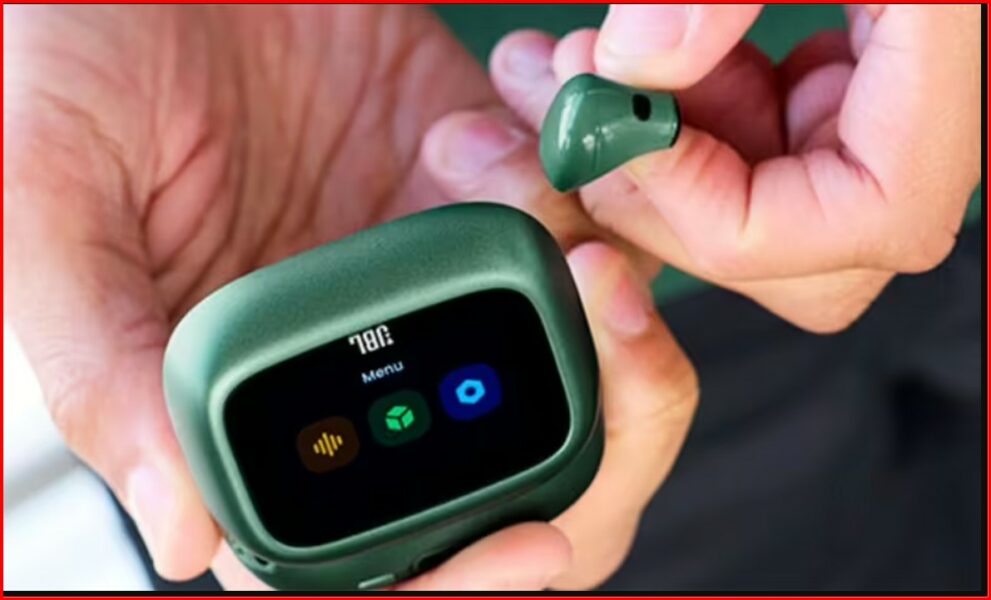
JBL, a global leader in audio innovation, has officially unveiled its new JBL Live 4 series, a line of premium TWS earbuds that fundamentally redefines the user interaction experience. At the heart of this innovation is a charging case boasting a vibrant, interactive touchscreen display, transforming a mere battery pack into a sophisticated control hub. This development marks a significant pivot in the fiercely competitive earbud market, promising enhanced convenience and personalization that could pressure industry giants like Apple to reconsider their minimalist design philosophies.
The Evolution of True Wireless Audio: A Chronological Overview
The journey of true wireless earbuds from niche gadget to mainstream necessity has been rapid and transformative. When Apple first introduced AirPods in 2016, they weren’t just a product; they were a cultural phenomenon, popularizing the untethered listening experience and setting a new standard for integration within a proprietary ecosystem. Their ease of pairing, respectable sound quality, and distinctive design quickly made them a status symbol and a benchmark for the nascent TWS market.
Over the past decade, AirPods have seen several iterations, from the original model to the noise-cancelling AirPods Pro and the open-fit AirPods 3rd generation, each bringing improvements in audio fidelity, battery life, and smart features. Apple has consistently focused on refining the core user experience, emphasizing seamless switching between Apple devices, spatial audio, and robust health-monitoring capabilities. However, the charging case, while functional and aesthetically pleasing, has remained a passive component, primarily serving as a power bank and a protective shell.

JBL, a brand synonymous with powerful audio and robust design, has long been a formidable player in the portable audio space. While not entirely new to the concept of integrated screens on earbud cases – they have experimented with smaller, more basic displays in the past – the Live 4 series represents a significant leap forward. The company’s prior ventures, though innovative, were often limited in scope and interactivity. The new generation, however, promises a vastly improved interface and a significantly larger screen, signaling a deliberate strategy to differentiate and lead through feature innovation rather than just audio quality.
The official announcement of the JBL Live 4 series, which includes the Live Buds 4, Live Beam 4, and Live Flex 4 models, came with immediate availability. The earbuds went on sale on May 12th, 2026, directly via JBL’s official website, priced at £179.99 (approximately €207.82 or $225 USD at current exchange rates). This aggressive launch strategy aims to capture immediate market attention and establish JBL’s innovative offering ahead of potential responses from competitors.
JBL’s Bold Innovation: A Deep Dive into the Live 4 Series
The cornerstone of the JBL Live 4 series is undoubtedly its intelligent charging case. This is not merely a cosmetic upgrade; it’s a fundamental reimagining of how users interact with their earbuds and, by extension, their digital world.
The Smart Charging Case: A Paradigm Shift in Interaction
The interactive touchscreen on the JBL Live 4 series charging case empowers users with unprecedented control, fundamentally reducing their reliance on their smartphone. Imagine being able to manage your audio experience without ever pulling out your phone from your pocket or bag. This is the promise of JBL’s new design.

Users can effortlessly navigate the case’s interface with simple swipe gestures – up, down, or sideways. This intuitive control scheme allows for a multitude of functions:
- Notification Management: Glance at incoming messages, calendar alerts, or other smartphone notifications directly on the case screen. This offers a quick, discreet way to stay informed without being fully engrossed in your phone.
- Music Control: Skip tracks, adjust volume, pause, or play music directly from the case. This is particularly useful during workouts, commutes, or any scenario where fumbling for a phone is inconvenient or impractical.
- Sound Settings Adjustment: Toggle between different active noise cancellation (ANC) modes, ambient sound settings, or EQ presets on the fly. This level of granular control, traditionally reserved for companion apps, is now instantly accessible.
- Personalization: The screen isn’t just functional; it’s also highly customizable. Users can personalize the home screen with various themes, widgets for frequently used functions (like a quick toggle for ANC), or even upload a favorite photograph, truly making the device their own. This adds an emotional and aesthetic dimension often missing from utilitarian charging cases.
This innovative approach positions the charging case not just as an accessory, but as a mini-dashboard for your audio and digital life, mirroring the utility of smartwatches but for a dedicated audio purpose.
Audio Fidelity and Enhanced Features
Beyond the groundbreaking case, JBL has ensured that the Live 4 series delivers a premium audio experience, staying true to its legacy. The company highlights several key advancements:
- High-Fidelity Drivers: The new earbuds are equipped with "new, high-fidelity sound drivers." While specific technical details like driver size or material are not explicitly mentioned in the initial release, this typically translates to a wider frequency response, improved dynamic range, and clearer sound reproduction across all genres of music.
- Advanced Active Noise Cancellation (ANC): JBL has significantly improved its active noise cancellation system. Modern ANC technology relies on microphones to detect external sounds and then generate anti-noise sound waves to cancel them out. An "improved" system implies better noise reduction across a broader frequency spectrum, particularly in challenging environments like public transport or busy offices, enhancing the immersive listening experience.
- Wind-Resistant Design: A common challenge for earbuds, especially during calls or outdoor activities, is wind noise interference. The Live 4 series incorporates a wind-resistant design, likely involving specialized microphone placement and acoustic filtering, to minimize this disturbance.
- AI-Trained Call Quality Algorithm: For crystal-clear calls, the earbuds utilize an algorithm trained with artificial intelligence. AI in this context is used to intelligently differentiate between the user’s voice and background noise, isolating and enhancing speech while suppressing distractions. This ensures that calls remain clear and intelligible even in noisy surroundings, a crucial feature for remote work and communication.
Ergonomics and Personalization: Tailoring the Fit
Recognizing that one size does not fit all when it comes to earbud comfort and sound performance, JBL has designed the Live 4 series in three distinct form factors, each catering to different preferences and ear anatomies:

- Live Buds 4: These are likely a more traditional, compact "bud" style, designed for a snug fit within the concha of the ear.
- Live Beam 4: Featuring an "in-ear" design with a stem and silicone tips, the Beam 4 offers superior passive noise isolation. The stem often aids in microphone positioning closer to the mouth for better call clarity and provides a more secure fit for many users.
- Live Flex 4: Designed for a more open and relaxed fit, the Flex 4 rests in the outer part of the ear. This "open-fit" style is often preferred by users who find in-ear tips uncomfortable or who need to maintain some awareness of their surroundings, making them ideal for casual listening or light activities.
This variety ensures that users can choose the model that best suits their ear shape, comfort needs, and intended use, maximizing both sound quality and long-term wearability.
Pricing, Availability, and Aesthetic Options
As mentioned, the JBL Live 4 series launched on May 12th, 2026, with a price point of £179.99. The broad range of color options further enhances personalization:
- Live Beam 4 and Live Flex 4: Available in black, blue, green, silver, orange, purple, and beige. This expansive palette allows users to match their earbuds to their style or mood.
- Live Buds 4: Offered in black, blue, silver, and beige, providing a slightly more restrained but still diverse selection.
This emphasis on choice in both form factor and color underscores JBL’s commitment to consumer individuality.
Beyond Earbuds: JBL’s Broader Portfolio Expansion
The launch of the Live 4 series is part of a larger product offensive from JBL, demonstrating the company’s continuous drive for innovation across its audio categories.
Advanced Over-Ear Headphones
JBL also introduced new over-ear headphones: the JBL Live 780NC and JBL Live 680NC. These models are designed for users seeking a more immersive and powerful listening experience. Key features include:
- 40mm Dynamic Drivers: Larger drivers generally deliver richer bass and a more expansive soundstage, crucial for high-quality over-ear audio.
- Spatial Sound: This technology aims to create a more three-dimensional audio experience, making sound feel like it’s coming from all around the listener, enhancing immersion for music, movies, and gaming.
- More Advanced Noise Cancellation: Building on the TWS earbuds’ ANC, these over-ear models likely offer even superior noise isolation due to their larger ear cups and dedicated processing capabilities.
- Diverse Color Options: Available in blue, black, white, beige, green, purple, and orange, catering to a wide range of aesthetic preferences.
Portable Party Powerhouses
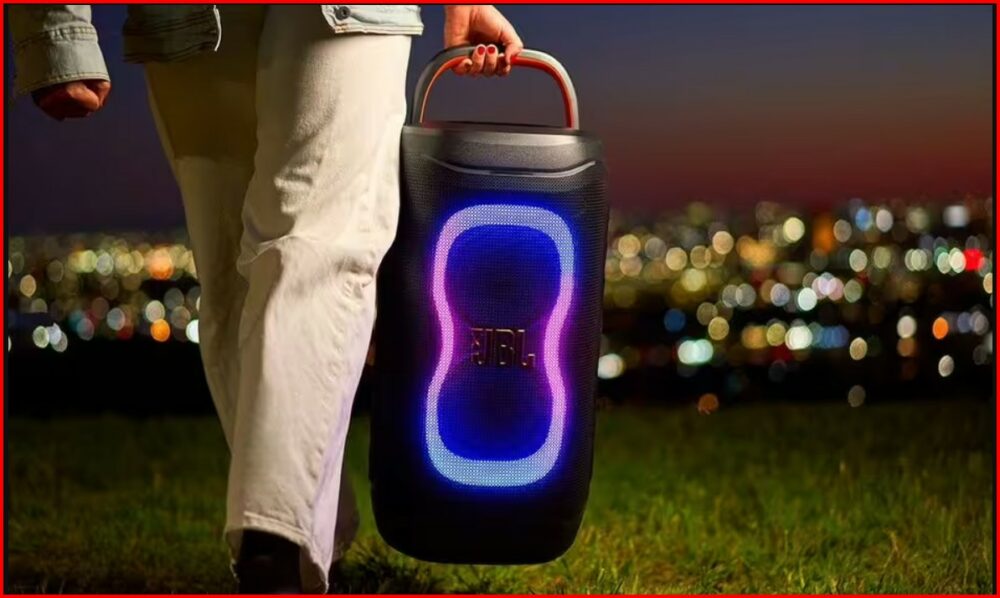
For those who prioritize shared audio experiences, JBL unveiled the JBL PartyBox 330 and JBL PartyBox 130. These portable party speakers are engineered to deliver powerful sound and vibrant visual effects:
- Integrated Disco Lights: Dynamic LED lighting synchronized with the music creates an instant party atmosphere.
- Improved Woofer and New Tweeter Technology: These enhancements promise deeper, more impactful bass and clearer, crisper high frequencies, ensuring every beat and vocal shines.
- Battery-Powered and Fully Portable: Designed for on-the-go entertainment, these speakers offer significant battery life, making them perfect for outdoor gatherings, tailgates, or any event needing robust sound without a power outlet.
The Fun of AI-Powered Karaoke
Finally, JBL introduced the JBL EasySing Mics Mini, a product that blends entertainment with cutting-edge AI. This microphone is not just for singing; it incorporates artificial intelligence technology capable of removing vocals from songs in real-time. This transformative feature makes it ideal for:
- Karaoke Enthusiasts: Instantly convert any song into a karaoke track, providing endless hours of fun.
- Family Entertainment: A perfect addition to home parties or gatherings, encouraging participation and creativity.
- Creative Content Creation: Aspiring musicians or content creators can easily isolate instrumental tracks for remixes or practice.
This diverse range of new products showcases JBL’s comprehensive strategy to cater to various audio needs, from personal listening to social entertainment.

Official Responses and Industry Outlook
Carsten Olesen, President of Consumer Audio at HARMAN (JBL’s parent company), articulated the philosophy behind the Live 4 series: "As headphones become increasingly feature-rich, it’s crucial that this doesn’t complicate the user experience. The JBL Live 4 series marks a new step in the development of smart charging cases and audio innovation." His statement underscores JBL’s focus on user-centric design, aiming to add functionality without sacrificing simplicity or intuitiveness. This approach is vital in a market where feature bloat can often deter users.
Industry analysts are largely optimistic about JBL’s new direction. "This is a bold move that could genuinely shake up the TWS market," commented a senior analyst from TechInsights. "For too long, the charging case has been an afterthought. JBL is turning it into an active component, a genuine extension of the earbuds themselves. It addresses a real pain point: constant phone interaction."
Implications and the Future of Wearable Audio
The introduction of JBL’s interactive charging case carries significant implications for both consumers and the broader TWS market.
Pressure on Apple and Competitors
Apple, known for its meticulously crafted user experience and minimalist design, now faces a direct challenge. While AirPods excel in integration and simplicity, the absence of an interactive screen on their charging cases might start to feel like a limitation, especially as consumers grow accustomed to the convenience offered by JBL. Will Apple respond with its own version of a smart case? Or will it double down on its current philosophy, arguing that the screen adds unnecessary complexity? The pressure is on for Cupertino to innovate in this overlooked area, or risk losing a segment of users who prioritize immediate, on-device control.
Beyond Apple, other major players like Samsung, Sony, and Bose will be closely watching JBL’s success. If the Live 4 series gains traction, it could spark a new trend, pushing manufacturers to integrate similar interactive displays into their next-generation charging cases, making the market even more dynamic and competitive.
Enhanced User Experience and Convenience
For consumers, JBL’s innovation promises a genuinely enhanced user experience. The ability to control playback, manage notifications, and tweak settings directly from the case streamlines interactions, making the earbuds feel more independent and self-sufficient. This newfound convenience is particularly valuable in scenarios where accessing a phone is cumbersome, such as during exercise, commuting, or in professional settings where discretion is key. The personalization options further cement the idea of the earbuds as a truly personal device, reflecting the user’s style and preferences.
The Evolution of Wearable Technology
The smart charging case also signifies a broader trend in wearable technology: the decentralization of control. As devices become smarter and more interconnected, the desire to manage them directly, without always needing a central smartphone, grows stronger. This could pave the way for more sophisticated smart cases that integrate further with smart home devices, health trackers, or even provide quick access to digital assistants without the need for voice commands or phone interaction.
In conclusion, JBL’s Live 4 series is more than just a new line of earbuds; it’s a statement. By transforming the humble charging case into an interactive command center, JBL has not only challenged the status quo but has also potentially charted a new course for the future of true wireless audio, where convenience, control, and personalization converge in the palm of your hand. The white earbuds of Apple may still be iconic, but the future of audio control might just be colorful and interactive.