
By Industry Correspondent
October 23, 2026
In a significant development for the global energy transition, Cambridge Heavy Industries (CHI), a startup born from the laboratories of the Massachusetts Institute of Technology (MIT), has officially emerged from stealth mode. The company announced today that it has successfully secured $6.2 million in a seed funding round, a capital injection that marks a pivot point in the race to make nuclear fusion a practical, commercial reality.
By eschewing the massive, multi-billion-dollar infrastructure typically associated with fusion research, CHI is championing a "benchtop-scale" approach. Their mission is to dramatically shrink the footprint and cost of laser-based fusion systems, starting with the production of tritium—a critical, high-value isotope that currently represents a major bottleneck for the burgeoning fusion power sector.
The Core Innovation: Shrinking the Fusion Footprint
The fundamental challenge in fusion energy has historically been one of scale and capital intensity. Traditional approaches, such as the massive tokamak reactors seen in international research consortia, require years of construction and billions in investment. CHI’s methodology represents a departure from this "big science" model.
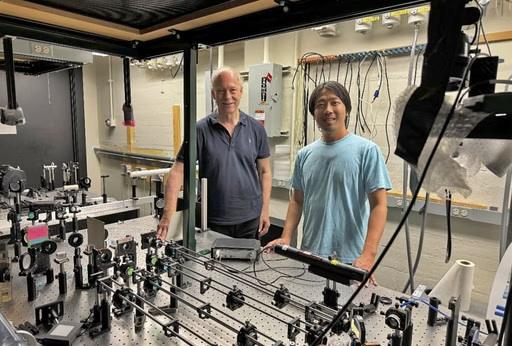
Founded in 2025 by a team of elite researchers—CEO Dr. Yun Kai, Raffi Freeman, Professor Keith Nelson, and Dr. Steve Kooi—the company leverages breakthroughs in shockwave science. By utilizing commercially available high-power lasers, CHI has developed a modular system that can fit on a table.
The engineering performance metrics are striking. The company’s prototype, occupying the space of roughly two dinner tables, has already achieved internal pressures of 350 gigapascals while utilizing only tens of millijoules of energy. This level of efficiency is facilitated by advances that the company claims provide compression 400 times higher than previous laser-based fusion architectures.
Chronology of Development
The trajectory of Cambridge Heavy Industries reflects the rapid acceleration of the private fusion sector:
- 2025: Inception. The founding team spins out of MIT, identifying a critical gap in the supply chain for fusion fuel and a technological opening for compact, modular fusion drivers.
- 2025–2026: Stealth Development. The team operates in "stealth," focusing on proving the physics of their modular, laser-based compression system. During this period, the prototype achieves its milestone of 350 gigapascals.
- October 2026: Public Unveiling and Funding. CHI formally emerges, announcing the $6.2 million seed round led by Azolla Ventures. The company sets its sights on constructing a permanent facility in Massachusetts to house its first production-ready compact reactor.
The "Tritium Bottleneck" and Strategic Market Entry
While the ultimate goal for many in the industry is grid-scale electricity generation, Cambridge Heavy Industries has identified a pragmatic and lucrative entry point: the production of tritium.
Tritium, a radioactive isotope of hydrogen, is a fundamental fuel component for experimental fusion reactors. However, it is notoriously scarce. Because it is not naturally abundant, it must be produced—often at massive expense—or recovered from specific nuclear reactors. The current global supply shortage has pushed the price of tritium to approximately $33 million per kilogram.
By focusing on producing tritium, CHI creates an immediate revenue stream while simultaneously solving a systemic supply chain issue that threatens the growth of other fusion energy developers. Beyond fuel production, the company is positioning its modular neutron sources for industrial applications, including neutron imaging and material defect engineering, sectors that require high-precision diagnostics without the need for large-scale nuclear facilities.
Supporting Data: Why Modular Matters
The shift toward "rapid testing" is perhaps the most significant differentiator for CHI. In the traditional fusion industry, an R&D cycle can span years, as components are custom-built and experiments are high-stakes, "one-shot" events.
CHI’s modular architecture, by contrast, relies on standard optical components and lasers that are commercially available. This allows for:

- Weekly Iteration: The company claims it can perform testing and upgrades on a weekly basis, effectively bringing software-style development cycles to the hardware-heavy fusion sector.
- Capital Efficiency: By reducing the need for massive, custom-built vacuum chambers and superconducting magnets, the company minimizes capital expenditure, making it easier to scale production and iterate on designs.
- Compression Efficiency: The 400x improvement in compression efficiency over legacy systems serves as the primary proof point that the company’s physics models are not just theoretically sound, but practically viable for industrial-scale deployment.
Official Perspectives
The investment community has signaled strong support for CHI’s "fail-fast, fix-fast" philosophy. Matthew Nordan, co-founder and General Partner of Azolla Ventures, highlighted the strategic importance of the company’s approach during the funding announcement.
"Cambridge Heavy Industries’ technology can be demonstrated on a benchtop and assembled in days using standard optical components," Nordan noted. "The same rapid test/fail/fix model is what brought us modern space and defense technologies; we see it as a promising approach to make fusion viable."
Dr. Yun Kai, the company’s CEO, emphasized the role the funding will play in shifting the company from laboratory experimentation to real-world infrastructure. "Fusion power leaders have a tritium supply problem that could significantly slow down the sector’s growth," Dr. Kai stated. "Our technology is in the unique position to solve this challenge. We are appreciative of our investors for their financial and operational support in bringing us to this important milestone."
Broader Implications for the Energy Transition
The emergence of Cambridge Heavy Industries arrives at a time when the energy sector is increasingly desperate for clean, base-load power sources. As nations struggle to meet net-zero targets, the reliability of solar and wind energy—intermittent by nature—remains a hurdle for total decarbonization.
Fusion offers the promise of a "holy grail": near-limitless, carbon-free energy. However, the path to that goal has been marred by cost overruns and technical stagnation. If companies like CHI can successfully prove that fusion can be decentralized and modularized, it could fundamentally rewrite the energy map.
1. Decentralization of Energy
Traditional power plants require massive grid integration and centralized management. A modular, benchtop-scale fusion system, if scaled, could eventually support decentralized industrial hubs, reducing the reliance on long-distance transmission infrastructure and increasing grid resilience.

2. Economic Viability
The high price of tritium ($33M/kg) acts as a tax on innovation for the entire fusion sector. By creating a competitive market for this fuel, CHI isn’t just selling a product; it is lowering the barrier to entry for the entire fusion ecosystem. This has the potential to trigger a "virtuous cycle" where cheaper fuel leads to more research, which in turn drives down the cost of fusion energy generation.
3. Strengthening the Supply Chain
The inclusion of investors like the Mass Clean Energy Center and the Neta Foundation underscores the geopolitical and strategic importance of this technology. Securing a domestic, reliable source of tritium and advanced neutron imaging capabilities is as much a matter of national security and industrial sovereignty as it is a matter of climate policy.
Looking Ahead
The $6.2 million raised will be immediately put to work at the company’s Massachusetts facility. The procurement list is already finalized: an ultrafast laser, specialized optical components, and advanced neutron diagnostics.
As the company transitions from the prototype phase to the construction of its first functional reactor, the industry will be watching closely. If CHI succeeds in demonstrating that a dinner-table-sized device can reliably produce fuel-grade isotopes, it will signal that the "fusion era" is no longer a prospect for the distant future, but an active, ongoing industrial evolution.
For now, the team at Cambridge Heavy Industries remains focused on the immediate task: proving that the power of the stars can be harnessed not just in massive, taxpayer-funded cathedrals of science, but in small, agile, and highly efficient facilities capable of keeping pace with the rapid demands of a changing world.