In the rapidly evolving landscape of the modern energy grid, connectivity has shifted from a supporting utility to the very backbone of operational stability. As power companies grapple with the integration of decentralized energy resources, climate-driven grid stressors, and the increasing demand for high-resolution data, the traditional silos of public and private communications are beginning to crumble.
In early October, a significant development in this space emerged: Avista, the energy provider serving a vast 34,000-square-mile territory across eastern Washington, northern Idaho, and parts of Oregon, announced a strategic partnership with Heddian. The collaboration is designed to modernize Avista’s field communications infrastructure. By deploying a hybrid network architecture, Avista is moving away from the "all-or-nothing" approach to connectivity, proving that utilities can optimize existing infrastructure while simultaneously future-proofing their operations against the unpredictability of a decarbonizing grid.
The Strategic Shift: Why "Hybrid" Is the New Standard
For years, utilities have faced a binary choice: rely entirely on public cellular networks, which offer broad coverage but lack the security and granular control required for critical infrastructure, or invest in 100% private wireless networks, which provide unparalleled control but carry astronomical capital expenditure requirements.
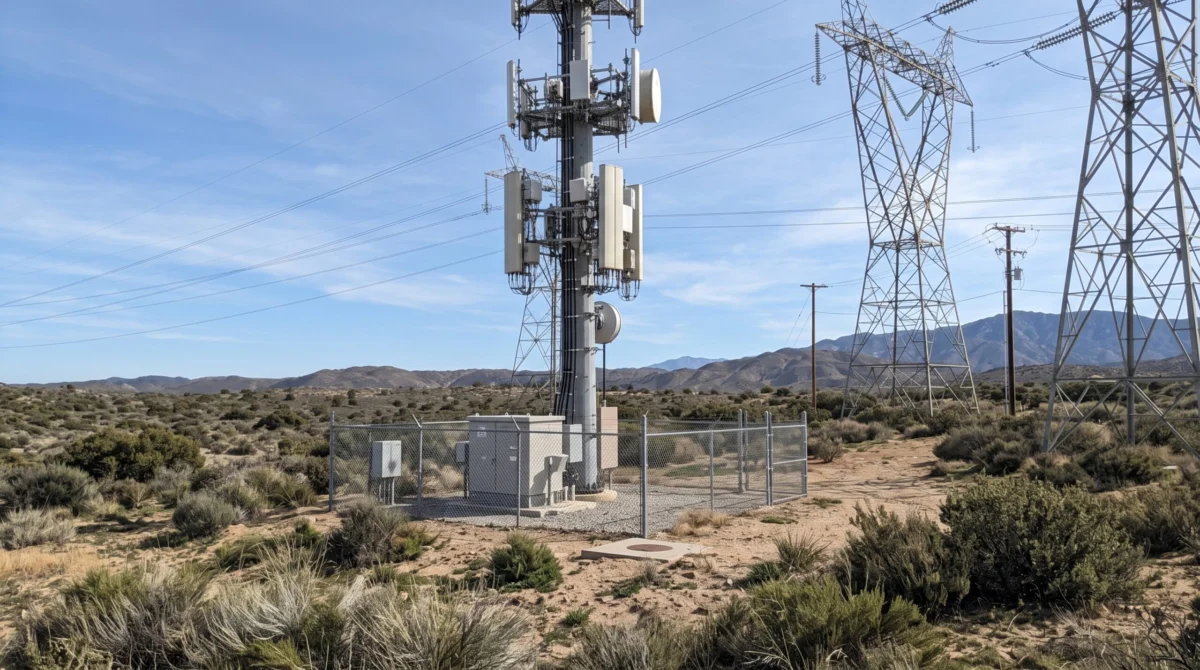
The Avista-Heddian deployment represents a middle path. By leveraging a hybrid architecture, Avista can utilize commercial cellular networks where coverage is robust and cost-effective, while selectively deploying private LTE assets for grid-edge applications that require maximum reliability and low latency. This approach is not merely a technical configuration; it is a business model that allows utilities to scale their infrastructure in lockstep with their budgetary constraints and operational needs.
"Energy companies don’t have to choose between the security of private wireless and the footprint of public cellular," says Joe Walsh, CEO of Heddian. "Instead, they can deploy integrated solutions that deliver both without the burden of building and managing private spectrum infrastructure entirely from scratch."
Chronology of a Modernization Effort
The road to this partnership began with a fundamental assessment of the challenges facing regional utilities. Avista’s operational footprint is geographically diverse, spanning mountainous terrain and rural expanses where public cellular coverage is inconsistent.
- Initial Assessment: Avista identified that its existing field communication dependencies were increasingly prone to gaps. Relying on carrier-controlled networks meant that when a device dropped off the grid, the utility often lacked the visibility to troubleshoot effectively.
- The Heddian Engagement: Recognizing the need for a more resilient, utility-controlled framework, Avista sought a partner capable of integrating legacy assets into a modern, software-defined core.
- The Integration Phase: The project focused on "meeting the utility where they are." Instead of requiring a "rip and replace" of existing field devices, the partnership utilized solutions like OneLayer to provide immediate visibility and security to existing carrier-connected devices.
- Implementation of the Core: By implementing a private core from Druid, Avista gained the ability to manage authentication and routing internally. This ensures that even when traffic travels over a public carrier, the "handshake" and security protocols are governed by the utility.
Supporting Data: Efficiency and Reliability
The economic and operational arguments for the hybrid model are compelling. Building out a private network to cover 34,000 square miles would be a multi-year, capital-intensive project that might leave vast swaths of the network underutilized in areas where commercial carriers have already invested billions in tower infrastructure.
By contrast, the hybrid model optimizes capital allocation. It allows utilities to deploy private LTE only in high-density areas or regions where the grid is most vulnerable to outages, while keeping "business-as-usual" communications on existing commercial rails.
Furthermore, the "UtiliSIM" technology—a central component of the Heddian deployment—solves the long-standing issue of truck rolls. Traditionally, migrating field devices to a new network required physical intervention at every remote site. With the UtiliSIM, after the initial replacement, the utility gains the ability to perform over-the-air updates. This allows the network manager to switch carriers or transition devices to private LTE remotely, drastically reducing the operational costs associated with manual maintenance.
Implications: From Communication to Grid Capacity
One of the most profound insights from the Avista-Heddian partnership is the link between communications bandwidth and grid capacity. In the traditional utility mindset, "capacity" was synonymous with transmission lines and transformers. In the digital era, capacity is synonymous with data.
Bridging the Data Gap
When a utility has a high-fidelity, reliable connection to grid-edge devices, it can operate those devices much closer to their thermal and mechanical limits. If a grid operator can see the real-time load, temperature, and health of a transformer with millisecond latency, they can safely manage more load through that equipment. This effectively creates "virtual capacity," delaying or avoiding the need for expensive physical infrastructure upgrades.

Regulatory Compliance and NERC Standards
The pressure from regulatory bodies, such as the North American Electric Reliability Corporation (NERC), is mounting. Standards like PRC-028, which mandates disturbance monitoring for inverter-based resources, require a level of data granularity that older communication systems simply cannot provide. A robust, hybrid network ensures that when a disturbance occurs, the utility has the high-resolution data required to report, analyze, and rectify the issue—a capability that is increasingly non-negotiable for modern utility operators.
Expert Insight: A Q&A with Joe Walsh
To better understand the nuances of this deployment, we sat down with Joe Walsh to explore the philosophy behind the hybrid model.
Jeremiah Karpowicz: Is hybrid more advantageous than a 100% private network?
Joe Walsh: A fully private network gives a utility the most security, but the economics don’t work everywhere. I don’t want utilities to let the perfect be the enemy of the good. A hybrid network provides real functionality today. It preserves the option to expand. Because authentication runs through a utility-controlled core, adding private cell sites later simply extends the network instead of rebuilding it. A utility can grow toward full private LTE as its budget allows.
Jeremiah Karpowicz: How do you handle legacy infrastructure without disrupting operations?
Joe Walsh: Many utilities have devices on carrier contracts today. We use OneLayer to connect to them, providing visibility and security immediately. Migration starts with the SIM. The UtiliSIM is a one-time visit, but after that, we can change which networks the SIM uses—including moving the device to private LTE—without rolling another truck. That’s critical, because every truck roll can sink the business case for a change.
Jeremiah Karpowicz: How does this help with the "capacity" problem?
Joe Walsh: It’s about visibility. When a utility can see how heavily equipment is loaded and whether it’s healthy, it can use more of the capacity it already has with confidence. That’s how communication turns into capacity.
Looking Forward: The Roadmap for Other Utilities
The Avista deployment serves as a blueprint for the energy sector at large. For other utilities looking to follow suit, the lessons are clear:
- Prioritize Visibility First: Before building a physical network, gain total visibility into existing assets. Tools that allow for secure management of devices currently on public networks are the essential first step.
- Focus on the Core: The "brains" of the network (the core) should always be under the utility’s control. By keeping authentication and routing in-house, the utility maintains sovereignty over its data, regardless of which carrier’s towers the traffic traverses.
- Adopt a "Modular" Build: Don’t attempt a "big bang" implementation. Build your private infrastructure where it is needed most—such as near substations or critical edge-computing sites—and use public networks to fill in the gaps.
- Prepare for Regulation: Assume that data requirements will only increase. Building a network today that can handle high-resolution, low-latency data is not just an operational upgrade; it is an insurance policy against future regulatory penalties.
As utilities move further into the digital age, the ability to manage the grid as a data-driven entity will determine the winners and losers in the energy transition. Through the partnership between Avista and Heddian, we are seeing the emergence of a more flexible, resilient, and intelligent utility model—one that doesn’t just build more, but builds better.