WASHINGTON — In a rare display of legislative alignment, a bipartisan coalition of U.S. senators has unveiled a sweeping framework designed to dismantle the bureaucratic bottlenecks currently strangling the nation’s energy and infrastructure sectors. The proposed legislation, aimed at reforming the labyrinthine federal permitting process, seeks to accelerate the deployment of large-scale projects at a moment when the rapid proliferation of artificial intelligence data centers is pushing the U.S. power grid to its breaking point.
The deal, spearheaded by a cross-party group including Republican Sens. Shelley Moore Capito of West Virginia and Mike Lee of Utah, and Democratic Sens. Martin Heinrich of New Mexico and Sheldon Whitehouse of Rhode Island, represents a significant, if tentative, step toward addressing the "permitting crisis" that has long plagued American industrial development.
The Core Mandate: Why Now?
For years, energy developers have decried the "years-long delays" associated with the National Environmental Policy Act (NEPA) and other federal mandates. Under the current regime, projects ranging from high-voltage transmission lines to offshore wind farms can spend over a decade in legal and regulatory limbo.
The urgency of this reform has been compounded by the sudden, massive electricity demands of AI. As tech giants scramble to build hyper-scale data centers, the existing energy infrastructure has proven insufficient. The proposed legislation mandates that these data centers shoulder the financial burden for the grid upgrades they necessitate, ensuring that the costs of modernization are not offloaded onto residential ratepayers and small businesses.
Chronology of the Legislative Push
The path to this agreement has been fraught with political friction, particularly concerning the executive branch’s aggressive stance toward renewable energy.
- Early 2026: Tensions peak as the Trump administration repeatedly intervenes to block offshore wind projects along the East Coast, citing national security concerns. These actions trigger a series of high-profile legal battles.
- Spring/Summer 2026: Federal courts intervene, striking down executive orders that sought to halt wind energy deployment. The judicial pushback forces the administration to reconsider its posture in exchange for broader legislative concessions.
- September 2026: A bipartisan group of senators from the Environment and Public Works and Energy committees begin intensive negotiations. The primary objective: trade permitting reform for long-term certainty for both fossil fuel and renewable energy developers.
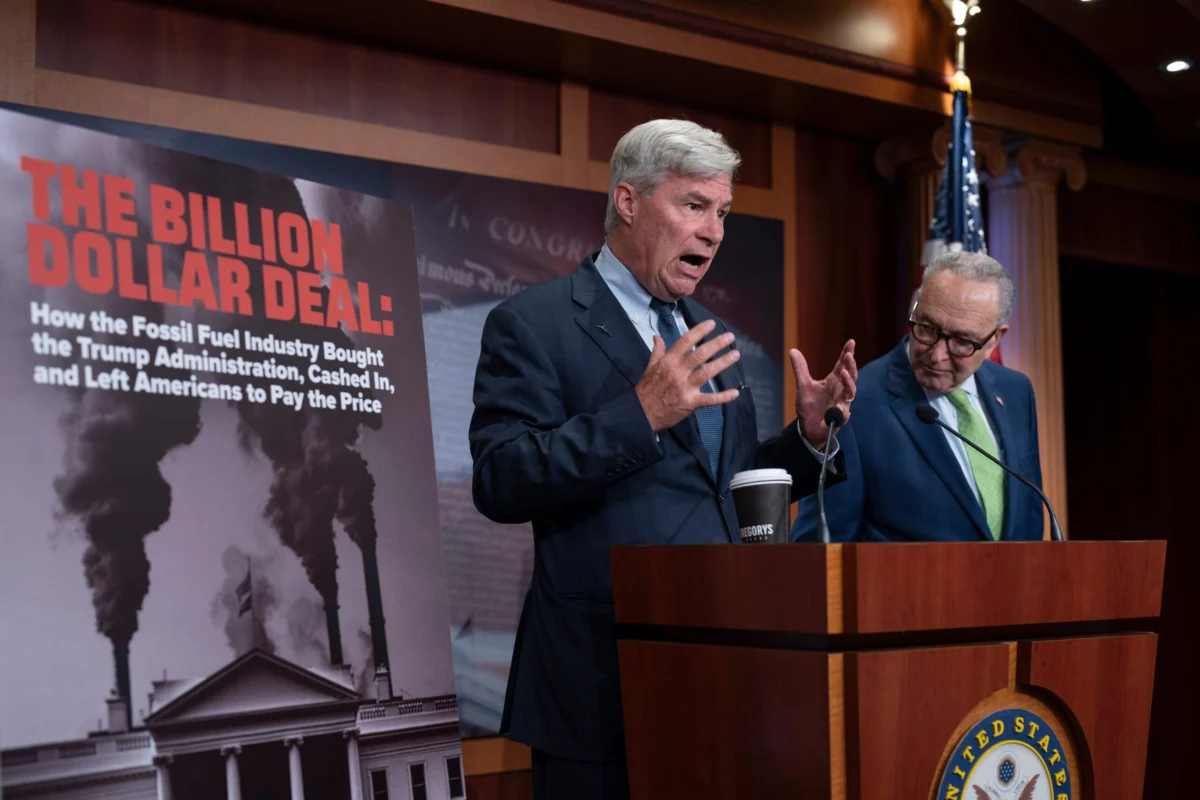
- September 24, 2026: Sens. Capito, Lee, Heinrich, and Whitehouse formally announce the framework to the press at the U.S. Capitol, signaling an agreement that seeks to transcend the typical partisan divide.
- November 2026 (Forthcoming): A "lame-duck" vote is anticipated, as leaders from both parties attempt to finalize the bill before the new Congress is seated.
Supporting Data: The Cost of Inefficiency
The impetus for this bill is rooted in cold, hard economic data. According to industry analysts, the current regulatory cycle—which requires multiple, often redundant federal reviews—has resulted in an estimated 30% increase in the total cost of energy infrastructure projects over the last decade.
Furthermore, the surge in AI-driven energy demand is unprecedented. Projections suggest that data centers could account for nearly 10% of total U.S. electricity consumption by 2030. Without the structural changes proposed in this bill—specifically the streamlining of interstate transmission line siting and the synchronization of Federal Energy Regulatory Commission (FERC) reviews with state-level processes—the grid may face severe reliability issues, including potential brownouts in high-growth technology hubs.
Official Responses: A Divided Reception
The reception to the deal has been as varied as the interests of the stakeholders involved.
The Legislative Architects
Sen. Shelley Moore Capito, the chair of the Environment and Public Works Committee, hailed the bill as a "monumental and legacy-setting" achievement. "The American people sent us here to do big things," she stated. "This is a big thing." Her counterpart, Sen. Martin Heinrich, emphasized the economic benefits, noting that the bill would drive job creation while protecting families from the rising costs of energy infrastructure upgrades.

Industry Perspectives
The Edison Electric Institute (EEI), representing the nation’s investor-owned utilities, has offered a cautious endorsement. President and CEO Drew Maloney stated that the bill’s focus on "project certainty" is a welcome departure from the current status quo, though he noted that utilities are still scrutinizing the specific language regarding transmission provisions to ensure they can effectively serve their 250 million customers.
Environmental Advocates
The reaction from the environmental community is starkly divided. Brad Campbell, president of the Conservation Law Foundation, warned that the bill "appears to adopt a fossil fuel industry wish-list." Critics argue that by limiting judicial review and curtailing the EPA’s ability to consider the full environmental impacts of projects, the bill could inadvertently pave the way for ecological degradation, specifically affecting clean water and endangered species.
Implications: A New Era for American Infrastructure
If passed during the post-election lame-duck session, the legislation would fundamentally alter the American landscape in several key ways:
1. Reining in Judicial Review
The bill seeks to limit the frequency and scope of legal challenges under the National Environmental Policy Act (NEPA) and the National Historic Preservation Act. By creating stricter timelines for litigation, proponents hope to prevent "frivolous" lawsuits from stalling projects for years on end. However, this remains the most controversial aspect of the proposal, as critics fear it undermines the public’s right to challenge projects that could cause irreparable harm.
2. The Transmission Revolution
The legislation grants the Federal Energy Regulatory Commission (FERC) more robust authority to fast-track interstate transmission lines. By allowing for simultaneous federal and state reviews, the bill aims to shorten the development cycle for the thousands of miles of wire needed to transport wind energy from the Great Plains and solar power from the Southwest to the urban centers where demand is highest.
3. The "Trump Factor" and Renewable Energy
The future of the bill is inextricably linked to the ongoing power struggle regarding the current administration’s hostility toward wind energy. While the White House has signaled a willingness to ease its opposition in exchange for the passage of these reforms, the durability of that promise remains a point of contention. Sen. Sheldon Whitehouse has made it clear that for Democrats, any final agreement must include ironclad guarantees that the administration cannot use "national security" as a pretext to unilaterally shutter renewable projects.
4. A Template for Future Bipartisanship
Perhaps most significantly, the bill serves as a test case for whether the legislative branch can still function on issues of national urgency despite a polarized electoral climate. The fact that the bill’s primary sponsors represent the spectrum of the ideological divide—from the conservative sensibilities of Sen. Mike Lee to the climate-focused priorities of Sen. Sheldon Whitehouse—suggests that the necessity of reliable, affordable energy may be the one issue capable of bridging the partisan gap.
Conclusion
As the November midterms approach, the "permitting reform bill" stands as the most consequential piece of legislation in the energy sector in decades. Whether it is viewed as a necessary modernization of a creaking, 20th-century regulatory system or a dangerous rollback of vital environmental protections, its impact will be felt for generations. The ultimate success of this initiative will depend on whether lawmakers can thread the needle between industrial efficiency and environmental stewardship—a challenge that has historically been the graveyard of many well-intentioned policy efforts. For now, the nation waits to see if the proposed framework can survive the volatile political landscape of the coming winter.