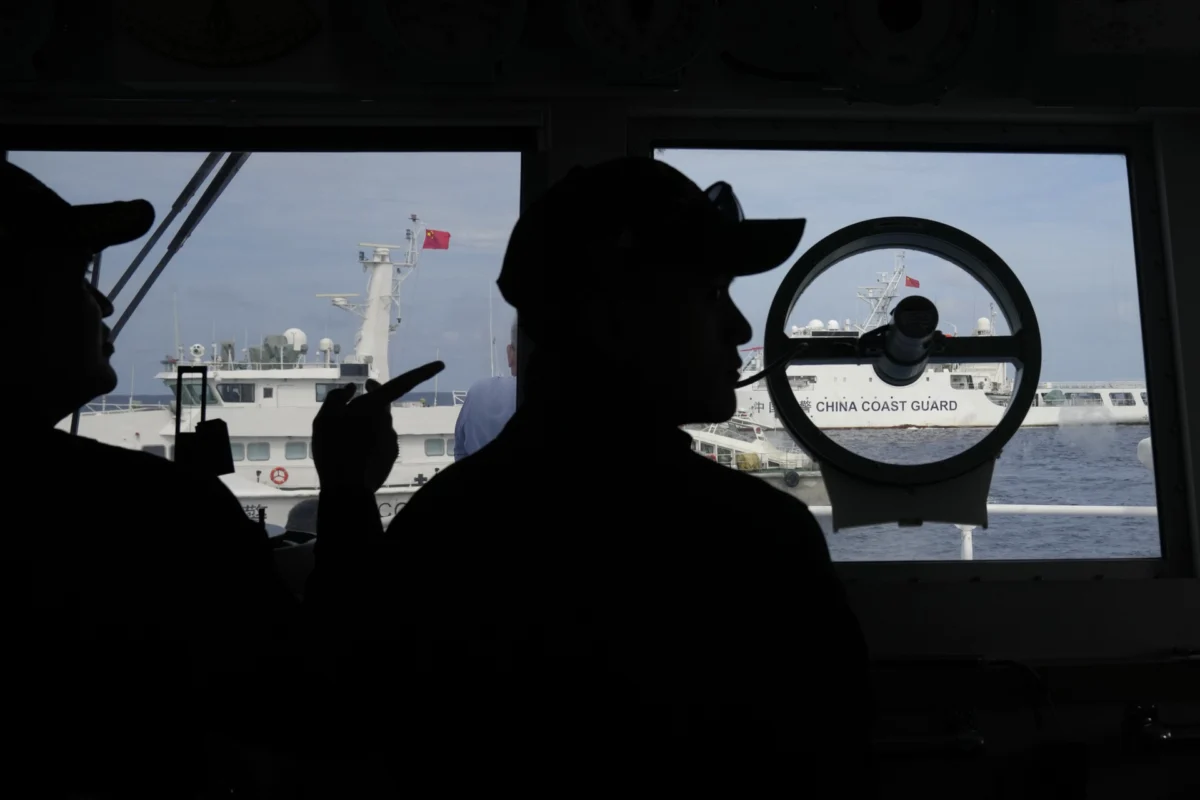
In the 2016 season of the hit television series The Last Ship, the crew of a U.S. Navy destroyer finds themselves navigating the treacherous, high-stakes waters of the South China Sea. As they search for a cure to a global pandemic, the series depicts the waterway not merely as a geographic feature, but as a theater where scientific survival and geopolitical dominance collide. While the show is a work of Hollywood fiction, the underlying premise—that the South China Sea is a critical nexus of global power—is a sobering reality that defines contemporary international relations.
As the world’s most vital maritime trade artery, the South China Sea has become the epicenter of a complex, multifaceted struggle for influence, resources, and legal authority. From the deployment of scientific research vessels to the construction of artificial islands, the scramble for control in these waters is a defining challenge of the 21st century.
A Chronology of Contention
To understand the current volatility in the South China Sea, one must look back at the decades of incremental expansion and diplomatic friction that have brought the region to its current state.
- The Post-WWII Vacuum: Following the end of the Second World War, the retreat of imperial powers left the status of various island chains, including the Paracels and the Spratlys, ambiguous. This vacuum allowed for the crystallization of various nationalist claims.
- The 1970s and 80s Resource Scramble: As the global economy industrialized, the focus shifted to the hydrocarbon potential of the seabed. Nations began to survey the region, leading to the first major skirmishes between naval forces.
- The 1990s Expansion: China began formalizing its presence, constructing structures on Mischief Reef in 1995, a move that alarmed the Philippines and ASEAN partners.
- The 2016 Permanent Court of Arbitration Ruling: A landmark moment in international law, the tribunal in The Hague ruled that China’s “nine-dash line” claim had no legal basis under the United Nations Convention on the Law of the Sea (UNCLOS). Beijing’s outright rejection of the ruling signaled a shift toward a "might-makes-right" approach to maritime governance.
- The Modern Era of Militarization: Since 2016, the region has seen the rapid transformation of submerged reefs into fully militarized outposts equipped with runways, radar arrays, and missile batteries.
The Intersection of Science and Sovereignty
The modern struggle is no longer limited to traditional naval posturing; it has entered the realm of "scientific" competition. In The Last Ship, the ability to secure biological data determines the fate of humanity. In the real South China Sea, the ability to collect bathymetric, oceanographic, and biological data is viewed by regional powers as a dual-use asset.
Scientific research vessels now serve as the vanguard of sovereignty claims. By conducting surveys, nations argue they are exercising administrative control over the seabed. This "scientific footprint" allows countries to argue that they have established a continuous, peaceful presence, thereby strengthening their legal standing for future maritime boundary delimitations. However, when these research efforts occur within the Exclusive Economic Zones (EEZs) of neighboring states, they are frequently viewed as acts of coercive intelligence gathering.
Supporting Data: The Economic and Strategic Stakes
The South China Sea is not merely a collection of reefs and rocks; it is a global economic juggernaut. The following figures underscore why the region remains the most heavily monitored maritime space on Earth:
- Global Trade Volume: An estimated $3.37 trillion in trade passes through the South China Sea annually. This accounts for roughly one-third of global shipping.
- Energy Security: The region is estimated to hold 11 billion barrels of oil and 190 trillion cubic feet of natural gas in proved and probable reserves.
- Fisheries: The South China Sea accounts for approximately 10 percent of the world’s total fish catch, making it a critical source of protein and economic livelihood for millions in Southeast Asia.
- Military Presence: With over 200 military exercises conducted annually by various stakeholders in the region, the density of naval assets is among the highest in the world, significantly increasing the risk of accidental collision or escalation.
Official Responses and Diplomatic Stalemates
The international community remains deeply divided on how to manage the South China Sea.
The Chinese Perspective
Beijing maintains that its claims are based on "historical rights" that predate modern international law. The Chinese Foreign Ministry has consistently asserted that its construction activities on disputed features are for civil purposes, such as search-and-rescue operations, weather forecasting, and maritime safety, rather than military aggression. China argues that external powers, particularly the United States, are the primary sources of regional instability.
The Perspective of Southeast Asian Nations
Countries like the Philippines, Vietnam, Malaysia, and Brunei emphasize the importance of UNCLOS. Their diplomatic efforts focus on the "Code of Conduct" (CoC) negotiations with China. However, these negotiations have been mired in stalemate for years, as the parties struggle to agree on whether the code should be legally binding and how it should address the presence of extra-regional military forces.
The Western and International Response
The United States, while not a claimant, maintains a policy of ensuring "Freedom of Navigation" (FONOPs). The U.S. Navy regularly conducts operations to challenge excessive maritime claims, asserting that the South China Sea must remain an international waterway. This stance is supported by allies such as Japan, Australia, and increasingly, European nations, who view the rule of law in the region as a bellwether for the global liberal order.
Implications for the Future
The situation in the South China Sea is reaching a state of "frozen conflict," where open war is avoided, but the status quo is constantly eroding in favor of the most powerful actor. This has several profound implications:
1. The Erosion of International Law
The disregard for the 2016 arbitral ruling creates a dangerous precedent. If powerful nations can ignore judicial mechanisms, the foundational architecture of the global maritime order—designed to prevent anarchy at sea—faces a slow but steady collapse.
2. The Weaponization of Infrastructure
As artificial islands become more sophisticated, the threshold for conflict lowers. A radar system on a reclaimed reef can track, target, and potentially neutralize commercial and military vessels, effectively creating a "no-go" zone for neighboring countries. This effectively turns the waterway into a gated community for the dominant power.
3. The Risk of Miscalculation
In a crowded maritime theater, the risk of a "Grey Zone" incident—an event that falls below the threshold of declared war but causes significant loss of life or property—is high. Without a robust, binding communication protocol, a minor fishing dispute or an intercepted scientific vessel could spiral into a broader military confrontation.
4. Technological Dependency
Much like the plot of The Last Ship, the future of the region will likely be dictated by technology. Subsea drones, satellite surveillance, and artificial intelligence-driven maritime domain awareness will define the next decade of the struggle. The nation that controls the data of the South China Sea will effectively control its physical domain.
Conclusion
The South China Sea is a microcosm of the modern world’s greatest challenges: the tension between nationalism and internationalism, the competition for dwindling resources, and the blurring lines between scientific advancement and military power. While television dramas like The Last Ship use the region as a backdrop for high-stakes survival, the reality is far more complex.
It is a slow-motion chess match where the pieces are aircraft carriers, survey ships, and fishing trawlers. As the international community continues to grapple with the demands of a rising superpower and the rights of smaller nations, the South China Sea will remain the ultimate test of whether the world can resolve its most profound disputes through the rule of law, or whether it will succumb to the cycles of power politics that have characterized history for centuries. The stability of the global economy and the future of maritime security depend on the outcome of this ongoing, unfolding drama.