
In the fast-evolving digital landscape of 2026, the traditional analytics dashboard is becoming an increasingly incomplete tool. For years, marketers have relied on clicks, impressions, and sessions as their primary barometers of success. However, as the buyer’s journey fragments across AI-driven search, social communities, and niche platforms, these metrics are failing to capture the full story.

When a potential buyer reads an AI-generated summary that highlights your competitor, or scrolls through a Reddit thread where your brand is conspicuously absent, you are experiencing "lost visibility." This critical loss of mindshare does not appear in your Google Analytics or your standard traffic reports.
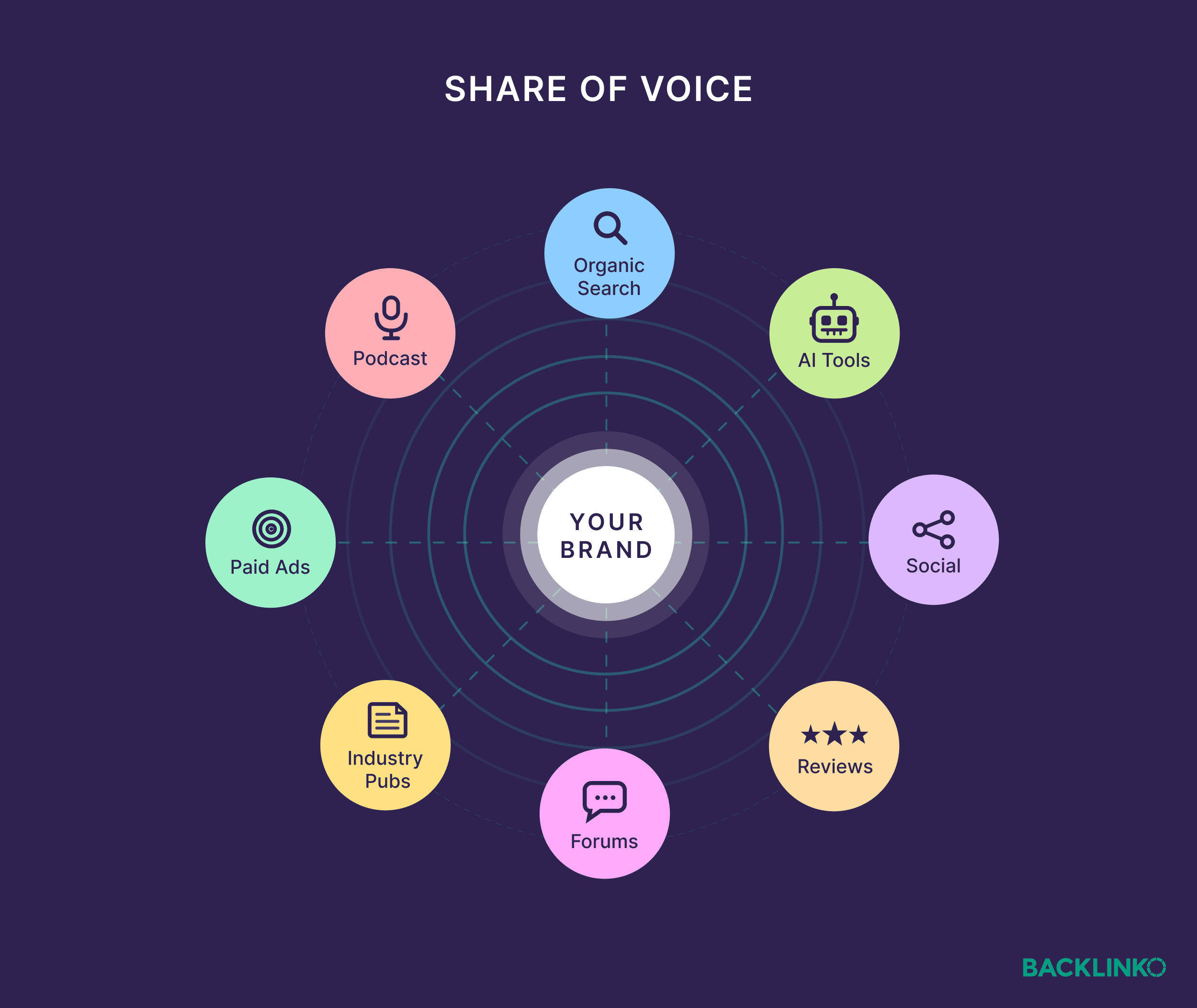
To bridge this gap, savvy marketing leaders are shifting their focus to Share of Voice (SoV). This metric measures your brand’s visibility relative to competitors across the channels where buyers actually conduct research and make high-stakes decisions. By moving beyond simple traffic data, SoV provides a holistic view of your brand’s authority and influence in your category.
What Is Share of Voice?
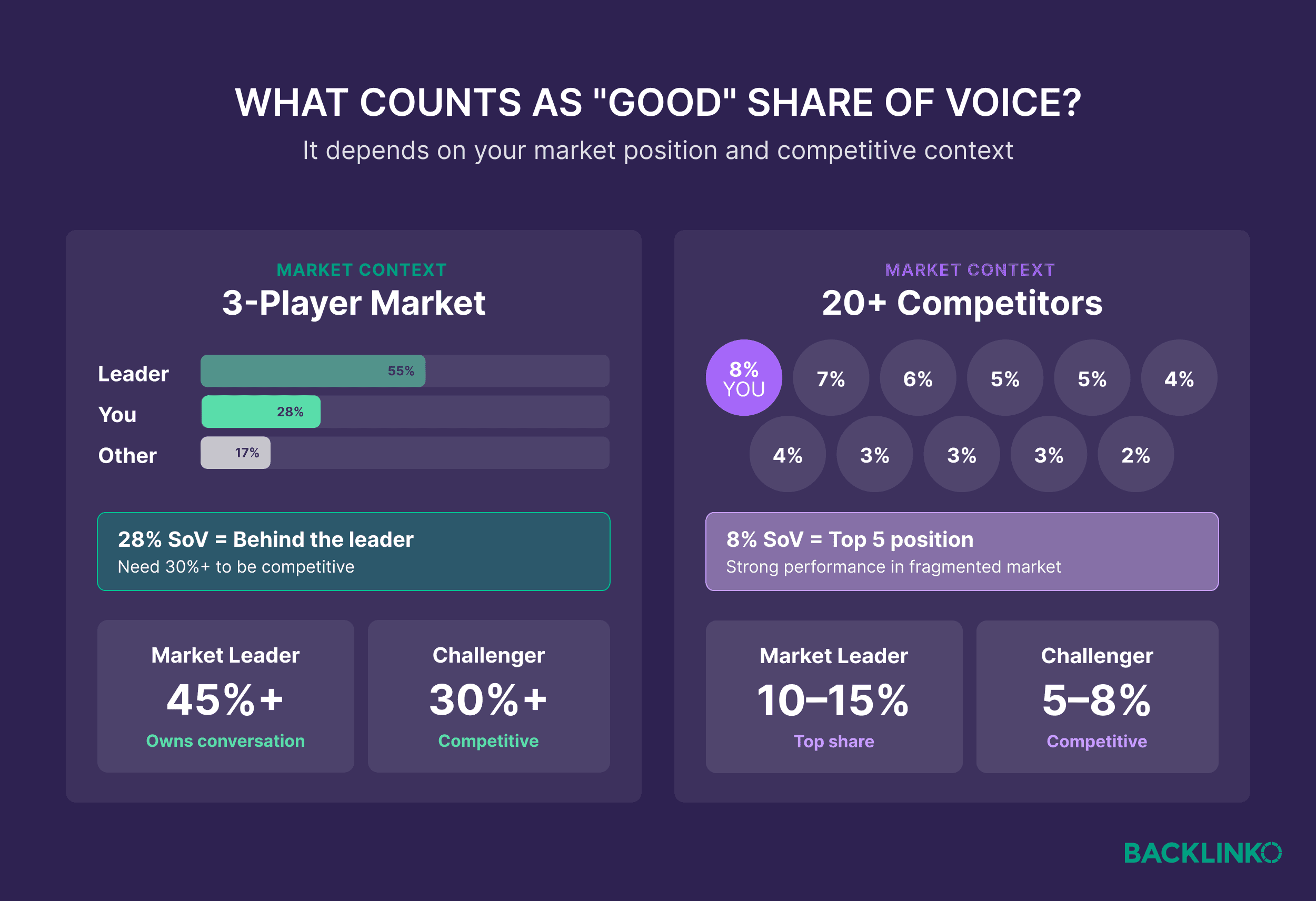
At its core, Share of Voice is a measurement of the percentage of the conversation your brand "owns" within a specific market. Traditionally used to track ad spend, SoV has evolved into a sophisticated tool for measuring brand presence at every touchpoint.
While SoV spans social media, PR, and paid media, search is the most logical starting point for most brands. Search remains the channel where buyers with the strongest purchase intent congregate, and thanks to recent advancements in data tooling, it is the easiest channel to measure with precision.
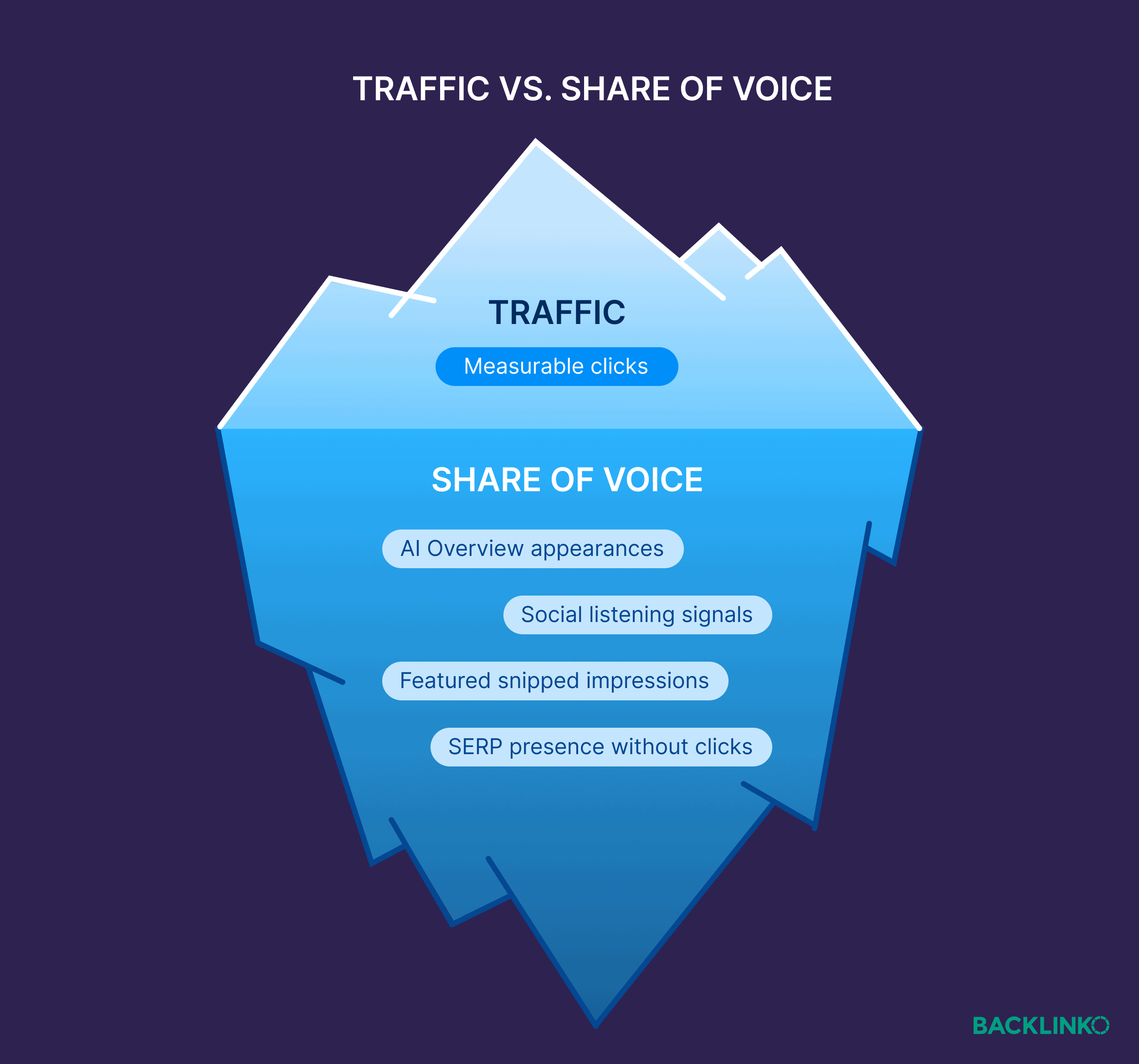
By focusing on search—specifically both organic and AI-driven search—brands can gain a foundational understanding of their market standing. Once you master visibility in these areas, layering in other channels like social and PR becomes a much more manageable task.
The Divergence: SEO vs. AI Search
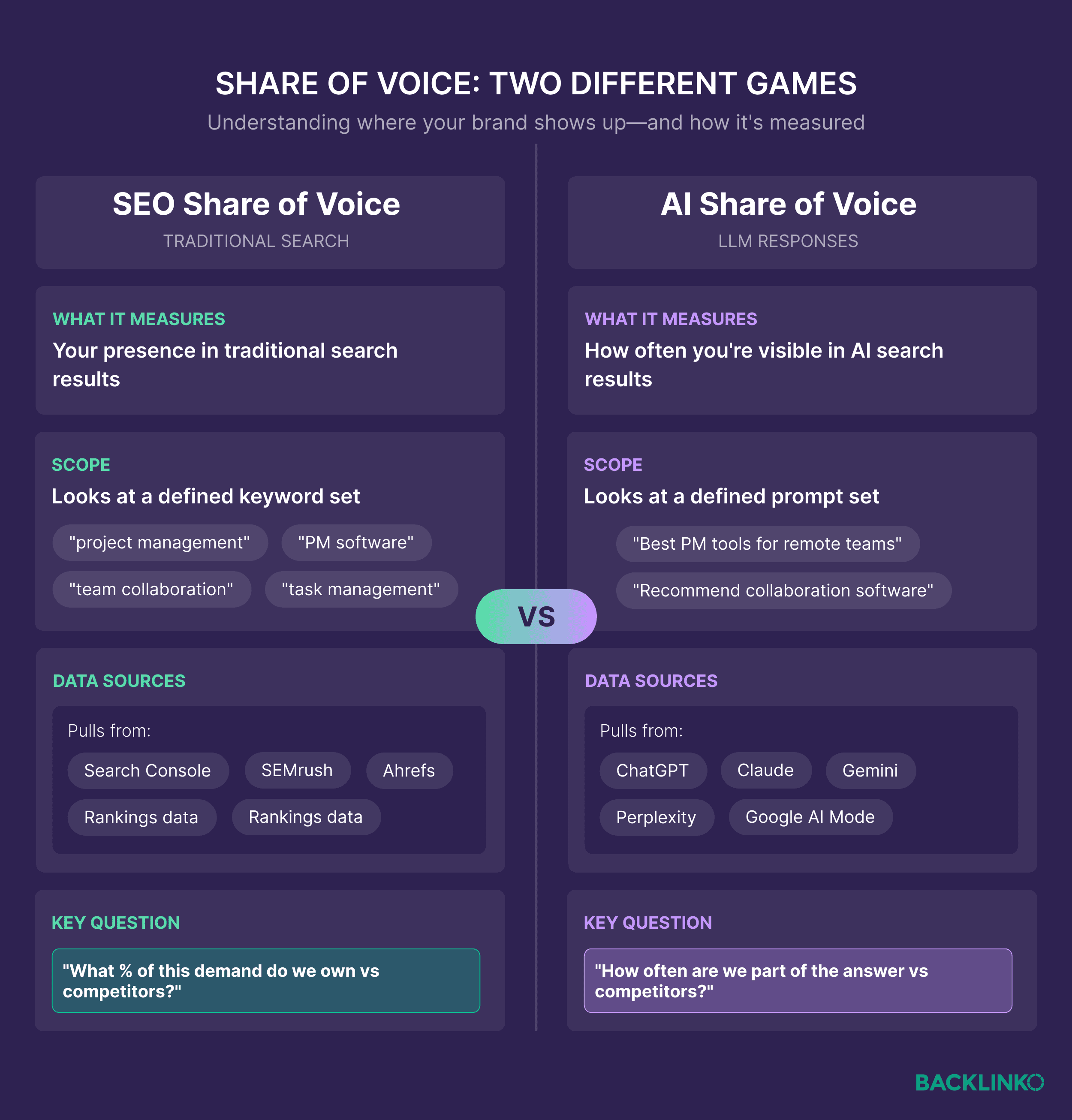
While both organic SEO and AI search aim to answer the question, "What percentage of category demand does your brand own?", they operate in fundamentally different contexts.
SEO Share of Voice
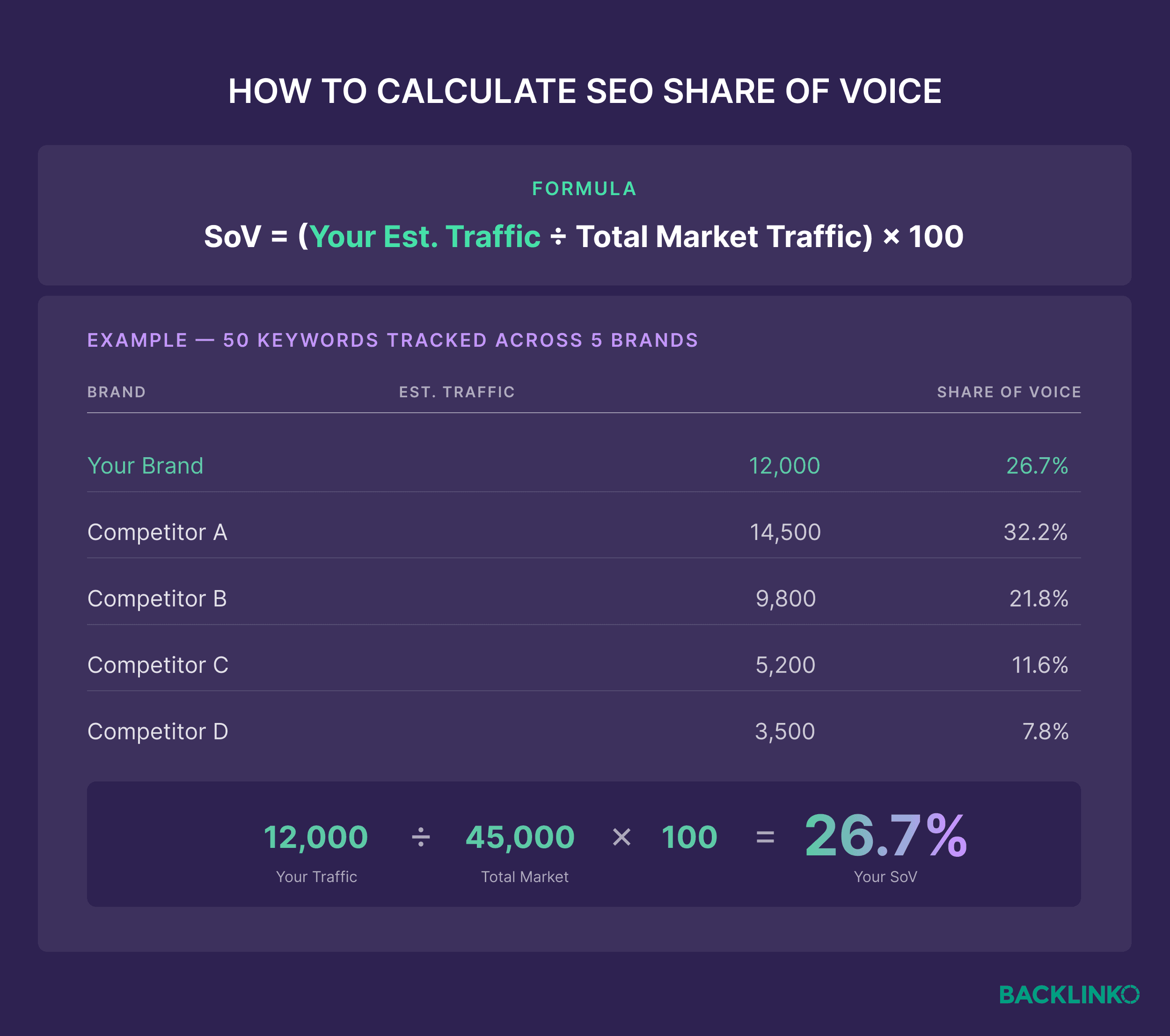
SEO SoV calculates your slice of traditional organic search traffic. If you track 100 target keywords that generate 50,000 total monthly visits across all ranking sites, and your brand captures 15,000 of those visits, you have a 30% organic share of voice. It is a game of ranking and click-through rates (CTR).

AI Share of Voice
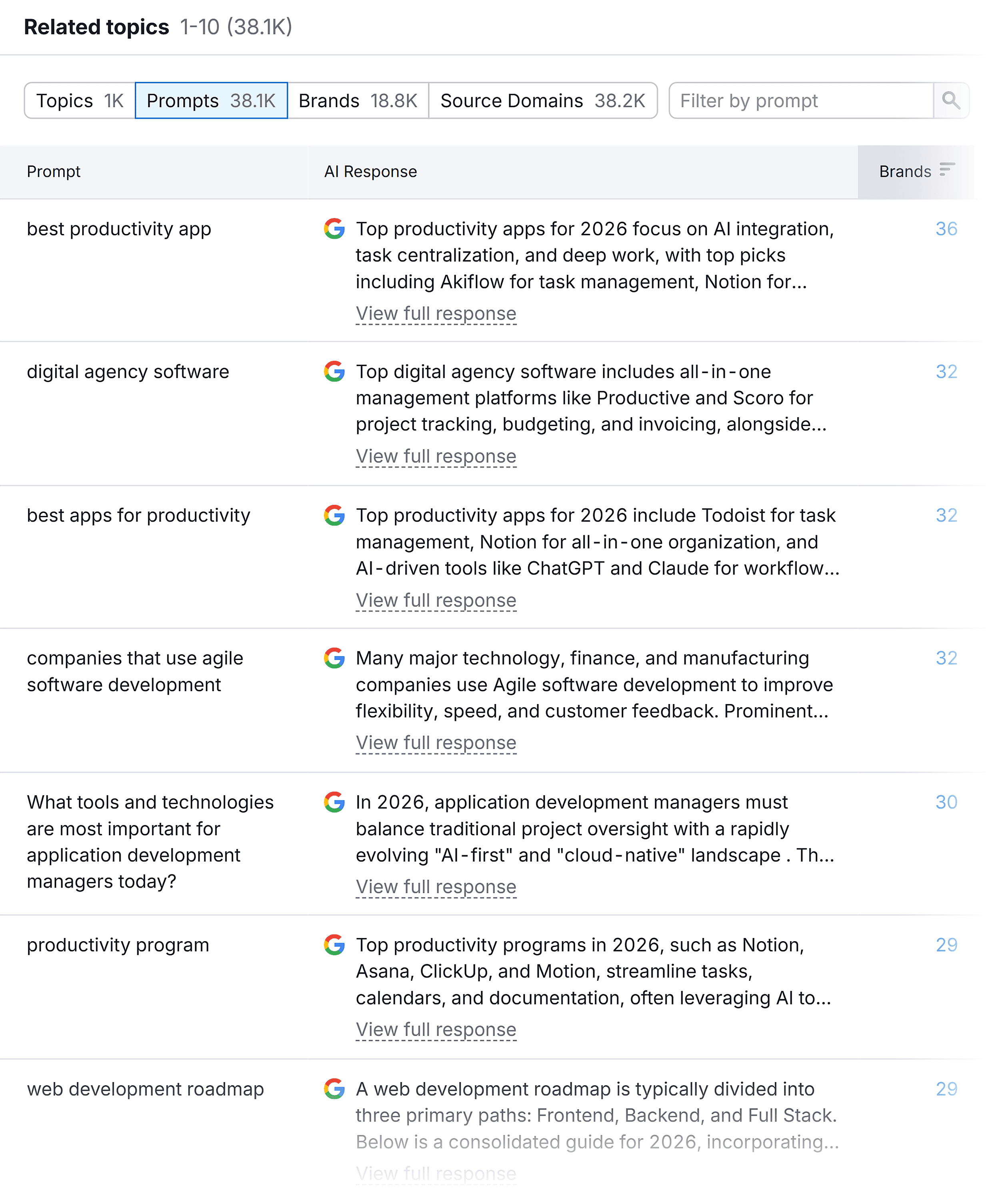
AI SoV is a different beast. It measures brand mentions and citations within Large Language Model (LLM) responses from tools like ChatGPT, Perplexity, and Google’s AI Overviews. If you test 100 category-related prompts and your brand appears in 45 responses, your AI SoV is calculated based on these weighted mentions and citations. In the age of AI, visibility is no longer just about the blue link; it is about being the "expert answer" provided by the machine.
Why Share of Voice is the Critical KPI for 2026
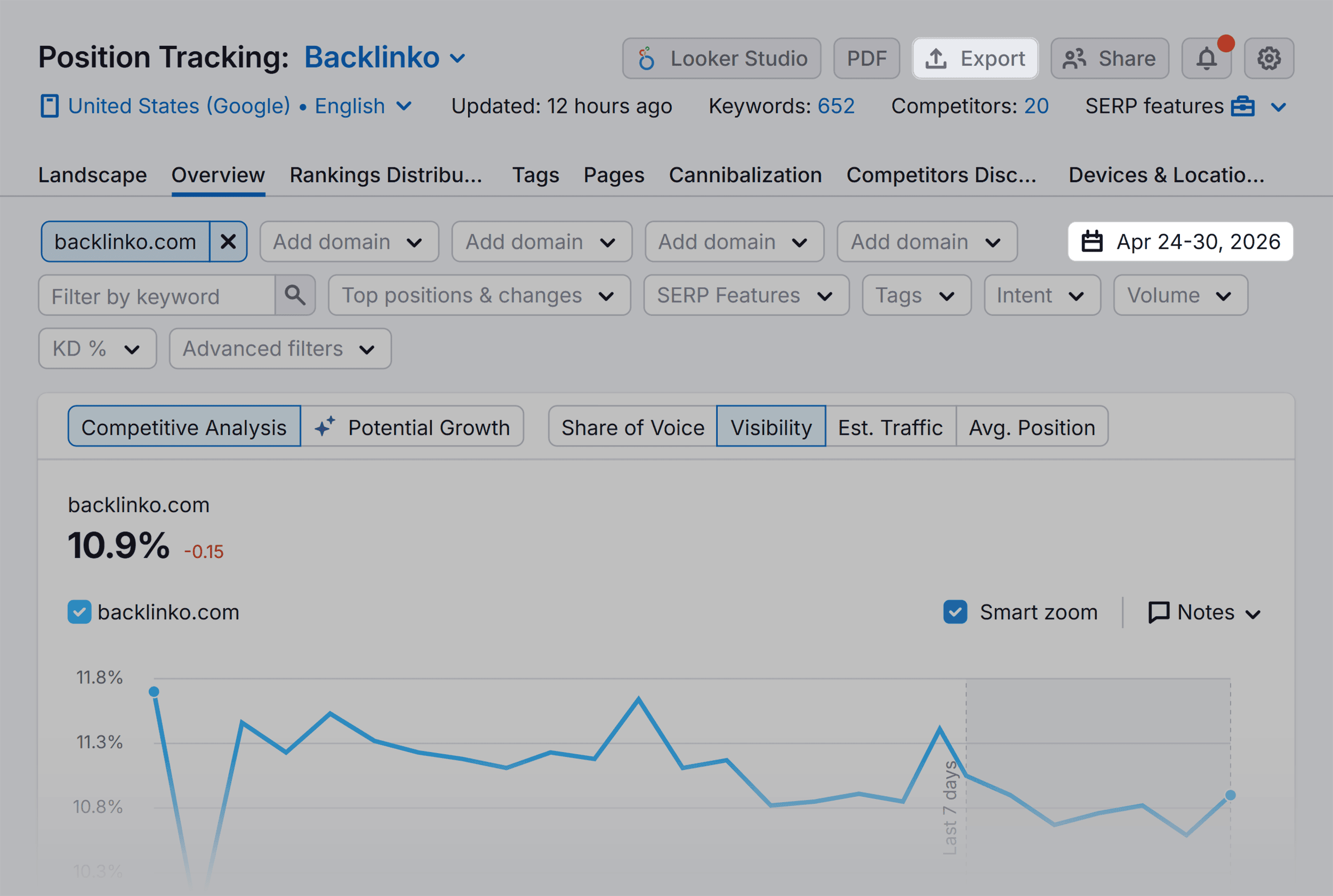
1. Tracking Visibility Beyond Traffic
Traffic data is a lagging indicator. With the rise of "zero-click" searches—where users get their answers directly from AI snippets—a significant portion of your visibility is never recorded in traditional analytics. SoV corrects this by showing your presence in the consideration set, even when a user doesn’t click through to your site.
2. A Unifying North Star Metric
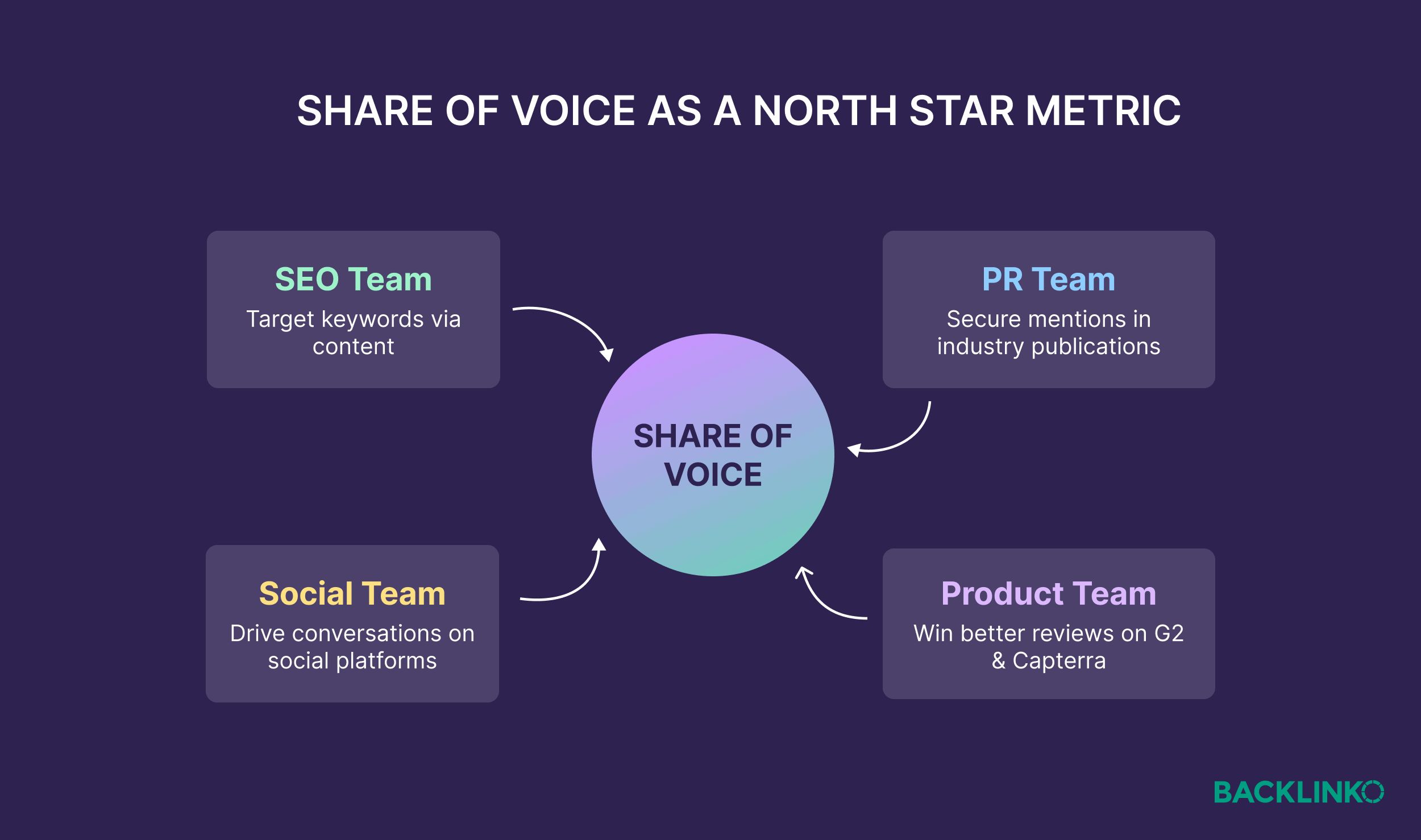
Marketing teams are often siloed: SEO focuses on clicks, PR on mentions, and social on engagement. SoV acts as a common language. When every department understands that their specific tasks contribute to the same total visibility percentage, collaboration shifts from competitive to strategic.
The Four-Step Framework to Measuring SoV
To effectively calculate your Share of Voice, follow this four-step strategic process.

Step 1: Define Your Industry Landscape
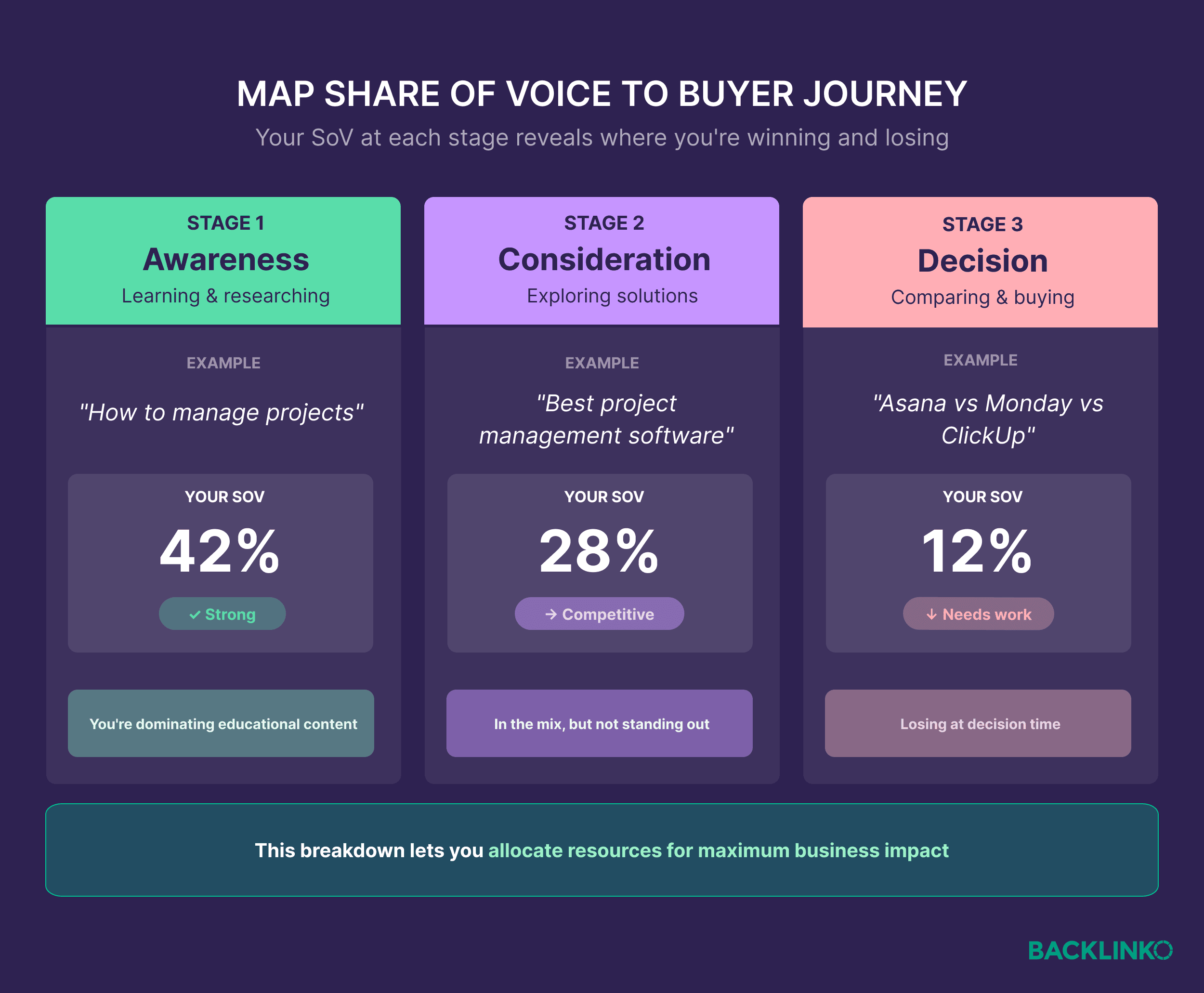
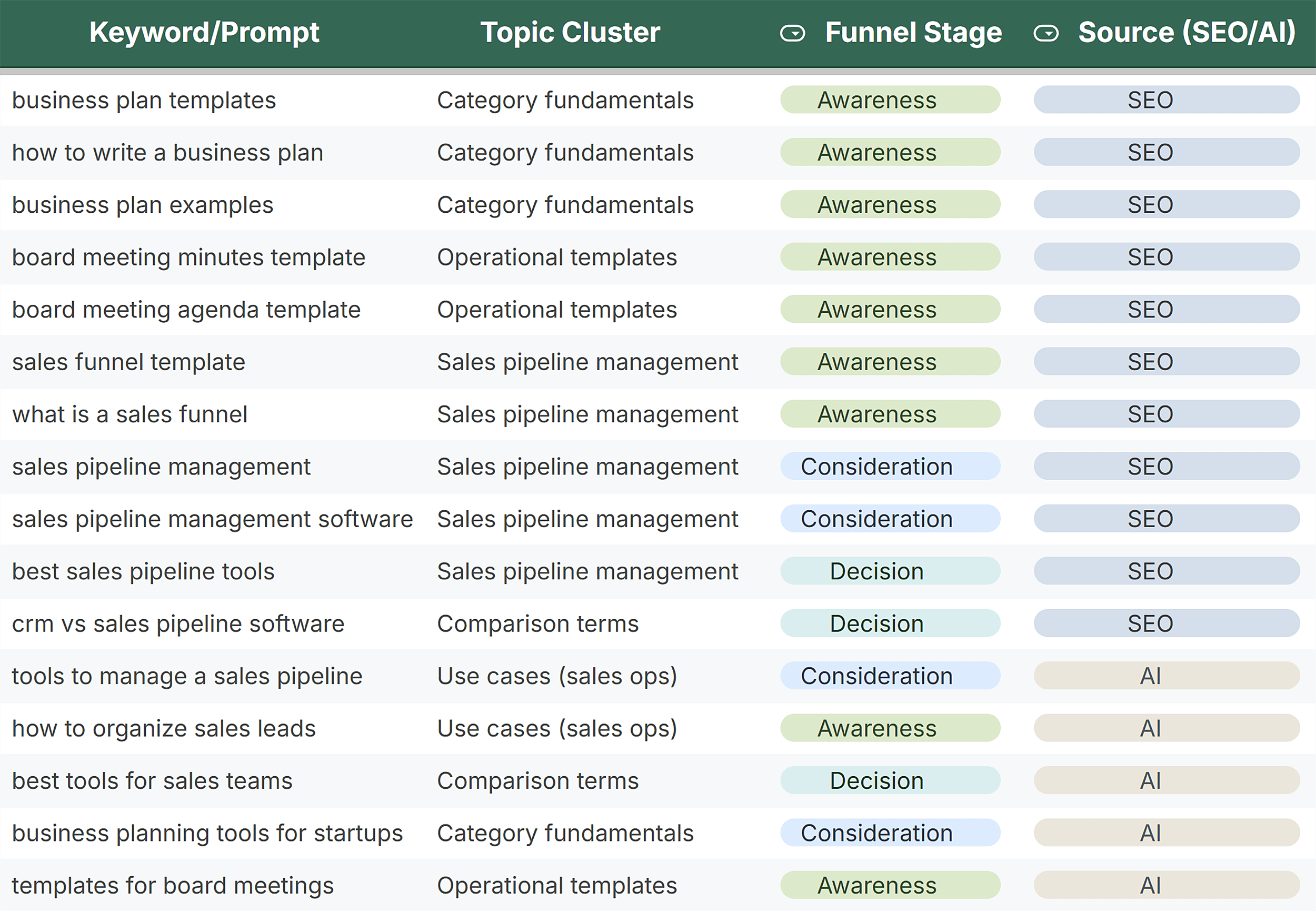
You cannot measure what you do not define. Start by outlining the specific competitors and topic clusters relevant to your revenue. Categorize these clusters into:
- Awareness: Broad industry terms.
- Consideration: Solution-oriented terms.
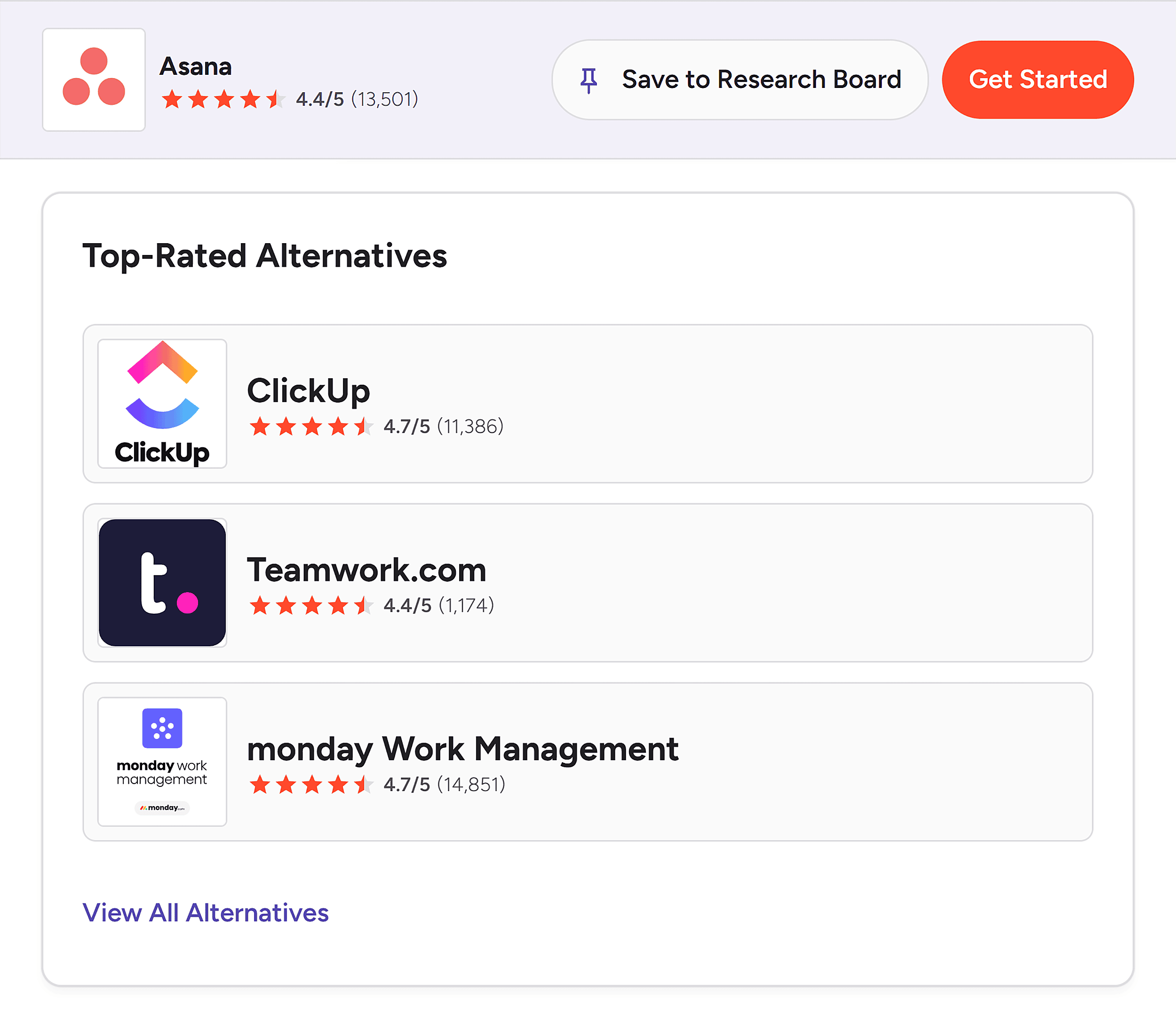
- Decision: Comparison terms (e.g., "[Your Brand] vs [Competitor]").
Step 2: Build Your Keyword & Prompt Libraries
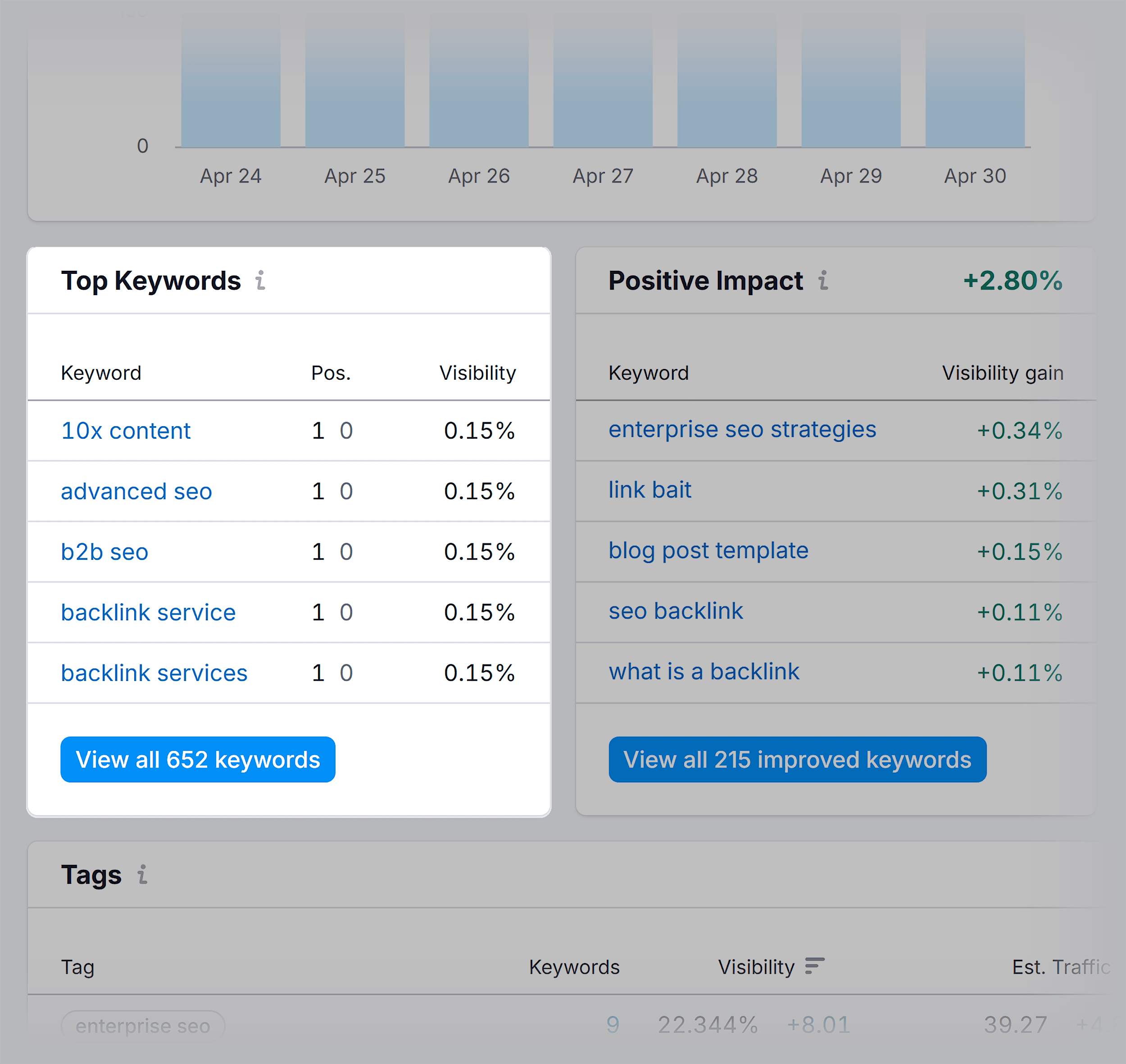
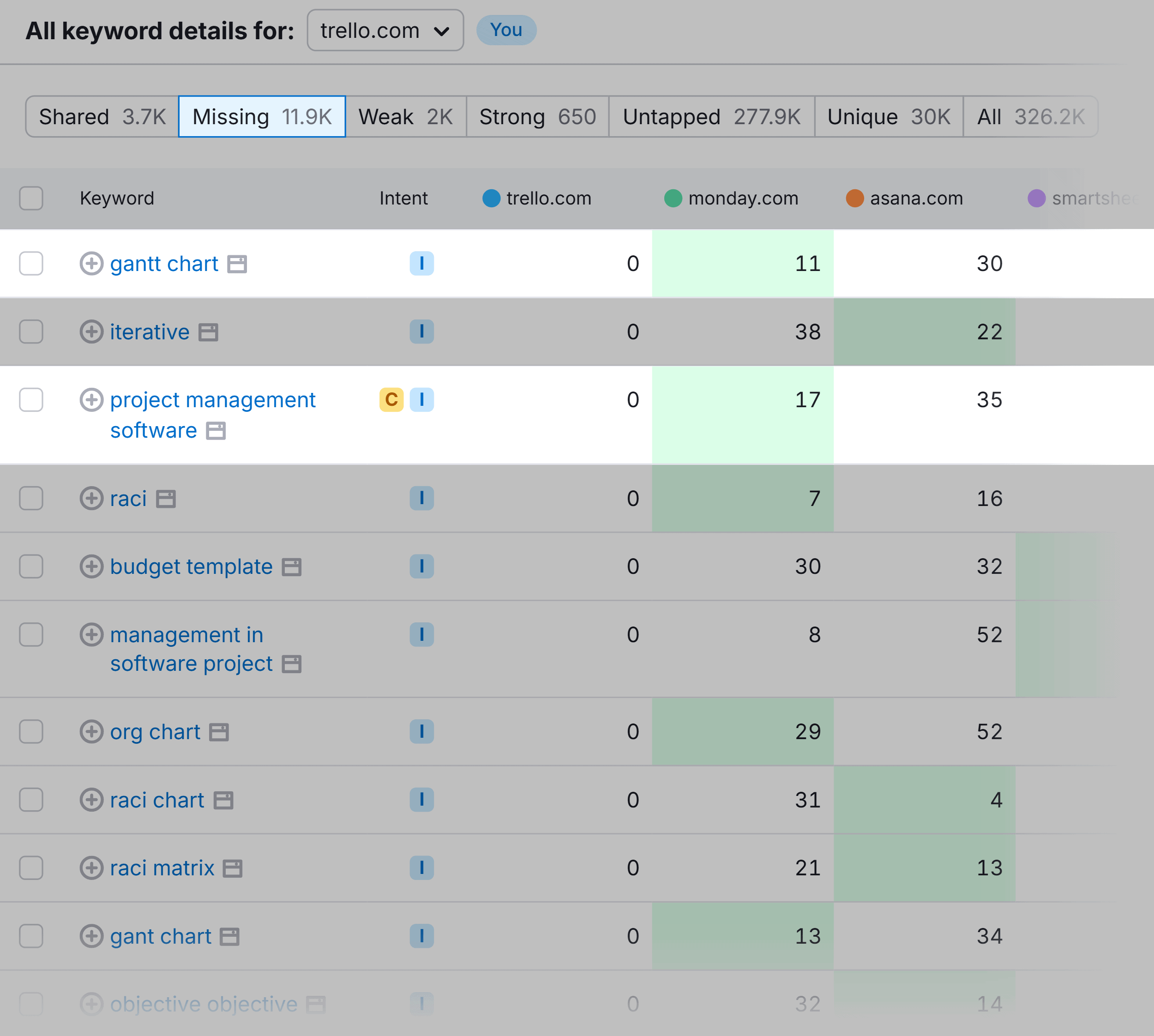
Create a library of 200–500 queries. Use Google Search Console to identify where you are currently visible, and use Semrush’s Keyword Gap tool to see where your competitors are winning. For AI prompts, look at community discussions on Reddit or G2 reviews to see how users frame their problems, then turn those pain points into natural-language prompts.

Step 3: Calculate the Data
- SEO SoV: Multiply search volume by the average CTR of your ranking position. Aggregate these figures for your brand and your competitors to find your percentage.
- AI SoV: Using an AI visibility toolkit, test your prompt library across various platforms. Count the mentions and citations, then divide your brand’s total by the aggregate number of all mentions in the category.
Step 4: Establish Your Baseline
Create a dashboard that tracks your SoV at the category, cluster, and funnel level. A monthly cadence is usually sufficient to spot trends without reacting to the noise of daily fluctuations.
Implications: Turning Data into Decisions
Once you have your SoV baseline, you must act on the findings.
- If you have high SEO SoV but low AI SoV: Your content is trusted by search engines but lacks the structure or "citable" depth required by LLMs. Focus on content chunking and authoritative, data-backed assets.
- If you have high AI SoV but low SEO SoV: You are hitting the right notes for AI, but your technical SEO foundation is weak. Invest in site speed, title tags, and internal linking to capitalize on your AI-driven authority.
- If you have low SoV in both: You are invisible. Prioritize high-impact, low-effort wins such as creating comparison pages or optimizing existing profiles on third-party review sites.
Conclusion
Share of Voice is more than a vanity metric; it is the most accurate reflection of your brand’s health in a fragmented digital ecosystem. In 2026, the brands that win will be those that stop obsessing over the individual click and start owning the entire conversation. By measuring your visibility across both traditional and AI search, you can move from reactive content creation to proactive market domination.
Disclaimer: Backlinko is owned by Semrush. This content was prepared by a professional team to provide actionable industry insights.