In a significant move to shift from a passive professional networking site to a robust, transactional ecosystem, LinkedIn has unveiled a suite of new tools designed to monetize expertise and streamline complex enterprise workflows. The most notable addition is a native consultation booking feature, which allows Premium Business subscribers to offer and facilitate paid one-on-one sessions directly through their profiles. This update, combined with new AI-driven hiring enhancements and mobile-first post promotion, signals a deliberate push by the platform to capture the burgeoning "solopreneur" economy and professional services market.
Main Facts: The "Get Advice" Initiative
For consultants, executive coaches, and independent subject matter experts, the barrier between professional visibility and actual revenue generation has long been a source of friction. Historically, users have had to direct traffic away from LinkedIn to third-party scheduling software like Calendly or Acuity, often losing prospective clients in the process of external redirection.
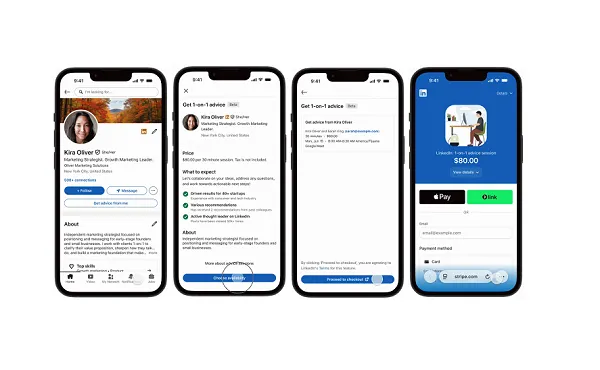
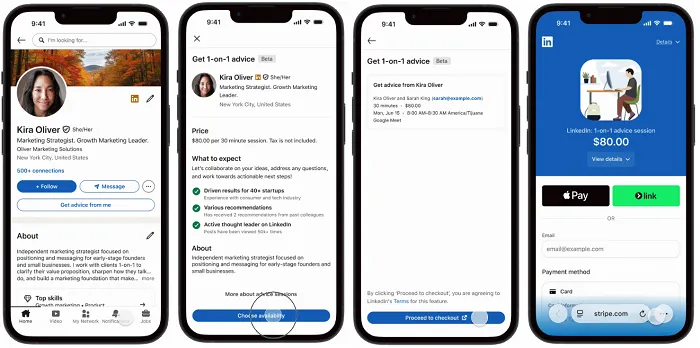
LinkedIn’s new "Get advice from me" button is designed to bridge this gap. By integrating booking, payment processing, and video conferencing into a single in-app flow, the platform is effectively shortening the sales funnel.
Key features of the new service include:
- Integrated Scheduling: Users can manage their availability directly within the LinkedIn interface.
- Streamlined Monetization: In-stream payment facilitation removes the need for external invoicing software for initial consultations.
- Profile Integration: The "Get advice from me" call-to-action is placed prominently on the user’s profile, serving as a persistent advertisement for their services.
- Native Video Hosting: Consultations can be hosted directly on the platform, ensuring a seamless end-to-end user experience.
This feature is currently rolling out to Premium Business subscribers in the United States, with broader global expansion expected throughout the year.
Chronology: A History of Evolution
To understand the weight of these updates, one must look at LinkedIn’s steady evolution from a digital resume repository to a full-stack business tool.
- 2003–2010: The Era of Digital Networking. LinkedIn’s early life was defined by simple connection building and job searching. The primary value proposition was a static, digital Rolodex.
- 2011–2016: Content and Engagement. The platform began emphasizing the "Feed" and content creation, acknowledging that passive profiles were insufficient for modern professional branding.
- 2017–2022: The Creator Economy Shift. LinkedIn began leaning heavily into video, newsletters, and the "Creator Mode," incentivizing users to become thought leaders rather than just job seekers.
- 2023–2025: Monetization and AI Integration. The platform pivoted toward direct revenue generation. The launch of Hiring Pro AI tools and the current "Get advice" feature represent the maturation of this phase. LinkedIn is now positioning itself as the primary infrastructure for professional services, not just the marketing channel for them.
Supporting Data: Why This Matters
The shift toward independent consulting is not merely a trend but a macroeconomic reality. According to recent labor market reports, the number of independent professionals and consultants in the United States has grown by over 30% since 2020.
A critical issue with the "old" LinkedIn model was the "vanity metric" problem. Users would strive to hit 500+ connections, believing that reach equated to influence. However, data has consistently shown that engagement does not always correlate to income. For many, a massive network remained unmonetized.
By providing a direct path to transaction, LinkedIn is attempting to solve the "ROI of connection" problem. If a user has 10,000 connections but zero ways to convert that network into a paid service, the network is arguably low-value. By enabling paid consultations, LinkedIn is effectively raising the "floor" of value for every connection a user possesses.
Official Responses and Strategic Rationale
LinkedIn’s corporate messaging regarding these updates emphasizes "reducing friction" and "scaling expertise."
In their official announcement, the company stated: "This new feature lets you offer paid 1-on-1 consultations directly from your LinkedIn profile. You can manage bookings, secure payments, and host video consultations all in one place. For consultants, coaches, and creators, it removes friction right where clients discover you and helps you get paid for what you already know."
Industry analysts suggest that this move is a defensive and offensive play. By keeping the entire transaction within their ecosystem, LinkedIn gains access to valuable data regarding what expertise is being bought and sold, at what price points, and by which industries. This data is invaluable for training their future AI models and for refining their "Premium" subscription tiers.

AI Advancements in Recruitment: Hiring Pro
Beyond the consultation features, LinkedIn is doubling down on its "Hiring Pro" suite. As manual recruitment remains a labor-intensive, time-consuming process for HR departments and small business owners alike, LinkedIn is deploying AI to act as a force multiplier.
The new updates allow recruiters to:
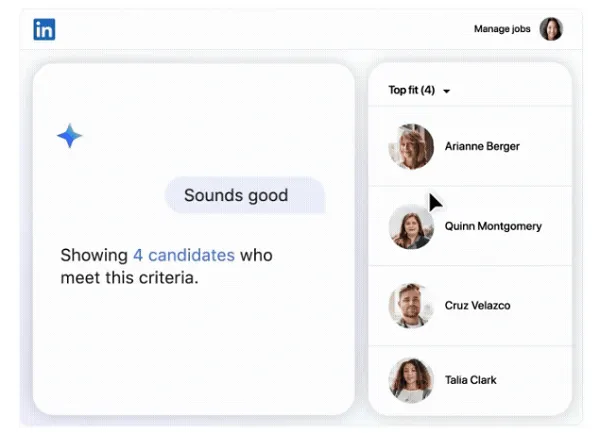
- Refine Qualifications via Plain Language: Instead of complex boolean search strings, recruiters can describe their ideal candidate in natural language.
- Automated Shortlisting: The AI analyzes the candidate pool to surface the most relevant matches, reducing the "resume review fatigue" common in high-volume hiring.
- Collaborative Evaluation: Integrated tools allow teams to share feedback and align on hiring criteria, keeping the entire process within the LinkedIn workflow.
The philosophy here is clear: replace repetitive, administrative "drudge work" with intelligent automation, allowing recruiters to focus on the human element—the interview and relationship-building phase.
Implications for the Future of Work
The introduction of these tools carries significant implications for three distinct groups:
1. For Independent Consultants
The barrier to entry for starting a coaching or consulting business has effectively been lowered. You no longer need a dedicated website, a payment processor like Stripe, or a third-party booking tool to get started. LinkedIn is providing the "all-in-one" solution. However, this may lead to a saturated market where competition for "advice" becomes fiercer, forcing consultants to differentiate their personal brand more aggressively than ever.
2. For Small and Medium Businesses (SMBs)
The ability to boost posts directly from the mobile app, combined with AI-assisted recruitment, provides SMBs with the capabilities of a much larger enterprise. It levels the playing field, allowing smaller firms to compete for talent and client attention without needing a dedicated marketing or HR department.
3. For LinkedIn’s Platform Strategy
LinkedIn is evolving into a "Professional Operating System." By capturing the transaction (payments), the workflow (recruitment), and the content (the feed), the platform is making itself indispensable. The long-term implication is a transition from a platform users check to a platform where users work.
Conclusion: A High-Stakes Transformation
LinkedIn’s latest updates represent more than just new buttons or features; they represent a fundamental shift in the site’s value proposition. By integrating paid consultations and AI-driven hiring, LinkedIn is signaling that it wants to be the primary engine of the global professional economy.
For the average user, the takeaway is clear: the platform is no longer just for finding a job—it is for building, managing, and monetizing a career in real-time. Whether these tools will effectively translate into higher earnings for the average subscriber remains to be seen, but the infrastructure for that transition is now firmly in place. As the digital landscape continues to favor agility and direct-to-consumer professional services, LinkedIn is positioning itself to be the indispensable partner for the next generation of workers.