Executive Summary: A New High-Water Mark for Global Logistics
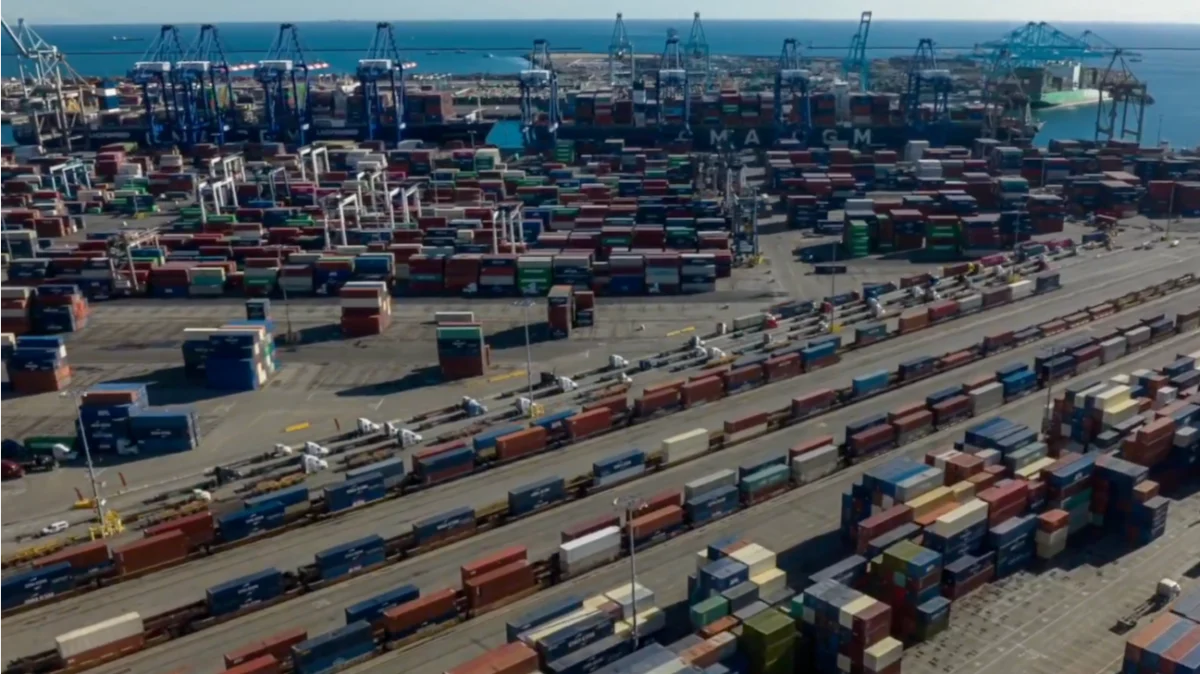
In a landmark moment for the maritime industry, the Port of Los Angeles has etched its name into the history books. During the month of September, the facility processed an unprecedented 1.42 million twenty-foot equivalent units (TEUs), marking the single busiest month in the port’s long history. More significantly, this volume represents the highest monthly throughput ever recorded by any port in the Western Hemisphere.
Executive Director Gene Seroka attributed this explosive growth to a "perfect storm" of logistics factors. Driven by resilient consumer demand, strategic cargo diversions from constrained traditional routes like the Panama and Suez Canals, and the proactive efforts of shippers to manage tariff-related costs, the Port of Los Angeles has cemented its status as the primary gateway for U.S.-bound trade.
Chronology of the Record-Breaking Quarter
The record-breaking performance in September was not an isolated incident but the culmination of a robust third quarter. The period from July through September stood as the strongest three-month stretch in the port’s history, handling nearly 3 million TEUs. When combined with the figures from June, the port moved a staggering 4 million containers in a four-month window.
Looking at the year-to-date performance, the Port of Los Angeles has handled approximately 8.1 million TEUs through September 2026. This represents a 3% increase over the same period in 2025, signaling a steady, if not accelerating, upward trajectory despite the volatility inherent in the global economy.
The month-over-month breakdown for September reveals the breadth of this activity:
- Loaded Imports: 546,000 TEUs, a 19% increase year-over-year and 26% higher than the five-year average.
- Loaded Exports: 126,000 TEUs, marking a 10% gain.
- Empty Containers: 371,000 units, a record volume as carriers aggressively repositioned equipment back to Asian manufacturing hubs to prepare for the next cycle of inventory replenishment.
Supporting Data: Shifts in Global Trade Patterns
The record volume at Los Angeles highlights a broader structural shift in global trade. For decades, China was the undisputed juggernaut of U.S. manufacturing imports. However, recent data from the Port of Los Angeles reveals a diversifying landscape.
Vietnam has ascended to the position of the port’s second-largest trading partner, with volumes originating from the Southeast Asian nation quadrupling over the past decade. Thailand has also broken into the port’s top five trading partners for the first time. According to Seroka, China’s share of the port’s total business has receded from 60% to 40%.
The Complexity of "Diversification"
While the shift away from China is statistically evident, industry experts warn against interpreting these numbers as a wholesale decoupling. Harvard Business School Professor Willy Shih, who joined Seroka in a recent media briefing, argued that companies are currently "optimizing for options" rather than solely for the lowest cost.
"Frequent policy changes and tariff uncertainty make long-term commitments incredibly difficult," Shih noted. "What we are seeing is a shift in final assembly, not necessarily a total abandonment of upstream dependence."
Shih emphasized that many products now arriving from Vietnam or Mexico still rely heavily on components manufactured in China. He cautioned that building comparable, integrated supplier networks in regions like Mexico is a monumental task that could take approximately a decade to fully realize.
Official Responses and Strategic Outlook
Looking toward the final quarter of 2026, the Port of Los Angeles maintains an optimistic, yet cautious, outlook. Executive Director Gene Seroka projects an October volume of approximately 900,000 TEUs.
Several factors contribute to this sustained volume:
- Schedule Disruptions: Typhoon activity in Asia has caused ripple effects, leading to "roll pools" where cargo is delayed before eventually flooding into the port.
- Holiday Inventory: Despite the peak season beginning to wind down, retailers are continuing to replenish inventories to ensure shelf availability through the end of the year.
- Route Diversions: Drought-related restrictions at the Panama Canal and the ongoing security crises in the Red Sea (impacting Suez Canal traffic) have made the trans-Pacific route to Los Angeles more attractive. Carriers and shippers are prioritizing the speed and reliability of the U.S. West Coast over the risks associated with traditional canal transit.
Operational Implications: Beyond the Docks
With record-breaking volume comes the challenge of operational throughput. Seroka noted that the port is currently functioning at a high level of efficiency, with truck turn times remaining healthy and large container vessels being turned around in roughly four days.
However, the port authority is keeping a watchful eye on the inland supply chain. As holiday goods move out of the terminals and toward distribution centers across the United States, rail dwell times have become a point of friction. "The fluid movement of containers onto rail is critical," Seroka stated. "We are monitoring dwell times closely to ensure that the record volumes we see at the wharf don’t become bottlenecks further downstream."
The Impact of Tariffs and Policy Uncertainty
The shadow of potential tariff changes remains the most significant variable for the logistics sector. Importers are currently engaged in a high-stakes game of inventory management, making rapid procurement decisions based on fluctuating cost projections, shifting consumer demand, and looming policy deadlines.
"Purchase orders out of Asia remain solid," Seroka explained, "but the visibility for November and December is murkier than usual." The unpredictability of trade policy has forced companies to move away from "just-in-time" inventory models toward a "just-in-case" strategy. This change in philosophy is a major driver of the high TEU volumes, as companies hedge against future supply chain disruptions or sudden cost escalations.
Conclusion: A New Era for the Western Hemisphere
The Port of Los Angeles has proven that it can handle the immense pressures of modern global trade, even when faced with regional conflicts, environmental challenges at shipping canals, and geopolitical shifts in manufacturing. By processing 1.42 million TEUs in a single month, the port has demonstrated that it is the linchpin of the North American economy.
As the industry moves toward the end of 2026, the focus will shift from simple volume records to operational resilience. The ability to manage the delicate balance between diverse manufacturing origins, complex inland rail networks, and a fluctuating regulatory environment will define the success of ports and logistics providers in the years to come. For now, the Port of Los Angeles stands not just as a hub of commerce, but as a barometer for the health and adaptability of the global supply chain.
About the Future of Freight
The logistics industry continues to evolve at a breakneck pace. As we look toward the conclusion of 2026, industry leaders are gathering to discuss these very challenges—from compliance and insurance to technological integration.
For those interested in the future of the sector, the F3: Future of Freight Festival will be held in Chattanooga, TN, from October 27–28, 2026. The event will feature industry-defining keynotes, technology demonstrations, and networking opportunities for professionals navigating these complex market dynamics. Preceding the festival, the Brokerage Compliance Symposium and the F3 Awards Dinner will provide further insights into the best practices defining the next generation of global trade.