In an era defined by rapid technological advancement, the invisible web of digital networks has become the central nervous system of modern civilization. From the orchestration of global supply chains to the instantaneous coordination of emergency response teams, connectivity is no longer a luxury—it is a fundamental human requirement. Yet, as the world grapples with the accelerating realities of climate change, these "digital lifelines" face unprecedented threats.
This year’s observance of World Telecommunication and Information Society Day, centered on the theme "Digital lifelines—Strengthening resilience in a connected world," serves as a stark reminder: our physical and digital infrastructures are inextricably linked to the stability of the climate. As extreme weather events shift from "once-in-a-century" anomalies to recurring operational realities, the imperative to fortify our connectivity against environmental volatility has never been more urgent.
Main Facts: The New Reality of Infrastructure Risk
For decades, digital infrastructure was designed under the assumption of a stable, predictable climate. Today, that assumption has collapsed. According to recent insights from industry leaders like Nokia, the impact of climate change has transitioned from a long-term environmental concern to a direct, systemic operational risk.
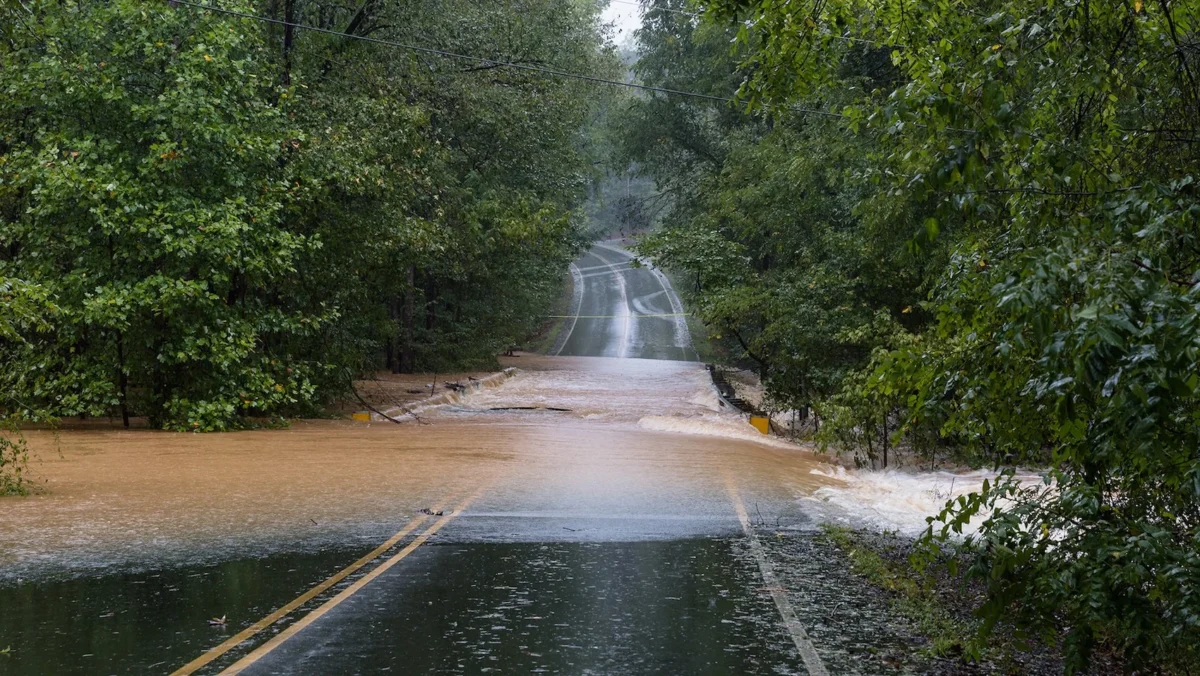
At its core, the challenge is one of interdependency. When a flood compromises a power grid, cell towers go silent. When a wildfire severs fiber-optic cables, hospitals lose access to digital patient records, and emergency services lose their ability to coordinate. This creates a domino effect where a localized climate event can trigger a wide-scale societal paralysis.
The goal of modern infrastructure engineering is no longer just "performance"; it is "resilience." Resilience is defined as the capacity of critical systems—connectivity, energy, and public services—to anticipate, withstand, recover from, and adapt to shocks. Achieving this requires a holistic view that treats our technological backbone not as a collection of isolated components, but as a deeply integrated, interdependent ecosystem.
Chronology: The Escalation of Environmental Stress
The trajectory of climate-induced disruption can be categorized into three distinct phases of evolution:
- The Era of Predictability (Pre-2000s): Infrastructure was built based on historical weather patterns. Failures were typically mechanical or human-made, and recovery protocols were standardized.
- The Era of Isolated Disruption (2000–2015): Extreme weather events began to occur with slightly higher frequency. These were treated as "black swan" events—unexpected shocks that required reactive, temporary fixes.
- The Era of Systemic Stress (2015–Present): We have entered a period where weather events are becoming more intense, clustered, and prolonged. The cumulative stress on physical assets (such as hardware overheating or being submerged) is exceeding the design tolerances of equipment installed just a decade ago.
This chronology demonstrates that we are currently in a race against time. As climate models project higher-emission scenarios, the "clustering" effect—where one disaster follows another before systems can be fully restored—is becoming the new standard.
Supporting Data: A Trans-Continental Risk Assessment
To quantify these threats, Nokia has partnered with the Clinton Global Initiative (CGI) to conduct a rigorous risk assessment. By synthesizing World Bank projections, EM-DAT disaster data, and primary field surveys across the United States and India, the research highlights a sobering reality.
The United States: The Storm Surge
In the U.S., the data reveals an unmistakable upward trend in high-impact storm activity. Peak years have already seen as many as 23 major storm events, but the concern lies in the intensity of precipitation. Increased moisture in the atmosphere is leading to more concentrated, violent rainfall events that overwhelm existing drainage systems, directly threatening underground fiber-optic networks and ground-level server facilities.
India: The Heat and Flood Paradox
In India, the data points to a dual-pronged crisis. First, there is the increasing flood risk driven by massive, erratic precipitation. Projections suggest that days exceeding 50mm of rainfall could increase by up to seven times compared to historical baselines. Simultaneously, the region is experiencing prolonged, severe pre-monsoon heat waves. This "persistent heat" degrades the performance of communication equipment, which is often rated for lower temperature ranges, leading to premature hardware failure and thermal throttling of high-speed networks.
Across both geographies, the research concludes that these events are no longer isolated. They are systemic, compounding, and evolving.
Official Responses and Strategic Frameworks
Addressing these risks requires a shift in how corporations and governments perceive sustainability. For organizations like Nokia, the strategy for climate resilience is built on a three-pillar framework:
1. Hardening the Assets
This involves re-engineering physical infrastructure to withstand extreme conditions. This includes elevating equipment to prevent flood damage, implementing advanced cooling solutions to combat rising ambient temperatures, and utilizing materials that resist corrosion from humidity and salt air.
2. Intelligent Network Management
AI is no longer a buzzword; it is a critical tool for resilience. By deploying machine learning models, network operators can now predict potential failure points before they occur. AI-driven "self-healing" networks can reroute traffic automatically when a node is threatened by a wildfire or flood, ensuring that communication lifelines remain active even when portions of the grid are destroyed.
3. Energy Efficiency and Circularity
Resilience cannot come at the cost of sustainability. Nokia emphasizes that responsible resource use—such as powering base stations with localized renewable energy and ensuring the circularity of hardware components—is essential. By reducing energy consumption, networks become less reliant on the main power grid, which is often the first system to fail during a disaster.
The Role of Technology in Crisis Recovery
The most significant contribution of modern telecommunications is the ability to facilitate continuity. During a crisis, the difference between an organized response and chaos is data.
- Anticipation: Using real-time weather analytics to preposition repair crews and backup power units before a storm makes landfall.
- Withstanding: Deploying "network-in-a-box" solutions—portable, ruggedized communication cells that can be parachuted or trucked into disaster zones to provide instant connectivity for emergency responders.
- Recovery: Utilizing remote diagnostics to pinpoint the exact location of a network break, allowing crews to bypass hazardous areas and focus on critical repairs that restore the most connectivity to the greatest number of people.
Implications: Why Resilience Matters for Society
The implications of failing to secure our digital lifelines are profound. When networks fail, the ripples are felt immediately:
- Public Health: Hospitals lose the ability to manage triage or communicate with ambulances.
- Economic Stability: Financial transactions stall, halting supply chains and preventing the flow of relief funds.
- Social Cohesion: The inability for citizens to contact loved ones or receive emergency alerts from authorities leads to panic and misinformation.
Ultimately, resilience is a human-centric endeavor. It is about ensuring that, in our most vulnerable moments, the promise of a "connected world" holds true.
However, the magnitude of the climate challenge is too great for any single entity to manage. True resilience requires a tripartite alliance between the private sector (telecommunications providers), the public sector (governments and regulatory bodies), and humanitarian organizations. This collaboration must focus on shared data, standardized disaster protocols, and a commitment to ensuring that digital connectivity is treated as a universal right, especially in the regions most susceptible to climate change.
Conclusion: Building for the Future
The path forward is clear. Climate adaptation is the journey, and climate resilience is the destination. We are transitioning from a world where we built for the "average" to a world where we must build for the "extreme."
As we look toward the future, the integration of AI, sustainable energy practices, and robust physical engineering will determine whether our digital lifelines remain the backbone of society or become its most vulnerable link. By investing in resilience today, we are not just protecting hardware and data; we are protecting the people who rely on these connections to survive, recover, and rebuild. The digital world is no longer just a space for information—it is the lifeline upon which our collective future depends.