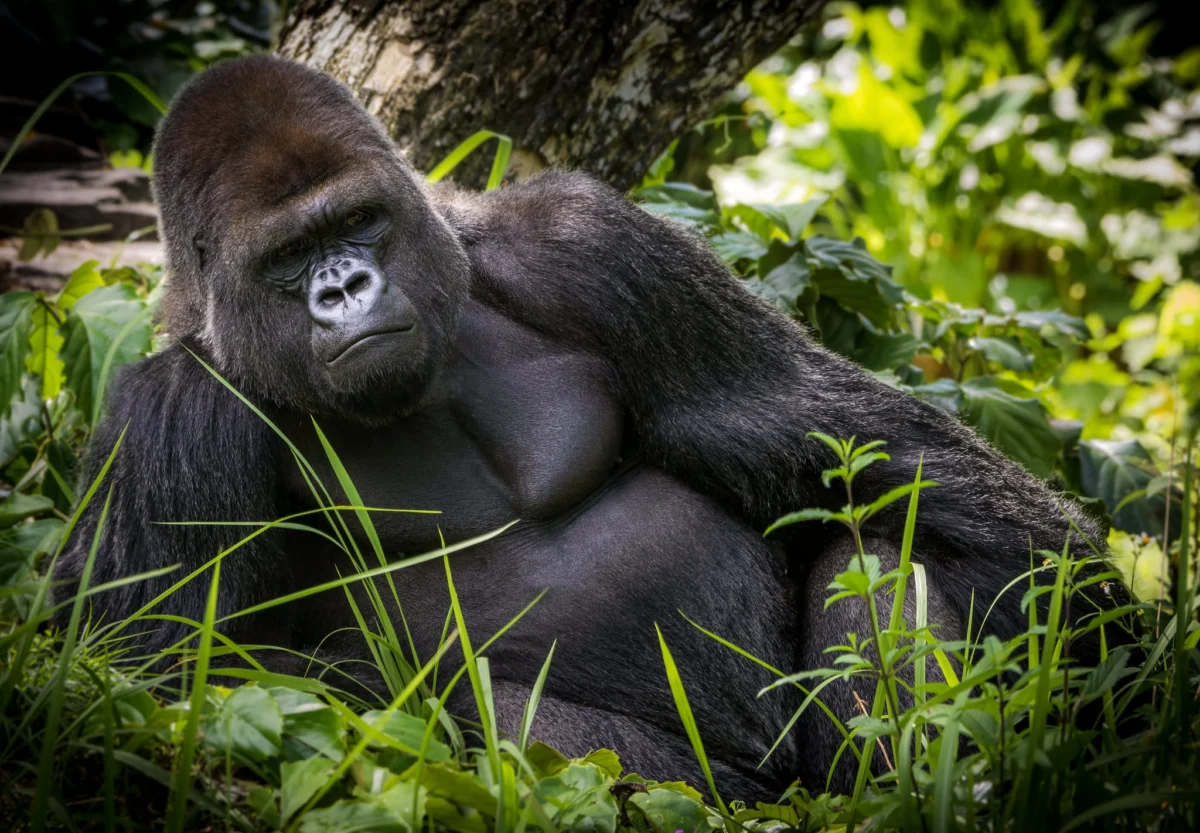
As the world marks World Gorilla Day 2026, the global community turns its gaze toward the lush, emerald heart of Africa. It is a moment of reflection, not just for the conservationists working in the field, but for every individual who recognizes that our fate is inextricably linked to the survival of our closest biological relatives. Gorillas, these powerful, intelligent, and profoundly sentient beings, serve as a mirror to our own humanity. Yet, the reflection is currently one of fragility.
From the mist-covered volcanic slopes of the Virunga Mountains to the dense, humid lowland basins, the four distinct subspecies of gorillas—the Mountain, Eastern Lowland, Western Lowland, and Cross River—are battling for survival against a rising tide of human-induced threats. As we revisit their stories, the urgency of their plight becomes clear: we are at a critical juncture where inaction is no longer an option.
Main Facts: The Four Faces of the Gorilla
Gorillas are divided into two primary species: the Eastern Gorilla (Gorilla beringei) and the Western Gorilla (Gorilla gorilla). Each species is further split into two subspecies, totaling four distinct groups that occupy specific niches across the African continent.
The Eastern Gorilla
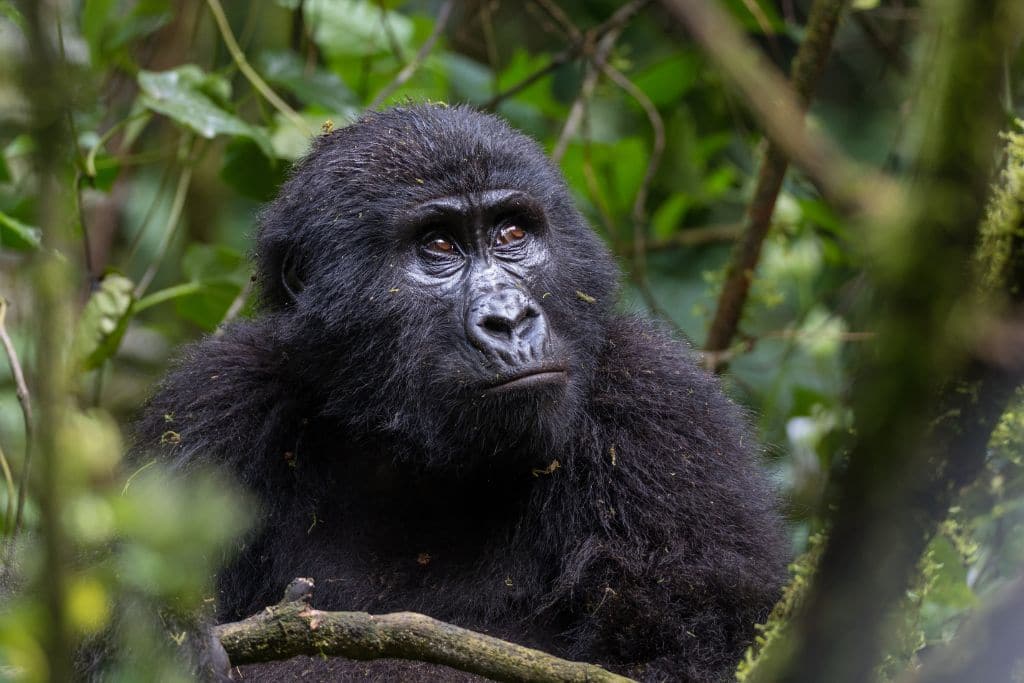
- Mountain Gorilla: Perhaps the most famous of the great apes, these individuals reside in the high-altitude forests of the Virunga Massif and Bwindi Impenetrable National Park. They are characterized by their thick fur, designed to withstand cold temperatures, and their highly cohesive social structures.
- Eastern Lowland Gorilla (Grauer’s Gorilla): The largest of all gorilla subspecies, these giants are found exclusively in the eastern Democratic Republic of the Congo. They are a keystone species, vital to the health of their forest ecosystems.
The Western Gorilla
- Western Lowland Gorilla: These are the most numerous and widespread of all gorillas, inhabiting the vast, swampy forests of Central Africa. Despite their higher population counts, they are under constant pressure from disease and illegal hunting.
- Cross River Gorilla: The rarest of them all, this population is isolated to a small, mountainous range on the border between Nigeria and Cameroon. Their extreme scarcity makes them particularly vulnerable to genetic bottlenecks and habitat fragmentation.
A Chronology of Conservation and Conflict
The relationship between humans and gorillas has shifted dramatically over the last century.
1902: The formal "discovery" of the Mountain Gorilla by Captain Robert von Beringe initiates a history of scientific fascination and exploitation.
1967: Dian Fossey establishes the Karisoke Research Center in Rwanda. Her groundbreaking, albeit controversial, work shifts the global perception of gorillas from "fearsome monsters" to vulnerable, complex family groups. This period marks the beginning of modern, intensive primate monitoring.
1994: A catastrophic Ebola outbreak in Minkébé, Gabon, serves as a sobering wake-up call. The epidemic decimated local gorilla populations, illustrating that diseases—often zoonotic in origin—can wipe out large swaths of apes in months.
2016: The IUCN updates its Red List, classifying the Eastern Gorilla as Critically Endangered. This designation highlights that even with increased protection, the pace of environmental change is outpacing natural recovery.

2020–2026: Recent years have seen a mix of hope and tragedy. While Mountain Gorilla populations have shown a modest, "miraculous" recovery to approximately 1,000 individuals, the Eastern Lowland and Cross River populations remain trapped in a cycle of instability, exacerbated by regional political instability and the illegal trade in wildlife.
Supporting Data: The Numbers Behind the Decline
The statistics regarding the current state of these populations are sobering. Data provided by the International Union for Conservation of Nature (IUCN) and regional wildlife authorities paint a picture of a species on the precipice:
| Subspecies | Estimated Population | Conservation Status |
|---|---|---|
| Mountain Gorilla | ~1,000 | Endangered |
| Eastern Lowland | <6,800 | Critically Endangered |
| Western Lowland | 150,000 – 250,000 | Critically Endangered |
| Cross River | 200 – 300 | Critically Endangered |
These figures, however, do not tell the whole story. The sheer scale of habitat loss is perhaps the most quantifiable threat. Satellite imagery indicates that over 30% of the natural range for the Eastern Lowland Gorilla has been lost or degraded since the early 2000s due to illegal mining operations (often extracting coltan for electronics) and subsistence farming.
The Drivers of Extinction: A Multi-Front War
The decline of the gorilla is not the result of a single factor, but rather a "perfect storm" of human-driven pressures.

1. Habitat Fragmentation
As human populations in Central Africa grow, the demand for agricultural land increases. Forests are cleared, creating a "mosaic" of small patches. This forces gorillas into smaller, isolated islands of vegetation, preventing genetic exchange between groups and limiting access to seasonal food sources.
2. The Illegal Wildlife Trade
While adult gorillas are rarely targeted for their skins, they are frequent collateral damage in the bushmeat trade. Furthermore, the capture of infants for the illegal pet trade remains a persistent threat. The removal of a single dominant silverback or a breeding female can effectively destabilize an entire family unit.
3. Zoonotic Disease
Because humans and gorillas share approximately 98% of their DNA, they are highly susceptible to the same pathogens. Respiratory illnesses, common in humans, can be fatal to gorillas. The 1994 Ebola outbreak remains the most striking example of how quickly a viral transmission can undo decades of conservation progress.
Official Responses and Strategic Interventions
Governments and NGOs have begun to adopt more integrated approaches to ensure the future of these primates.

The Dian Fossey Gorilla Fund
The Fund has pivoted from passive observation to active guardianship. By deploying anti-poaching patrols and utilizing satellite data to map forest health, they are tackling the root causes of population decline. Their "community-first" approach ensures that local villagers are beneficiaries of conservation, rather than obstacles to it.
The Jane Goodall Institute (JGI)
The JGI focuses heavily on the human side of the equation. By promoting sustainable agriculture and education, they reduce the pressure on local populations to rely on forest resources, thereby protecting the core habitat that gorillas require to thrive.
International Policy
The CITES (Convention on International Trade in Endangered Species) framework continues to provide the legal teeth necessary to combat the international trafficking of great apes. However, enforcement remains a significant challenge in remote, conflict-prone regions.
The Implications: Why We Must Act
The disappearance of the gorilla would be more than a biological tragedy; it would be an ecological catastrophe. Gorillas are "gardeners of the forest." They consume vast quantities of fruit and disperse seeds across long distances, playing a fundamental role in the regeneration of the forests that act as critical carbon sinks. If these forests fail, the global climate crisis will only accelerate.

Furthermore, there is a profound ethical implication. As we look at the eyes of a silverback, we see a creature capable of empathy, complex social bonds, and high-level reasoning. To let them vanish under our watch would be a failure of our responsibility as stewards of the Earth.
Looking Forward: A Call to Stewardship
As Dian Fossey famously noted: "When you realize the value of all life, you dwell less on what is past and concentrate more on the preservation of the future."
This is the central theme of World Gorilla Day 2026. The future of the gorilla is not yet written in stone. With continued investment in community-based conservation, stringent protection of protected areas, and a global commitment to reducing the demand for products that drive habitat destruction, we can ensure these gentle giants remain in their ancestral homes.
The resilience of the Mountain Gorilla proves that when we intervene with purpose and science, the natural world can recover. We must carry that lesson forward. We do not just save the gorilla for the sake of the species; we save them for the sake of the planet, and ultimately, for the sake of ourselves. Our shared heritage in the forest is not a legacy to be discarded—it is a responsibility to be honored.