Warsaw, Poland – The stark realities of the Polish-Belarusian border are far more complex than simple statistics of intercepted crossings or official cause-of-death reports. A groundbreaking investigative report, "The Death Zone: How a Regime of Forced Pushbacks Was Created on the Polish-Belarusian Border," published by Border Forensics in conjunction with research projects Circumference of Violence and Infrastructuring Nature, paints a chilling picture of how deliberate policies and infrastructural choices have transformed a vital borderland into a landscape of human suffering and preventable death.
The report, a culmination of extensive research by experts including Katarzyna Czarnota, who led investigations into the border for the Helsinki Foundation for Human Rights from 2021 to 2024, challenges the prevailing narrative that attributes migrant deaths solely to natural causes like hypothermia or drowning. Instead, it argues that these tragedies are the direct, and often foreseen, consequence of state-sanctioned actions and a deliberately constructed environment of violence.
The Human Cost of State Policy: A Stark Reality
The chilling account begins with a desperate plea: in the winter of 2021, Katarzyna Czarnota received a call from a woman seeking an ambulance for three teenage boys, aged 16 or 17, who had spent days lost in the ancient Bialowieza Forest. They were surviving on leaves and drinking from puddles. The dispatcher’s response was blunt: "They are illegal migrants. I’m not sending an ambulance." This refusal, Czarnota recounts, exemplifies a systemic disregard for human life that has become tragically common along this volatile frontier.
Official reports often cite physiological causes for migrant deaths – hypothermia, drowning, cardiac arrest. However, Czarnota points out that these terms obscure the crucial question: "Why were they exposed to deadly conditions in the first place?" The report meticulously dissects 102 documented deaths and 214 partial reports of missing persons in the Polish-Belarusian border region. Its overarching conclusion is unequivocal: the policies, infrastructure, and practices of authorities on both sides of the border have "knowingly exposed" migrants to life-threatening natural conditions.
Unraveling the Cycle of Violence: A Forensic Approach
The methodology employed in "The Death Zone" draws inspiration from forensic architecture, a field pioneered by Eyal Weizman at Goldsmiths, University of London. This approach utilizes satellite imagery, 3D modeling, and spatial analysis to investigate state-sanctioned violence. Charles Heller, the lead researcher for the report and an early practitioner of forensic architecture, co-founded Border Forensics in 2021 to extend these methods to border regions worldwide.
This innovative approach allows researchers to map the accumulation and escalation of harm. "Migrants traversing border areas experience multiple, interconnected forms of violence, while being trapped there for weeks or months, in cycles of pushbacks and returns," Heller explains. The report details how violence perpetrated by law enforcement on both sides intertwines with the harm inflicted by border infrastructure and, crucially, by the environment itself, which becomes weaponized.
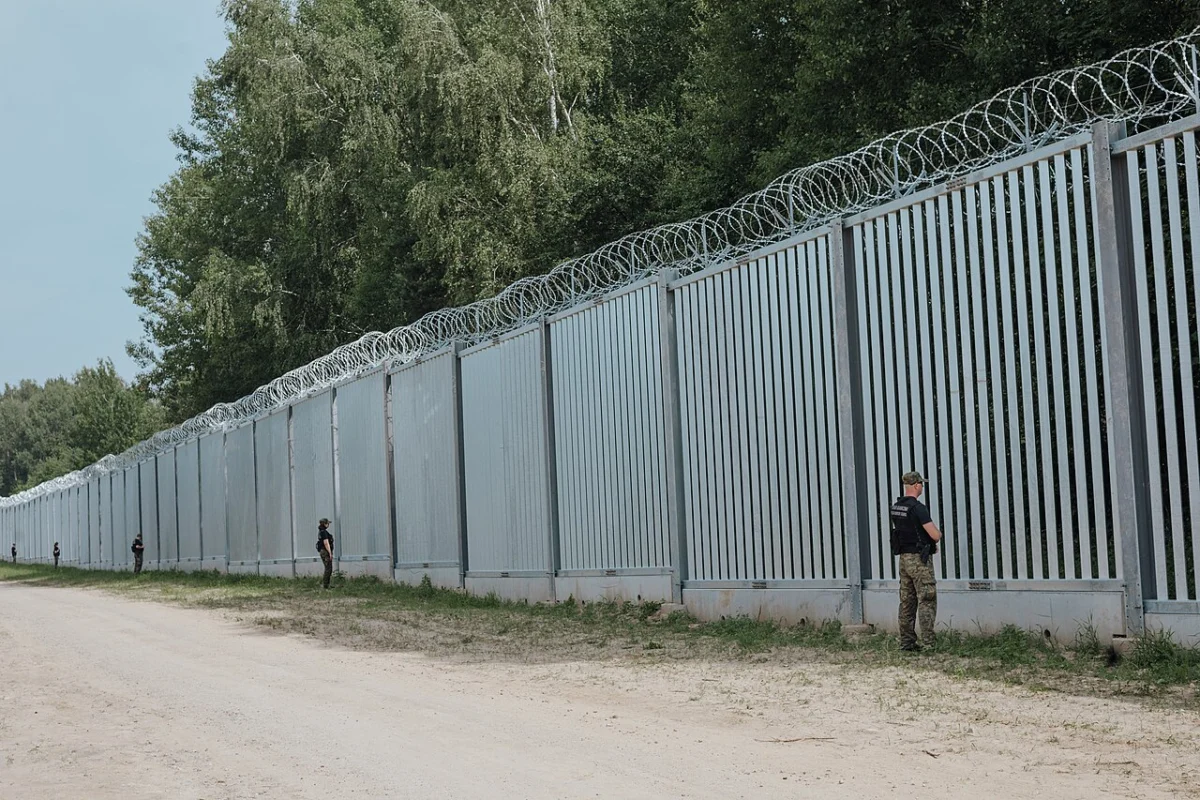
The mechanism is often described as follows: migrants are subjected to violence by Belarusian officers, and sometimes by smugglers, before being intercepted and pushed back by Polish border guards. Those who attempt to scale the 5.5-meter-high fence are injured by barbed wire and may suffer broken bones or limbs upon falling. Unable to cross, they often linger in border areas and retreat deeper into the dense Bialowieza Forest to evade capture. This, in turn, exposes them to harsh elements, rivers, and freezing winter temperatures.
"The 102 deaths we focus on are primarily the result of environmentally mediated harm," Heller states. However, he emphasizes that the environment becomes dangerous and deadly not due to natural conditions, but because it is transformed into a "territory of violence through legislation, law enforcement practices, and border infrastructure."
To substantiate this claim, the researchers modeled how prolonged exposure to cold exacerbates when individuals are trapped, comparing these simulations with locations from which help calls were made. While a single map cannot definitively explain why people died precisely where they were found, Heller stresses the vital role of traditional investigative techniques. "Investigative techniques like interviews, testimonies, and statistics are absolutely essential," he notes. "The power of spatial and visual methods truly emerges when they are combined with these approaches."
Geostatistical analysis was used to test models initially identified through interviews and testimonies gathered by the Polish group "We Are Monitoring," as well as through reconstructions of ten fatal incidents. Czarnota describes this as a "counter-investigation." "If, for example, someone drowned, we examine how they ended up in the water – including whether there was a forced pushback and if their death was linked to the actions or inactions of state actors like the Border Guard, police, or army," she explains.

In Poland, prosecutors automatically open investigations when a body is found. However, border cases often stall. The initial investigation into deaths near the Belarusian border, covering bodies found from autumn 2021 to the end of 2022, saw prosecutors in Suwalki examine 12 deaths, closing 11 cases, as reported by Radio Bialystok in March 2024. Czarnota attributes this to the fact that these cases are typically treated as potential instances of negligent homicide.
"This framework requires direct action and a direct perpetrator, whereas a large part of the violence at the border is exercised indirectly," she argues. "Harm can be distributed in space and time from the actions that caused it – for example, when someone is forcibly pushed back or left in a swamp, prevented from seeking help, or when access to aid is effectively blocked." The researchers’ task was to reconstruct the chain of actions, inactions, and conditions preceding each death, rather than treating the discovery site as the starting point of an investigation.
The Accumulation of Harm: A Systemic Failure
The report’s methodology, rooted in forensic architecture, allows for a granular understanding of how individual instances of harm accumulate and escalate. This is particularly relevant to the Polish-Belarusian border, where migrants often find themselves caught in a protracted cycle of violence and expulsion.
The concept of "forensic architecture" itself is crucial here. Developed initially to analyze state-sponsored violence, it applies rigorous, evidence-based methods to reconstruct events and attribute responsibility. In the context of the border, this means meticulously tracing the sequence of events that lead to a migrant’s death, rather than accepting superficial explanations.
The report highlights how the violence experienced by migrants is not a singular event but a continuous process. They face initial pushbacks from Belarusian authorities, then interception and further pushbacks by Polish Border Guards. The very infrastructure of the border, such as the newly constructed physical barriers, contributes to injuries. These injuries can incapacitate individuals, making them more vulnerable to the harsh natural environment.
The report details how this cycle traps individuals in a liminal space, often for extended periods. They are pushed back and forth, denied entry, and forced to survive in the unforgiving wilderness. This prolonged exposure to extreme weather conditions, coupled with injuries and lack of food and water, significantly increases the risk of death.
Official Responses and the Shifting Narrative
The Polish Ministry of Interior has vehemently rejected the report’s findings. In a statement to BIRN, the ministry asserted, "Responsibility for the situation of foreigners attempting to cross the Polish-Belarusian border illegally lies with the authorities of Russia and Belarus, who created this situation, as well as with the associated smuggling networks." The ministry accused the report of "distorting reality" and ignoring the "hybrid attack" orchestrated by Minsk in conjunction with Moscow.
The ministry pointed to the substantial investment in border fortifications and the Border Guard, totaling approximately 3 billion zloty (686 million euros). They reported a significant decrease in illegal border crossing attempts, from 25,519 in the first nine months of 2023 to 472 in the same period of 2024, a 98% reduction. The ministry also stated that migrants have received medical and humanitarian assistance throughout the crisis and claimed that the report’s authors failed to cite available Border Guard data on rescue operations.
However, when asked if the ministry possesses compiled data on deaths and disappearances at the border, it did not provide a direct answer. Poland does not officially publish figures on these tragic incidents; such data is primarily gathered by civil society organizations.
The report’s authors are critical of the narrative surrounding "humanitarian pushbacks," which they argue is a semantic attempt to shift state responsibility. Czarnota stated, "When authorities began to speak of ‘humanitarian pushbacks,’ it became clear to us that the practice was not changing – only the narrative surrounding state responsibility."

In March 2025, the government temporarily suspended the right to seek asylum for individuals crossing from Belarus, with exceptions for vulnerable groups. The report argues that these legal measures, policy shifts, and infrastructure have created "a kind of hidden zone of violence, where people are essentially deprived of legal protection."
Implications and the Path Forward
The report’s recommendations stem from a fundamental critique of the current policies. The authors argue that an end to the violence – and the exploitation of migration by states like Belarus – would require a fundamental shift in Polish and EU policies, including an end to the portrayal of migrants as a threat and the creation of safe and legal pathways to Europe.
The initial step, they contend, would be to acknowledge and address the victims and their families who have consistently demanded accountability. "We have become fixated on trying to understand migration through the language of migrant control, rather than controlling how the system itself behaves towards them," Czarnota observes.
The challenge is significant, as forced pushbacks often leave minimal documentary evidence. In December 2023, the Polish Ombudsman highlighted that under the procedure for returning individuals at the border, the Border Guard does not record personal data, age, health status, or any limitations of the individuals concerned. Unlike other return procedures regulated by the Law on Foreigners, information on individuals subjected to these forced returns is not recorded in Border Guard documentation.
According to Czarnota, meaningful accountability would necessitate examining the entire chain of events surrounding each death or disappearance, and the role played by individual officers, rather than treating each case as an isolated medical incident.
Meanwhile, for extended periods since 2021, human rights monitors and search teams have been denied entry to the border zone or granted only limited access – initially due to a state of emergency, and later within a buffer zone established in 2024. Individuals assisting migrants have faced criminal charges.
"We did not write this report with any illusions," Heller admits. Their recommendations run counter to current Polish and European policy directions, a reality the authors acknowledge. Their hope, he adds, is that the report will serve as a "wake-up call."
The report concludes with the case of Mahlet Kassa, who died in the forest in February 2023, allegedly because Polish border guards failed to assist her. For her uncle, Seyoume Shashego, the matter remains open. "The family knows why she died," he states, "yet no one is doing anything about it." The landscape of the border, it seems, conceals the chain of responsibility as effectively as it conceals the people who traverse it.