In a concerted effort to shift the public narrative surrounding its AI-integrated wearable technology, Meta has announced a significant charitable initiative: the donation of 15,000 pairs of Ray-Ban Meta glasses to Vision Ireland, the nation’s primary organization dedicated to supporting individuals with sight loss. This move is more than a simple philanthropic gesture; it is a calculated strategic maneuver designed to emphasize the life-enhancing potential of AI-enabled eyewear at a time when the product’s reputation is under fire.
As Meta positions itself to lead the next generation of personal computing, it faces a paradox. On one hand, its Ray-Ban Meta glasses have seen a remarkable surge in commercial success, doubling their sales volume in 2025. On the other, the company is grappling with a mounting wave of negative public sentiment, privacy concerns, and high-profile social pushback. By pivoting the conversation toward accessibility and utility, Meta hopes to secure the future of what CEO Mark Zuckerberg calls the "ultimate form-factor for AI."
The Core Initiative: Empowering the Visually Impaired
The partnership with Vision Ireland represents a significant expansion of Meta’s social impact efforts. Under the new program, residents of Ireland who are navigating sight loss can apply for the devices directly through the charity’s official website.
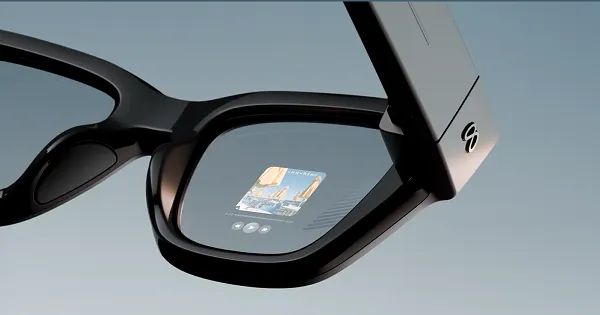
The utility of these glasses for the visually impaired is substantial. Equipped with multimodal AI, the glasses can describe environments, read text aloud, identify objects, and provide real-time audio navigation cues. By integrating these features into a discreet, fashionable form factor, Meta is attempting to move the product away from the "surveillance" stigma and toward the "assistive technology" category.
This follows a massive initiative announced in June, wherein Meta committed to donating 130,000 pairs of AI-enabled glasses to legally blind veterans across the United States. These combined efforts are clearly intended to showcase the technology’s capacity to function as a "digital companion," effectively bridging the gap between the physical and digital worlds for those who have traditionally been excluded from the smartphone-dominated era.
Chronology of a Controversy: From Innovation to Infamy
To understand the current tension, one must look at the timeline of the product’s public reception.
- September 2023: Meta officially launches the second generation of Ray-Ban Meta glasses, featuring improved cameras, AI integration, and live-streaming capabilities. Initial reception is largely positive, praising the ergonomics and the seamless integration of Meta AI.
- Early 2024: As the glasses become a cultural fixture, reports emerge regarding their use in public spaces. Privacy advocates begin to question the ethics of "passive recording," noting that the small LED indicator is often too subtle to be noticed by those being filmed.
- Late 2024: The term "pervert glasses" begins to gain traction on social media. Influencers and celebrities, including pop star Lorde, publicly discourage the use of the devices, citing their perceived "creep factor."
- January 2025: Meta reports that sales have doubled year-over-year, yet the PR crisis worsens. Evidence surfaces that some users are actively tampering with the hardware—using tape, paint, or physical modifications—to cover the recording LED, allowing them to capture footage surreptitiously.
- February 2025: Meta releases a mandatory software update. The update introduces a "tamper detection" system that renders the recording function inoperable if the device detects that the LED indicator has been obstructed or modified.
- March 2025: Meta announces the expansion of its charitable arm to Ireland, doubling down on the "utility-first" marketing strategy.
The Privacy Crisis: Investigating the "Unwitting Victim"
The primary source of the "bad press" haunting Meta is the inherent friction between recording technology and social etiquette. The core issue is consent. Because the glasses look like standard fashion eyewear, observers in public spaces often do not realize they are being recorded.
Critics argue that Meta has failed to implement robust safeguards to protect the privacy of those who have not consented to being captured by the onboard cameras. This has led to investigations in both the United States and the United Kingdom, where regulators are scrutinizing not only the physical recording capabilities but also how Meta utilizes the data harvested from these interactions. There are lingering questions about whether the footage captured by these glasses is fed back into Meta’s broader AI training models, raising significant concerns about the commodification of private, candid human interaction.
Meta’s response—the "tamper-proof" software update—was an attempt to appease regulators and address the most egregious cases of misuse. However, the move has been criticized by some as a "band-aid" solution that does not address the fundamental nature of the product, which is to be a wearable camera that is always on and always available.
Official Responses and Corporate Strategy
Meta has been vocal in its defense of the technology, framing the current controversy as a "growing pain" associated with any disruptive innovation. The company maintains that the Ray-Ban Meta glasses are designed with privacy as a foundational principle, pointing to the LED light and the physical privacy shutter as evidence of their commitment to ethical design.
"Our goal is to create a seamless, AI-powered experience that enhances the human condition," a Meta spokesperson noted in a recent press briefing. "The charitable partnerships we have formed, from the veteran programs in the U.S. to our collaboration with Vision Ireland, are reflections of our core belief that this technology is fundamentally about empowerment and connection."
Internally, Mark Zuckerberg has doubled down on his vision. He believes that smart glasses are the natural successor to the smartphone. In his view, the phone is a distraction—a device that pulls us away from the physical world. Conversely, he envisions smart glasses as a layer of "augmented intelligence" that sits atop reality, providing context, information, and assistance without breaking the flow of human interaction.
Implications: The High Stakes of Wearable Computing
The implications of this struggle extend far beyond the balance sheet of a single tech giant. We are currently at a crossroads in the evolution of consumer electronics.
1. The Erosion of Public Anonymity
If smart glasses become as ubiquitous as smartphones, the expectation of privacy in public spaces may vanish. This shift could lead to a permanent change in social norms, where individuals must assume they are being recorded at all times. The backlash against Meta is, in many ways, a societal "push-back" against the normalization of constant surveillance.
2. The Battle for the Next "Platform"
For Meta, the stakes are existential. The company missed the smartphone revolution, relying on Apple and Google for the distribution of its apps. With smart glasses, Meta is attempting to own the platform itself. If they can successfully transition from being a social media company to a hardware-plus-AI company, they secure their dominance for the next several decades. Failure to overcome the current PR crisis could leave them relegated to the status of a secondary app provider, losing the "AI war" to rivals who might achieve higher consumer trust.
3. The Utility Paradox
The most critical takeaway from the current situation is the divide between utility and perception. For the visually impaired, these glasses are a miraculous tool for independence. For the general public, they are a potential tool for intrusion. Meta’s challenge is to find a way to make the benefits of the technology so clear and so universally positive that the stigma of the "recording" aspect is outweighed by the value of the "assistant" aspect.
Conclusion: Can Charity Redefine a Brand?
Meta’s move to donate thousands of pairs of glasses to Vision Ireland is a masterclass in reputation management. By placing the devices in the hands of a community that truly needs them, Meta is creating a new category of "brand ambassadors"—people whose lives are genuinely improved by the technology.
However, charity alone will not be enough to fix the fundamental issues of privacy and trust. The company must continue to navigate the thin line between technological innovation and social intrusion. As we look toward the future, the success of Meta’s AI glasses will likely not be determined by the technical prowess of the device, but by the company’s ability to prove that its technology is not meant to watch the world, but to help people experience it more fully.
The path forward for Meta requires a delicate balance: satisfying the demand for sophisticated, always-on AI while simultaneously respecting the evolving boundaries of human privacy. Whether they can achieve this balance—or whether the "smart glasses" will be relegated to a niche, controversial product—remains one of the most compelling narratives in modern technology. For now, the focus shifts to Ireland, where 15,000 new users will soon begin their own journey with the glasses, providing a test case for whether the promise of the technology can ultimately eclipse its troubled public image.