In a significant shift for the digital retail landscape, Google has officially launched its "Universal Cart" in the United States. Available through both Google Search and the Gemini mobile application, this feature promises to consolidate the fragmented online shopping experience into a singular, cohesive hub. By allowing users to aggregate items from disparate retailers into one virtual space, Google is positioning itself as the central nervous system for modern consumer behavior.
The rollout comes as Google accelerates its "agentic commerce" strategy—a vision where AI acts not just as a search tool, but as an active participant in completing transactions on behalf of the user. While the feature aims to streamline the path to purchase, it also introduces complex new dynamics for merchants, who must now navigate the technical and analytical implications of Google’s evolving ecosystem.
The Core Functionality: Shopping Redefined
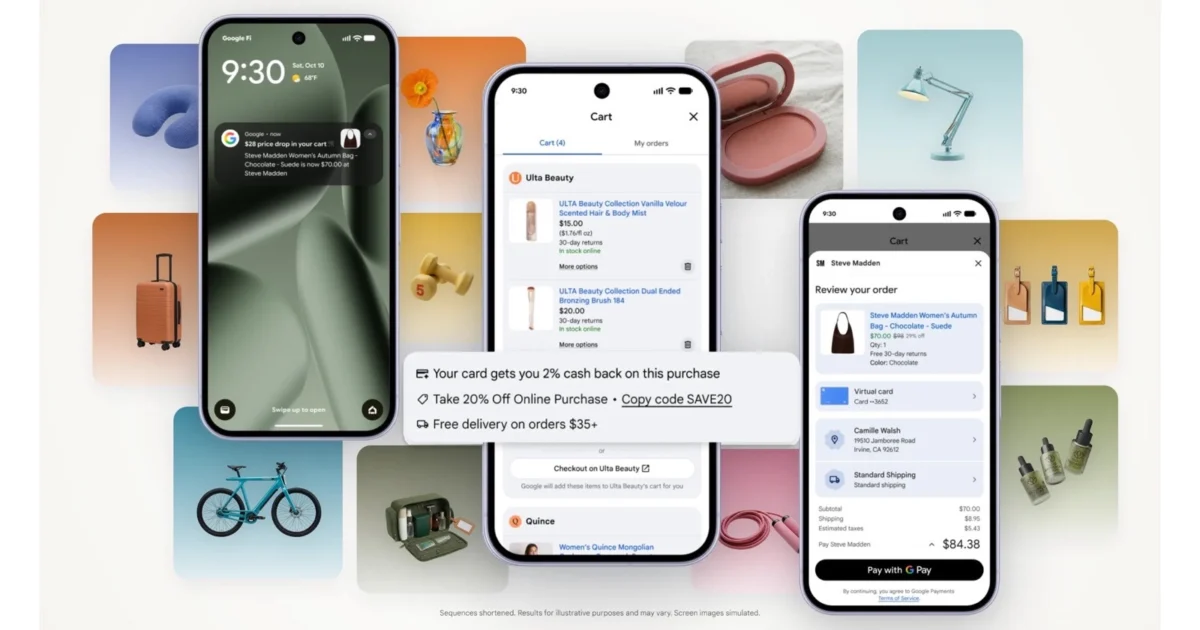
At its most basic level, Universal Cart is a cross-platform shopping aggregator. Users browsing for products via Google Search—including those using the platform’s "AI Mode"—or through the dedicated Gemini app can now save items from various retailers into a single, persistent cart.
The utility extends beyond simple storage. The system provides proactive notifications, alerting shoppers when saved items experience price drops or return to stock. Furthermore, the integration with Google Wallet adds a layer of intelligence: the platform can recommend specific payment methods based on individual card perks and display available promo codes directly within the cart interface.
The merchant ecosystem for this launch includes major industry players such as Nike, Sephora, Target, Ulta Beauty, Walmart, and Wayfair, alongside a vast network of Shopify merchants. Crucially, regardless of where the checkout occurs, the retailer remains the "seller of record," maintaining the direct relationship between brand and consumer.
Chronology of Development
The trajectory of Universal Cart has been rapid, moving from a conceptual framework to a live, production-ready tool in less than a year.
- May 2024 (I/O Announcement): Google first unveiled the concept of the Universal Cart during its I/O developer conference. At the time, the company positioned the cart as the next logical step in its "agentic commerce" infrastructure. Early documentation suggested a robust suite of features, including historical pricing data, cross-product compatibility warnings, and deep integration with loyalty programs.
- September 2024: Google introduced the cart transfer option within its Merchant Center’s Universal Commerce Protocol (UCP) integration hub, signaling the technical groundwork for retailers to adopt the system.
- Late 2024 (Current Launch): Google officially pushed the feature to live status in the U.S. market. Interestingly, the launch announcement was notably quieter regarding several features teased in May, such as the promised support for YouTube and Gmail, as well as the advanced loyalty and historical pricing tools.
Supporting Data and Technical Architecture
The mechanics behind Universal Cart are powered by the Universal Commerce Protocol (UCP), specifically utilizing the Cart API. For merchants, this is a two-fold integration:
1. The Two Paths to Purchase
Google facilitates two distinct methods for completing a transaction:
- Native Checkout: The purchase is finalized directly within the Google interface using the user’s stored payment information in Google Wallet.
- Cart Transfer: The user is redirected to the merchant’s website, where their cart is pre-populated with the items they selected in Google, allowing them to complete the checkout in the retailer’s own native environment.
2. Analytical Oversight
The UCP Analytics Reporting dashboard in the Merchant Center serves as the "source of truth" for retailers. It tracks the entire checkout funnel—from the initial click on a "Buy" button to the final conversion or cancellation. Google is also alpha-testing a more granular Merchant API that tracks "cart transfers," providing metrics on the volume of transfers and the average cart value at the point of handoff.
3. The Shopify Variable
For the significant number of retailers using Shopify, the integration is governed by the "Google AI Mode & Gemini Channel." Currently, Shopify stores that are eligible for the channel have "Direct Checkout" enabled by default. However, there remains a level of ambiguity regarding how tracking data—specifically Google Analytics and Custom Pixels—interacts with these transactions. Because these tools may not fire during a "Direct Checkout" event, merchants may face challenges in attributing sales back to their own internal marketing efforts.
Official Responses and Strategic Pivot
Suresh Ganapathy, Senior Director of Product Management for Consumer Shopping at Google, spearheaded the announcement via a blog post. The tone of the launch marks a subtle but significant strategic pivot.
In May, Google spoke of Universal Cart as an all-encompassing "agentic" tool. Today, the company is recalibrating that language. The new documentation draws a clearer line between "agentic features" (which perform actions on a user’s behalf) and "confidence tools" (which provide information and control). By placing the Universal Cart firmly in the second category, Google may be attempting to appease retailers wary of an AI agent taking too much control over the customer experience.
Notably, the silence regarding YouTube and Gmail integration is telling. Industry analysts suggest that Google may be prioritizing a stable, controlled rollout in Search and Gemini before expanding the surface area of the cart into high-traffic content platforms like YouTube, where the user intent is consumption rather than immediate commerce.
Implications for Retailers and Consumers
For the Consumer: A Frictionless Future
The primary benefit to the consumer is convenience. By keeping a single list across devices and platforms, shoppers can avoid the "tab sprawl" that often occurs when researching high-consideration purchases. The promise of automated price alerts and smart-card suggestions adds genuine financial value, potentially increasing user loyalty to the Google ecosystem.
For the Merchant: The Loss of the "Last Mile"
For retailers, the implications are more nuanced. On one hand, the Universal Cart provides a new, high-intent channel to capture sales. On the other, it distances the brand from the customer during the research phase.
If a customer completes a purchase via "Native Checkout," the merchant loses the opportunity to engage the user with their own site experience, loyalty programs, or upsell offers that typically occur during a branded checkout flow. While the retailer remains the seller of record, the data captured during the "middle" of the funnel—the browsing and comparing—now sits firmly within Google’s walled garden.
For the Future of Commerce
The shift toward UCP and agentic commerce represents a long-term transition from "search-to-site" to "search-to-sale." As Google continues to refine the Universal Cart, retailers must decide how much of their checkout experience they are willing to outsource to an AI agent.
The gradual rollout—starting with the U.S. and moving toward Australia and Canada next year—gives the market time to adjust. However, as the holiday shopping season approaches, the pressure is on for merchants to optimize their UCP integration. Those who fail to monitor their analytics via the Merchant Center risk flying blind as the "agentic" shopping revolution gains momentum.
Conclusion
Google’s Universal Cart is not just a new feature; it is an infrastructure play. By standardizing how carts are created, transferred, and tracked, Google is attempting to solve the biggest friction point in digital commerce: the disconnect between discovery and transaction.
Whether this becomes the gold standard for retail or another proprietary tool that forces merchants to cede control, remains to be seen. What is clear, however, is that Google is no longer content to merely be the signpost that directs users to retail websites—it now intends to be the store itself. As the platform matures and expands to more services, the "agentic" future of shopping is arriving, one cart at a time.