By Editorial Staff
Published: September 9, 2026
In the modern enterprise, data is no longer merely an asset—it is the bedrock of operational reality. However, as the reliance on artificial intelligence and automated decision-making systems intensifies, the concept of "Data Sovereignty" has undergone a radical transformation. No longer confined to the backrooms of legal and compliance departments, data sovereignty has emerged as a cornerstone of corporate strategy.
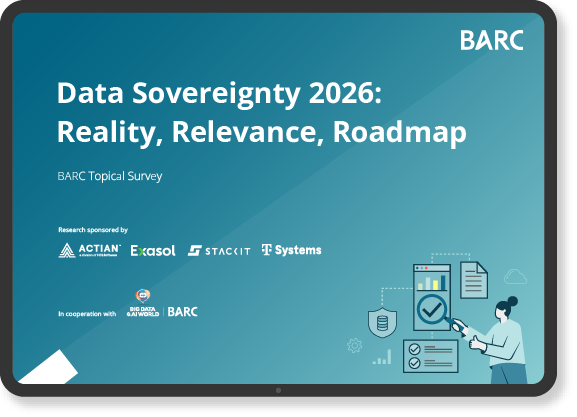
According to the latest research from BARC (Business Application Research Center), captured in the comprehensive Data Sovereignty 2026: Reality, Relevance, Roadmap report, organizations are shifting their perspective. Based on a survey of 320 organizations worldwide, the findings indicate that data sovereignty is now viewed as a critical condition for managing AI-driven processes at acceptable levels of risk.
Main Facts: The New Paradigm of Control
The BARC 2026 study highlights a pivotal shift in how global enterprises perceive the boundaries of their digital estates. The survey reveals that 78% of respondents now categorize data sovereignty as a "top-three strategic priority," a significant increase from previous years.
At its core, data sovereignty refers to the capability of an organization to control its own data—where it resides, who can access it, and how it is processed—regardless of the cloud infrastructure or third-party AI service providers involved. The research indicates that the primary drivers for this heightened focus are:
- Risk Mitigation: Protecting sensitive intellectual property from model-training contamination.
- Regulatory Resilience: Adapting to the fragmented global landscape of data privacy laws.
- Operational Autonomy: Ensuring that vital business functions remain uninterrupted, even if a service provider experiences a service outage or a change in terms of service.
The report emphasizes that the "sovereignty gap"—the distance between an organization’s reliance on external AI tools and its ability to govern the data fed into those tools—is the most significant risk factor for the modern enterprise.

Chronology: How We Reached This Pivot Point
To understand why data sovereignty has become a 2026 priority, one must look at the progression of the data economy over the last decade:
- 2018–2020 (The Compliance Era): Data sovereignty was synonymous with GDPR and CCPA compliance. The focus was strictly on "keeping data within borders" to satisfy regulators.
- 2021–2023 (The Cloud Migration Era): Organizations rushed to the cloud, often prioritizing scalability and cost-efficiency over sovereignty. Data became siloed within proprietary ecosystems of hyperscalers.
- 2024–2025 (The Generative AI Shock): The explosion of Large Language Models (LLMs) created a crisis of control. Enterprises realized that by using public AI models, they were inadvertently training competitors’ algorithms on their proprietary data.
- 2026 (The Strategic Sovereignty Era): The current landscape is defined by "Sovereignty-by-Design." Organizations are now auditing their entire stack, demanding "data-sovereign" AI deployments where the model stays within their own infrastructure or a private, controlled environment.
Supporting Data: The 2026 Survey Insights
The BARC survey, which informs Chapter 6 of the Data, BI & Analytics Trend Monitor 2026, provides a sobering look at current capabilities. Among the 320 organizations surveyed:
- The Governance Deficit: While 85% of companies claim to have a data strategy, only 34% believe their current technical architecture effectively prevents data leakage to third-party AI providers.
- Investment Intentions: 62% of respondents are planning to increase their budget for "Sovereignty-Enabling Technologies," such as confidential computing, federated learning, and localized data warehouses, over the next 18 months.
- The AI Dilemma: 49% of firms admitted they have paused the deployment of certain GenAI initiatives specifically due to concerns regarding data sovereignty and intellectual property leakage.
These figures illustrate a clear market trend: the initial "gold rush" phase of AI adoption has been superseded by a "rationalization" phase, where the cost of losing control over data is finally being calculated against the benefits of AI-driven productivity.

Perspectives from the Experts
BARC’s Senior Analysts, Timm Grosser and Dr. Carsten Bange, have been at the forefront of this discourse. Their work focuses on guiding organizations through the complex transition toward becoming truly data-driven while maintaining independence.
The Analyst View: Timm Grosser
Timm Grosser, whose expertise lies in data strategy and architecture, argues that sovereignty is ultimately an architectural challenge. "Many companies are realizing that they’ve built their houses on rented land," Grosser notes. "If you cannot control the flow of your data into a model, you cannot control the outcome of your business processes. We are seeing a move toward hybrid architectures where the ‘brains’ (the models) are brought to the ‘data,’ rather than the other way around."
The Strategic View: Dr. Carsten Bange
As the founder and CEO of BARC, Dr. Carsten Bange has observed the evolution of the data market for 25 years. He views the current focus on sovereignty as the maturation of the data-driven enterprise. "For a long time, the promise of the cloud was ‘effortless scale.’ Today, the reality is ‘managed complexity.’ Our research shows that the most successful firms in 2026 are those that have stopped viewing sovereignty as a legal checkbox and started viewing it as a competitive advantage. If you own your data flow, you own your innovation cycle."
Implications for the Future
The shift toward data sovereignty will have profound implications for the software vendor landscape and internal corporate structures.
For Software Vendors
The "vendor lock-in" model is facing a backlash. SaaS providers that cannot offer "sovereign cloud" options—where the vendor cannot access the customer’s data even for maintenance—are finding it increasingly difficult to win contracts in highly regulated sectors like banking, healthcare, and manufacturing. We are seeing a resurgence in demand for open-source AI models that can be hosted on-premise or within private, sovereign cloud environments.
For Corporate Leadership
The "Data Officer" role is evolving. By 2027, the role of a Chief Data Officer (CDO) will likely be indistinguishable from a Chief Risk Officer. Organizations are moving away from centralized data lakes that are "data swamps" and toward decentralized data meshes, which naturally align with sovereign data management principles.
The Roadmap Ahead
For organizations looking to navigate this landscape, the BARC report suggests a three-part roadmap:
- Audit the Data Supply Chain: Identify every point where data leaves the internal environment, specifically focusing on third-party AI APIs.
- Define Sovereignty Thresholds: Not all data is equal. Categorize data based on its sensitivity and the risk associated with its exposure.
- Implement Sovereign Architecture: Transition toward technologies that provide cryptographic proof of data isolation, ensuring that even if a system is breached, the data remains unusable to unauthorized entities.
Conclusion
The findings of the Data Sovereignty 2026 report serve as a wake-up call for the enterprise sector. As we move further into the decade, the ability to maintain sovereignty over one’s own data will determine the winners and losers of the AI era. Those who prioritize control over convenience are laying the foundation for a resilient, sustainable, and truly autonomous future.
As BARC continues to track these trends, one thing is clear: the era of blind trust in external data platforms is over. The era of the sovereign enterprise has begun.

For those interested in the full data set and specific vendor analysis, the complete report is available to subscribers of BARC+. With an investment of €79 per month, BARC+ subscribers gain access to deep-dive research, exclusive trend monitors, and strategic guidance to navigate the shifting currents of the global data and analytics landscape.