By [Your Name/Journalistic Desk]
October 22, 2026
"Life imitates art—imitates life!"
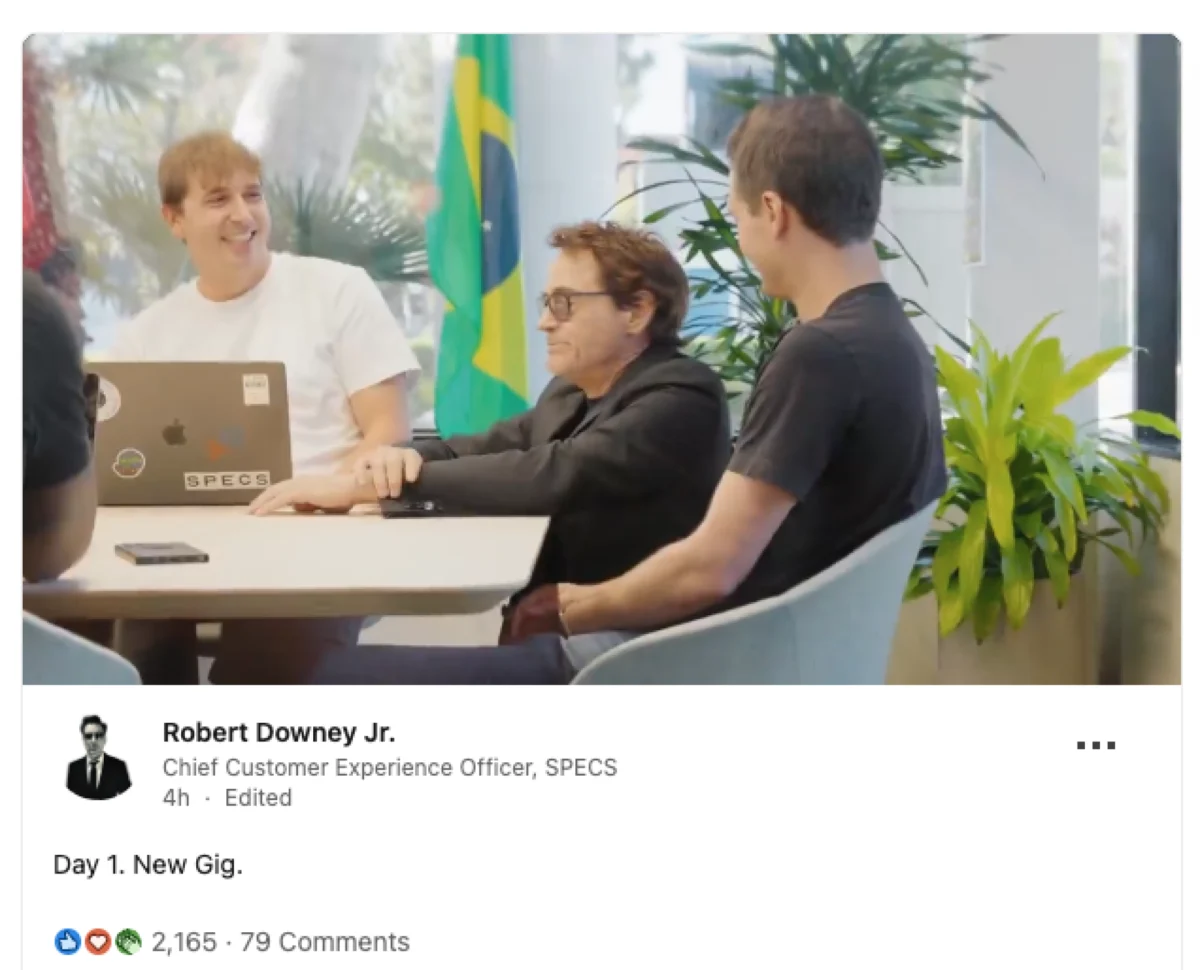
With those four words, Robert Downey Jr. has blurred the line between his most iconic cinematic legacy and his real-world career path. The Oscar-winning actor, synonymous with the genius, billionaire, playboy, philanthropist Tony Stark, has officially entered the world of high-stakes hardware. As of October 20, 2026, Downey has been appointed the honorary Chief Customer Experience Officer for Specs, the augmented reality (AR) glasses division under the Snap Inc. umbrella.
It is a casting choice so fitting it borders on the surreal. For years, audiences watched Downey’s Stark interact with holographic displays in the air, manipulate complex data with flicking wrists, and iterate on futuristic engineering projects in seconds. Now, the man who defined the visual language of the "techno-optimist" superhero is tasked with selling that same vision to a skeptical public.
The Dawn of a New Partnership
The partnership, announced on Tuesday, is far from a standard celebrity endorsement. According to Snap, Downey’s role will be multifaceted, spanning the creation of original content, the development of custom AR experiences, and direct collaboration on future hardware iterations.
"Trying is believing," Downey said in a statement released to the press. "Having tested practically every wearable tech that’s come to market in the last 20 years, and been largely unimpressed, I was absolutely sold on Specs within 40 seconds."

The actor’s commitment to the project was made "LinkedIn official" the same day, featuring a video of him walking into the Santa Monica headquarters of Snap. The move was met with immediate, viral engagement. While Snap CEO Evan Spiegel publicly welcomed the actor with a promise of collaboration, the internet predictably flooded the comments section with Marvel references, one fan famously warning the actor to "be careful not to work with any Obadiah Stanes."
A Chronology of Innovation and Advocacy
To understand why this partnership matters, one must look at Downey’s long-standing, and often nuanced, relationship with emerging technology. His interest in the digital frontier is not a recent development fueled by a marketing contract.
- 2018: Downey hosted and executive produced the YouTube series The Age of AI, a deep-dive exploration into how artificial intelligence was poised to reshape human interaction, medicine, and manufacturing.
- 2021: Demonstrating his financial skin in the game, Downey participated in a $65 million Series C funding round for Forethought, a startup focused on AI-driven customer service automation.
- 2024: Downey made waves during an appearance on On With Kara Swisher, where he explicitly stated his intention to legally combat any future executives who might attempt to use AI to replicate his likeness. His assertion—that his law firm would remain active even after his death—became a rallying cry for actors concerned about digital rights.
- 2025: His Broadway debut in McNeal served as a meta-commentary on the intersection of AI and artistic ownership, utilizing advanced projection technology to mirror the very themes the play questioned.
- 2026 (March): Following the acquisition of Forethought by Zendesk, Downey reaffirmed his commitment to the team, highlighting his long-term belief in the potential of their tech.
- 2026 (October): The formal alliance with Snap begins.
Downey’s history suggests he is not merely a brand ambassador, but an active, if cautious, participant in the evolution of silicon-based tools. He has clearly drawn lines in the sand—protecting his image while simultaneously championing the utility of AI in areas like cybersecurity, through his involvement with the identity-protection firm Aura.
The Hardware: What Are Specs?
Snap’s current offering, the Specs AR glasses, represents a pivot for the company. Launched in June 2026, the device carries a premium price tag of $2,195, requiring a $200 deposit for pre-order.
Technologically, Specs operate as a standalone, wireless computer. Unlike the clunky, camera-fed VR headsets that have dominated the market, Specs utilize see-through displays that overlay digital content directly onto the wearer’s physical environment. They are controlled by a combination of hand tracking and voice commands.
In a recent assessment, tech analysts noted that the device feels less like a pair of "smart glasses" and more like a miniaturized version of Apple’s Vision Pro, albeit with a focus on transparency rather than total immersion. While the current form factor is undeniably "chunky," the promise—as Evan Spiegel noted—is to move toward a future where computing is freed from the constraints of a handheld screen.

The Industry Landscape: The Challenge Ahead
Despite the "Stark-level" excitement, Snap faces a steep uphill climb. The consumer appetite for AR glasses remains unproven, particularly at the $2,000 price point.
During an August earnings call, Spiegel was notably cagey about pre-order numbers, focusing instead on the "high consideration" nature of the purchase. He openly admitted that mass-market adoption is likely not on the table until the end of the decade.
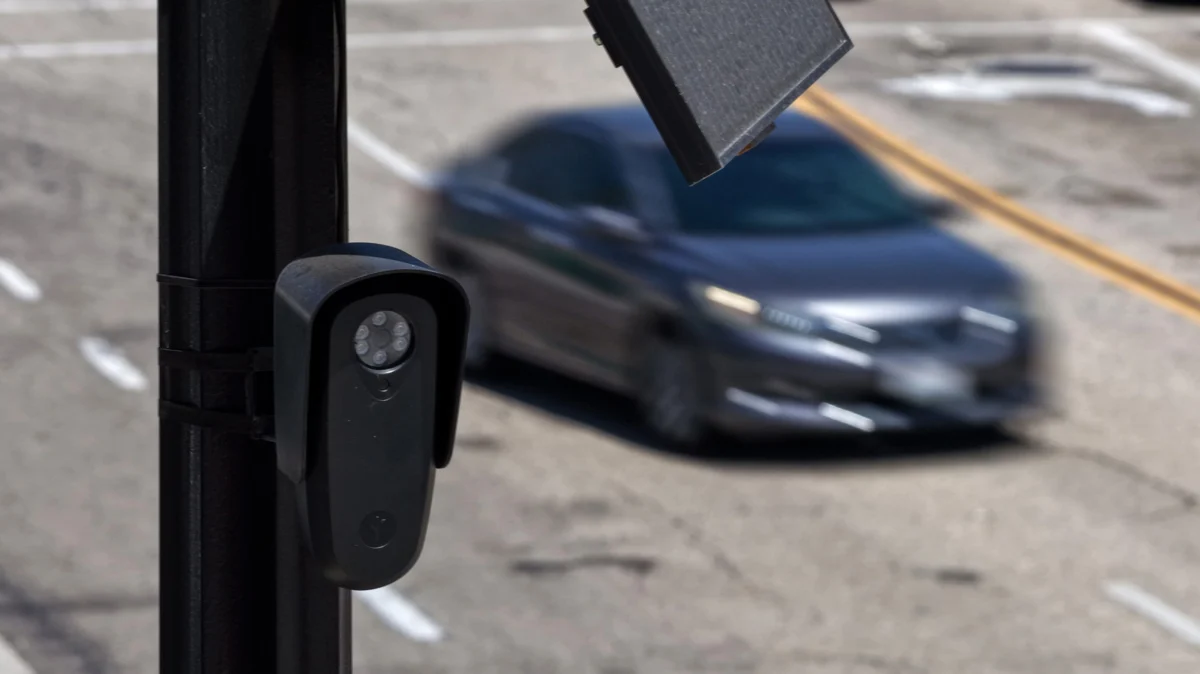
This caution is well-founded. Meta, in partnership with EssilorLuxottica, has dominated the smart glasses space, shipping over 7 million units in 2025 alone. Meta’s eyewear accounted for over 81 percent of global shipments in the first half of 2026. However, that dominance has come with baggage. Privacy concerns regarding discreet, always-on cameras have led to regulatory scrutiny from the European Data Protection Board, which recently called for more stringent safeguards.
Snap is attempting to differentiate itself by moving away from the "AI glasses" label—which has become synonymous with privacy-invading cameras—and toward the concept of an "AR computer." In the promotional video accompanying his announcement, Downey goes so far as to physically toss a generic "AI glasses" box into the trash, signaling a desire to frame the product as a tool for creativity and productivity rather than a surveillance device.
Implications: Can Iron Man Move the Needle?
The implications of this partnership are significant for both the tech industry and the entertainment world. For Snap, securing Downey is an attempt to inject "cool" into a category that has struggled to bridge the gap between niche developer tools and everyday fashion.
For the tech industry, it represents the next phase of the "celebrity-engineer" complex. We are no longer in the era of simple endorsements; we are in the era of strategic partnerships where the public face of a product is also a high-level investor and creative consultant.

However, the question remains: Can a $2,195 pair of glasses solve the "why" problem? As the market matures, consumers are increasingly asking why they need smart glasses in a world already saturated with smartphones and laptops. Snap is betting that by integrating these glasses into the lives of people like Downey—showing them used for everything from golf swings to complex engineering—they can answer that question.
Conclusion: The Road to Mass Adoption
Robert Downey Jr.’s career has been defined by his ability to pivot, to reinvent, and to embrace the uncomfortable middle ground between human ingenuity and machine assistance. By joining the team at Specs, he is betting that the future of computing is not in our hands, but in front of our eyes.
Whether the public follows him into this AR-augmented future remains to be seen. The barriers—price, form factor, privacy, and utility—are high. Yet, if anyone has the cultural capital to make a clunky piece of hardware feel like a must-have piece of tech, it is the man who built an empire in a cave with a box of scraps.
As Downey himself put it, "The applications are endless. Families can share experiences instead of hunching over devices, skills can be honed, big business can streamline development."
For now, the world is watching, waiting to see if this is just another marketing play, or if we are truly on the cusp of the "Stark" future we were promised. One thing is for certain: the bar for wearable technology has just been raised to a superhero standard.