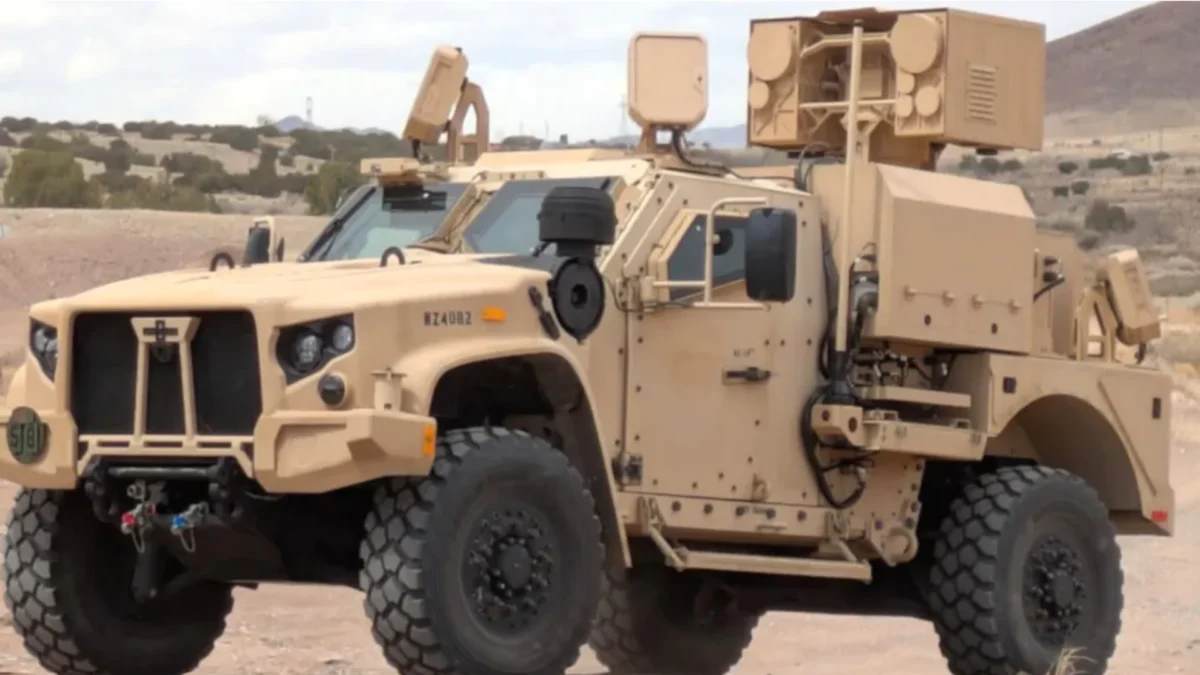
In an era where the battlefield is increasingly dominated by low-cost, high-frequency drone swarms, the United States Army has embarked on a strategic pivot. Moving away from heavy, platform-dependent air defense systems, the service is embracing a modular, "plug-and-play" approach to directed energy. At the heart of this transformation is the LOCUST X3, a 30-kilowatt laser system developed by AeroVironment, which represents the next evolution in tactical air defense.
The Strategic Imperative: Why Modular Lasers?
For years, the U.S. military’s approach to air defense was defined by massive, specialized platforms. However, the rise of Group 1 to 3 unmanned aerial systems (UAS)—aircraft ranging from small tactical drones of 9 kg (20 pounds) to larger platforms weighing up to 600 kg (1,320 pounds)—has rendered traditional missile-based interception economically and logistically unsustainable. A single interceptor missile can cost millions, a prohibitive price tag to pay for neutralizing a drone that costs mere hundreds or thousands of dollars.
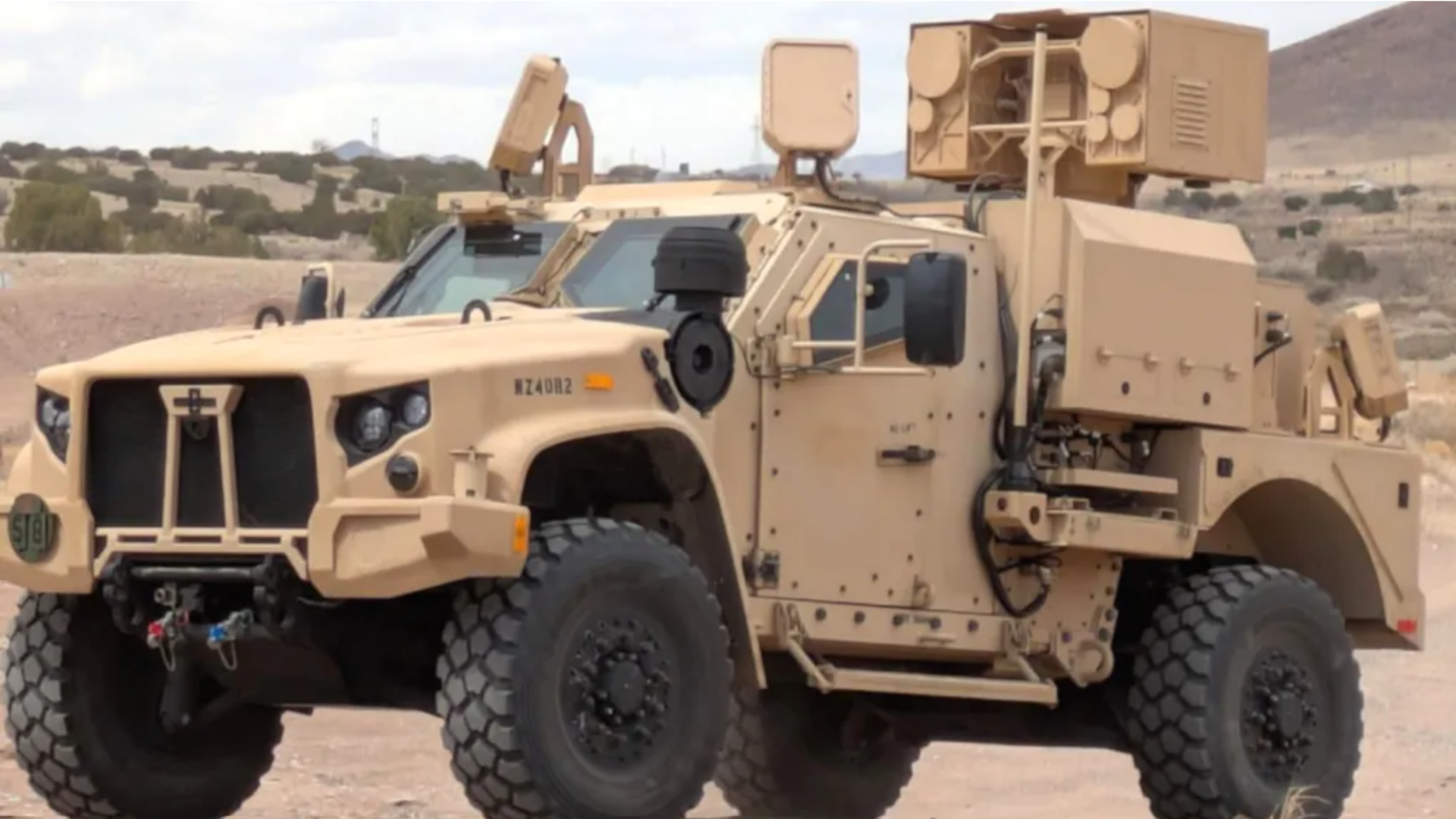
The Army’s solution, formalized with the selection of AeroVironment’s LOCUST X3 in September 2026, focuses on cost-efficiency and adaptability. By mounting 30-kilowatt lasers onto detachable, sled-based frames, the Army can transform any standard tactical truck into a potent air defense asset. This modularity ensures that if a vehicle suffers mechanical failure or battle damage, the weapon system itself remains operational, simply moved to another chassis in the motorpool.
Chronology of Development: From Strykers to Sleds
The journey toward mobile high-energy lasers has been marked by both ambition and technical setbacks.
- 2022: The Army took a significant step by reactivating an air defense battalion at Fort Sill, Oklahoma, specifically equipped with laser-armed Stryker vehicles. The goal was to provide rapid, short-range air defense (SHORAD) for mobile infantry units.
- 2023–2025: Reliability issues plagued the initial Stryker-based programs. The integration of high-energy lasers into moving, vibrating, and ruggedized vehicle platforms proved more difficult than anticipated, forcing the Army to reevaluate its procurement and design philosophy.
- March 2026: A trade report surfaced suggesting that the cost per engagement for next-generation laser systems could be as low as $5 per shot—a revolutionary prospect for logistics.
- September 2026: The Army officially awarded the initial manufacturing contract for the LOCUST X3 to AeroVironment, valued at $464.8 million.
- August 25, 2026: The military reported a successful interception of a drone near the U.S. southern border, marking a significant milestone in the field-testing of the LOCUST system.
- Early 2028: The Army expects the first operational X3 units to reach the field, marking the transition from development to active service.
Supporting Data and Technical Specifications
The LOCUST X3 is not merely a "death ray" but a complex system-of-systems. Key technical parameters include:
Power and Performance
The X3 provides a variable power output, typically ranging between 20 and 35 kilowatts depending on the tactical requirement. While this falls into the lower-to-mid tier of current directed-energy technology, it is optimized for the persistent threat of small-to-medium drones. Battery-dependent, the system offers between 80 and 120 seconds of continuous firing time before requiring a recharge, effectively creating an "infinite magazine" that can be refilled as long as the host vehicle has power.
AI and Target Engagement
Central to the X3’s success is "Halo Pinpoint," an in-house AI suite developed by AeroVironment. This system automates the most difficult aspects of laser warfare: detection, tracking, and beam stabilization. Because a laser beam’s effectiveness is inherently tied to the stability of the aim point, the AI handles the complex calculations required to maintain focus on a maneuvering target.
Economic and Industrial Impact
The shift to laser-based defense is not just a military strategy but an industrial one. AeroVironment is currently investing over $30 million to expand its Albuquerque, New Mexico, production campus. This expansion is expected to create 450 high-tech jobs and generate an estimated $670 million in regional economic impact. Furthermore, the company’s recent $50 million international order highlights the global demand for this technology.
Official Responses and Strategic Vision
The transition to modularity has been championed by high-ranking officials who emphasize that the battlefield of the future will be chaotic and destructive.
"We’re getting to the point where the systems are reliable enough, but we still have to make them maintainable and repairable because this is an Army system," said Kirk Williams, Chief Engineer at the Army’s Directed Energy Project Office. Williams highlights the reality of land warfare: "It’s going to be on a battlefield. Things are going to break. We can break things in very creative ways. So if it’s not reliable, or if it’s not maintainable, if it’s not repairable, that’s a problem."
Brig. Gen. Guy Yelverton, the Army’s Capability Program Executive for Defensive Fires, echoed this sentiment regarding the versatility of the deployment. "We’re focused on any vehicle in the motorpool. I want to try to integrate future capability of high-energy lasers into it," Yelverton stated, underscoring the desire to eliminate reliance on single, bespoke vehicles.
Implications: The Reality of Modern Laser Warfare
While the promise of $10-per-shot air defense is transformative, the technology is not without its limitations.
Environmental Constraints
High-energy lasers are bound by the laws of physics. The beam’s potency decreases significantly over distance. Furthermore, the "blooming" effect—where moisture, dust, smoke, or even heavy rain diffuses the laser—can drastically reduce the weapon’s range and lethality. In a desert environment, sand kicked up by a vehicle or a windstorm could render the system ineffective, a reality that testing protocols must account for.
The Scalability Gap
At 30 kilowatts, the LOCUST X3 is specialized. It cannot yet engage cruise missiles, high-altitude aircraft, or armored targets. However, the roadmap is clear. Developers like Scott Keeney, CEO of nLIGHT, are already looking toward the one-megawatt horizon. The Army is concurrently pursuing a separate containerized laser program aimed at reaching 150 kilowatts, which would provide the necessary punch for larger, more hardened threats.
Transparency and Verification
The U.S. Army has touted several successful engagements, including the August 2026 incident near the southern border. However, in the absence of declassified, independent, or third-party data regarding these engagements, the true efficacy of the LOCUST system remains a matter of internal military reporting. As the program nears its 2028 deployment date, the scrutiny on its real-world performance will only intensify.
Conclusion
The adoption of the LOCUST X3 marks a departure from the "Gold-plated" acquisition cycles of the past. By focusing on modularity, AI-driven automation, and a drastically reduced cost-per-engagement, the U.S. Army is attempting to solve the math problem of modern air defense. While environmental variables and power constraints remain significant hurdles, the ability to turn a standard truck into a drone-killing machine provides the tactical flexibility required for the conflicts of the 21st century. As the technology scales toward higher power levels, the LOCUST system may well be remembered as the first step in a broader revolution of land-based directed energy.