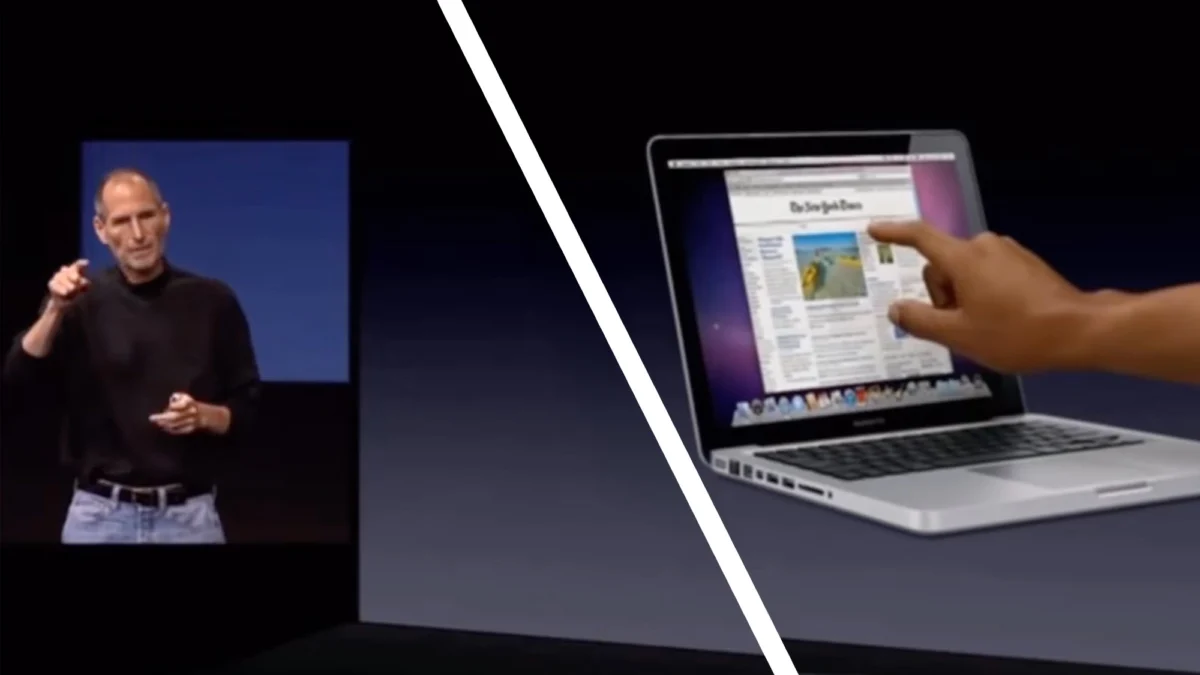
For over a decade, the "gorilla arm" argument has been a foundational pillar of Apple’s design philosophy. It was a mantra etched into the company’s culture by its co-founder, Steve Jobs, who famously dismissed the utility of touchscreen laptops as ergonomically disastrous. Yet, as the tech industry prepares for a major Apple event next week in Los Angeles, the rumor mill is spinning with unprecedented intensity: Apple is reportedly poised to unveil its first-ever MacBook Pro featuring a touchscreen.
If these reports hold true, the move represents more than just a hardware iteration; it signifies a monumental shift in strategy, suggesting that Apple is finally ready to reconcile its past dictates with the evolving demands of the modern consumer.
The Chronology of a "Bad Idea"
To understand the weight of this potential announcement, one must look back at the origins of the anti-touch stance. During an October 2010 product launch, Steve Jobs addressed the industry’s fascination with touch-enabled PCs with characteristic bluntness.
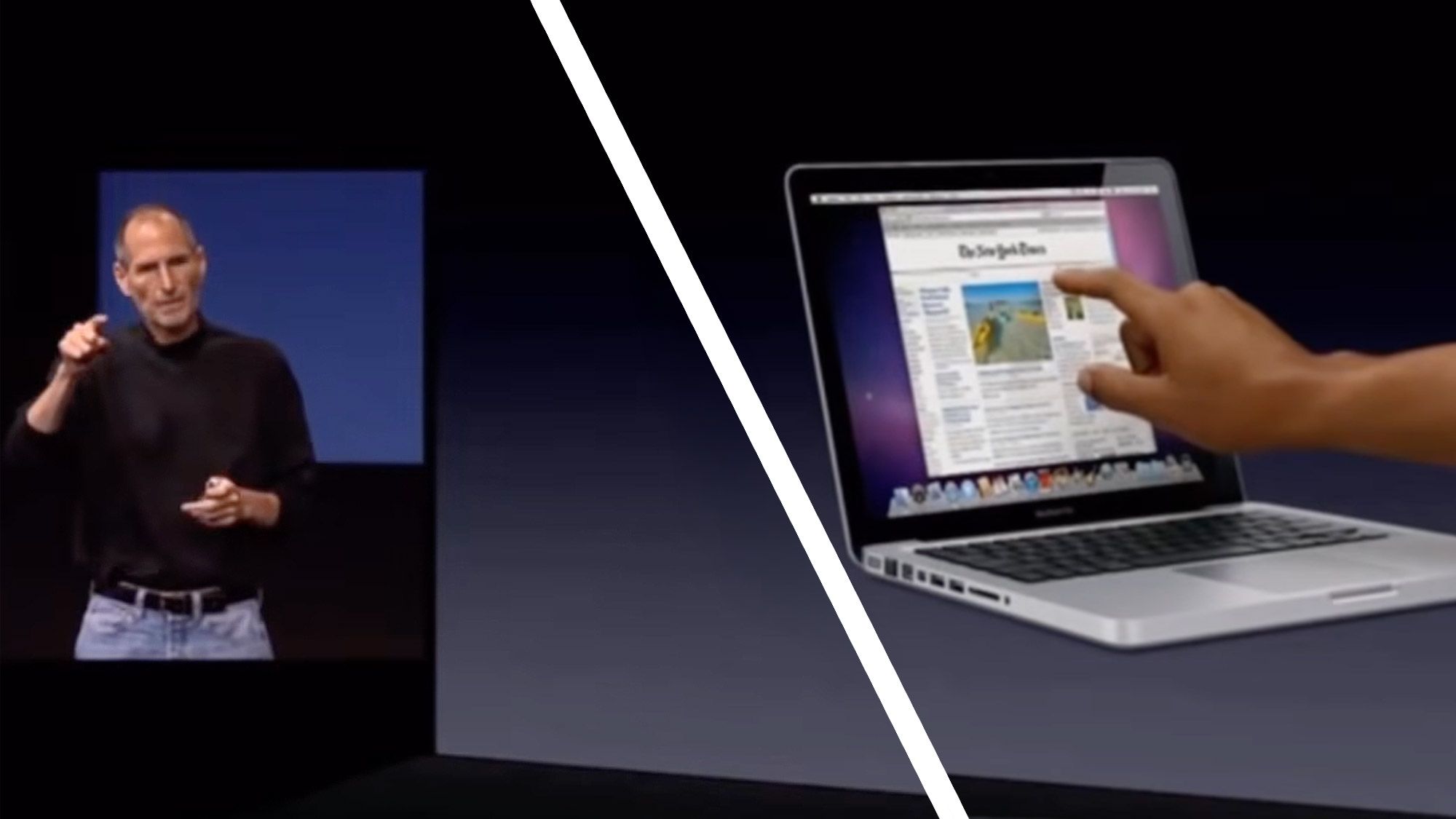
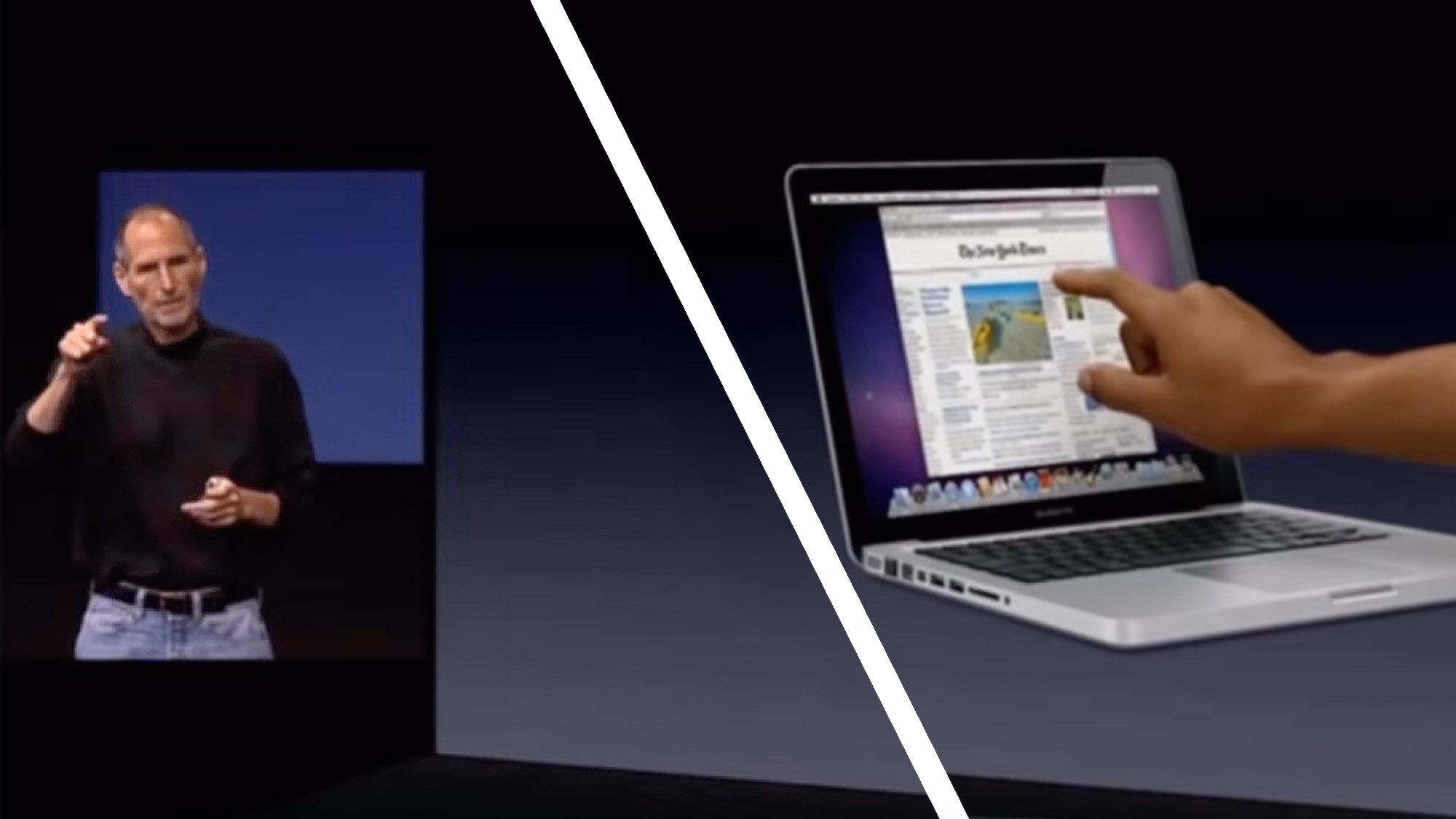
"We’ve done tons of user testing on this, and it turns out it doesn’t work," Jobs declared, gesturing toward a mock-up of a user reaching out to touch a vertical laptop screen. "Touch surfaces don’t want to be vertical. It gives a great demo, but after a short period of time you start to fatigue, and after an extended period of time your arm wants to fall off; it doesn’t work. It’s ergonomically terrible."
At the time, Jobs’ words carried the weight of scripture. Just ten months earlier, he had unveiled the iPad, a device that effectively defined the horizontal touch experience. He saw a clear demarcation between the tablet—a consumption-first, touch-driven device—and the Mac, a productivity-first, keyboard-and-mouse-driven machine.
This ideological line was maintained for years. When competitors like Microsoft launched the Surface Pro in 2012—essentially a tablet-first hybrid—Apple remained unmoved. Even the 2016 introduction of the Touch Bar, a thin, dynamic OLED strip above the keyboard, was framed by then-Global Head of Marketing Phil Schiller as a way to avoid the "vertical touch" pitfall. Schiller famously told Bloomberg that while Apple had experimented with touchscreens, they had come away with the "belief that it isn’t the right thing to do."
The Market Forces at Play
The tech landscape of 2024, however, looks vastly different from 2010. The rise of 2-in-1 convertibles, where screens can fold back or detach entirely, has normalized the gesture-based interface for computing. Consumers have grown accustomed to the fluidity of touch, particularly in creative industries where "pro" users often work in environments that blur the lines between illustration, editing, and traditional document management.
Apple’s decision to potentially adopt a touchscreen MacBook Pro is likely a pragmatic acknowledgment of this reality. For years, Windows OEMs (Original Equipment Manufacturers) have successfully captured a segment of the market that demands the tactile immediacy of a touchscreen. By refusing to enter this space, Apple has effectively conceded a portion of the creative and enterprise market to rivals.
Furthermore, the integration of iPadOS and macOS—facilitated by the transition to Apple Silicon (the M-series chips)—has brought the two operating systems closer than ever. With apps now running seamlessly across both platforms, the lack of touch capability on the Mac feels increasingly like a software limitation rather than a hardware philosophy.
Official Responses and Internal Shifts
While Apple has historically remained tight-lipped regarding unannounced products, the internal landscape has shifted significantly. With John Ternus now at the helm as CEO, the company is under new leadership that, while deeply respectful of the Apple DNA, is also composed of engineers who are less tethered to the dogmas of the past.
It is important to note that a product of this magnitude is not the result of a single executive’s whim. The development of a touchscreen MacBook would have likely spanned several years, involving hundreds of engineers and designers. If this device is indeed ready for a public debut, it suggests that the "no-touch" policy was effectively overturned during the final years of the Tim Cook era, with the full backing of Apple’s design and engineering leads.
The "Reality Distortion Field" and the Power to Change
What would Steve Jobs think? The question is a staple of tech journalism, yet it often relies on a misunderstanding of who Jobs was. While he was famously stubborn, he was not static.
Jobs was a man who famously stated he had "no interest in making a phone," only to introduce the iPhone a few years later. He dismissed the idea of video on an iPod, then turned it into a flagship feature. As he noted in a 1985 Playboy interview, "If you want to live your life in a creative way, as an artist, you have to not look back too much. You have to be willing to take whatever you’ve done and whoever you were and throw them away."
Jobs’ "reality distortion field" wasn’t just about forcing his will onto the world; it was about defining the future by ignoring the limitations of the present. If he were alive today, it is entirely possible that he would be the first to argue that the current iteration of the MacBook is "magical," regardless of his previous stance on vertical touch surfaces.
Implications for the Future of macOS
The introduction of a touchscreen would necessitate significant changes to the macOS interface. Currently, the UI is optimized for high-precision cursor control. A touchscreen experience requires larger touch targets, different haptic feedback, and perhaps an entirely new design language for navigation.
Industry analysts expect that if the rumor holds, the interface will remain distinctly "Mac" while adopting "touch-friendly" layers. This could mean a shift in the windowing system or the introduction of a more tablet-like "Launchpad" that activates when the user touches the screen.
Beyond the interface, the implications for software developers are massive. Developers will have to re-evaluate their app architectures to support touch input. While the transition to Apple Silicon made this easier, the physical interaction layer is a different beast. This will likely trigger a new wave of "Mac-first" apps that are designed with touch in mind, potentially making the MacBook Pro a much more potent tool for digital artists and animators who currently rely on external peripherals like the Wacom tablet.
Conclusion: A New Chapter for Apple
If next week’s event in Los Angeles reveals a touchscreen MacBook Pro, it will be hailed as a turning point. It will signify that Apple has successfully transitioned from a company that dictates how users should interact with their machines to a company that listens to how they want to interact with them.
For the purists who argue that "Steve wouldn’t have done it," the answer is simple: Apple has never been a company that lives in the past. If the innovation meets the moment, and if the technology allows for a seamless, ergonomic, and truly useful experience, then the "gorilla arm" argument will finally be relegated to the history books.
The Mac is evolving. Whether the touchscreen is the revolution users have been waiting for, or merely a feature that brings Apple in line with the rest of the industry, one thing is certain: the conversation around computing is about to get much more tactile. We are, perhaps, witnessing the death of a dogma and the birth of a new, more flexible, and more inclusive era for the Mac.
As the world watches the stage in Los Angeles, the focus will be on the glass itself. If Apple has truly solved the ergonomics, the fatigue, and the "vertical touch" problem, then the touchscreen MacBook Pro will not just be a hardware release—it will be a masterclass in adaptation.