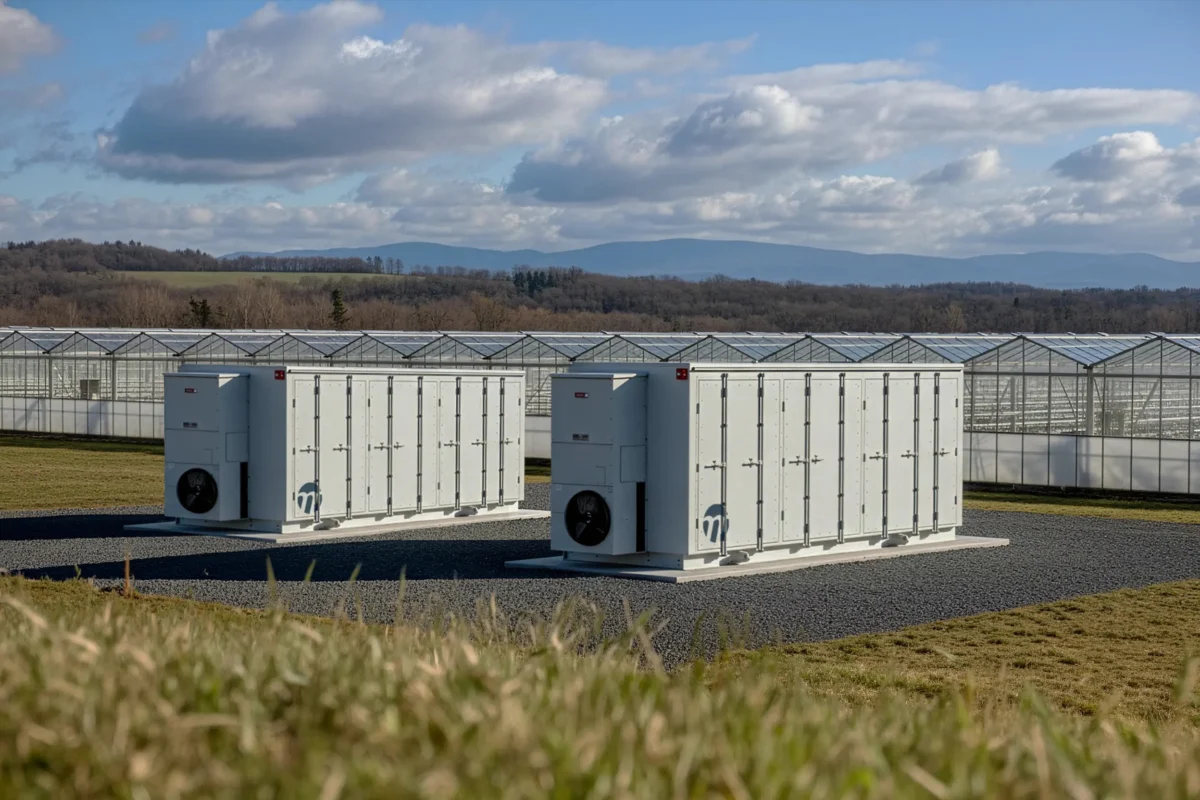
In a monumental shift that signals a fundamental realignment of the global energy landscape, a new report from Wood Mackenzie has confirmed that four-hour duration battery storage is now more cost-effective than open-cycle natural gas turbines—the very technology long favored by data center developers and utility providers to manage peak power demand.
This economic crossover is not limited to a few favorable markets; it is a global phenomenon. According to the data, in every one of the 43 markets surveyed by the consultancy, utility-scale batteries have officially outperformed natural gas on a cost-basis. As artificial intelligence-driven data centers continue to push global electricity demand to unprecedented heights, this pivot could not come at a more critical time.
Main Facts: The End of the Gas Peaker Era
For decades, "peaking power plants"—facilities designed to turn on rapidly when electricity demand spikes—have relied almost exclusively on open-cycle gas turbines. These plants are essential for grid stability, providing a bridge during moments of high stress. However, the Wood Mackenzie report suggests that the era of the gas peaker is entering its sunset years.
The findings are stark:
- Cost Parity Achieved: Four-hour battery storage is now the cheaper alternative to open-cycle gas turbines across every continent.
- Diverging Trajectories: The consultancy projects that the cost of electricity derived from battery storage will continue to plummet as technology matures and supply chains scale. Conversely, electricity generated from gas turbines is forecasted to grow increasingly expensive due to fuel price volatility and supply chain bottlenecks.
- The AI Factor: The sudden, insatiable demand for electricity from AI data centers has created a "gold rush" for power generation equipment. Developers are scouring the globe for any available turbines, driving up costs for everyone, including the utilities that rely on them to keep the lights on for the general public.
Chronology: A Rapid Shift in Market Dynamics
The transition from fossil-fuel-based peakers to electrochemical storage has been accelerating over the past several years, driven by a convergence of technological breakthroughs and market pressures.
The Rise of the Data Center
Starting in 2023 and intensifying through 2026, the meteoric rise of generative AI required massive, centralized computing power. Data centers, which operate 24/7, placed immense strain on regional grids. This demand shock forced developers to seek "quick-turn" power solutions, leading them to aggressively purchase open-cycle gas turbines—the most readily available, albeit less efficient, generation technology.
The Procurement Bottleneck
By mid-2024, the procurement timelines for power generation equipment began to fracture. While open-cycle turbines are mechanically simpler than their closed-cycle counterparts, waitlists grew to two to four years. For more efficient closed-cycle turbines, waitlists have now stretched into the early 2030s. This scarcity has created a pricing environment where natural gas power is no longer the "cheap" or "easy" option, effectively neutralizing its primary historical advantage.
The Battery Breakthrough
Parallel to the gas supply chain crisis, the cost of lithium-ion and alternative battery chemistries continued to fall. With significant manufacturing investments in China, the U.S., and Europe, the ability to deploy large-scale, four-hour storage systems moved from a niche project to a standard utility offering. As of late 2026, the economics have reached a "decisive and widening" tipping point.
Supporting Data: Regional Variations and Global Trends
The Wood Mackenzie report paints a picture of a world moving at different speeds toward the same destination, with significant regional variations in cost and adoption.
The Middle East and Africa
In these regions, where natural gas has traditionally been the default, the economic shift is particularly dramatic. The report estimates that by 2035, four-hour batteries will be 33% cheaper than gas-fired peaking plants, effectively displacing the need for new gas infrastructure across the entire region.
China’s Dominance
China continues to leverage its massive manufacturing capacity to lower the barrier to entry for storage technology. Current energy storage costs in China are reported to be 55% lower than those of its immediate neighbors, giving the nation a significant competitive advantage in stabilizing its grid for industrial growth.
The North American Complication
In the United States, the situation is nuanced. While solar remains the cheapest form of new power, the domestic market is wrestling with trade policy. Tariffs and import restrictions on solar components have created price pressure. However, the "One Big Beautiful Bill" provides a critical safety net. Approximately 168 gigawatts of utility-scale solar projects are currently protected from near-term price shocks thanks to "safe-harbor" provisions, which ensure that projects that began construction or achieved completion before the end of 2027 retain vital tax credits.
Official Perspectives: The Expert Consensus
The shift has been greeted by industry analysts as a fundamental change in the rules of the game. Ahmed Jameel Abdullah, principal analyst at Wood Mackenzie, emphasized the permanence of this trend in a recent press statement.
"This economic shift is decisive and widening," Abdullah noted. His analysis highlights that we are no longer talking about a temporary fluctuation in commodity prices, but a structural change in how energy markets value flexibility and dispatchability.
The implications for utilities are profound. Utility companies are traditionally conservative, preferring assets with long, proven lifespans like gas turbines. However, the escalating costs of procuring these units, combined with the volatility of natural gas prices, are forcing a rethink. Many utilities are now conducting integrated resource plans that favor hybrid solar-plus-storage projects over traditional fossil-fuel-based "peaker" plants.
Implications: The Future of the Grid
The displacement of gas peakers by battery storage carries significant implications for the global economy, the environment, and the future of the power grid.
1. Decarbonization by Default
Perhaps the most significant implication is that decarbonization is no longer solely driven by policy or environmental advocacy; it is now being driven by pure, bottom-line economics. When utilities can provide the same service—peak power—more cheaply with batteries than with gas, the transition to cleaner energy becomes inevitable, regardless of the political climate.
2. Grid Reliability in an AI World
As data centers demand more power, the grid must become more resilient. Batteries provide a level of agility that gas turbines cannot match. They can respond to frequency fluctuations in milliseconds, providing a higher quality of power for sensitive computing equipment. This makes battery storage an ideal companion for the AI revolution.
3. Investment Risks for Gas Assets
Investors in energy infrastructure must now account for the risk of "stranded assets." As batteries become the preferred choice for peaking power, the utilization rates of existing gas plants may drop. If a gas plant is only turned on for a few hundred hours a year, it becomes increasingly difficult to justify the high maintenance and fuel costs compared to a storage facility that requires no fuel and significantly less maintenance.
4. Supply Chain Shifts
The competition for minerals and components required for battery production will likely intensify. As the world moves away from a fuel-dependent energy system (gas) toward a mineral-dependent one (batteries), geopolitical tensions may shift from the control of oil and gas pipelines to the control of lithium, cobalt, and rare earth element supply chains.
Conclusion: A New Era of Energy
The findings from Wood Mackenzie serve as a wake-up call for the energy industry. We are witnessing the end of an era where natural gas was the undisputed king of peak power. As we look toward the 2030s, the grid will increasingly rely on the silent, efficient, and now cheaper power of battery storage. For data center developers, utility planners, and global investors, the message is clear: the future of energy is electrochemical, and the economic tide has officially turned.
Disclaimer: This article provides a summary of market trends based on industry reports. When you purchase through links in our articles, we may earn a small commission. This doesn’t affect our editorial independence.