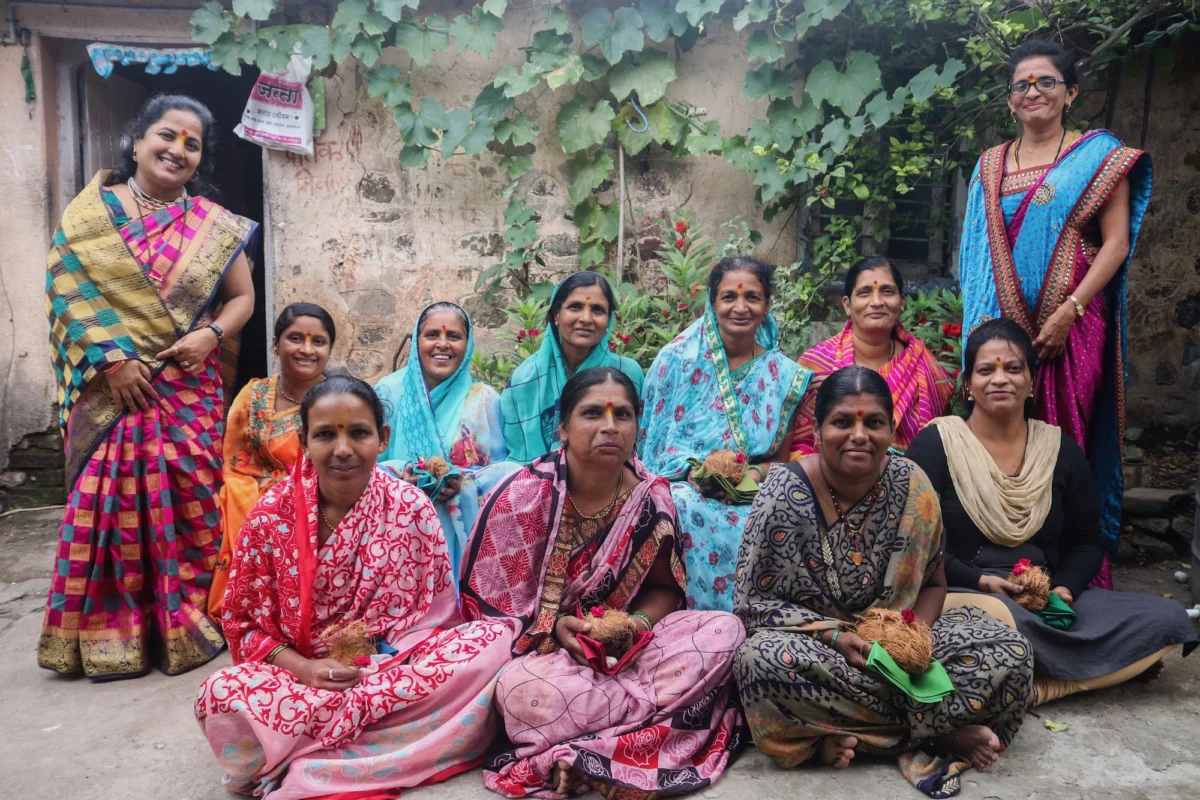
For millions of women, the transition into menopause is framed as a biological inevitability—a quiet, private passage marked by the cessation of fertility. However, for Sanjivani Patil, a 42-year-old resident of Badlapur in Maharashtra, India, this transition was far from quiet. It was a harrowing descent into a state of physical and mental turmoil that left her questioning her own will to live.
As her menstrual cycle became erratic and bleeding grew excessive, Sanjivani found herself dismissed by her community and local healthcare providers, who characterized her suffering as mere "normal" aging. The subsequent toll—night sweats, debilitating sleeplessness, metabolic dysfunction, and a fog-like cognitive decline—was compounded by the onset of severe clinical depression. With no formal support system and the stigma surrounding menopausal mental health acting as a barrier to care, Sanjivani reached a breaking point.

Sanjivani is not alone. Across India, the intersection of menopause and mental health remains a vast, overlooked territory. Yet, in the absence of institutional support, a grassroots movement led by Accredited Social Health Activists (ASHAs) is emerging to provide a lifeline to women caught in the silence of this transition.
The Hidden Epidemic: Main Facts and Context
Menopause, typically occurring between the ages of 45 and 55, is defined by the permanent cessation of menstrual periods due to significant hormonal shifts. While the physical symptoms are often discussed, the psychological implications remain shrouded in mystery and stigma.

An analysis of over 28,000 women in India revealed a staggering statistic: nearly one in five postmenopausal women aged 50 and older suffers from clinical depression. Despite these numbers, reliable data remains scarce. The normalization of women’s pain—both emotional and physical—often leads to the misclassification of menopause-related psychiatric distress as general depression, resulting in ineffective treatment plans.
The crisis is exacerbated by the structure of the medical system in India. With fewer than 4,000 clinical psychologists available to serve a population of 1.4 billion, the burden of mental health care often falls onto the shoulders of community volunteers who are neither trained nor compensated for this specialized role.

Chronology of a Silent Struggle: From Despair to Advocacy
Sanjivani’s journey is a microcosm of the systemic neglect faced by midlife women in rural and urban India.
The Onset: At 42, Sanjivani began experiencing symptoms that went beyond standard perimenopause. Her blood pressure spiked, necessitating hospitalization. She reported feeling "restless, suicidal, and depressed." During this period, she found herself isolated, lacking the terminology to describe her pain and the resources to find relief.

The Turning Point: In the depths of her despair, a phone call from Netradipa Patil, a fellow ASHA and a union leader representing 3,000 health activists, became a catalyst for change. The two had previously met during protests demanding better pay for the overworked and underpaid ASHA cadre.
The Intervention: Netradipa, sensing a change in Sanjivani’s demeanor, reached out repeatedly. After 15 days of silence, Sanjivani answered. Recognizing that the symptoms might be linked to hormonal changes during perimenopause, Netradipa stepped outside her official remit—which is primarily focused on maternal health and immunization—to provide psychosocial counseling.

The Recovery: Netradipa introduced a holistic recovery model. She encouraged meditation, mindfulness, and, crucially, the rediscovery of Sanjivani’s passion for poetry and rangoli (traditional floor art). By utilizing art as a form of therapy, Sanjivani slowly reclaimed her agency. After three years of struggle, she transitioned from a patient into an advocate, documenting her journey and helping other women navigate the same path.
The Weight of Stigma: Supporting Data and Medical Perspectives
The medical community’s approach to menopause is often criticized for being overly clinical and exclusionary of the "life event" nature of the transition.

Dr. Jayashri Kulkarni, director of the Women’s Mental Health Center at Monash University, highlights the complexity of the diagnosis. "Sometimes women describe that they feel completely normal, and then again, they can have a crash in their mental health," she notes. The diagnostic difficulty is further compounded by the reliance on peripheral blood tests, which often fail to reflect the precise hormonal fluctuations occurring within the brain.
Furthermore, medical professionals often treat menopausal depression with standard antidepressants, which may not address the underlying hormonal etiology. This is further complicated by the over-medicalization of women’s health, such as the high rate of hysterectomies. Data from India’s National Family Health Surveys indicate that by age 50, one in 10 women has undergone a hysterectomy—a surgery often performed without exhausting less invasive alternatives.

As Martha Hickey, professor of obstetrics and gynecology at the University of Melbourne, argues, "That [disease] model shouldn’t apply to menopause because it’s a life event." By viewing menopause through the lens of pathology, the medical system risks reinforcing the narrative that aging is a period of "decay" rather than a natural, albeit challenging, phase of life.
Building a Volunteer Support System: The Role of the ASHA
Accredited Social Health Activists (ASHAs) are the backbone of India’s public health infrastructure. Introduced in 2005 under the National Rural Health Mission, their initial mandate was to reduce maternal and child mortality. However, their scope has expanded to include everything from tuberculosis care to non-communicable disease screenings.

Despite their critical importance, ASHAs are not classified as government employees. They are essentially volunteers paid through performance-based incentives. They are, by definition, overworked and under-resourced. Yet, as seen with Netradipa and Sanjivani, they are filling the gaps left by a strained healthcare system.
Netradipa has taken the initiative to train over 50 ASHAs in menopause support, providing counseling remotely. Their efforts demonstrate that while professional medical treatment is irreplaceable, it is significantly enhanced by psychosocial support—groups, counseling, and creative therapies—that foster emotional resilience.

Implications: Rethinking Menopause Care for the Future
The research is clear: psychosocial interventions—including mindfulness, music therapy, and community support groups—have shown strong potential in improving emotional well-being during menopause. Randomized trials in countries like Turkey have shown that activities as simple as mandala coloring and music therapy can reduce anxiety and improve sleep quality for menopausal women.
However, individual resilience cannot be the solution to a systemic failure. The implications for policy are twofold:

- Formal Integration and Training: The government must move beyond viewing ASHAs as informal volunteers. Providing formal training in menopausal mental health and offering fair compensation is essential to sustaining this model of care.
- Specialized Care Networks: There is an urgent need to hire more mental health and menopause specialists, shifting the focus from purely clinical intervention to holistic, long-term support that honors the experience of aging women.
For Sanjivani, the journey has come full circle. She now maintains a list of women in her community experiencing similar symptoms, creating a "chain" of support that grows with every healed individual. "After someone heals, I ask them to share their experience with others," she says.
Her story, and the tireless work of the ASHA network, serves as a poignant reminder that the most effective health interventions are often those that combine rigorous medical care with deep, human-centric empathy. The goal is no longer just to survive the transition, but to ensure that women are empowered to thrive during what should be a significant, life-affirming stage of their existence.

As we look toward the future, the work of women like Sanjivani and Netradipa stands as a testament to the fact that when silence is broken, the barriers of stigma begin to crumble. By investing in these community-level solutions, India has the potential to transform the menopause experience from one of quiet despair into one of collective growth and restored purpose.