In the rapidly evolving landscape of artificial intelligence, the transition from passive chatbots to active, goal-oriented "agents" marks a paradigm shift in software engineering. Unlike traditional Large Language Models (LLMs) that simply respond to prompts, AI agents are autonomous entities capable of reasoning, planning, and executing sequences of actions to achieve complex objectives. For the modern engineer, building these agents is no longer an academic exercise; it is the fundamental prerequisite for mastering the next generation of software architecture.
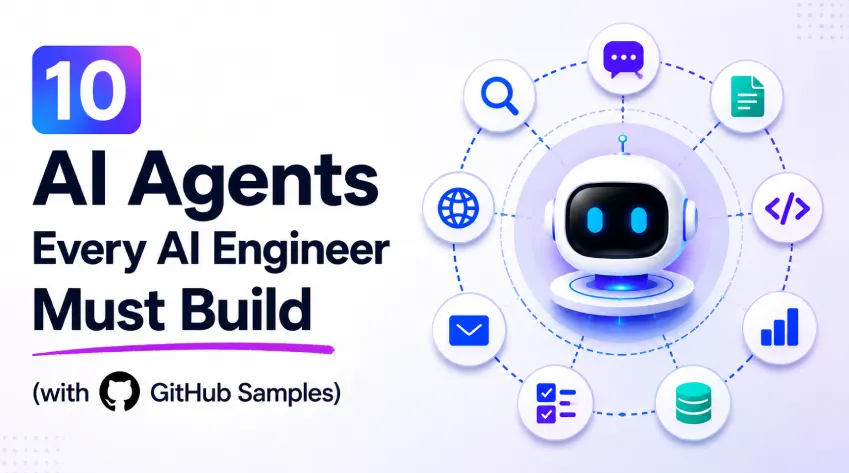
This guide outlines 10 high-impact AI agents that serve as a roadmap for engineers aiming to transition from theoretical understanding to practical, production-ready AI development.
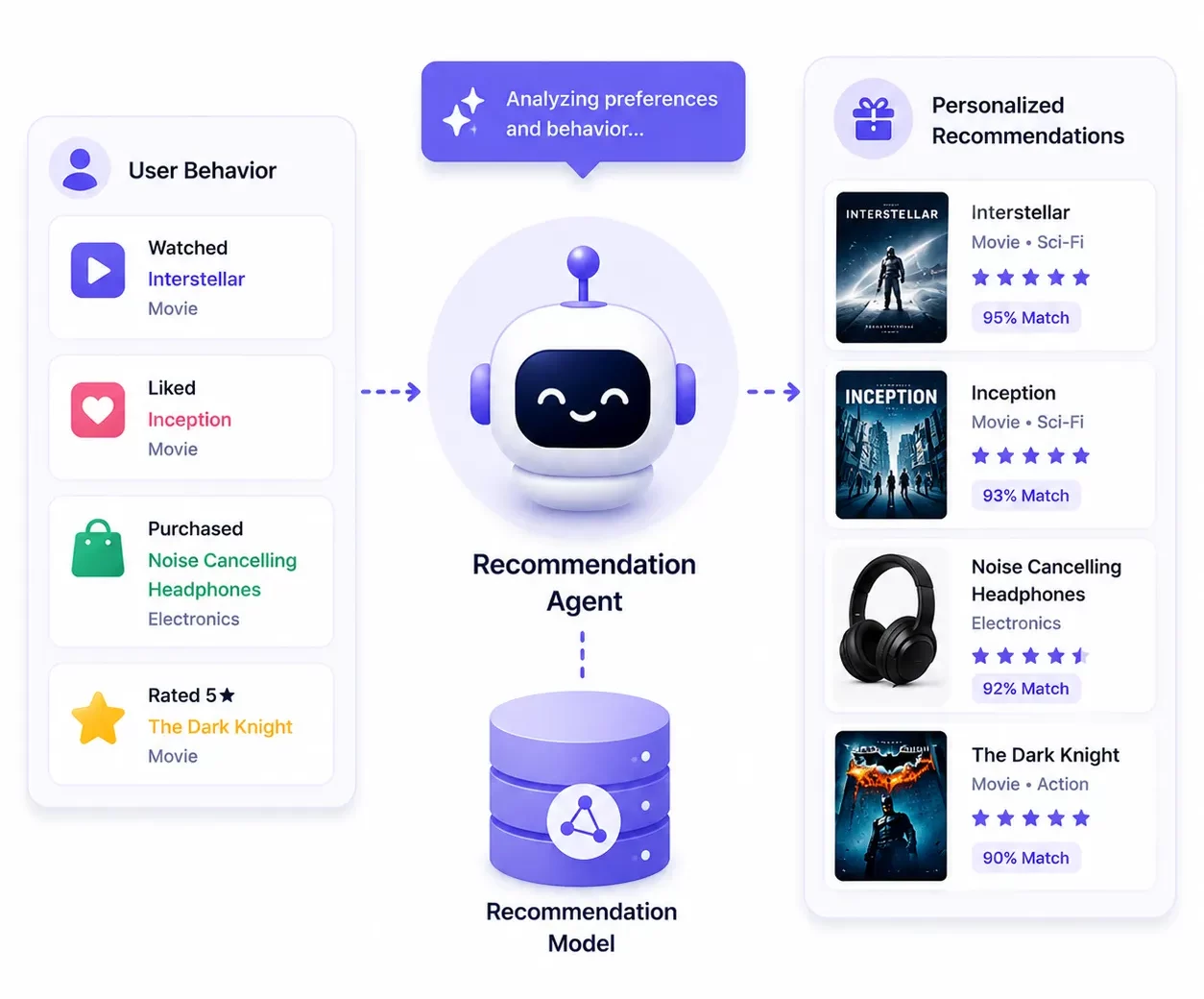
1. Recommendation Agent
Recommendation systems are the silent engines behind the world’s most successful digital platforms. From Netflix’s content curation to Amazon’s product suggestions, these systems optimize user engagement.
- The Core Concept: Building a recommendation agent requires mastery of collaborative filtering, matrix factorization, and content-based filtering.
- Technical Implications: You will learn to handle large-scale datasets, calculate similarity scores, and integrate real-time feedback loops to refine suggestions.
- Essential Resource: Microsoft’s Recommenders Repository provides the industry-standard toolkit for building and evaluating these systems.
2. Coding Agent
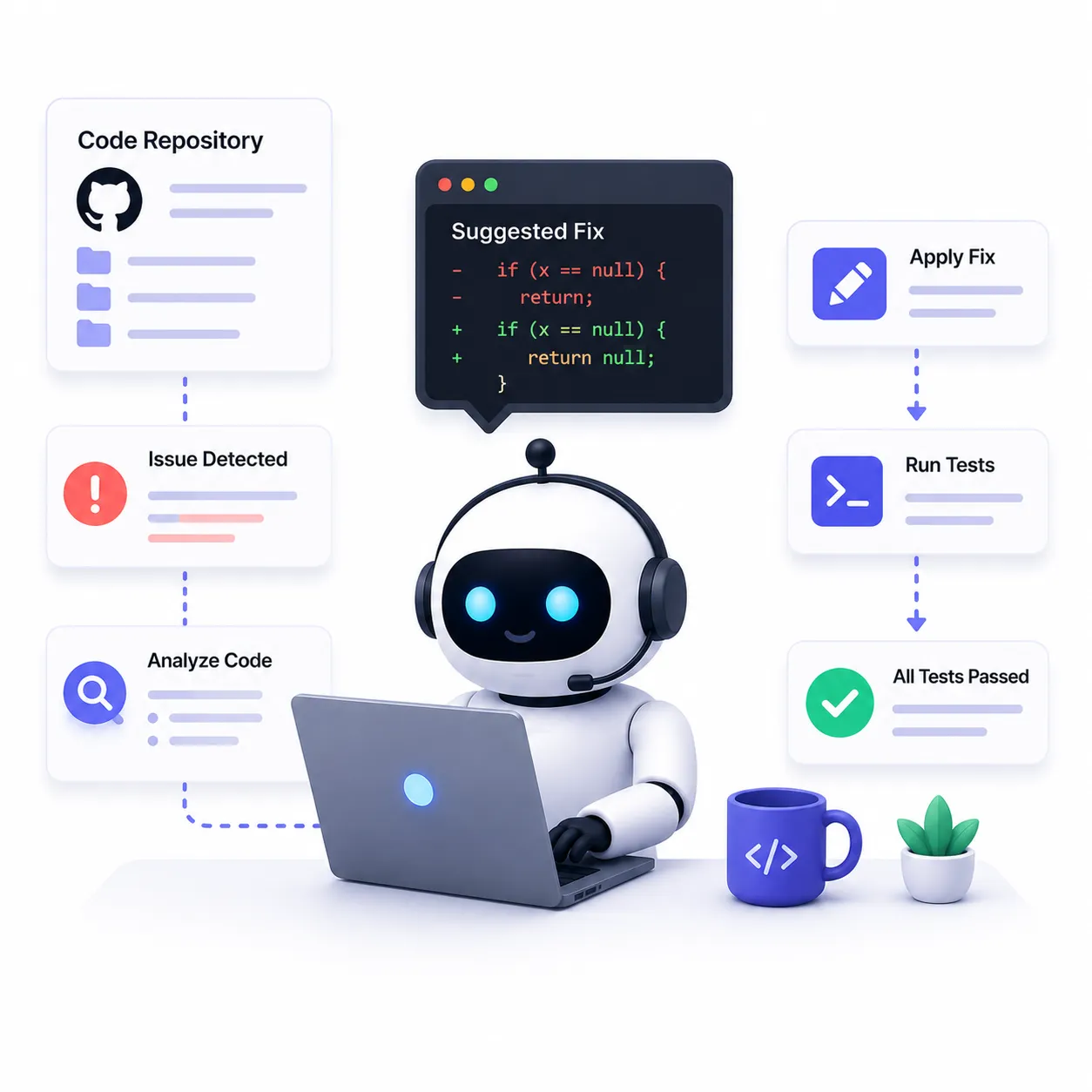
The "Automated Software Engineer" is the holy grail of modern productivity. These agents can navigate complex codebases, perform dependency analysis, and autonomously execute bug fixes.
- The Core Concept: An effective coding agent leverages LLMs to interpret error logs, locate the offending file, suggest a patch, and verify the fix via automated unit testing.
- Technical Implications: You will grapple with abstract syntax trees (ASTs), repository navigation, and the safety constraints required to prevent "hallucinated" code from breaking production environments.
- Essential Resource: The swe-agent project offers a blueprint for creating an agent capable of interacting with GitHub issues and pushing commits.
3. AI Research Agent
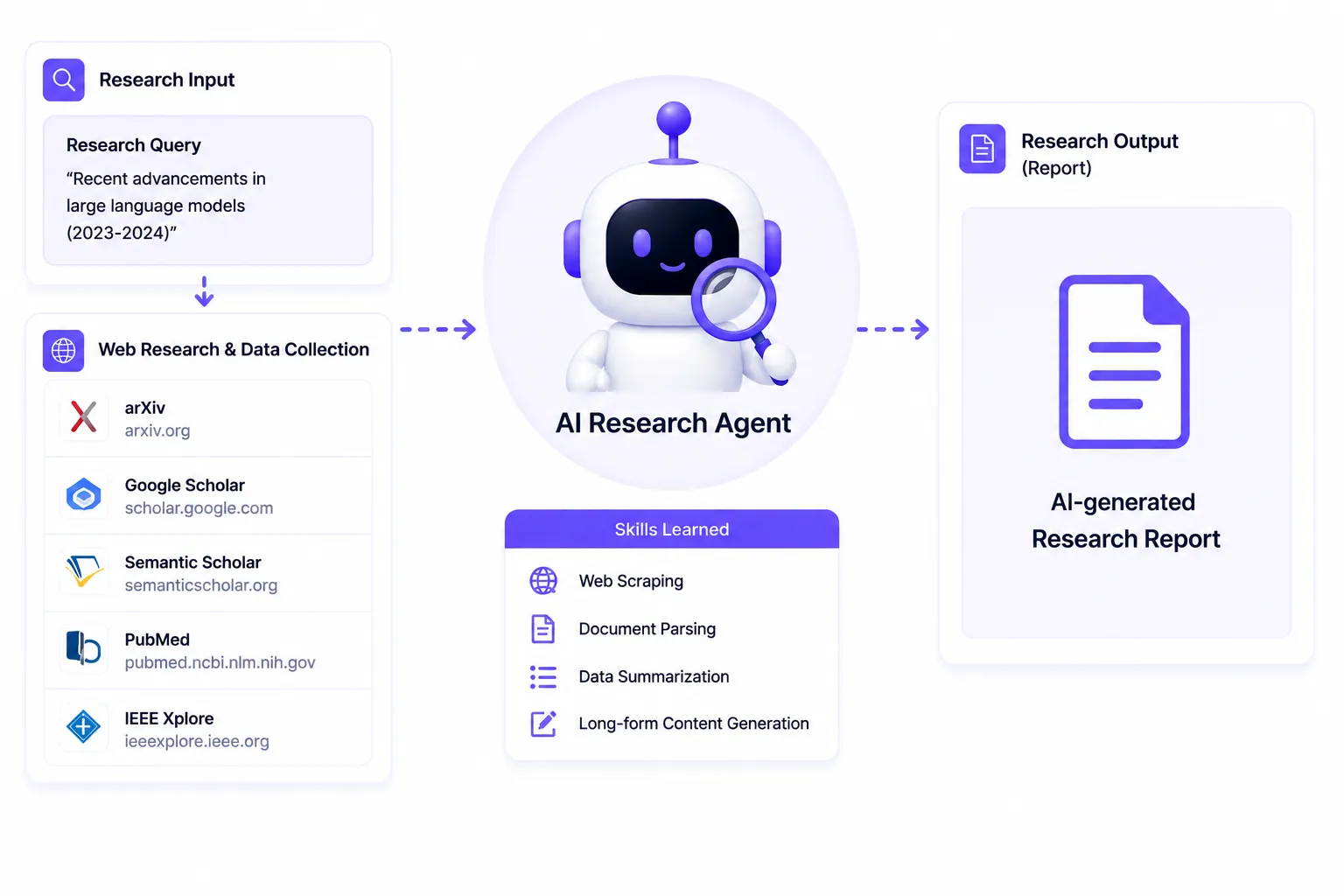
Information overload is a modern tax on human intelligence. AI research agents act as specialized investigators, scraping the web to synthesize vast amounts of data into structured, actionable reports.
- The Core Concept: These agents combine web search APIs with summarization chains to filter out noise and provide grounded, evidence-based responses.
- Technical Implications: You will develop expertise in multi-step reasoning, context window management, and citation verification.
- Essential Resource: gpt-researcher is the gold standard for creating agents that autonomously search, collect, and report on specific topics.
4. Browser Automation Agent
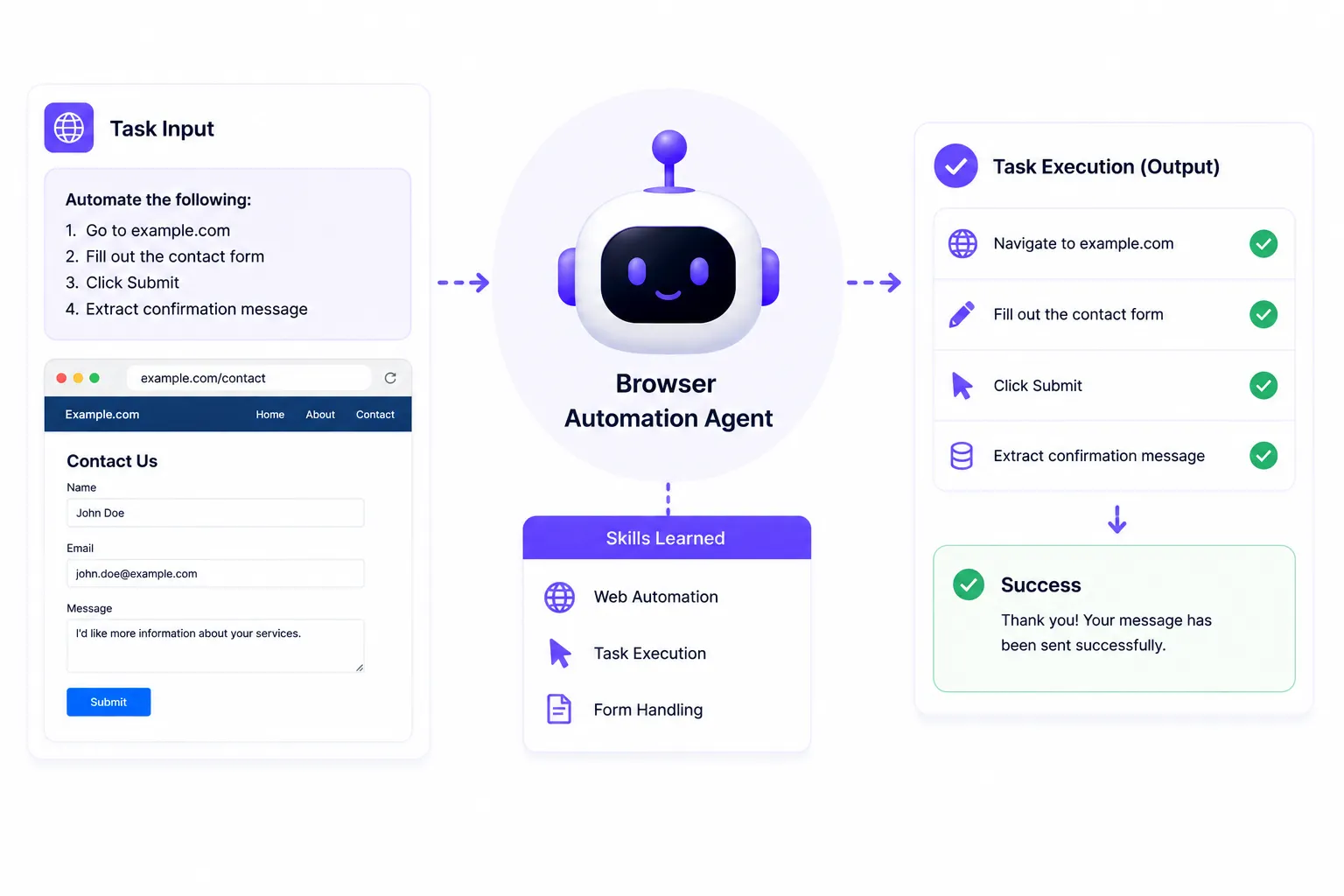
Manual data entry and repetitive web navigation are relics of the past. Browser automation agents use computer vision and DOM parsing to "see" and interact with websites like a human would.
- The Core Concept: These agents translate natural language requests (e.g., "Find the cheapest flight to Tokyo") into sequences of browser clicks, form fills, and scrolls.
- Technical Implications: This project teaches you to navigate dynamic web elements and manage asynchronous state changes within a browser environment.
- Essential Resource: The browser-use framework is currently at the forefront of enabling LLMs to navigate the web with human-like proficiency.
5. Document Q&A / RAG Agent
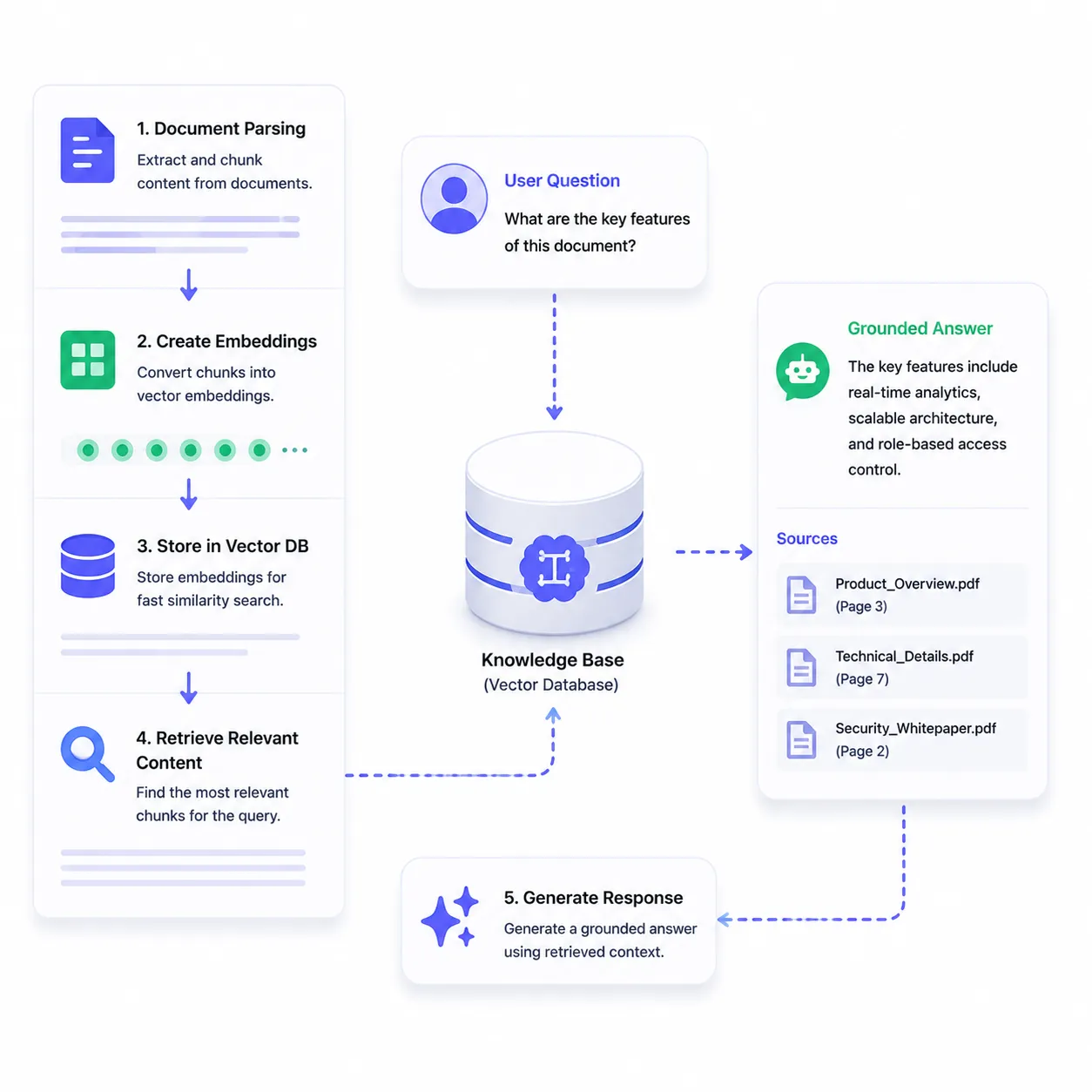
Retrieval-Augmented Generation (RAG) is the bridge between static pre-trained models and proprietary, up-to-date data.
- The Core Concept: By indexing local documents into a vector database, an agent can "read" your private files and answer questions with specific, cited context.
- Technical Implications: You will master vector embeddings, chunking strategies, and retrieval evaluation (RAGAS metrics) to ensure accuracy.
- Essential Resource: RAG-Anything provides an excellent entry point for indexing and querying arbitrary document formats.
6. Customer Support Agent
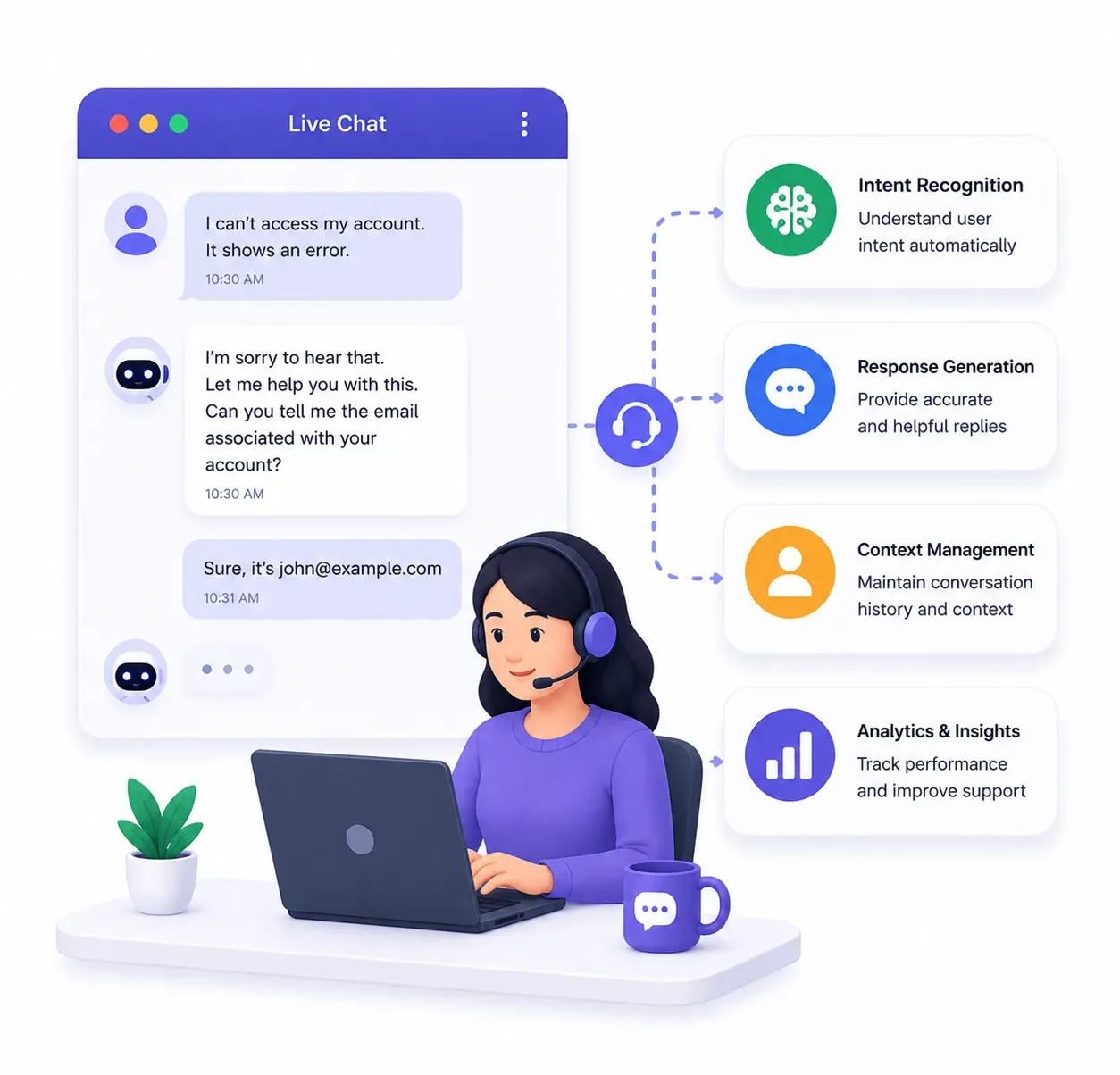
Modern customer support is moving toward "agentic" flows where the AI doesn’t just answer questions—it resolves issues.
- The Core Concept: These agents integrate with CRM APIs to check order status, initiate refunds, or escalate tickets, maintaining conversational continuity throughout the process.
- Technical Implications: You will learn to design state machines, manage intent classification, and implement "human-in-the-loop" handoffs.
- Essential Resource: The Rasa Helpdesk Assistant offers a robust, enterprise-grade framework for building conversational flows.
7. Personal AI Assistant Agent
This is the ultimate "utility" agent. It connects your digital life—calendars, weather, reminders, and emails—into a single command interface.
- The Core Concept: The goal is to build an agent that uses "Tool Use" (Function Calling) to trigger external APIs based on user intent.
- Technical Implications: You will learn to handle authentication, API rate limiting, and natural language command parsing.
- Essential Resource: QwenPaw demonstrates the integration of multi-modal inputs (voice and text) with complex tool execution.
8. Predictive Maintenance Agent
In the industrial sector, the ability to predict machine failure before it occurs saves millions in downtime.
- The Core Concept: This agent analyzes time-series sensor data to detect anomalies and forecast remaining useful life (RUL) for mechanical assets.
- Technical Implications: You will dive into data preprocessing for time-series, statistical anomaly detection, and regression modeling.
- Essential Resource: AWS Labs’ Predictive Maintenance is the premier reference for implementing industrial-scale predictive models.
9. Computer Vision Agent
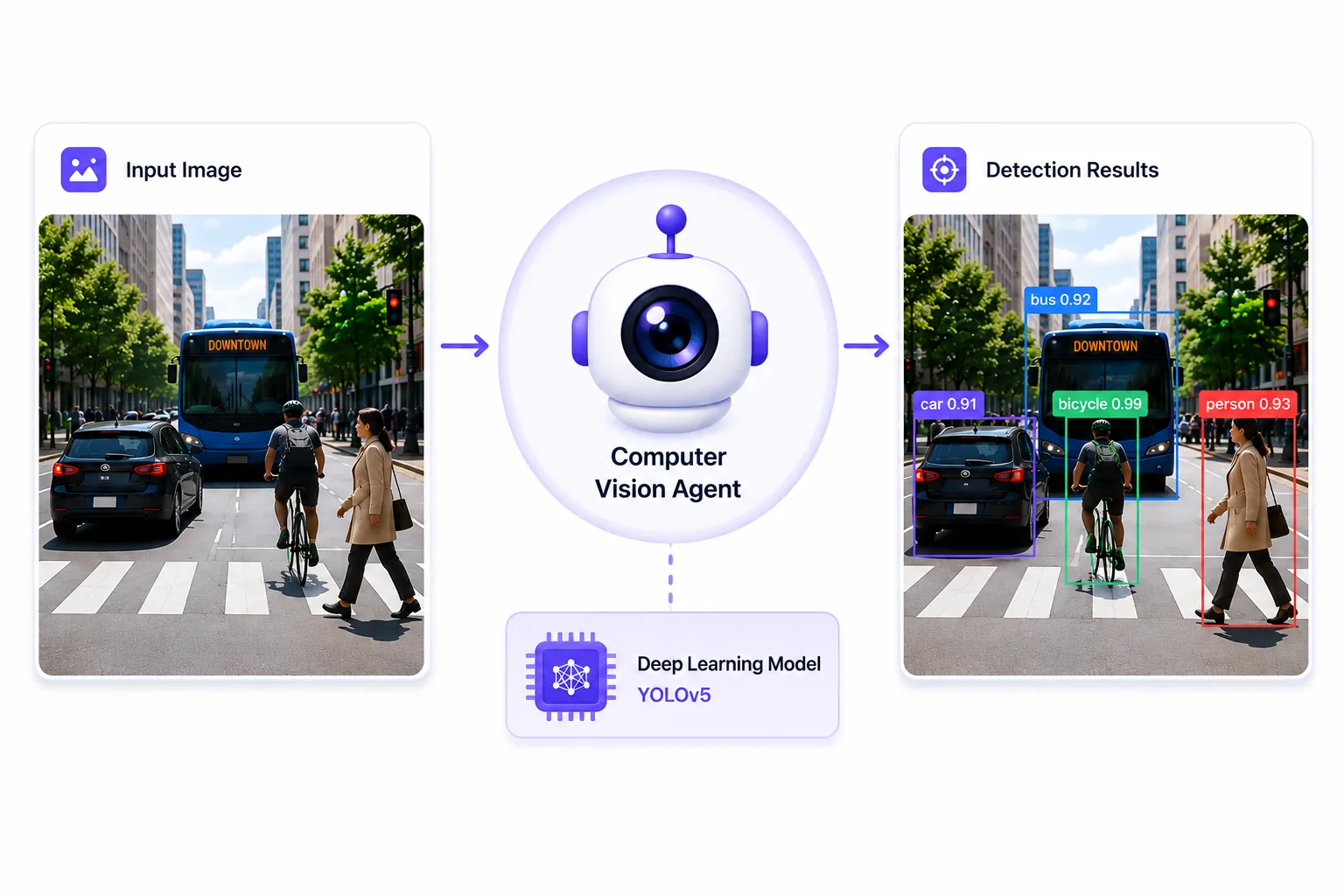
Computer vision agents bring sight to AI, enabling the identification and tracking of objects in real-time.
- The Core Concept: By leveraging YOLO or similar architectures, these agents can process video feeds to perform security monitoring, traffic analysis, or quality control.
- Technical Implications: You will work with image pre-processing, model training, and the trade-off between inference speed and accuracy.
- Essential Resource: YOLOv5 by Ultralytics remains the industry benchmark for fast, reliable object detection.
10. Financial Trading Agent
Trading agents represent the intersection of high-stakes data analysis and reinforcement learning.
- The Core Concept: Using historical price action and sentiment analysis, these agents attempt to optimize a portfolio by learning from simulated market environments.
- Technical Implications: You will explore reinforcement learning (RL) agents, backtesting frameworks, and risk management logic.
- Essential Resource: FinRL Trading provides a comprehensive library for training agents in complex financial environments.
Implications for the Engineering Landscape
The transition toward agentic workflows is shifting the focus of software engineering. We are moving away from "writing code that executes a fixed logic" toward "designing systems that reason to achieve a goal."
For the professional, the implication is clear: the ability to build and orchestrate these agents is the new baseline for seniority. Engineers must now account for non-deterministic behavior, cost-effective prompt engineering, and rigorous evaluation of AI performance.
Where to Begin?
If you are starting today, do not attempt all ten. Begin with the Personal AI Assistant or RAG Agent. These provide the foundational understanding of how to bridge an LLM with external tools and data. Once you have mastered the "Tool Use" pattern, you can progress to more complex autonomous loops like those found in Coding or Browser Automation agents.
The future of engineering is not just in writing the software—it is in building the intelligence that writes, researches, and operates it. By mastering these ten agents, you are building the architecture of the next decade of computing.