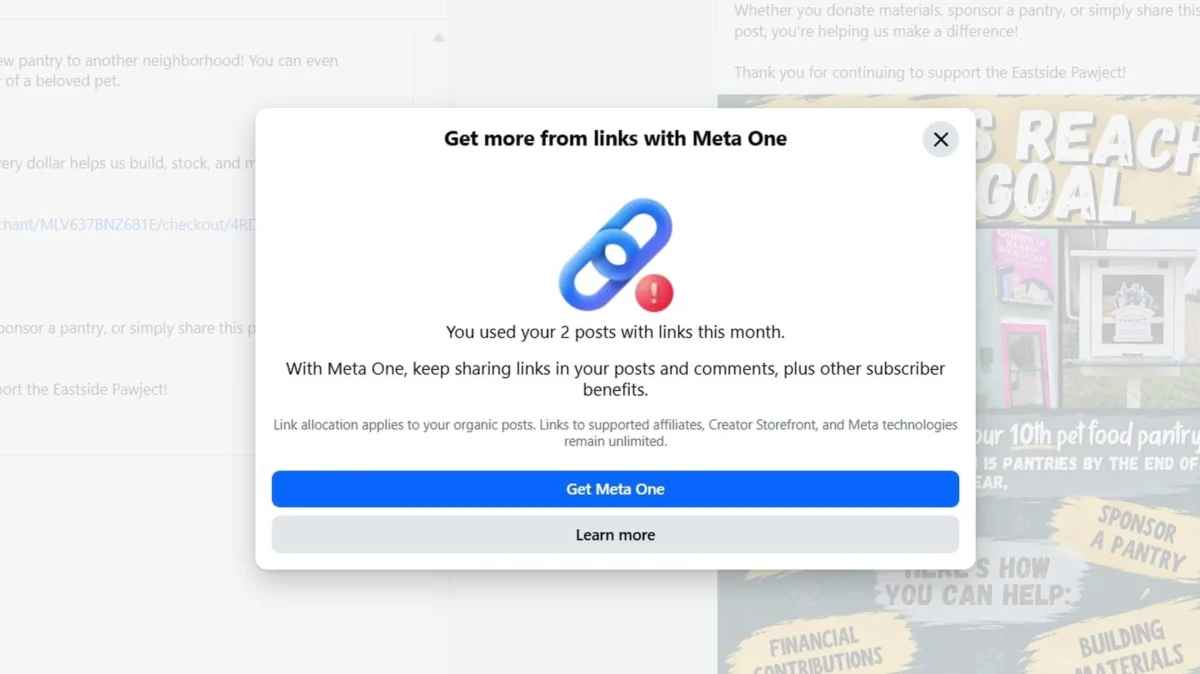
In an era where social media serves as the digital town square for local governance and charitable outreach, a controversial experiment by Meta has sparked widespread alarm. The tech giant, owner of Facebook and Instagram, is currently conducting a test that restricts the ability of certain pages to post hyperlinks—the fundamental building blocks of internet navigation—unless they subscribe to a premium “Meta One” plan.
While Meta has publicly stated that these restrictions are not intended to affect government entities or nonprofit organizations, the reality on the ground tells a different story. Municipalities and small, volunteer-led charities are finding themselves caught in a bureaucratic dragnet, facing the choice of either paying steep monthly subscription fees or losing their ability to direct their communities to vital information.
The Anatomy of the Test: Pay-to-Post
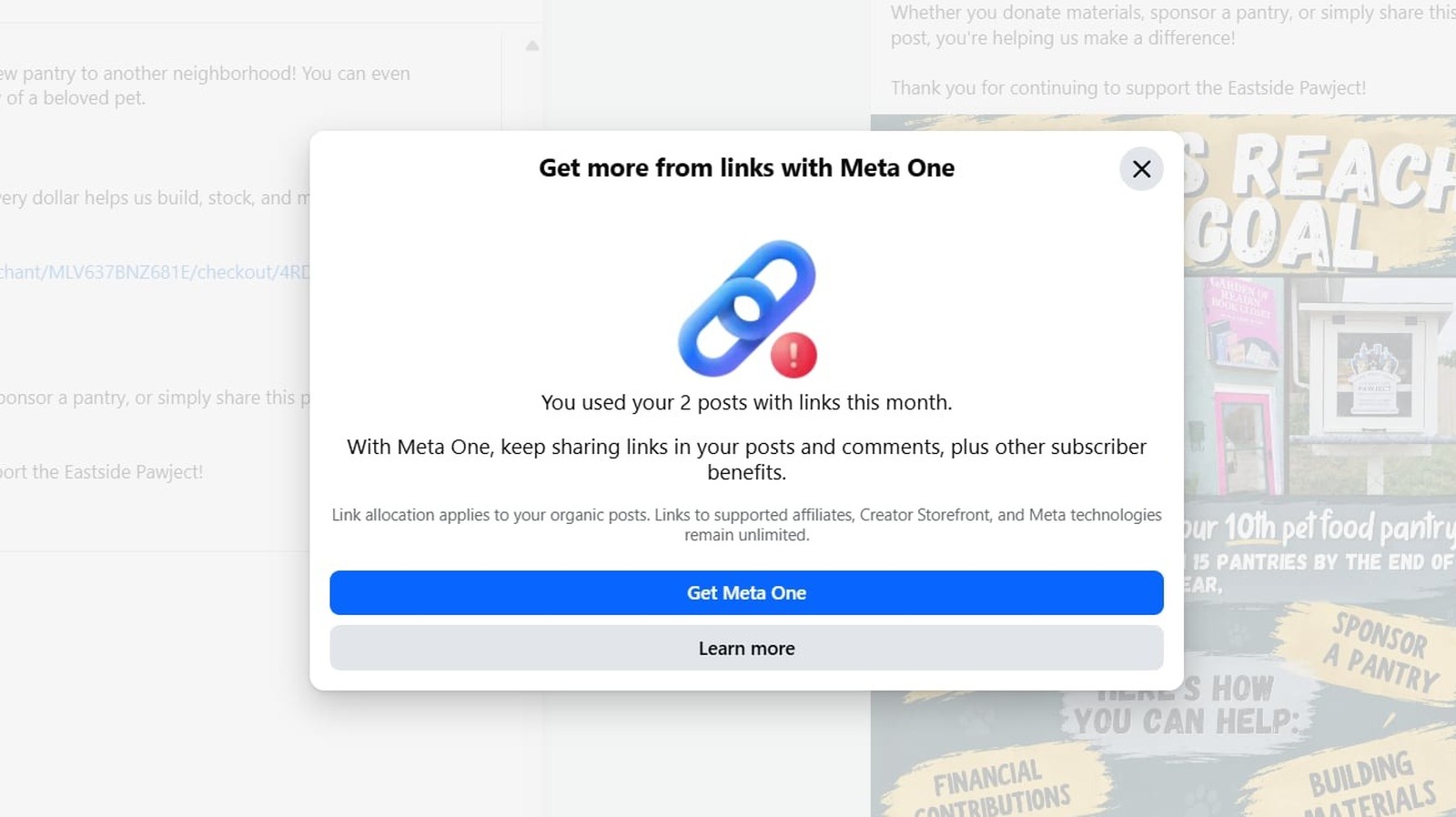
For nearly a year, Meta has been quietly testing a system that ties the utility of Facebook pages to its new subscription tiers. The “Meta One” plans are marketed as AI-centric tools designed to enhance business performance, yet they have become the gateway to basic functionality. Under the current test parameters, some users are restricted to as few as two link-shares per month. To gain more, they must opt into tiered subscriptions ranging from $50 to over $150 per month, with "unlimited" access reserved for the highest tier, which can cost as much as $500 monthly.
For a standard user, this may be an inconvenience. For a city government providing public safety alerts or a food bank coordinating essential resources, it represents an existential threat to their communication strategy.
Chronology of a Digital Crisis
The friction began intensifying earlier this year as Meta began rolling out the test to a wider swath of pages.
- Initial Rollout: Meta introduced the link-sharing limitations as part of its broader Meta Verified and Meta One initiatives. The company framed these as a way to "unlock specialized capabilities" for businesses.
- The Municipal Wake-up Call: Daniel Starks, communications manager for the city of Greenville, Texas, discovered the restriction when the city’s library page was barred from posting more than two links per month. The notification explicitly prompted him to sign up for a paid subscription.
- Nonprofit Disruption: Shortly thereafter, small nonprofits—such as the East Side Pawject in Indianapolis—began reporting identical issues. These organizations, which rely on organic social media traffic to secure volunteers and donations, were suddenly unable to link to their own websites.
- The "Glitch" Pattern: Reports emerged of erratic behavior, where some accounts were hit with restrictions, only to have them removed without explanation days later—often after critical events or fundraising windows had already closed.
Supporting Data: The Financial Burden on the Social Sector
The economic implications for small organizations are stark. Meta’s pricing structure appears divorced from the reality of the non-profit sector.
For the East Side Pawject, which operates with a limited budget, a $150 monthly charge for the "Expert" tier—which grants a mere 20 links—is fiscally impossible to justify. The irony, as many observers have pointed out, is that these organizations are often using Meta’s own fundraising tools, which have historically been supported by the platform.
The Pricing Tiers Under Scrutiny:
- Basic/Free Tier: Restricted to two links per month (or none, depending on the test cohort).
- Mid-Level ($49.99/mo): Eight links per month.
- Expert ($149.99/mo): Twenty links per month.
- Unlimited ($499.99/mo): Uncapped link sharing.
Marketing managers like Jeff Bannister of the North Carolina-based nonprofit SparkPoint have been vocal about the math. “Fifty bucks for eight links a month is crazy,” Bannister noted. “The ROI seems almost negative.” For a small organization, paying for the privilege of sharing their own content is not just a financial burden; it is an insult to the community-building role these entities play on the platform.
Official Responses and Strategic Ambiguity
Meta’s official stance remains intentionally vague. When approached for comment, a spokesperson for the company stated: “We’ve been testing whether sharing links on Facebook should be part of the Meta One subscription. We will continue to evolve the experience based on the feedback we receive and what we learn.”
Critically, the company has failed to address why organizations that are clearly labeled as "Government" or "Nonprofit"—and which have undergone separate verification processes for fundraising—are being caught in the net. By refusing to provide a clear exemption policy, Meta is forcing these organizations into a state of perpetual uncertainty, where they must constantly monitor their own account status to ensure they haven’t been "paywalled."
The Implications: A Shift in the Digital Landscape
The fallout from this experiment is causing a fundamental shift in how public institutions view their reliance on Big Tech.
1. The Migration of Information
As seen in Greenville, Texas, administrators are beginning to move away from direct linking. Instead of posting a URL, they are forced to post images with text, or move links into the comments section—a process that reduces reach, engagement, and accessibility for users who rely on screen readers or simple navigation.
2. Erosion of Public Trust
When a government entity is forced to pay a private corporation to broadcast public information, the optics are poor. It creates a dynamic where "official" communication is gated by commercial interests. This is particularly problematic in disaster scenarios, where the rapid dissemination of links (for evacuation routes, emergency shelters, or public health updates) is literally a matter of life and death.
3. The "Meta-Dependent" Dilemma
Many organizations are trapped. Because their entire user base, donor pool, and volunteer network are concentrated on Facebook, they cannot simply delete their accounts. This "platform lock-in" is exactly what allows Meta to test such aggressive monetization strategies. Organizations are effectively being held hostage by their own success in building an audience on the platform.
4. Fragmented Communication
The inconsistency of the test—where some pages are restricted and others are not—is creating a fragmented information environment. Users cannot be certain if a page is failing to provide a link because they have been "paywalled" or because the information is simply unavailable. This uncertainty degrades the quality of the Facebook ecosystem as a whole.
Conclusion: The Path Forward
The outcry from city managers and nonprofit leaders suggests that Meta’s current path is unsustainable. By tying a basic, fundamental utility of the web—the hyperlink—to a high-cost subscription service, Meta is fundamentally altering the utility of its platform for the worse.
If the company continues to ignore the unique needs of the public sector, it risks driving away the very institutions that provide the "valuable content" that keeps users on the platform. For now, small nonprofits and local governments are forced to play a game of cat-and-mouse, looking for workarounds and questioning whether the cost of staying on Facebook is finally exceeding the benefit.
As the digital landscape evolves, one thing is clear: the era of "free" communication on social media platforms is ending, and the cost of this transition is being paid by the organizations that serve the public good. Unless Meta implements a transparent and functional exemption policy for government and charitable entities, they may find that their quest for new revenue streams comes at the expense of their reputation and their role as a neutral, accessible conduit for public information.