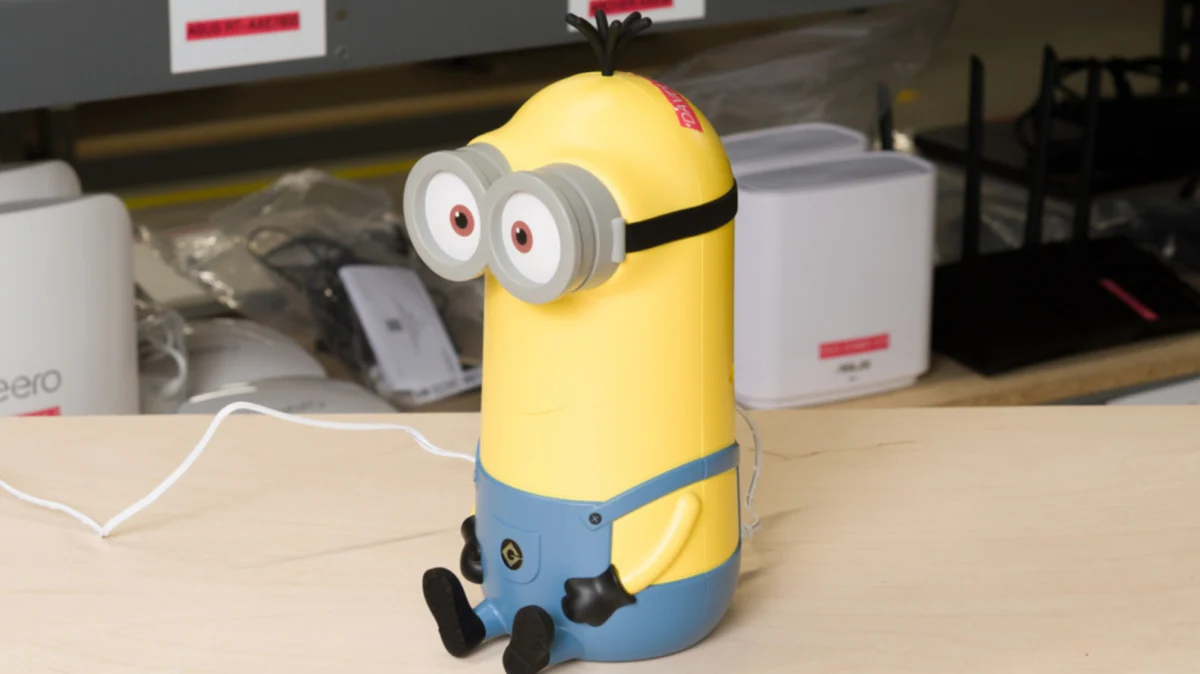
In the strange intersection of pop culture and national security, few products have generated as much online buzz as Davolink’s Minions-themed Wi-Fi routers. "Kevin" and "Bob"—quirky, yellow, and undeniably adorable—became an overnight internet sensation after an X (formerly Twitter) post highlighted their impressive performance specs. However, while tech enthusiasts scrambled to acquire these devices, they unknowingly waded into a complex geopolitical minefield. Despite their charm, these routers are now caught in the crosshairs of an expansive Federal Communications Commission (FCC) crackdown on foreign-made networking equipment.
The Viral Rise of the Minions Routers
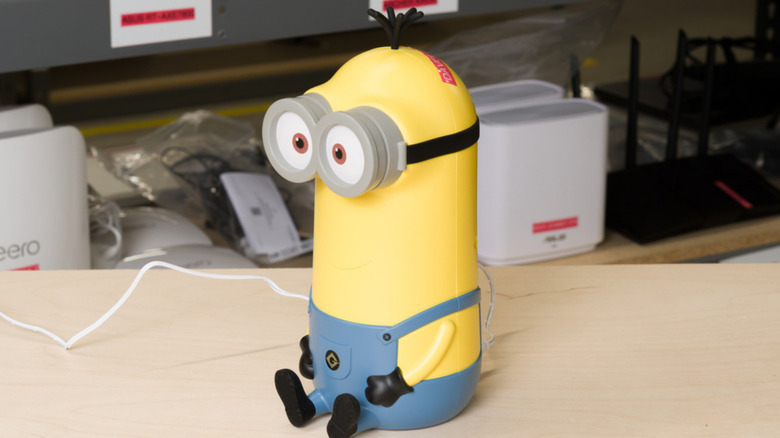
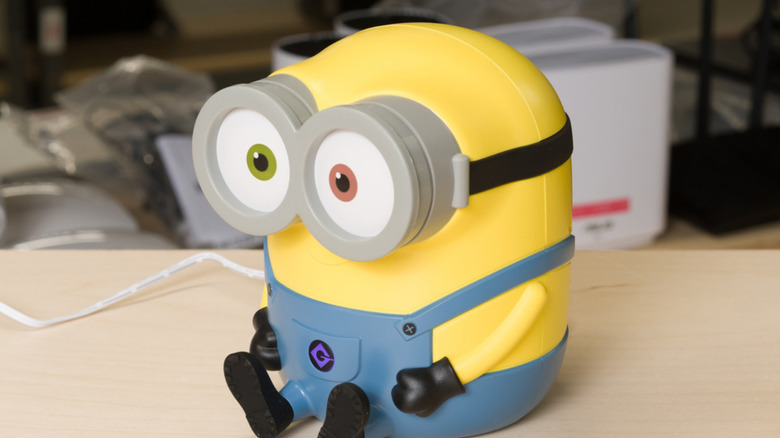
The story of these devices began at CES 2023, where South Korean networking firm Davolink unveiled the routers under an exclusive licensing agreement with Universal. The devices, designed to resemble the iconic henchmen from the Despicable Me franchise, were never intended as mere toys. Beneath their plastic yellow shells lay legitimate, high-performance networking hardware.
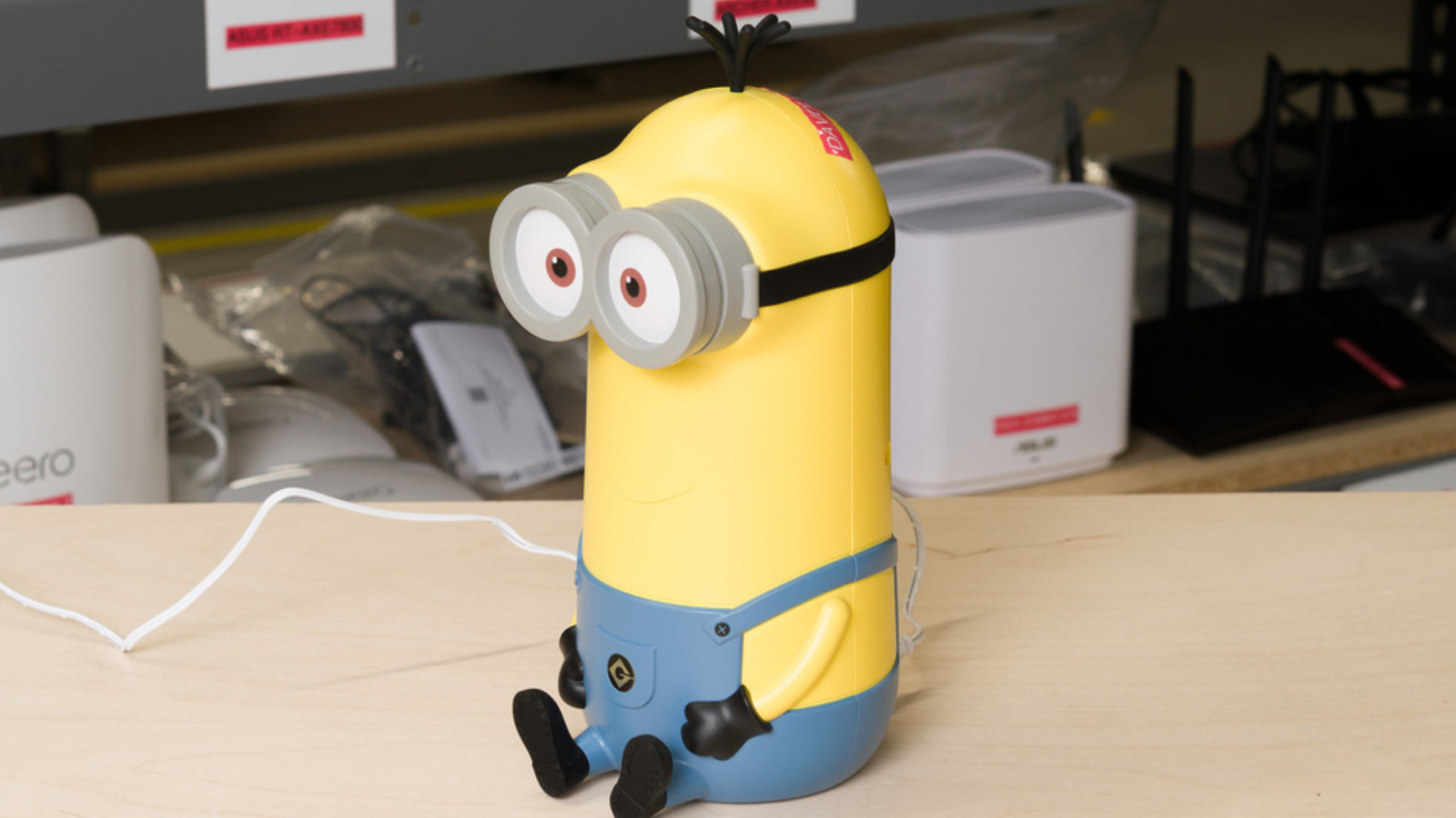
The taller model, "Kevin" (model DVW-632), features a tri-band Wi-Fi 6E configuration. With an AXE5400 rating, it delivers 573 Mbps on the 2.4 GHz band and a robust 2.4 Gbps on both the 5 GHz and 6 GHz bands. It boasts a 2.5 Gbps WAN port, WPA3 security, and mesh networking capabilities. Its counterpart, "Bob" (model DVW-642), is a more modest dual-band Wi-Fi 6 router capable of 1.77 Gbps.
When a viral social media post dubbed Kevin "one of the best Wi-Fi 6E routers money can buy," the secondary market exploded. Amazon inventory priced at $62.99 vanished in hours. Yet, the irony remains: while fans view these devices as fun, high-speed upgrades for their home offices, the U.S. government views them as part of a broader, systemic concern regarding foreign-manufactured telecommunications infrastructure.
Chronology: From CES Debut to Federal Blacklist
The trajectory of the Minions routers serves as a microcosm of the rapidly shifting regulatory landscape for networking gear in the United States.
- January 2023: Davolink officially unveils the Minions routers at the Consumer Electronics Show (CES) in Las Vegas.
- Summer 2023: The routers launch in the South Korean market, targeting consumers looking for performance hardware that doubles as home decor.
- November 2023 – February 2024: The FCC grants authorization for the Kevin and Bob models, allowing them to legally enter the U.S. market.
- March 20, 2024: A high-level interagency body convened by the White House issues a national security determination regarding foreign-made network equipment.
- March 23, 2024: The FCC formally adds "routers produced in a foreign country" to its Covered List. This move effectively blocks new foreign-made routers from receiving the necessary authorization for sale in the U.S.
- Present Day: While existing units remain legal to own and operate, the pipeline for future Minions-themed iterations (such as a potential Wi-Fi 7 model) is effectively severed, and long-term support for the current lineup remains in limbo.
Technical Performance: How Kevin Stacks Up
One of the most surprising aspects of the Minions router saga is that they are not just "novelty" products—they are genuinely competent pieces of hardware. Testing by organizations like RTINGS has shown that Kevin often outperforms more traditional, aesthetically "serious" competitors.
In a direct comparison, the AXE5400-rated Kevin competes with established market players like the TP-Link Archer AXE75. Interestingly, reviewers noted that in terms of raw throughput and signal range, the Minion-shaped router holds its own, if not exceeds, the performance of the TP-Link device.
However, there are compromises. The Kevin router offers only a single gigabit LAN port, which is a significant drawback for users with multiple wired devices. To build a robust home network, users would need to invest in an additional network switch. Furthermore, while the current models support Wi-Fi 6E, the next generation of connectivity—Wi-Fi 7—is already here. With its 320 MHz channels and multi-band operation, Wi-Fi 7 is the new standard, and the current regulatory climate makes it highly unlikely that Davolink will be able to bring a Wi-Fi 7 Minion router to the U.S. market.
The FCC’s Regulatory Framework
To understand why a cute, yellow router is banned, one must understand the FCC’s "Covered List." This list identifies communications equipment and services that pose an unacceptable risk to U.S. national security.
The interpretation of the law, as analyzed by legal experts at the firm Wiley, is expansive. The term "produced" is not limited to the final assembly of the product; it encompasses any major stage of development, including design and engineering. Even if a product is branded by a non-prohibited entity, if the development lifecycle involves facilities or supply chains designated as high-risk, the product becomes ineligible for FCC authorization.
For Davolink, a company whose primary business involves supplying gateways and access points to major South Korean telecommunications giants like LG Uplus and KT, this regulatory shift is a massive hurdle. Although the company has a relatively clean record in the U.S. vulnerability database—with only one high-severity flaw in a 2018 product that was promptly addressed—the current geopolitical climate prioritizes the origin of the technology over the history of the manufacturer.
Official Responses and the Path to Exemption
The FCC has provided a narrow path for manufacturers to circumvent these bans through "Conditional Approvals." These exemptions are granted by the Department of Defense (DoD) or the Department of Homeland Security (DHS) and are valid for 18 months.
The requirements for these exemptions are grueling. Manufacturers must:
- Disclose the complete supply chain, including the origin of every component and firmware module.
- Provide a rigorous justification for the necessity of foreign production.
- Commit to a concrete, time-bound plan for transitioning production to the United States.
- Submit quarterly progress reports and financial disclosures.
Industry giants like Netgear, Eero, and ASUS have already secured these approvals, signaling their intent to localize production or restructure their supply chains. Davolink, however, finds itself in a precarious financial position. Having reported operating losses since 2022, the cost and logistical burden of applying for a Conditional Approval may prove insurmountable. To date, the company has remained silent on whether it has pursued such an exemption.
Implications for Consumers and the Future of Networking
What does this mean for the person who managed to snag a Minions router before the window closed?
First, the good news: the FCC has allowed for a waiver regarding security patches and compatibility fixes. Under the current ruling, manufacturers are permitted to issue critical updates for banned hardware until January 1, 2029. The FCC’s engineering office has expressed interest in codifying this into permanent policy, which would provide some stability for owners of these devices.
However, the "expiration date" of 2029 hangs over these devices like a guillotine. Beyond that date, if the policy isn’t extended or the manufacturer doesn’t find a way to navigate the regulatory landscape, the routers will become "orphan hardware"—vulnerable to future security exploits with no path for remediation.
For the broader market, the Minions router story illustrates the end of the "borderless" era of consumer electronics. As the U.S. government tightens the reins on networking equipment, the price of entry for foreign manufacturers is rising. We are likely to see a consolidation of the market, where only the largest, most well-capitalized firms can afford the compliance costs required to sell in the U.S.
While the Minions routers were a fun diversion, they represent a serious shift in how we approach the "Internet of Things." In the future, the primary factor in choosing a router may no longer be its speed, its price, or its adorable design, but rather its compliance with an increasingly complex and restrictive national security framework. For now, Kevin and Bob remain a rare, colorful footnote in the history of telecommunications regulation—a reminder that in the modern world, even the most harmless-looking technology can be caught in a web of global policy.