In the modern landscape of high-fidelity audio, consumers are frequently bombarded by a retail culture that prioritizes high-margin add-ons over fundamental acoustic principles. From the persistent myth of gold-plated cables—which offer negligible benefits for digital signals—to the boutique allure of vintage vacuum tubes, the path to "perfect sound" is often cluttered with marketing noise. Yet, at the heart of every serious home theater and music sanctuary lies one indispensable component: the amplifier.
While amplifiers are essential, the necessity of purchasing a dedicated or standalone unit is frequently misunderstood. Before investing hundreds or even thousands of dollars into external amplification, it is vital to demystify what these devices actually do, when they become necessary, and why you likely already own several of them without realizing it.
The Core Function: Why Every System Needs Amplification
At its most fundamental level, an audio signal traveling from a source—such as a turntable, a DAC (Digital-to-Analog Converter), or a streaming box—is essentially a whisper. These "line-level" signals lack the electrical current required to physically move the heavy cones of a speaker driver.
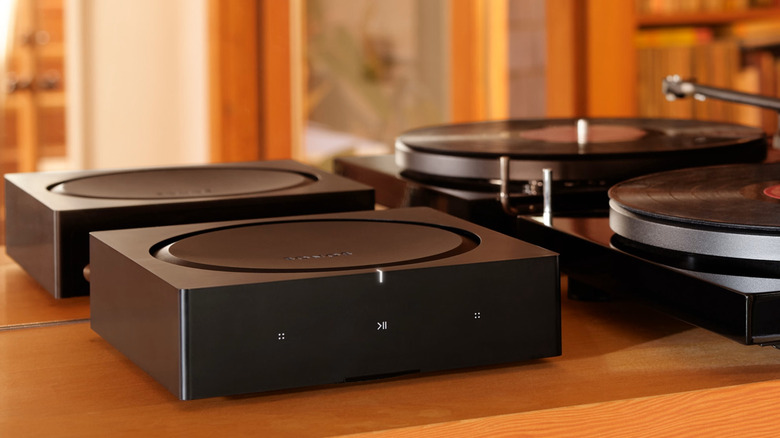
For a visceral demonstration of this, one need only look at a turntable. When a record is spinning and the speakers are disconnected, if you lean in closely, you will hear "needle talk"—the faint, tinny sound of the stylus vibrating in the vinyl groove. That is the raw audio signal. Without an amplifier to boost that signal to a level capable of driving speakers, music remains a microscopic vibration.
Technical Specs: Watts and Impedance
When evaluating amplifiers, the language of "watts" and "ohms" often serves as a barrier to entry for newcomers.
- Watts (Power): This measures the amount of energy the amplifier can deliver to the speaker. Higher wattage allows for greater headroom, meaning the system can handle sudden bursts of sound (like an explosion in a film or a drum hit) without distorting.
- Ohms (Impedance): This measures the resistance the speaker provides to the amplifier. An amplifier must be compatible with the speaker’s impedance rating; mismatching these can lead to "clipping," where the amplifier struggles to push the signal, resulting in harsh, distorted audio or, in extreme cases, hardware damage.
The Evolution of Amplification: A Brief Chronology
The history of the amplifier is a journey from industrial necessity to domestic luxury.
- 1910s–1940s: The Tube Era: Vacuum tubes were the standard for amplification. They provided a warm, harmonic distortion that became the "golden sound" for mid-century audiophiles. However, they were bulky, power-hungry, and required frequent maintenance.
- 1950s–1970s: The Transistor Revolution: The invention of the transistor allowed for the birth of "solid-state" amplifiers. These were smaller, more efficient, and significantly more reliable than their tube-based predecessors. This era brought high-fidelity sound into the average living room.
- 1980s–2000s: The Rise of Integrated Systems: As home theater became a household staple, manufacturers began folding preamplifiers (which manage source selection and volume) and power amplifiers into a single unit: the A/V Receiver (AVR).
- 2010s–Present: The Era of Active Audio: With the advent of wireless speakers (like those from Sonos or high-end Bluetooth monitors), the amplifier has effectively become "invisible." By placing the amplification inside the speaker cabinet, manufacturers have simplified the signal path and eliminated the need for external wiring.
Supporting Data: When Do You Actually Need an Amp?
The most common misconception in the audiophile world is that a "separate" amplifier always sounds better. Data and physics suggest otherwise.
The "Active" Speaker Reality
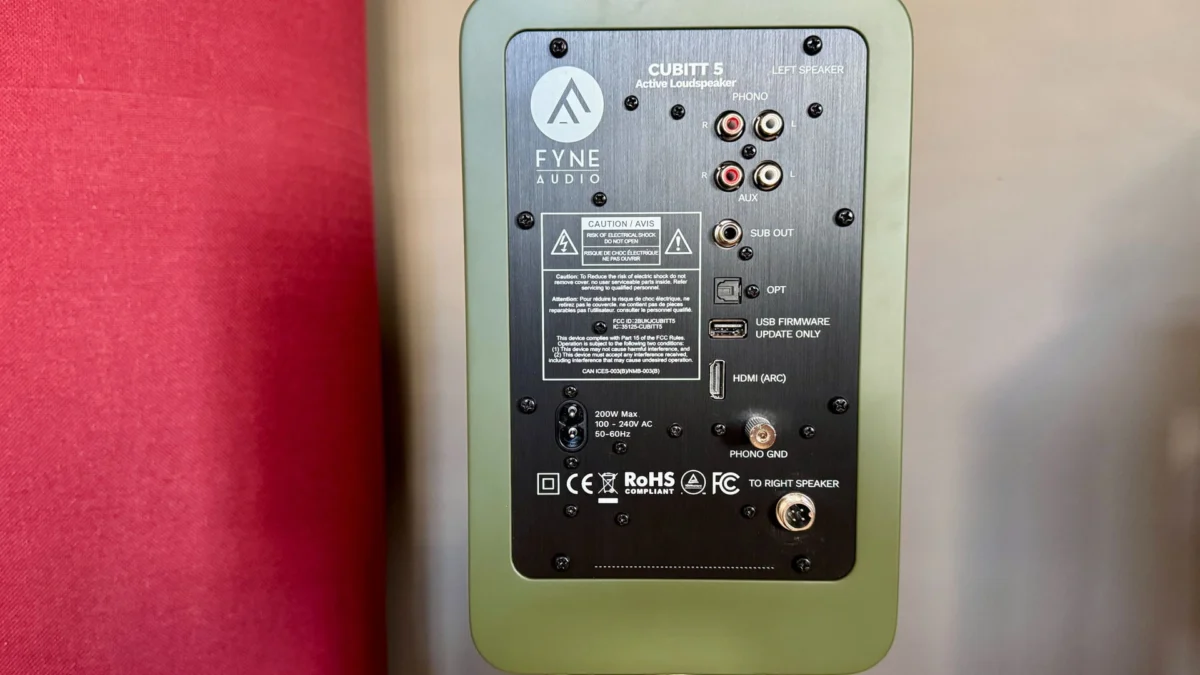
The vast majority of modern consumer speakers are "active." This means they house their own dedicated internal power supply and amplification circuitry. If your speakers require a power outlet, they are active. In this scenario, adding an external amplifier is not only redundant—it is technically impossible without specialized equipment, as the signal is already being amplified internally.
The Receiver Threshold
For those using "passive" speakers (those that connect via simple copper wire), the A/V receiver is usually sufficient. Modern receivers are marvels of engineering, capable of powering 5.1 or 7.1 channel systems with ease.
When to consider a standalone amplifier:
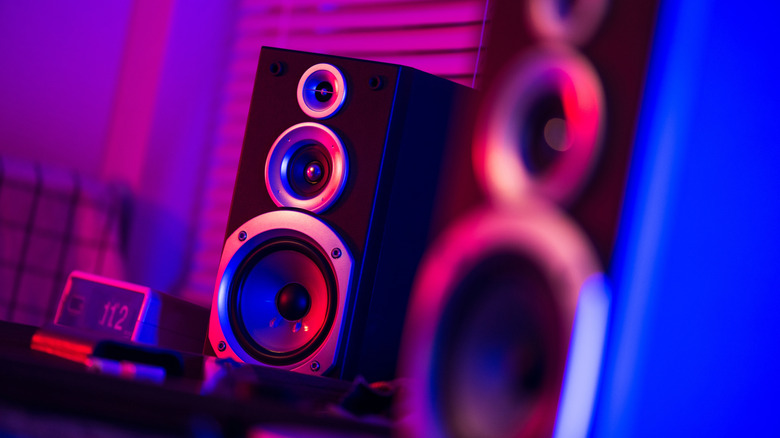
- High-Impedance Speakers: Some high-end audiophile speakers are "power hungry" and demand more current than a standard consumer receiver can provide.
- Channel Expansion: If you are running an elaborate Dolby Atmos setup (e.g., a 7.2.4 configuration) and your receiver only supports 7.2 channels, a separate multi-channel amplifier becomes a necessity to power the additional ceiling-mounted speakers.
- Dedicated Listening Rooms: For those who demand absolute sonic purity, separating the "noisy" power components from the "delicate" processing components (the preamp) can reduce electromagnetic interference.
Official Perspectives: The Tube vs. Solid-State Debate
The debate between tube and solid-state amplification is the "religious war" of the audio world. Manufacturers who produce tube amps often highlight the "organic" and "lush" quality of the sound. However, industry engineers point to the measurable reality: tube amps are inherently less efficient.
Most tube amplifiers struggle to output more than 50 watts per channel. In a modern home theater environment, where surround sound requires sustained power across many channels, a tube setup would be an logistical nightmare, requiring a rack full of amplifiers that generate massive amounts of heat and require constant tube replacement. For the vast majority of users, solid-state amplification remains the objective standard for clarity, power, and longevity.
Implications: Cost-Effective Alternatives to "More Power"
If your goal is to improve the quality of your audio, buying a $1,000 amplifier is rarely the first step. In the hierarchy of sound, the amplifier is often the least of your concerns until you have addressed the acoustic environment and the transducers (speakers) themselves.
1. Upgrade the Transducers
If you have a modest stereo pair, the most significant "bang for your buck" is upgrading the speakers themselves. A set of high-sensitivity bookshelf speakers will sound vastly better on a low-power receiver than a set of inefficient floor-standing speakers on a high-end amplifier.
2. Acoustic Treatment
Before buying more power, fix your room. Muddy bass and echoing vocals are usually caused by sound reflecting off hard surfaces. Acoustic panels, heavy curtains, and even strategically placed bookshelves can do more to "clean up" your sound than an expensive power upgrade.
3. Room Calibration
Modern smart speakers and high-end receivers come with built-in room correction software (such as Audyssey or Dirac Live). These systems use microphones to measure the specific acoustic signature of your room and automatically adjust EQ settings to compensate for physical flaws. If you have not run your room calibration since you set up your system, you are likely leaving better sound quality on the table.
4. Physical Decoupling
Vibration is the enemy of high-fidelity audio. If your speakers are sitting directly on a wooden desk or floor, they are transferring energy into the furniture, causing resonance and "rattling." Using speaker stands or simple foam isolation pads can decouple the speaker from the surface, tightening the bass response and improving clarity significantly.
Conclusion: The Path Forward
The amplifier is the unsung hero of the audio world, silently turning weak electrical signals into the soundscapes that define our movies and music. However, it is not a "magic bullet." The industry thrives on the idea that more hardware equals better sound, but for most listeners, the bottleneck isn’t a lack of raw power—it is the placement of speakers, the acoustics of the room, and the inherent quality of the source material.
Before opening your wallet for a high-end amplifier, evaluate your chain. If you are using active speakers, you are already covered. If you are using a standard receiver, ensure your speakers are positioned correctly and your room is treated. Only when you have exhausted these physical upgrades—or when your ambitions expand to massive, multi-channel theater arrays—should you look to the dedicated amplifier as the next logical step in your audiophile journey. Keep your gear simple, your signal path clean, and your focus on the music.