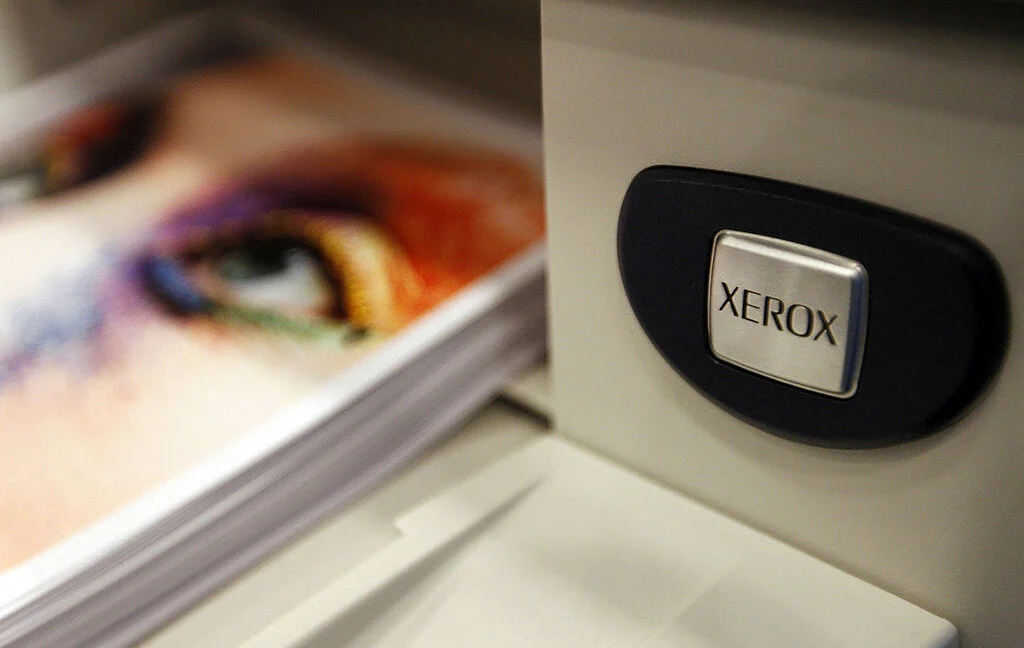
In an era where global supply chains are increasingly complex, law enforcement agencies are finding that everyday office equipment can serve as a trojan horse for illicit narcotics. In a case that has finally reached its legal conclusion, four Australian men attempted to exploit international logistics to move 22.4 kilograms of cocaine into the country, hidden inside the unassuming shells of five Xerox printers.
What followed was a years-long legal saga, a meticulously planned police sting, and a sobering reminder of the lengths to which transnational organized crime syndicates will go to bypass border security.
The Anatomy of the Heist: Main Facts
The operation, which centers on the discovery of 22.4 kg (approximately 49.4 pounds) of cocaine, represents one of the more brazen attempts at industrial-scale smuggling in recent Australian history.
In April 2017, the Australian Border Force (ABF) intercepted a shipment of five Xerox printers arriving at a port in Melbourne. Upon routine inspection, authorities grew suspicious of the hardware’s weight and internal configuration. Closer scrutiny revealed 10 vacuum-sealed packages of compressed white powder ingeniously concealed within the paper trays of the machines.
Subsequent laboratory testing confirmed the substance was high-purity cocaine. With a street value estimated at the time between 9.3 million AUD and 12.4 million AUD ($6.7 million to $9 million USD), the seizure represented a significant blow to the syndicate’s financial pipeline.
Chronology: From Port Interception to Final Sentencing
The timeline of this investigation reveals a textbook example of "controlled delivery," a technique where police allow a shipment to proceed to its destination to identify the individuals higher up the criminal chain.
The Interception (April 30, 2017)
After ABF officers identified the narcotics, they initiated a joint operation with the Australian Federal Police (AFP). Rather than arresting the couriers at the port, authorities replaced the cocaine with an inert substitute and installed covert tracking devices within the printers. The shipment was then released, monitored closely as it made its way to a designated factory in Airport West, Victoria.
The Bust (May 2017)
In May 2017, as the intended recipients arrived at the Airport West facility to retrieve their "cargo," police moved in. Four men were taken into custody on the spot. They were subsequently charged with "attempting to possess a commercial quantity of a border-controlled drug," a serious offense under Australian federal law that carries heavy mandatory sentencing.
The Legal Quagmire (2017–2025)
The wheels of justice turned slowly as the prosecution navigated the complexities of the case. The legal proceedings spanned nearly eight years, reflecting the intricacies of the evidence and the varying degrees of involvement attributed to the four defendants.
- The First Conviction (2022): One of the key participants was sentenced to 10 years in prison with a non-parole period of six-and-a-half years.
- The Second Conviction (2025): A second participant received a 10-year sentence with a five-and-a-half-year non-parole period.
- The Final Sentencing (March 2025): The third man was sentenced to nine years behind bars, with a non-parole period of four-and-a-half years.
- The Acquittal: Amidst the high-profile convictions, one of the original four men arrested in 2017 was ultimately found not guilty by a jury, highlighting the complexities in proving direct criminal intent in logistical smuggling operations.
Supporting Data: The Logistics of Smuggling
The use of office hardware as a smuggling vector is not accidental; it is a calculated choice by criminal organizations. Printers, particularly large industrial-grade models, are heavy, possess complex internal cavities, and are routinely shipped in bulk, making them ideal for hiding contraband from cursory X-ray screenings.
The 22.4 kilograms of cocaine seized in this operation were meticulously packed to minimize the footprint of the contraband, ensuring the printers appeared functional and balanced to the casual observer. The selection of a factory in Airport West as a destination also suggests an attempt to bypass residential security by using a commercial "front" to receive illicit goods.
This case also underscores the staggering economics of the illicit drug trade. With a potential street value exceeding 12 million AUD, the risk-to-reward ratio for these criminal syndicates remains dangerously high, despite the increasing sophistication of ABF detection technology.
Official Responses: A Unified Front Against Crime
Following the final sentencing this month, the Australian Federal Police and the Australian Border Force issued a joint statement. The agencies emphasized that the successful disruption of this ring was a direct result of inter-agency cooperation and intelligence-sharing.
AFP Acting Commander Simone Butcher was unequivocal in her assessment of the crime. "The AFP, as well as our domestic and international partners, are steadfast in our mission to protect the community by disrupting and dismantling organized crime groups and their efforts to profit off the misery caused in our community," she stated.
Butcher noted that this incident serves as a primary example of how organized crime syndicates are constantly evolving. As border security tightens, criminals pivot toward more creative—and often more dangerous—methods of concealment. The use of everyday objects like printers reflects a "hide in plain sight" strategy that relies on the massive volume of global trade to mask the movement of illicit substances.
Implications: The Future of Border Security
The "Printer Case" has several lasting implications for Australian law enforcement and the logistics industry:
1. Enhanced Screening Technology
The interception has spurred further investment in non-intrusive inspection (NII) technologies. Border forces are increasingly utilizing AI-enhanced X-ray systems that can detect anomalies in density within complex mechanical objects. When a printer is scanned, the machine now flags not just the presence of foreign objects, but discrepancies in the expected weight and density of internal components.
2. Supply Chain Accountability
This case has intensified the scrutiny on logistics providers and importers. Authorities are now pushing for "Know Your Customer" (KYC) protocols for shipping agents to ensure that commercial deliveries are tied to legitimate business entities. The use of a factory as a receiving point underscores the need for better monitoring of commercial zoning and warehouse activities.
3. The Deterrence Factor
While the sentences—ranging from nine to 10 years—are significant, the question remains whether such penalties act as an effective deterrent against the massive profits available to drug cartels. The fact that the organization was able to orchestrate such a complex shipment indicates that they view the Australian market as a high-value, high-risk, but ultimately profitable frontier.
4. A Warning to Organized Crime
The message from the AFP is clear: even if a shipment clears the initial port of entry, the investigation is far from over. The use of tracking technology and controlled deliveries means that even if criminals successfully retrieve their "goods," they are merely walking into a police trap.
Conclusion
The story of these four men and their illicit printer cargo is a modern-day cautionary tale. It is a narrative of technological hubris met by the relentless persistence of law enforcement. While the legal chapter of this case has finally closed, the broader battle against drug smuggling continues.
For the authorities, the goal remains the same: to ensure that the "misery" mentioned by Commander Butcher is kept at bay, one shipment at a time. As technology advances, so too will the tactics of those who wish to profit from illicit trade, ensuring that the cat-and-mouse game at Australia’s borders remains as intense as ever.