
For any high-growth ecommerce brand, there is no scenario more harrowing than the "Nightmare Before Christmas": a wildly successful Black Friday sale that turns into an operational catastrophe. When your most popular product sells out, but your store—blinded by disconnected data—continues to accept orders, the result is not just a lost sale; it is a brand-damaging logistical disaster.
As peak season approaches, inventory synchronization failures emerge as the primary cause of sleepless nights for ecommerce teams. These failures transform what should be a period of record-breaking revenue into a cycle of damage control, characterized by desperate inventory re-allocation and the sending of awkward, trust-eroding apology emails to disappointed customers. To survive the holiday rush, retailers must move beyond simple auditing and establish a singular, unshakeable "source of truth" for their inventory.
The Anatomy of an Inventory Disaster
In the modern omnichannel landscape, inventory issues rarely stem from a lack of stock; they stem from a lack of communication between systems. As sales channels—Amazon, TikTok Shop, brick-and-mortar storefronts, and direct-to-consumer (DTC) websites—multiply, so does the risk of data fragmentation.
Inventory "drift" occurs when your ecommerce platform, your physical point-of-sale (POS) system, and your warehouse management software (WMS) operate in silos. If your website remains unaware of a massive surge in Amazon marketplace sales, or if your physical retail team is updating stock levels manually via spreadsheets, you have created a vacuum where overselling is inevitable. Peak-season preparation is, therefore, as much about engineering the connections between your systems as it is about stocking your shelves.

Establishing a Single Source of Truth: The Audit Protocol
An audit is only as effective as the integrity of the data it reveals. To prepare for the high-velocity traffic of Black Friday and Cyber Monday (BFCM), retailers must conduct a rigorous, end-to-end synchronization test.
The SKU Sync Stress Test
Before the peak season begins, merchants should select three specific SKUs to serve as a litmus test for their entire ecosystem:
- The Best Seller: A high-velocity item that exposes the limits of your system’s latency.
- The Low-Stock Item: A product nearing depletion, which tests the effectiveness of your replenishment and notification workflows.
- The Multichannel Product: An item sold across every channel you occupy, testing the synchronization between platforms.
For these items, record the baseline inventory across all platforms: WooCommerce, your POS, your ERP, and your marketplace dashboards. Once baselined, place a controlled test order through each channel. Crucially, track the "latency window"—the time elapsed between the initial transaction and the moment the inventory count is accurately reflected across all other connected systems.
Testing the Full Lifecycle
The test must also include "reverse logistics"—the process of cancellations and refunds. If a customer cancels an order, does that inventory return to the pool in real-time, or does it require manual intervention? If your business relies on bundles, backorders, or partial fulfillment, these workflows must be tested under simulated high-load conditions.

The "oversell window" is defined by your slowest update. If your website updates inventory instantly but your marketplace feed takes four hours to sync, you have a four-hour window of extreme risk. Any step in this process that relies on manual entry, staff messaging, or spreadsheet manipulation must be identified as a critical failure point and prioritized for automation.
The Role of Architecture: ERPs and APIs
For growing operations, the ecommerce website should act as a storefront, not the master database. Instead, an ERP (Enterprise Resource Planning) or a dedicated inventory management platform should function as the "source of truth."
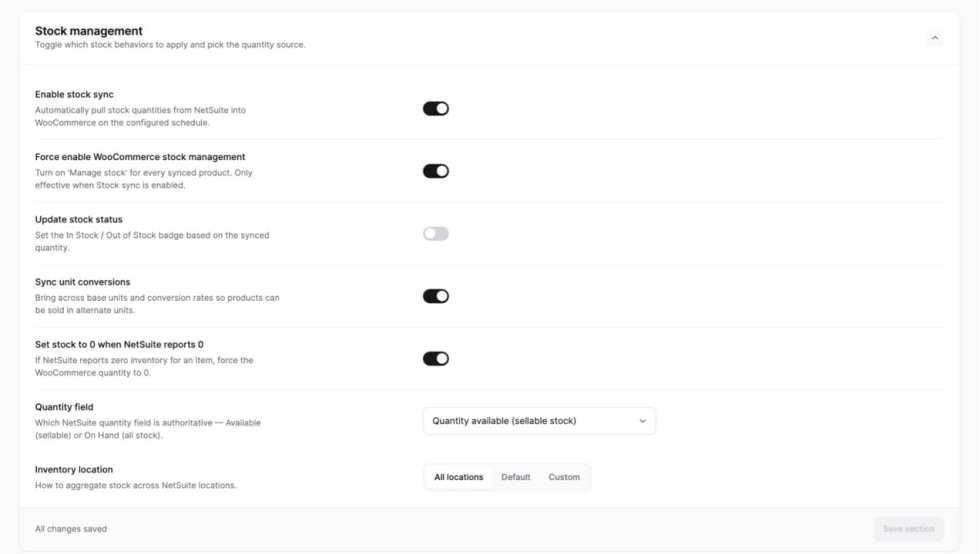
In the WooCommerce ecosystem, this is achieved through robust API integration. Native solutions and established integrations allow for bidirectional data flow. For example, integrating an ERP like NetSuite with WooCommerce ensures that the ERP maintains the master count, while WooCommerce receives real-time updates as frequently as every hour.
This architectural shift moves the burden of inventory management away from manual oversight. By using the REST API and webhooks, businesses can ensure that as stock moves—whether it is sold in a store or shipped from a warehouse—every connected system receives an automated update.
Case Studies in Operational Resilience
The difference between a frantic holiday season and a profitable one is often found in the sophistication of a brand’s digital stack.
Scratch Pet Food: Automating the Warehouse
Australia’s Scratch Pet Food exemplifies the power of automated fulfillment. By prioritizing warehouse integration from the company’s inception, founders Mike Halligan and his team created a "hands-off" ecosystem. When a pet owner places an order or a subscription renews, that data flows directly to their manufacturing and warehouse partners without manual interference.
"An order comes in and we don’t touch a thing," says Halligan. By selecting partners that offered direct integration with their WooCommerce storefront, they eliminated the human element from the fulfillment loop, effectively removing the possibility of manual data entry errors.
Dan-O’s Seasoning: Managing Multichannel Complexity
Dan-O’s Seasoning represents a more complex challenge: a brand that sells through 40,000 retail locations, major marketplaces like Walmart and Amazon, and a viral DTC website fueled by TikTok.
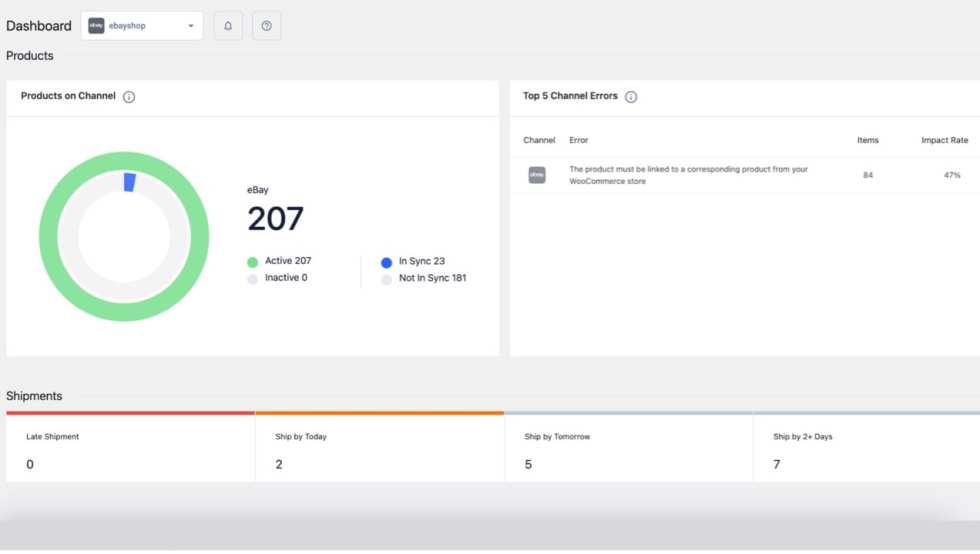
When a brand goes viral, order volume can spike by thousands of units in a matter of hours. Dan-O’s manages this by feeding all online and marketplace sales into Brightpearl, their central inventory management system. Brightpearl then pushes updated stock levels back to their WooCommerce site in real-time. This "hub-and-spoke" model ensures that regardless of where the order originates, the inventory picture remains consistent. As Ryan Fertig, Senior Marketing Activation Director at Dan-O’s, notes, the flexibility of the WooCommerce architecture allowed them to scale from a simple site to a complex, automated operation that rivals much larger enterprises.
Implications for the Modern Merchant
The shift toward total inventory synchronization has profound implications for the future of ecommerce.
- Reduced Operational Overhead: Automation allows teams to shift focus from "firefighting" inventory discrepancies to strategic marketing and customer acquisition.
- Increased Customer Loyalty: The most effective marketing is a reliable customer experience. Ensuring that a product listed as "in stock" is actually available to ship builds foundational brand trust.
- Data-Driven Forecasting: When your inventory data is centralized, it becomes significantly easier to perform demand forecasting. You can analyze which channels are driving the highest velocity and allocate inventory accordingly before the peak season hits.
Moving Toward Peak Season: A Final Checklist
As we move toward the final quarter of the year, merchants must ask themselves difficult questions:
- Do you know which system holds your "true" inventory? If the answer is "the website," you are likely vulnerable to overselling.
- Is there a manual handoff? If any person on your team is responsible for manually updating stock levels in a spreadsheet or a second system, you have a weak link.
- What is your fail-safe? If your primary sync tool fails, does your team have an immediate notification system, or will you only discover the failure when a customer complains?
The goal of a successful peak season is not just to sell more; it is to fulfill every promise you make to your customers. By auditing your SKUs, automating your synchronization, and establishing a single, immutable source of truth, you can ensure that your holiday season is defined by growth rather than apology emails.

In the open-source world of WooCommerce, the tools exist to connect your warehouse, your marketplaces, and your website into one cohesive, automated machine. The only thing missing is the audit—and that is a task that should begin today.