After more than two decades immersed in the world of planning, reporting, and analytics software, the landscape has shifted from localized spreadsheets to sophisticated, AI-driven ecosystems. Yet, one fundamental truth remains unchanged: the success of any digital transformation hinges not on the software’s feature list, but on the rigor of the decision-making process that precedes its procurement.
Too often, organizations treat software selection as a checkbox exercise, only to discover fundamental misalignments after contracts are signed, implementation consultants are on-site, and organizational expectations have been set. This article examines why a structured, competitive evaluation process is the ultimate hedge against project failure and long-term technical debt.
The Triggers of Change and the Trap of Familiarity
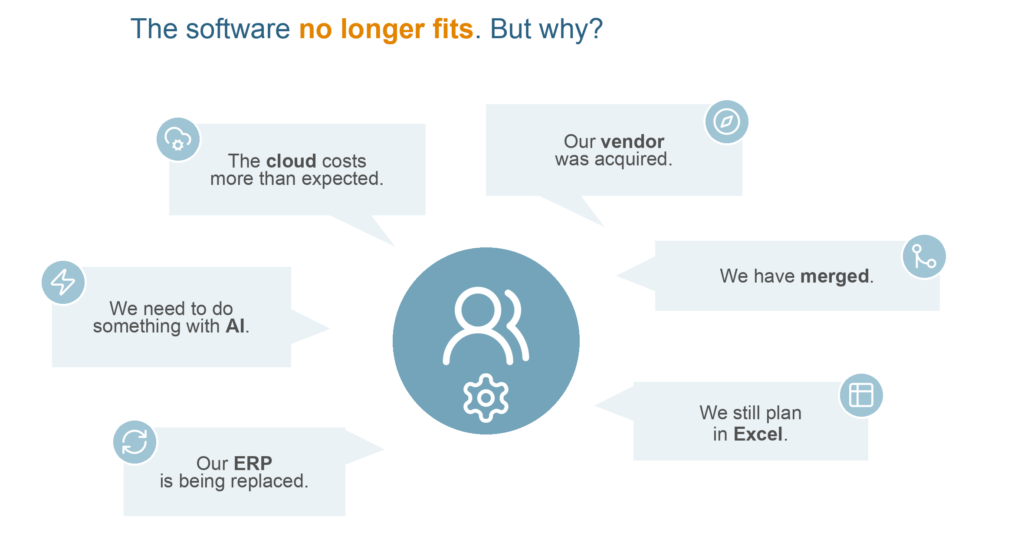
The impetus for a new software selection project is rarely arbitrary. It is usually born from a specific organizational trigger: a vendor acquisition that casts doubt on a product’s long-term roadmap, cloud infrastructure costs that have ballooned beyond budget, a core ERP migration that necessitates a shift in data architecture, or the limitations of Excel-based planning finally hitting a ceiling of scalability and control.
When these pressures mount, the urgency to "just pick something" becomes palpable. However, this is where most organizations stumble. The market for enterprise software is vast and rapidly evolving, with legacy platforms gaining new AI-driven capabilities and agile newcomers disrupting established workflows. Most executive teams, however, are intimately familiar with only two or three products. Relying on this narrow scope for an investment intended to last a decade is a recipe for strategic misalignment.
The Anatomy of a Flawed Decision Process
Why do processes that appear rigorous—complete with requirements catalogs, scoring models, and vendor presentations—often yield disappointing results?
The failure usually lies in the quality of the inquiry. A selection process is only as good as the questions it asks. Without a clearly defined "target state," organizations often allow the shortlist to be dictated by existing vendor relationships or the visual polish of a demo.
Furthermore, the role of the advisor is frequently misunderstood. Implementation partners and IT service providers are rarely neutral. Their recommendations are often filtered through their own commercial interests, existing partnerships, and implementation portfolios. When an entity that stands to profit from the subsequent implementation project is the one vetting the options, the objectivity of the selection process is inevitably compromised.
Even the rise of Generative AI, while helpful for administrative tasks like drafting requirements templates, carries risks. AI-generated catalogs often produce generic criteria that almost every vendor can meet with a "yes," failing to distinguish between superficial feature parity and deep-seated architectural fit.
Data-Driven Insights: What the Research Reveals
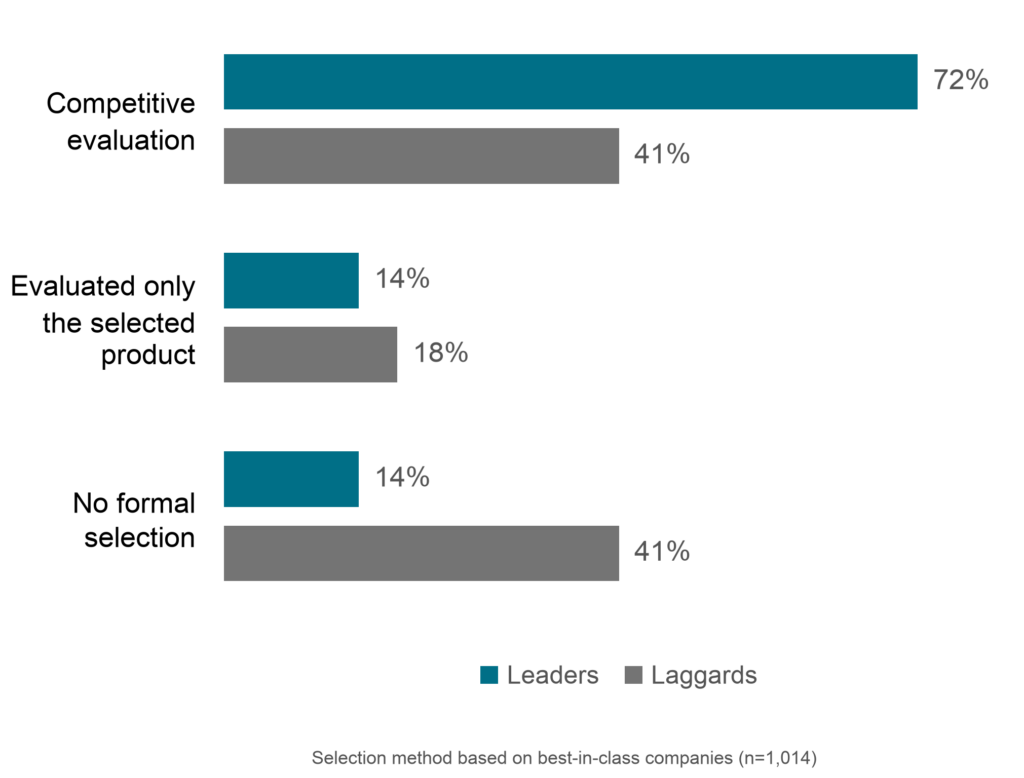
The relationship between a structured selection process and business success is not merely anecdotal; it is empirically backed. According to the latest BARC BI & Analytics Survey, which analyzed 1,014 responses, there is a stark divide between industry leaders and laggards.
- 72% of "Leader" companies (those ranking in the top 10% of BARC’s Business Benefits Index) conducted a formal, competitive evaluation before finalizing their software purchase.
- In contrast, only 41% of "Laggard" companies performed a similar level of due diligence.
The data suggests a clear correlation: organizations that prioritize a thorough requirements-gathering phase, broad market comparison, and rigorous, side-by-side testing of shortlisted candidates are significantly more likely to achieve superior business outcomes. Those that rely on informal recommendations or the path of least resistance—often sticking with a "strategic" incumbent—frequently find themselves dealing with poor performance, functional gaps, and the high cost of early replacement.
Chronology of a Sound Selection Methodology
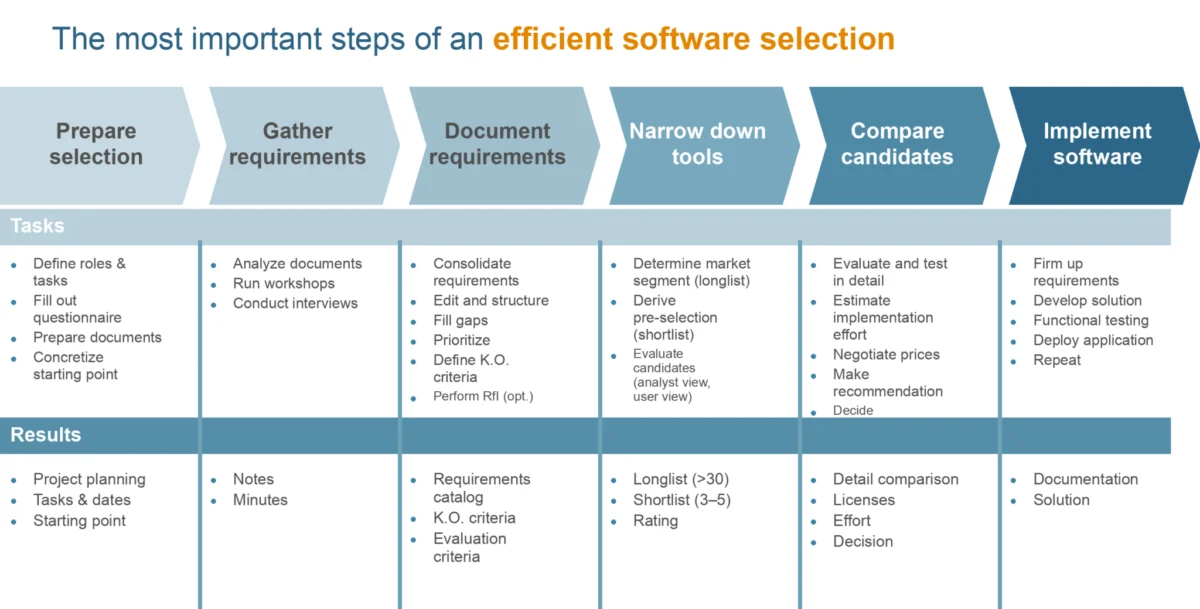
To avoid the pitfalls of subjective decision-making, an objective, six-phase framework is essential. While specific steps may vary, a professional approach typically follows this trajectory:
- Defining the Target State: Before looking at software, define the business problems to be solved. This includes mapping current data flows, identifying functional gaps, and establishing a clear vision for the future operating model.
- Market Screening & Longlisting: Cast a wide net. Identify vendors that meet the fundamental architectural and technical requirements, moving beyond the "usual suspects."
- Requirements Cataloging: Develop specific, weighted criteria. Avoid binary "yes/no" questions in favor of inquiries that demand an explanation of how a specific planning logic or data integration process is handled.
- The Shortlist Selection: Narrow the field to 3–4 candidates based on their ability to meet the most critical, high-weight requirements.
- Competitive Proof of Concept (PoC): This is the "moment of truth." Move away from sales-led demonstrations and into objective testing.
- Final Evaluation and Selection: Synthesize the data from the PoC to make a decision based on evidence, not salesmanship.
The Necessity of the Competitive Proof of Concept (PoC)
When an investment is substantial, a competitive PoC is not just recommended; it is a fiduciary responsibility. A PoC allows an organization to look behind the curtain. It moves the evaluation from the "presentation layer" into the "logic layer."
A well-designed PoC should force vendors to demonstrate their capabilities against a specific, internal use case. It should answer critical questions:
- How does the software handle our specific, complex calculation logic?
- What is the true effort required to maintain this model after the initial deployment?
- How intuitive is the system for the end-user, not just the power user?
- How does the prospective implementation team react when faced with a real-world, messy data challenge?
Testing only one product offers no baseline for comparison. To truly understand the market, an organization must compare at least two—and ideally three—candidates under identical conditions.
The Value of Independent Expertise
The role of an independent analyst firm like BARC is to provide the "ground truth" that internal teams often lack. Because independent firms do not sell licenses or implementation services, their perspective is untethered from the commercial outcomes of the selection.
By utilizing proprietary, evidence-based tools like BARC Scores and survey-based satisfaction metrics, organizations can cut through the noise of marketing collateral. This independent perspective allows for a "defensible decision"—one that can be justified to the board, investors, or stakeholders by pointing to objective data rather than the charisma of a vendor representative.
Implications: The Long-Term Cost of Inaction
The implications of a flawed selection process are rarely immediate. They manifest over time as "soft costs": low user adoption rates, excessive manual workarounds that negate the benefits of automation, and a lack of agility when the business needs to pivot.
A bad choice can lead to a "re-selection" project within three to five years, effectively doubling the initial investment while causing significant organizational fatigue. Conversely, a rigorous process acts as a form of insurance, ensuring that the software chosen is not just a match for today’s requirements, but a flexible foundation for future growth.
Next Steps: A Roadmap for Executives
For leaders currently facing a software decision, the path forward is clear:
- Define the mandate: Be explicit about what the software must do, and, equally important, what it does not need to do.
- Assemble the right team: Include process experts, potential end-users, IT stakeholders, and a committed executive sponsor.
- Establish a timeline with milestones: A protracted, stalled process allows vendor promises and internal priorities to drift, undermining the integrity of the selection.
- Seek independent validation: Do not rely solely on the vendor’s narrative or the advice of parties with a vested interest in the software’s success.
As we look toward the future of enterprise technology—including the integration of more sophisticated AI and machine learning—the ability to select the right tools will become an even greater competitive advantage. On November 24, 2026, at the BI & Analytics Conference in Vienna, Dr. Christian Fuchs will provide further guidance on navigating these complex evaluations, specifically addressing how to look beyond the "vendor demo" to identify the criteria that truly dictate long-term success.
In the final analysis, the cost of a formal, independent, and rigorous software selection process is a small fraction of the cost of a failed implementation. It is an investment in stability, performance, and strategic clarity.