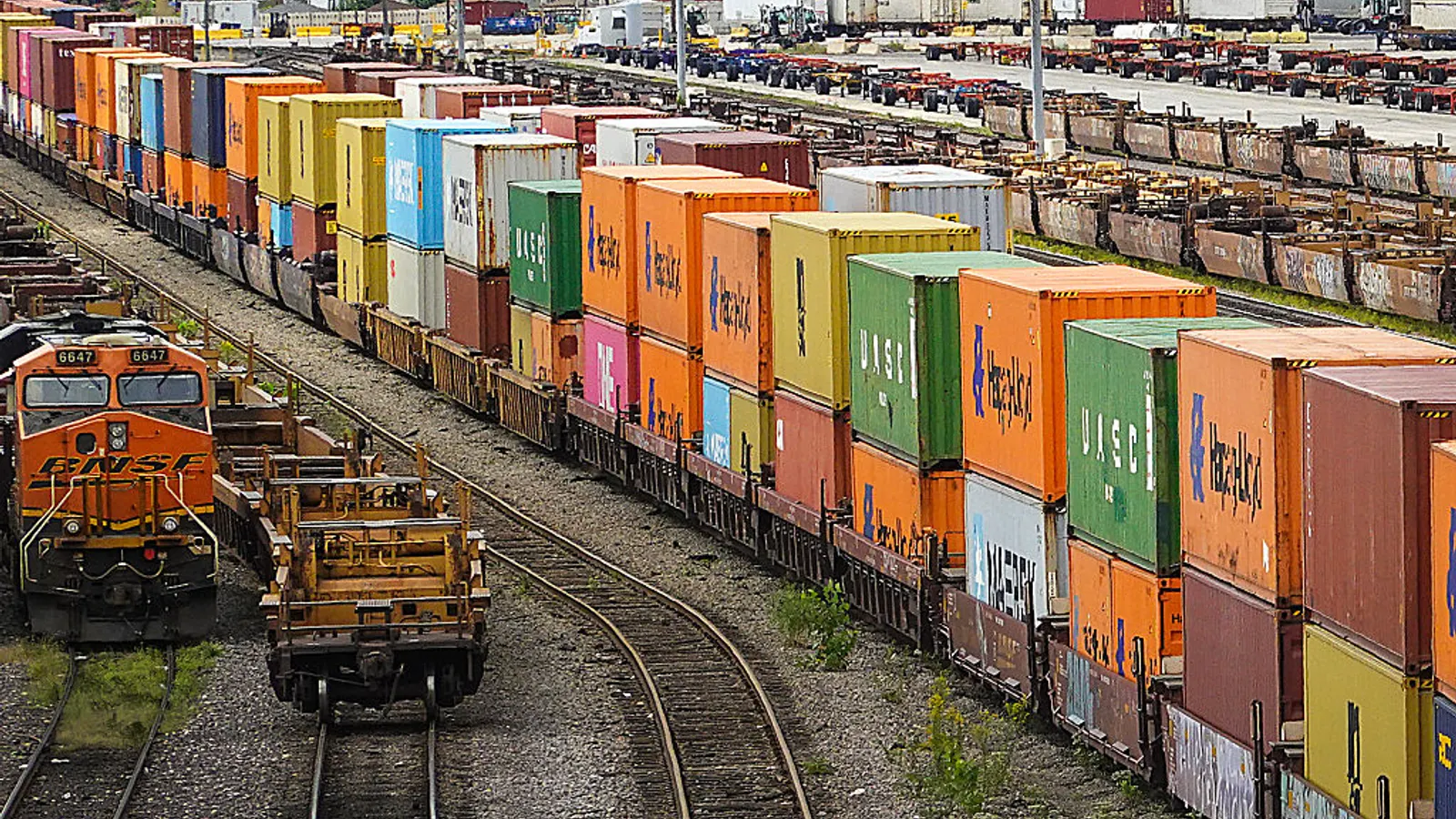
The landscape of North American freight logistics stands at a precarious crossroads. In what has become the most contentious regulatory battle in the history of the Surface Transportation Board (STB), the proposed mega-merger between Union Pacific (UP) and Norfolk Southern (NS) has ignited a firestorm of opposition. As the two rail giants seek to forge a colossal network spanning 50,000 route miles across 43 states, a diverse coalition of chemical shippers, fertilizer manufacturers, and labor advocates are sounding the alarm, warning that the deal threatens to strangle competition and consolidate unprecedented monopoly power in an industry already dominated by a handful of players.
The Core Conflict: A Market in Flux
At the heart of the debate is the fundamental tension between corporate efficiency and competitive access. Union Pacific and Norfolk Southern, which entered into a definitive merger agreement in June 2025, argue that the union is a logistical necessity. By connecting their respective networks, the carriers claim they can create a seamless transcontinental service, providing access to 10 international interchanges and linking roughly 100 ports.
However, critics view the move through a lens of market concentration. With four of the six major Class I railroads already controlling more than 90% of U.S. freight, stakeholders argue that this merger represents the final nail in the coffin for true rail competition. For industries such as chemical production and agriculture, where rail is often the only viable transport option, the prospect of facing a single, massive carrier is not a promise of efficiency, but a threat to pricing power and service reliability.
A Chronology of the Regulatory Tug-of-War
The path to this potential merger has been anything but smooth, marked by repeated regulatory hurdles and administrative friction.
- June 2025: Union Pacific and Norfolk Southern announce a formal agreement to merge, sparking immediate industry-wide concern.
- December 19, 2025: The Surface Transportation Board (STB) delivers a sharp blow to the applicants, rejecting their initial merger proposal. The board cited the application as "incomplete," noting that it failed to provide essential data required under federal regulations.
- April 2026: Undeterred, the two rail giants submit a revised, more comprehensive application to the STB.
- May 2026: The STB accepts the revised application for formal review, signaling that while the technical requirements were met, the substantive merits of the deal remained entirely unproven.
- September 2026: A coalition of shippers files a joint motion to have the merger denied outright, citing ongoing concerns regarding market monopolization. The STB denies the motion, clarifying that this procedural ruling does not constitute an endorsement of the merger’s merits.
- November 18, 2026 (Upcoming): Deadline for stakeholders to submit renewed arguments regarding the merits of the proposal.
- February 16, 2027 (Upcoming): Deadline for responses to these comments, a critical date that will likely shape the final administrative hearing.
Supporting Data and the "Transparency Gap"
One of the most damning critiques of the merger comes from within the STB itself. Board member Richard Kloster has been vocal about the insufficiency of the applicants’ evidence. In a scathing docket filing, Kloster noted that despite the submission of thousands of pages of documentation, the rail carriers have failed to provide a robust plan for mitigating competitive harm.
"Applicants have submitted thousands of pages of documents, yet they do not offer a very robust plan for how they will address competitive concerns or mitigate potential harms," Kloster stated. He further challenged the carriers’ primary defense—that the merger would significantly improve intermodal freight. Kloster pointed out that the intermodal market is already highly competitive and well-served, suggesting that the applicants are leveraging a strong, existing market segment to distract from the lack of benefit in captive-shipper segments, such as bulk chemical and fertilizer transport.
The data suggests that the concerns are not merely theoretical. With the industry already operating under an oligopolistic structure, any further consolidation limits the "customer choice" that regulators like the STB are mandated to protect.
Official Responses and Stakeholder Positions
The opposition is broad and deeply entrenched. The American Chemistry Council (ACC), representing one of the largest segments of the shipping industry, has been the most vocal critic.

"We will continue to stress to the STB that a healthy freight rail network depends on competition and customer choice, not increased market concentration and monopoly power," the ACC stated. For these shippers, the concern is that without the threat of a competitive alternative, UP and NS could dictate rates with impunity, forcing producers to absorb higher costs that are ultimately passed down to the American consumer.
The U.S. Senate has also weighed in, with a group of senators writing to the STB to express grave concerns regarding the pressure the merger would place on rail rates and service quality. The senators highlighted that a reduction in the number of players from six to five would significantly diminish the bargaining power of the agricultural and manufacturing sectors, which rely on the rail network to keep domestic goods moving.
Economic and Supply Chain Implications
The implications of this merger extend far beyond the balance sheets of Union Pacific and Norfolk Southern. Should the merger be approved, the logistical map of the United States would be fundamentally altered.
The Threat to Pricing Stability
In the absence of competition, railroads have historically demonstrated a tendency to prioritize high-margin traffic over the consistent, long-term service required by the chemical and fertilizer industries. If this merger proceeds, the resulting entity would possess massive leverage over captive shippers—customers who have no alternative to rail transport. The fear is that the merged entity will move toward a "price-setter" model, eroding the economic viability of smaller manufacturers.

Service Reliability and Network Complexity
While the carriers argue that the merger will streamline operations, critics argue that the integration of two of the largest rail networks in the world is a recipe for operational gridlock. The history of rail mergers is littered with examples of integration failures that led to service meltdowns, which caused supply chain bottlenecks that lasted for years. For an economy that is still recovering from the logistical volatility of the post-pandemic era, a major service disruption on the scale of a UP-NS integration could have catastrophic consequences for domestic supply chains.
The Future of Regulatory Oversight
The STB’s role in this case is a test of its authority. By initially rejecting the application, the board proved it would not act as a rubber stamp. However, the subsequent acceptance of the revised application has left many observers wondering if the board is prepared to take the final step of denying the merger based on market impact. The decision will define the regulatory environment for rail for decades to come, setting a precedent for whether the government views railroads as private corporations entitled to consolidate, or as essential infrastructure utilities that must prioritize public access and competition.
Conclusion: The Path Forward
As the industry turns its attention to the November 18 deadline for comments, the tone is one of cautious apprehension. The merger is no longer just a corporate transaction; it is a referendum on the future of American industrial logistics.
The rail giants maintain that they are building a more efficient future. The shippers and their allies believe they are witnessing the creation of an untouchable monopoly. The STB now holds the keys to the outcome, tasked with balancing the carriers’ desire for growth against the national interest of maintaining a competitive, accessible, and affordable rail network. As we look toward early 2027, one thing is certain: the debate over the Union Pacific and Norfolk Southern merger is far from over, and the final decision will resonate across every sector of the U.S. economy.