The rapid evolution of artificial intelligence is no longer just a digital phenomenon; it is becoming a physical reality etched into the landscape of the United States. As tech giants scramble to build the massive server farms required to train and run next-generation AI models, they have collided with the realities of local infrastructure, sparking a fierce national debate over energy, water, and economic development.
For residents like John Steinbach, who has lived in Manassas, Virginia, for four decades, the AI revolution arrived not as a software upgrade, but as a utility bill. In January 2026, Steinbach opened a statement showing a charge of $281—nearly triple his usual $100 monthly expense. His story is becoming a common refrain as neighborhoods across the country grapple with the sudden, gargantuan energy demands of AI data centers plugging into aging local grids.
The Chronology of Conflict: A Growing Movement
The friction between data center developers and local communities has intensified significantly over the past 24 months.
- 2023: The AI boom enters a state of rapid acceleration, with companies like Microsoft, Google, and Amazon searching for land to house high-density GPU clusters.
- 2024: Concerns regarding electricity consumption and grid stability begin to surface in key hubs like Northern Virginia and Central Arizona.
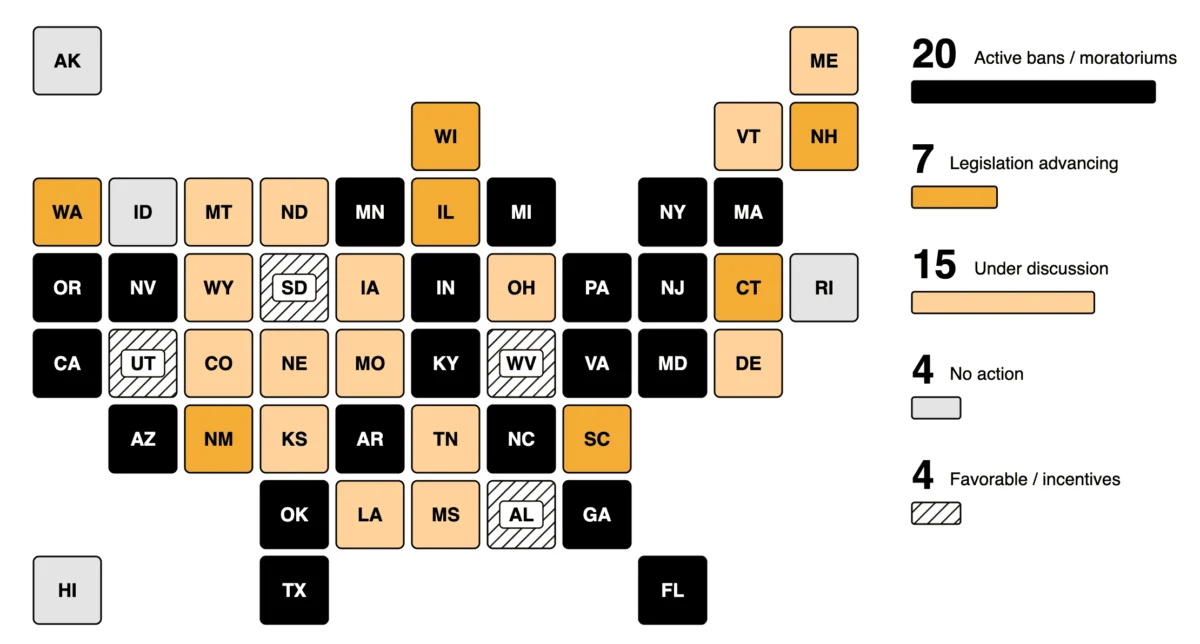
- 2025: Local resistance moves from fringe concern to mainstream political issue. Tucson, Arizona, rejects a major project (Project Blue) following intense public pressure.
- 2026 (First Half): The backlash reaches a fever pitch. Data Center Watch reports that roughly 120 projects faced disruption or opposition, with 45 projects totaling $68 billion in investment stalling in the second quarter alone.
- August 2026: Indianapolis sets a new precedent by voting 23–1 to impose a total moratorium on new data center construction through 2027.
- September 2026: Texas Governor Greg Abbott halts state permitting for data center projects pending a comprehensive audit of their grid impact.
The Math of Modern Compute
The transition from traditional "cloud" computing to "AI-scale" computing is the root cause of the current grid strain. While standard cloud servers fluctuate in usage based on user traffic, AI clusters represent a constant, high-intensity draw. These facilities pack GPUs densely, generating massive amounts of heat that require intensive cooling systems, effectively acting as 24/7 power-hungry industrial anchors.
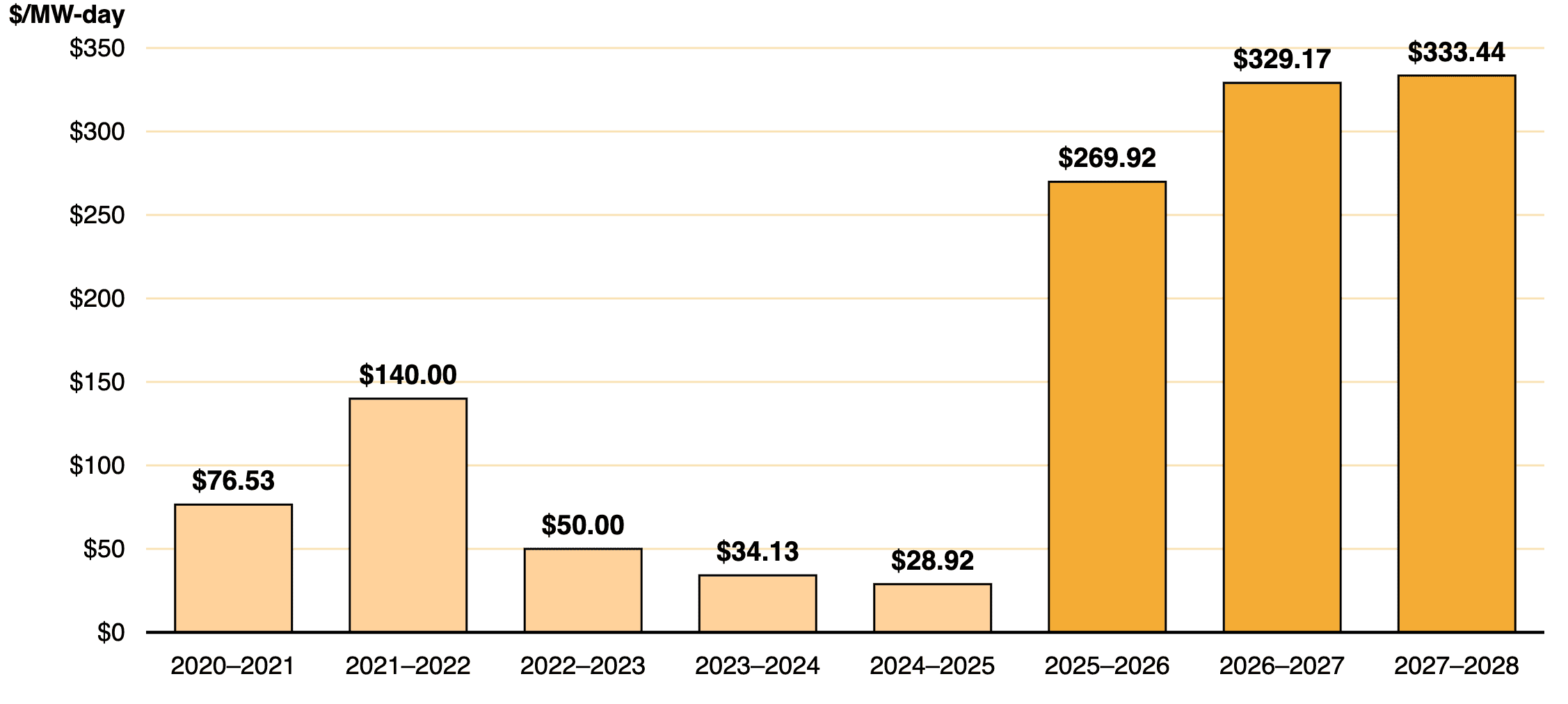
According to the Lawrence Berkeley National Laboratory, U.S. data centers consumed approximately 176 terawatt-hours in 2023—about 4.4% of the nation’s total electricity. Projections from Bloom Energy suggest this load could jump from 80 gigawatts in 2025 to 150 gigawatts by 2028. This growth is placing unprecedented pressure on grid operators like PJM, which manages power across 13 states. PJM has seen capacity clearing prices skyrocket, with the independent market monitor attributing over 60% of recent price hikes directly to the influx of data center demand.
Supporting Data: The Case for and Against
The debate is polarized between the necessity of technological leadership and the preservation of local resources.

The Economic Argument (The Pro-Development Stance)
Industry proponents argue that data centers are engines of economic growth. In places like Quincy, Washington, data center property taxes have funded new high schools, hospitals, and critical infrastructure, effectively subsidizing the tax base for local residents. Furthermore, studies funded by tech conglomerates suggest that large-scale, consistent industrial loads can help spread fixed utility costs across more users, theoretically lowering retail rates. Some reports indicate that for every $1 million in tax exemptions, data centers generate over $6 million in personal income for the local economy.
The Environmental and Utility Argument (The Skeptic Stance)
Critics point to the "hidden" costs. While national statistics may suggest data centers use a small percentage of total water or electricity, the local impact is often devastating. In Botetourt County, Virginia, a planned Google facility could consume up to 8 million gallons of water per day in a region where residents rely on private wells. Environmental advocates emphasize that these "indirect" costs—such as the massive transmission and distribution upgrades needed to bring power to these sites—are ultimately being footed by ratepayers rather than the tech corporations themselves.
Official Responses and Regulatory Shifts
The political establishment is beginning to respond to the pressure. Both Democratic and Republican candidates are increasingly running on platforms that prioritize grid security and local control over unchecked expansion.
State governments are now moving to reclaim control:
- Tax Reform: Virginia has implemented a surcharge of 1.1 cents per kilowatt-hour on data center electricity to help offset the burden on the grid.
- Permitting Audits: States like Texas and Illinois are demanding greater transparency regarding water usage, traffic impacts, and noise pollution before approving new sites.
- Ending NDAs: A growing movement, supported by various governors and state legislatures, seeks to ban the use of Non-Disclosure Agreements (NDAs) that have historically allowed developers to negotiate secret deals with local officials without public oversight.
The Memphis Case: A Microcosm of the Crisis
The situation in Memphis, Tennessee, surrounding xAI’s "Colossus" facility serves as a cautionary tale. To bypass the years-long wait for grid upgrades, the company deployed dozens of methane-powered gas turbines. This action drew the ire of environmental groups and the NAACP, who argued that the facility was polluting an already burdened community. The subsequent legal battle saw the Department of Justice intervene on behalf of the company, citing "national security" concerns—highlighting the growing tension between local environmental health and the national desire to win the global "AI arms race."
Implications: Who Pays the Bill?
The fundamental question facing the nation is one of equity. As it stands, the current regulatory framework—written long before the AI revolution—is ill-equipped to handle the massive capital expenditures required to modernize the grid.
If the anticipated AI demand falls short, or if tech companies shift their focus overseas, the American ratepayer risks being left with the bill for billions of dollars in "stranded" grid infrastructure. To mitigate this, states are moving toward more rigorous "take-or-pay" contracts, ensuring that large-scale users are financially responsible for the capacity they reserve, regardless of whether they ultimately utilize it.
The Path Forward
The conflict over AI data centers is likely to continue for the remainder of the decade. As communities become more sophisticated in their opposition, and as tech companies face increasing pressure to demonstrate sustainability, the era of "easy builds" is coming to an end.
Moving forward, the industry must address three critical pillars:
- Transparency: Abandoning restrictive NDAs to ensure that local communities have a seat at the table.
- Infrastructure Fairness: Moving toward funding models where the heavy burden of grid upgrades is carried by the developers, not the residential ratepayer.
- Efficiency: Investing in on-site power and cooling innovations that reduce the strain on public water and electrical systems.
The AI data center boom is not merely an economic opportunity; it is a stress test for American infrastructure. Whether these projects are viewed as symbols of progress or sources of blight will depend on whether developers can prove that the benefits of their digital ambitions are not built on the backs of the local communities they occupy. If the next wave of data centers comes with a "fair bill" attached, the current standoff may evolve into a collaborative model for 21st-century growth. If not, the moratoriums currently spreading across the country may be only the beginning of a much larger movement to reclaim local sovereignty in the age of automation.