In the modern digital landscape, the promise of Artificial Intelligence often feels like a double-edged sword. While AI tools can generate content and code in seconds, they frequently require a "human in the loop" to review, edit, and babysit every output. For many professionals, this creates a bottleneck that defeats the purpose of automation.
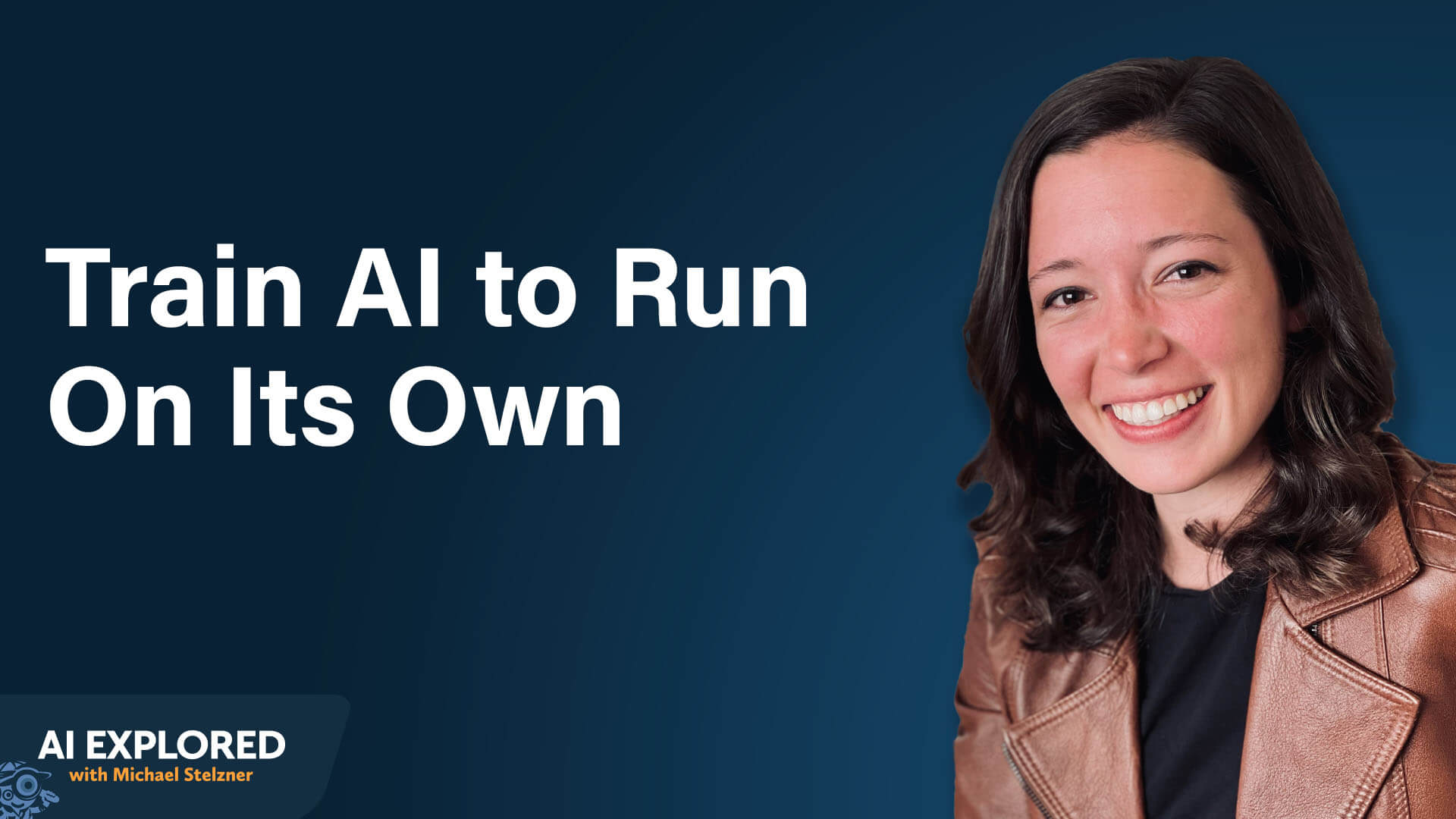
According to AI strategist Rachel Woods, the transition from "AI-assisted" to "autonomous" is not about building more complex agents, but about building better systems of trust. By shifting the focus from the AI’s inherent intelligence to the structure of your own workflows, you can effectively offload hours of daily tasks. The goal is to move beyond mere prompting and toward the creation of "AI Playbooks"—documented, predictable procedures that allow AI to manage its own operations and even oversee other agents.
The Foundation: Trust Over Tech
The primary barrier to autonomous AI is unpredictability. If an AI agent operates without clear guardrails, it often veers into hallucination or misaligned tasks, forcing the user to spend more time correcting the work than if they had done it manually.
Rachel Woods argues that autonomy is a byproduct of predictability. When a process is documented with enough granularity, the AI ceases to "guess" what you want and instead follows a set of rigid instructions. This is the difference between asking an AI to "handle your email" (which leads to erratic results) and feeding it an email triage playbook that defines exactly how to categorize, draft, and prioritize messages based on specific criteria.
Once a process is codified into a playbook, the need for human oversight drops significantly. For power users like Woods, this framework allows for approximately eight hours of work to be offloaded to autonomous agents on a daily basis.
Chronology: Building the Autonomous Ecosystem
Transitioning to an autonomous workflow is an iterative process that requires a disciplined approach to documentation and design.
1. Scoping the Playbook
The most common mistake in delegation—whether to a human or an AI—is trying to automate too much at once. A "marketing campaign" is not a task; it is a collection of dozens of sub-tasks. Attempting to build a single, monolithic AI agent to run a campaign is a recipe for failure.
Instead, the successful strategy is "stacking." You should build independent, granular playbooks for every deliverable (e.g., social media posts, email outreach, landing page copy). Once these individual agents are reliable, you create an overarching "manager" playbook that triggers these sub-agents in the correct sequence.
2. The CRAFT Cycle for Continuous Improvement
To evolve a manual process into an autonomous one, Woods recommends the "CRAFT" cycle, a five-step framework designed to minimize errors and refine performance:
- Clear Picture: Document the ideal workflow. This isn’t just a list of steps; it is a granular guide that accounts for nuances, constraints, and success metrics.
- Realistic Design: Don’t aim for full autonomy on day one. Start by keeping a human in the loop for the most complex stages of the process. If the AI hits a roadblock, document the solution so the AI can learn for the next iteration.
- AI-ify: Deploy the playbook into your chosen AI tool (e.g., Claude, ChatGPT, or Grok). This is the testing phase where you verify if the agent can execute the logic as intended.
- Feedback Loop: This is the most critical phase. When the AI makes a mistake, you don’t just fix the output; you update the playbook instructions. Over time, this transforms the AI from a tool that guesses into a system that follows a protocol.
- Team Rollout: A playbook is only useful if it is integrated into your routine. Using "habit stacking"—linking the AI execution to specific, recurring times in your day—ensures that the automation is utilized consistently.
Supporting Data and Technical Architecture
While many users keep their prompts buried within the chat history of an AI tool, this is considered a "weak" architecture. To ensure longevity and scalability, the industry standard is moving toward the mantra: "Own the playbook, rent the tech."
By storing your playbooks in centralized, platform-agnostic locations like Google Drive, Notion, or GitHub, you create a library of assets that can be ported across any AI model. Whether you are using Claude’s "Skills" feature or integrating Microsoft Copilot, your instructions remain the same. This makes your system resilient; if one AI provider changes its interface or pricing model, your workflows remain intact because they are stored externally.
The Role of the AI Middle Manager
Once you have multiple agents executing distinct playbooks, you reach the "Middle Manager" stage of development. An AI Middle Manager is essentially a high-level agent tasked with coordinating the activity of lower-level sub-agents.
This agent does not write the blog post or send the email; it ensures that the "Content Agent" has finished the draft before the "Distribution Agent" publishes it. This hierarchical structure mimics human organizational management, where the manager monitors outcomes, flags bottlenecks, and initiates the next stage of the workflow.
Implications for the Future of Work
The implications of this shift are profound. As AI becomes capable of managing its own workflows, the definition of a "knowledge worker" begins to change. The value shifts away from execution (writing the email, formatting the data) toward architecture (designing the playbook, managing the agents).
Scalability and Specialization
For small business owners and marketing teams, this is a force multiplier. With a well-structured library of playbooks, a single individual can effectively manage the output of what would traditionally be a mid-sized department. The AI doesn’t get tired, doesn’t need breaks, and follows instructions with absolute precision—provided those instructions are documented.
The Human Element
It is important to note that "autonomous" does not mean "abandoned." Human judgment remains the final arbiter. The most effective users of this technology are those who treat their AI agents like junior employees: they provide clear onboarding, set defined expectations, and conduct periodic performance reviews.
The "nitpicking" playbook—a term coined by Woods to describe a system for providing feedback on overall business outcomes—is essential. By creating a dedicated channel for the AI to report on its own performance and receive "nitpicking" corrections, you create a virtuous cycle of improvement that is impossible to achieve through manual, ad-hoc task management.
Summary: A Strategic Path Forward
To achieve true autonomy, you must move away from the "prompting" mindset and toward the "systems design" mindset.
- Stop guessing: Document your processes in written playbooks that exist outside of your AI tools.
- Start small: Build and test one playbook at a time using the CRAFT cycle.
- Stack your systems: Once individual agents are reliable, create a manager agent to coordinate them.
- Iterate relentlessly: Treat your AI’s performance as a training data set for its own future improvement.
The era of constant babysitting is ending. By investing time into the architecture of your workflows today, you can build a self-sustaining ecosystem of AI agents that not only perform the work but also ensure the work meets your specific standards, day in and day out. The future of productivity isn’t more AI—it’s better-managed AI.