By Jan-Werner Mueller
October 15, 2026
The post-war German political landscape has long been defined by a singular, stabilizing force: the Christian Democratic Union (CDU). For decades, the party served as the ultimate "catch-all" vessel, a centrist pillar that promised to harmonize the interests of disparate social groups—from industrial titans to rural farmers, from devout Catholics to secular pragmatists. By fostering a sense of shared national destiny, the CDU acted as a firewall against the kind of corrosive, self-destructive infighting that had crippled the Weimar Republic.
However, the tectonic plates of German politics have shifted. While international headlines have been dominated by the meteoric rise of the far-right Alternative for Germany (AfD), a quieter, more existential crisis has been unfolding within the CDU itself. This crisis reached a fever pitch during recent state elections, where the party suffered a humiliation that would have been unthinkable just a decade ago: failing to clear the 5% threshold in Mecklenburg-Vorpommern.
The Anatomy of a Political Collapse
The collapse in Mecklenburg-Vorpommern is not merely a local electoral anomaly; it is a structural indictment of a party that has lost its connection to its own history. The irony is particularly biting given that this was once the political home of former Chancellor Angela Merkel, who chaired the state branch for nearly seven years.
For the CDU, the 5% threshold is more than a legal barrier; it is the boundary between being a national governing force and becoming a political relic. When a party that once defined the "German miracle" finds itself locked out of a state parliament, it signals that the traditional "Big Tent" strategy—which relied on balancing competing social interests through consensus—is no longer viable in an increasingly polarized society.
A Chronology of Decline: From Hegemony to Fragility
To understand how the CDU arrived at this precipice, one must look at the gradual erosion of its ideological foundation.
- 1949–1990: The Era of Consensus: The early years of the Federal Republic were defined by the CDU’s ability to unite the conservative, religious, and pro-market elements of society. Under Konrad Adenauer, the party successfully positioned itself as the guarantor of economic stability and Atlanticist integration.
- 2005–2021: The Merkel Paradigm: Angela Merkel’s tenure saw the CDU pivot toward the center, often adopting social-democratic policies to neutralize opposition. While this maintained electoral dominance, it gradually hollowed out the party’s conservative core, leaving a vacuum on the right flank.
- 2023–2025: The Populist Surge: As economic anxiety spiked due to inflation and energy costs, the CDU found itself trapped. It was neither conservative enough to capture voters fleeing toward the AfD, nor progressive enough to compete with the Greens or the SPD on social issues.
- October 2026: The Mecklenburg-Vorpommern Debacle: The threshold failure. A result that shocked the Berlin establishment and signaled that the CDU’s traditional voter base in the East had effectively evaporated.
Supporting Data: The Shrinking Electorate
The data emerging from recent state polls paints a grim picture of demographic and regional disconnect. While the CDU still maintains a foothold in the urban, affluent West, its support in rural and eastern regions has plummeted.
Current polling trends indicate:
- Age Polarization: The CDU’s average voter age is now nearing 60. The party has failed to capture the "Generation Z" demographic, who are increasingly drawn to either the environmentalism of the Greens or the protest-oriented rhetoric of the fringes.
- The Eastern Gap: In states like Mecklenburg-Vorpommern, the CDU’s vote share among rural, blue-collar workers has declined by nearly 14% since 2020. This cohort, which once saw the CDU as the defender of traditional German values, now views the party as an extension of the "Berlin elite."
- The "5% Threshold" Risk: In three other eastern states, the CDU is currently polling within the margin of error of the 5% barrier. The risk of a cascading collapse is no longer theoretical; it is a live political danger.
Official Responses: Denial, Deflection, and Defiance
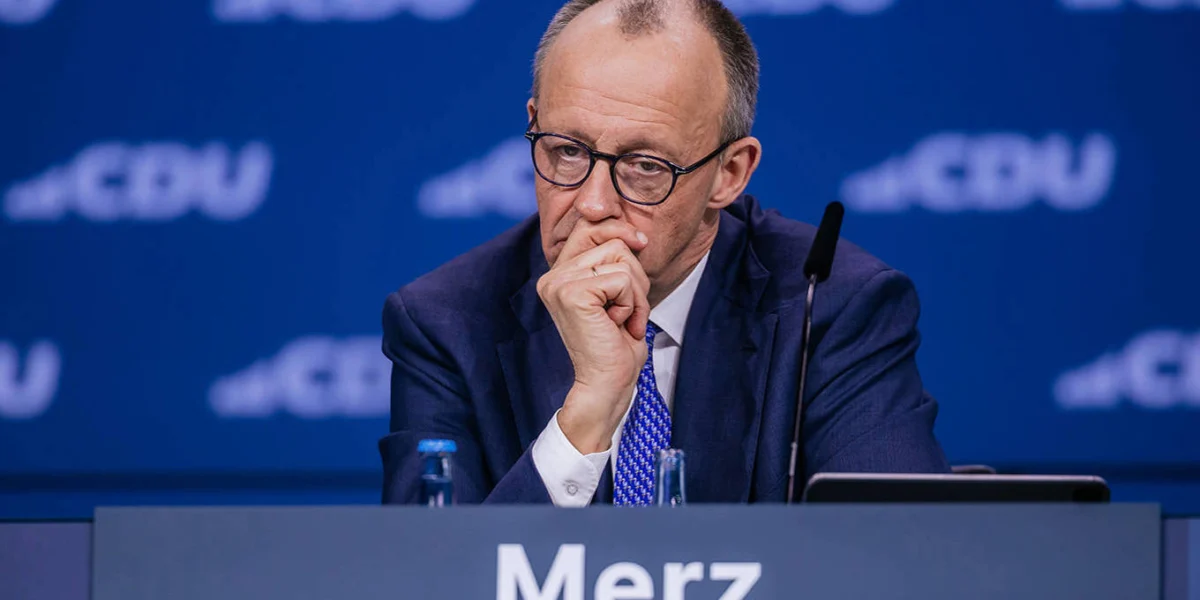
The reaction from the CDU’s national leadership has been a mix of internal finger-pointing and outward calls for unity. Friedrich Merz, in a closed-door emergency session, characterized the result as a "wake-up call" but insisted that the party’s core platform remains sound.
"We are not the problem; the environment is," one senior party strategist noted, requesting anonymity. "When voters choose the fringes, they are choosing chaos over competence. Our job is to prove that competence still matters."
However, this rhetoric has been met with skepticism from local party chapters. In Mecklenburg-Vorpommern, regional leaders have been more vocal, arguing that the national party’s refusal to address concerns regarding migration, energy prices, and the "Green transition" has made the CDU toxic in rural areas. "We cannot govern if we do not listen," one local representative stated. "We have been talking at the people for too long, rather than to them."
Implications: The Future of German Democracy
The implications of the CDU’s struggle extend far beyond the party’s own survival. If the primary vehicle for center-right politics in Germany continues to weaken, the political system faces three dangerous possibilities:
1. The Normalization of the Far-Right
As the CDU loses its ability to aggregate conservative voters, those voters have drifted toward the AfD. If the "cordon sanitaire"—the long-standing agreement among mainstream parties to never form coalitions with the far right—is forced to break because no other governing coalition can be formed, the democratic fabric of Germany will be fundamentally altered.
2. Increased Legislative Deadlock
A weak CDU means a weak opposition or, worse, a fragmented parliament where forming a stable government requires unwieldy, five-party "traffic light" coalitions. This leads to policy paralysis, which in turn fuels further anti-establishment sentiment among the electorate.
3. A Return to the "German Question"
The CDU’s historical role was to anchor Germany firmly within European and Western structures. If the party loses its ability to influence the national discourse, the consensus on Germany’s role in the world—its commitment to NATO, its support for the European Union, and its stance on global trade—could become subject to radical revision.
Reconnecting with History
The path forward for the CDU is not necessarily to move further to the right or to attempt to out-green the Greens. Rather, it is to reconnect with a different part of its own history—the tradition of Soziale Marktwirtschaft (Social Market Economy) that prioritized the security of the middle class over the interests of globalized capital or ideological purity.
Christian Democrats must realize that the "harmonious balance" they once promised cannot be restored through the technocratic management of the past. It requires a new narrative that addresses the genuine anxieties of those left behind by the digital and green transitions. If the party continues to view its electoral failures as mere PR blips rather than symptoms of a structural decline, the result in Mecklenburg-Vorpommern will not be an outlier—it will be a preview.
The era of the "Big Tent" is closing. Whether the CDU can build a smaller, more resilient structure, or whether it will be swept away by the very winds of instability it once sought to prevent, remains the most pressing question in European politics today. History is watching, and for the CDU, the time for half-measures has passed. The party must decide if it is a relic of the 20th century or a relevant actor in the 21st. The 5% threshold is not just a statistical mark; it is a mirror reflecting a party that has forgotten how to be the backbone of its nation.