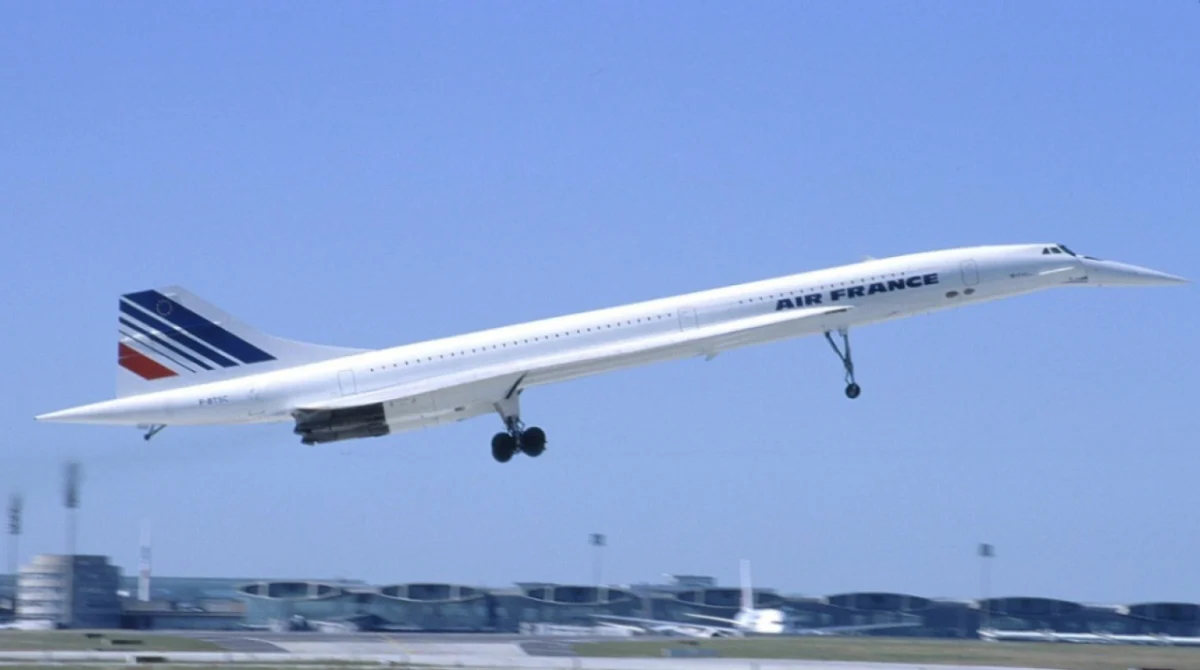
Paris, France – Twenty-six years ago today, on a clear summer afternoon in July, the skies over Paris bore witness to an unimaginable tragedy that would forever mark the history of aviation and ultimately seal the fate of one of humanity’s most iconic engineering marvels: the Concorde. On July 25, 2000, Air France Flight 4590, a supersonic passenger jet known affectionately as "the white bird," crashed shortly after takeoff from Charles de Gaulle Airport, claiming the lives of all 109 people on board and four individuals on the ground. This devastating incident not only brought an abrupt end to the Concorde’s flawless safety record but also accelerated its eventual retirement, extinguishing the dream of routine supersonic travel.
The Concorde, a joint Anglo-French project, was a symbol of technological prowess and luxurious speed. Capable of crossing the Atlantic in just over three hours – less than half the time of conventional aircraft – it offered a privileged few an unprecedented travel experience. Yet, on that fateful day, a seemingly innocuous piece of metal left on a runway would set in motion a catastrophic chain of events, transforming a routine departure into a global headline of sorrow and shock.
The Dream of Supersonic Travel: A Brief History of the Concorde
Concorde was more than just an aircraft; it was a testament to human ingenuity, a gleaming arrow piercing the sound barrier and soaring at speeds exceeding Mach 2. Its distinctive delta wing design, droop nose, and powerful Rolls-Royce/Snecma Olympus engines made it instantly recognizable and revered. First taking to the skies in 1969, the Concorde entered commercial service in 1976 with both British Airways and Air France, quickly becoming the preferred mode of transport for celebrities, dignitaries, and business executives who valued speed and exclusivity above all else.
The promise of the Concorde was revolutionary: to shrink the world, making trans-Atlantic journeys feel like short hops. Passengers would dine on gourmet meals, sip champagne, and experience the surreal sight of the Earth’s curvature from cruising altitudes of up to 60,000 feet, all while traveling faster than the speed of sound. For decades, it remained an unparalleled icon of luxury air travel, meticulously maintained and flown by the most experienced crews. Its safety record was, until that summer day in 2000, impeccable, a source of immense pride for its operators and creators. This unblemished record only intensified the shock and disbelief that reverberated worldwide when news of the crash broke.
A Fateful Afternoon in Paris: The Pre-Flight Atmosphere
On July 25, 2000, Charles de Gaulle Airport buzzed with its usual summer activity. The weather was clear, providing perfect conditions for travel. At Gate 28, anticipation was palpable as approximately 100 passengers prepared to board Air France Flight 4590, bound for New York’s John F. Kennedy International Airport. From there, most of them, predominantly German tourists, were scheduled to embark on a cruise to Ecuador, a journey of a lifetime.
The atmosphere inside the sleek cabin of the Concorde was one of quiet excitement and expectation. Conversations flowed easily, smiles were exchanged, and the hum of the pre-flight checks filled the air. These passengers, having paid an estimated $10,000 for a round-trip ticket, represented a segment of society for whom the Concorde was not merely transportation but an experience, a status symbol. None among them, nor the nine crew members – including Captain Christian Marty, First Officer Jean Marcot, and Flight Engineer Gilles Jardinaud – could have possibly foreseen that their dreams of a luxurious journey were about to turn into aviation’s gravest nightmare.
The Chain of Events: A Minute-by-Minute Account of Air France Flight 4590
The tragedy that unfolded was a complex sequence of unfortunate coincidences and critical failures, meticulously reconstructed by investigators. The events leading to the crash began just minutes before the Concorde was cleared for takeoff.
The Precursor: The Metal Strip
Approximately five minutes prior to Flight 4590’s scheduled departure, a Continental Airlines DC-10, operating Flight 55 to Newark, had taken off from the same runway, 26R. As the DC-10 accelerated down the tarmac, a critical piece of its engine cowling, a titanium wear strip about 43 centimeters (17 inches) long and 3 centimeters (1.2 inches) wide, detached from the aircraft. This metal strip, designed to guide thrust reverser doors, fell onto the runway, unseen and unnoticed by ground control. It lay there, an innocuous yet deadly trap, directly in the path of the approaching Concorde.
16:41 CET: Takeoff Authorization and Acceleration
At 4:41 PM Central European Time, Air France Flight 4590 received clearance for takeoff. The powerful Olympus engines roared to life, and the Concorde began its acceleration down runway 26R, quickly building speed. As it reached approximately 300 kilometers per hour (185 miles per hour), a speed at which critical decisions regarding takeoff are made, the left main landing gear’s number 2 tire rolled directly over the titanium strip.
The Tire Burst and Fuel Tank Rupture
The impact was immediate and devastating. The metal fragment, acting like a razor blade, sliced into the tire, causing it to burst violently. A substantial chunk of rubber, weighing about 4.5 kilograms (10 pounds), was ejected upwards and backwards at high velocity. This projectile struck the underside of the left wing, precisely impacting the integral fuel tank located between the main landing gear bays. The force of the impact created a shockwave inside the tank, rupturing it and causing a massive fuel leak.
Ignition and Fire
Almost simultaneously with the fuel leak, a massive fire erupted from under the left wing. Investigators later determined that the spilled fuel was ignited either by an electrical arc from severed wiring near the landing gear system or by contact with hot engine components or sparks generated by the tire debris. Eyewitnesses on the ground reported seeing flames trailing from the aircraft even before it lifted off.
Past V1: No Turning Back
At the moment the tire burst and the fire ignited, the Concorde had already passed V1 speed – the critical decision speed after which a takeoff cannot be safely aborted. Captain Marty and his crew were committed to flying. Despite the roaring fire and the alarm bells sounding in the cockpit, the aircraft continued its takeoff roll, struggling to gain sufficient lift. The flaming engine, now compromised, was generating significantly less thrust.
The Struggle for Control
The fire quickly began to wreak havoc on the aircraft’s systems. The intense heat caused structural damage to the wing, leading to the collapse of the number 2 engine. The number 1 engine also suffered damage, further reducing available power. Crucially, the landing gear, despite attempts by the crew, could not be fully retracted due to fire damage and hydraulic failures. The extended landing gear created immense drag, severely impeding the Concorde’s ability to climb and accelerate. Electrical systems began to fail, and the aircraft’s control surfaces became increasingly unresponsive.
The pilots, battling a rapidly deteriorating situation, struggled heroically to maintain control. With two engines severely compromised, the left wing partially disintegrated, and the landing gear stuck down, the Concorde became virtually unmanageable. It banked sharply to the left, losing altitude and speed.
The Final Moments and Crash
For approximately 90 terrifying seconds after liftoff, the aircraft, a plume of fire trailing behind it, limped through the air, struggling to gain altitude. Witnesses described a horrifying scene: the majestic "white bird" transformed into a fiery meteor, barely clearing nearby buildings. Its engines screamed, then sputtered. The crew desperately tried to steer towards Le Bourget Airport for an emergency landing, but it was a futile attempt.
At 4:43 PM, just two minutes after beginning its takeoff roll, the Concorde pitched violently to the left, stalled, and plunged into the Hotel Les Relais Bleus in Gonesse, a commune near the airport. The impact was catastrophic, creating a massive fireball and instantly killing everyone on board and four hotel employees. The dream of supersonic travel ended in a fiery inferno.
The Devastating Aftermath: Casualties and Witness Accounts
The scene at Gonesse was one of utter devastation. Emergency services rushed to the site, confronting a raging inferno and the horrific wreckage of the aircraft and the hotel. The death toll was immense: all 100 passengers and 9 crew members perished. On the ground, four employees of the Hotel Les Relais Bleus also lost their lives, bringing the total number of fatalities to 113.
The sight of the burning Concorde, captured by amateur photographers and videographers, sent shockwaves around the world. The images of the iconic jet, once a symbol of prestige and speed, engulfed in flames, became indelibly etched in the collective memory.

Witness accounts painted a harrowing picture. A 21-year-old local resident described the final moments: "It flew about 30 meters above our heads, and the whole back part was on fire. Then it started to turn, and suddenly everything went dark." Another recounted the terrifying sound of the engines struggling, followed by a deafening crash and explosion. The tragedy was particularly poignant for the families of the German passengers, many of whom had saved for years for this once-in-a-lifetime trip.
Unraveling the Tragedy: The Official Investigation and Findings
The crash of Flight 4590 immediately triggered a comprehensive and exhaustive investigation led by France’s Bureau of Enquiry and Analysis for Civil Aviation Safety (BEA). Given the Concorde’s previous safety record and its status as a technological icon, the world watched closely as investigators painstakingly pieced together the events.
The investigation was one of the most complex in aviation history, involving experts from France, the UK, and the US. Investigators meticulously examined every fragment of the wreckage, analyzed flight data recorders (FDR) and cockpit voice recorders (CVR), and interviewed countless witnesses.
Key Findings:
The BEA’s final report, released in December 2004, confirmed the chain of events:
- The Titanium Strip: The primary cause was indeed the titanium strip, which had detached from the Continental Airlines DC-10.
- Tire Burst and Fuel Tank Rupture: The Concorde’s tire bursting upon hitting this debris, and a chunk of rubber subsequently striking and rupturing the fuel tank, was the direct mechanism of the fire.
- Fuel Ignition: The investigation concluded that the fuel was ignited by either an electrical arc from damaged wiring or by hot components within the engine nacelle.
- Design Flaws: While the metal strip was the immediate trigger, the investigation also highlighted specific vulnerabilities in the Concorde’s design, particularly the strength of its fuel tanks and the placement of critical wiring. The tanks were not designed with sufficient resistance to internal shockwaves caused by external impacts, a phenomenon known as "hydrodynamic ram." The landing gear design also meant that debris from a tire burst could easily strike the wing and fuel tank.
- Lack of Abort Option: The aircraft passing V1 speed meant the crew had no option but to attempt takeoff, even with a catastrophic engine fire.
The findings underscored that while the metal strip initiated the accident, a combination of design characteristics, operational procedures, and the specific sequence of events led to the disaster.
Industry Response and Safety Revisions
The immediate aftermath of the crash saw both Air France and British Airways ground their entire Concorde fleets for safety reviews. This unprecedented move reflected the gravity of the accident and the need to restore public confidence in the aircraft.
Mandatory Modifications:
Following the BEA’s recommendations, significant modifications were mandated for all remaining Concorde aircraft:
- Strengthened Fuel Tanks: The fuel tanks were reinforced with Kevlar lining to improve their resistance to impact and rupture.
- Improved Wiring Protection: Electrical wiring in the landing gear bays was better protected to prevent arcing.
- New, More Robust Tires: Michelin developed new, more burst-resistant tires for the Concorde, capable of withstanding greater impacts.
- Revised Landing Gear Procedures: Operational procedures for landing gear retraction were reviewed.
These extensive modifications cost millions of dollars and took over a year to implement. The Concorde eventually returned to service in November 2001, just months after the September 11th attacks, which dramatically reshaped the global aviation landscape.
Legal Proceedings:
The crash also led to lengthy legal proceedings. In 2010, Continental Airlines and one of its mechanics were found guilty of involuntary manslaughter by a French court, with the court ruling that the titanium strip was improperly manufactured and installed. They were fined and given suspended sentences, though Continental appealed the ruling. In 2012, a French appeals court overturned the manslaughter convictions, concluding that while Continental bore civil responsibility for the crash, its actions did not amount to criminal negligence. Air France and several individuals were also investigated but cleared of wrongdoing. The legal battles highlighted the complexities of assigning blame in such a multi-faceted tragedy.
The Concorde’s Twilight: Economic Challenges and Public Perception
Even before the Gonesse crash, the Concorde faced significant economic hurdles. Its operational costs were astronomical, burning fuel at an incredible rate. A single trans-Atlantic flight consumed enough fuel to power an average car for several years. This, combined with the limited seating capacity (typically around 100 passengers), made ticket prices exorbitant. At roughly $10,000 for a round trip, Concorde travel was an exclusive luxury, out of reach for most travelers. As a result, despite its prestige, the Concorde never achieved the economic success envisioned by its creators.
The Gonesse crash delivered a devastating blow to public confidence. Despite the subsequent safety modifications, the psychological impact was profound. For an aircraft once considered invulnerable, the image of a flaming Concorde plummeting from the sky was difficult to erase. The global downturn in air travel following the September 11th terrorist attacks in 2001 further exacerbated the Concorde’s financial woes, drastically reducing demand for luxury travel. Airlines found it increasingly difficult to fill seats, even with reduced fares.
Maintenance costs also continued to escalate as the fleet aged. Parts became harder to source, and the specialized engineering required to keep the supersonic jets airworthy became prohibitively expensive. British Airways and Air France, already grappling with commercial pressures, found it increasingly difficult to justify the continued operation of their Concorde fleets.
The End of an Era: Retirement and Enduring Legacy
The combination of the Gonesse crash’s psychological impact, the post-9/11 slump in air travel, and the ongoing economic challenges ultimately spelled the end for "the white bird." Air France announced its decision to retire its Concorde fleet in April 2003, with British Airways following suit shortly after.
On October 24, 2003, the Concorde made its final commercial flight, a poignant journey from New York to London, watched by thousands of spectators. The retirement marked the end of an extraordinary chapter in aviation history. For three decades, the Concorde had symbolized a bold vision of the future, a triumph of engineering that pushed the boundaries of speed and luxury.
Its legacy, however, is complex. While the Concorde failed to usher in an era of widespread supersonic passenger travel, it remains an unparalleled engineering achievement. The lessons learned from its design, operation, and tragically, its sole fatal accident, have contributed significantly to aviation safety and future aircraft development. The Gonesse crash, though a dark chapter, led to a deeper understanding of aircraft vulnerabilities and the critical importance of runway maintenance and debris detection.
Conclusion
Twenty-six years have passed since that ordinary July afternoon transformed into an extraordinary tragedy. The crash of Air France Flight 4590 was a stark reminder of the inherent risks, however small, in aviation and the unforgiving nature of a catastrophic chain of events. It forced the world to re-evaluate the balance between technological ambition and safety, ultimately contributing to the premature retirement of a beloved icon.
Today, the Concorde stands as a testament to what humanity can achieve, even as it serves as a solemn reminder of what can be lost. Its elegant silhouette, once soaring across the sky, now rests in museums, a silent monument to a bygone era of supersonic dreams, forever etched in history by the events of July 25, 2000. The "white bird" may no longer fly, but its story continues to captivate, educate, and resonate as a powerful narrative of ambition, innovation, and tragic loss.