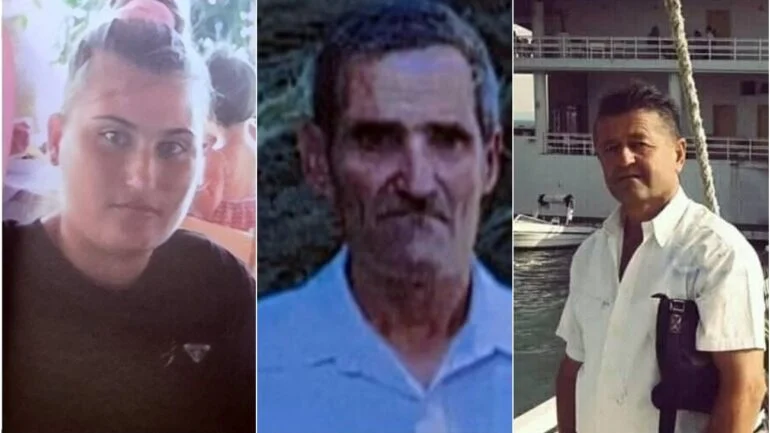
FIER, Albania – October 24, 2026 – In a case that has gripped the nation and sent shockwaves through the quiet village of Frashër, Patos, the Fier Prosecutor’s Office has concluded its investigations into the brutal murder of Anesti Rama, charging his daughter, Ermalinda Rama, with patricide and her mother, V.R. (identified as Valbona Rama in court documents), with obstructing justice. The indictment, announced today, details a harrowing account of domestic violence culminating in a daughter allegedly taking her father’s life, followed by her mother’s alleged attempts to conceal the crime.
The incident, which occurred on July 23, 2025, in the family’s home, saw Anesti Rama, 55, die from asphyxiation after allegedly being strangled with a wire loop by his daughter. In the immediate aftermath, before the arrival of law enforcement, Valbona Rama is accused of meticulously cleaning the crime scene and washing her husband’s body in a deliberate effort to erase crucial evidence and mislead investigators. This complex and tragic family saga has now advanced to the First Instance Court of General Jurisdiction in Fier, where the accused will face trial for their respective roles in the grim events.
Main Facts Unveiled
The prosecution’s detailed findings, stemming from penal procedure No. 1073/2025, paint a disturbing picture of a family fractured by violence and deceit. Ermalinda Rama stands accused under Article 79/a of the Albanian Penal Code, which addresses "Murder due to family relations." This specific charge underscores the severe nature of the crime, often carrying the gravest penalties, reflecting the betrayal of trust inherent in such a familial act. The prosecution asserts that Ermalinda intentionally caused her father’s death by applying a wire loop around his neck, leading to immediate asphyxiation.
Concurrently, Valbona Rama, the victim’s wife and Ermalinda’s mother, faces charges under Article 301 of the Penal Code for "Actions preventing the discovery of the truth." This accusation stems from her alleged post-incident actions, which included the thorough cleaning of the environment where Anesti Rama’s body was found and the washing of his body. Investigators contend that these actions were a calculated attempt to alter the crime scene, destroy forensic evidence, and ultimately hinder the police investigation, thus preventing the truth from coming to light.
The Fier Prosecutor’s Office, after a rigorous and extensive investigation spanning over a year, confirmed that the evidence gathered — including forensic medical reports, crime scene inspections, analysis of seized items, and witness statements — unequivocally points to Ermalinda Rama as the perpetrator of the fatal act and Valbona Rama as the individual who actively sought to cover up the crime. The case represents a profound challenge to the fabric of family and community in Albania, demanding a thorough and impartial judicial process.
A Grim Chronology of Events
The journey from a hidden tragedy to a public indictment has been long and arduous, marked by meticulous investigative work to uncover the truth behind the clean facade.
The Day of the Crime: July 23, 2025
The tranquility of the Rama family home in Frashër, a rural village nestled in the Patos municipality, was shattered on July 23, 2025. While the exact trigger for the fatal confrontation remains officially undisclosed, investigators believe that an altercation escalated dramatically, leading to Ermalinda Rama’s alleged decision to take her father’s life. At some point during the day, Anesti Rama was reportedly strangled with a wire loop, a crude but effective method that caused immediate asphyxiation and death. The specific details leading up to this horrific moment are central to the upcoming trial, as they may reveal underlying tensions or motivations that culminated in the patricide.
Following the death, the situation took an even more disturbing turn. According to the prosecution, Valbona Rama, the victim’s wife and mother of the accused, allegedly sprang into action to conceal the crime. Her alleged actions included a comprehensive cleaning of the room where Anesti Rama died, using various detergents and cleaning agents to remove any potential traces of blood, skin cells, or other forensic evidence. Furthermore, she is accused of washing her husband’s body, an act that could significantly alter or remove crucial evidence such as DNA, fibers, or defensive wounds, thereby complicating the initial assessment by medical personnel and law enforcement. These actions, undertaken before any official responders arrived, were pivotal in shaping the subsequent investigation.
Discovery and Initial Investigation
The discovery of Anesti Rama’s death was eventually reported, though the precise circumstances of how police were alerted have not been fully disclosed. It is plausible that Valbona Rama herself, or perhaps another family member or a neighbor, eventually contacted authorities, likely reporting the death as a sudden or accidental demise. However, upon the arrival of police services and forensic teams, the scene immediately raised suspicions. Experienced investigators are trained to recognize signs of tampering, even when meticulously executed. The unnaturally clean state of the room, despite a reported sudden death, likely triggered alarm bells. The body, too, despite being washed, would still bear marks consistent with asphyxiation, which a preliminary medical examination would have quickly identified.
The initial phase of the investigation would have involved securing the scene, taking preliminary statements, and transporting Anesti Rama’s body for a full autopsy. The discrepancies between the reported circumstances of death and the physical evidence on site would have quickly pointed towards a suspicious death requiring a deeper probe.
The Year-Long Inquiry: 2025-2026
What followed was a meticulous and prolonged investigation spanning over a year. The Fier Prosecutor’s Office, in collaboration with the local police and forensic experts, embarked on a painstaking process of evidence collection and analysis. This included:
- Detailed Crime Scene Re-examination: Despite the initial cleaning, forensic experts would have employed advanced techniques to detect latent evidence. This might include luminol testing for traces of blood, specialized UV lights for bodily fluids, and microscopic analysis for fibers, hairs, or residues of cleaning agents.
- Interrogations: Ermalinda and Valbona Rama would have been subjected to multiple rounds of questioning, along with other family members, neighbors, and anyone who had contact with the family in the days leading up to the incident. Inconsistencies or evasive answers in their statements would have been carefully noted.
- Forensic Laboratory Analysis: Any seized items, from cleaning products to the alleged wire loop, would have undergone rigorous laboratory analysis for DNA, fingerprints, and other trace evidence. The medical-legal expertise on Anesti Rama’s body would have been crucial in determining the exact cause and manner of death, and whether his injuries were consistent with the alleged weapon and method.
- Digital Forensics: While not explicitly mentioned, investigators often examine phone records, social media activity, and other digital footprints of those involved to establish timelines, communication patterns, and potential motives.
The length of the investigation underscores the complexity of the case, particularly given the alleged attempts to obscure the facts. Investigators had to peel back layers of deception to reconstruct the true events of that fateful day.
Prosecution’s Conclusion: October 24, 2026
After more than 15 months of intensive work, the Fier Prosecutor’s Office announced the conclusion of its investigations and the formal referral of the case to the First Instance Court of General Jurisdiction. The evidence accumulated was deemed sufficient to press charges against both Ermalinda Rama for "Murder due to family relations" and Valbona Rama for "Actions preventing the discovery of the truth." This announcement marks a significant milestone, shifting the focus from investigation to adjudication, where the accused will now have the opportunity to present their defense in a court of law.
Supporting Evidence and Forensic Insights
The prosecution’s decision to send the case to trial is based on a robust body of evidence, meticulously collected and analyzed over the course of the investigation. The interplay of forensic science, witness statements, and crime scene analysis was crucial in unravelling the truth.
The Forensic Report
The cornerstone of any murder investigation is the medical-legal expertise, or autopsy report. In Anesti Rama’s case, this report confirmed that the cause of death was asphyxiation, consistent with strangulation. Forensic pathologists would have meticulously documented the presence of ligatures marks on his neck, providing crucial details about the width, depth, and pattern of the impression, which could help identify the type of weapon used (e.g., a wire loop). The report would also have estimated the time of death, helping to corroborate or refute the timelines provided by the accused.
Furthermore, despite Valbona Rama’s alleged attempts to clean the body, forensic examination can still detect subtle signs. Traces of cleaning agents might be found on the skin, or certain types of bruising and internal injuries consistent with strangulation would remain evident regardless of external washing. Microscopic examination could reveal minute fibers from clothing or the alleged ligature, or even DNA evidence under fingernails if there was a struggle.
Crime Scene Reconstruction
Even a thoroughly cleaned crime scene leaves behind clues for skilled forensic investigators. The absence of expected evidence, such as blood spatter or disturbed furniture consistent with a struggle, can itself be a tell-tale sign of tampering. Investigators would have focused on:
- Chemical Analysis: Testing surfaces for residual cleaning chemicals.
- Latent Prints: Searching for fingerprints and palm prints that may have been missed during cleaning.
- Dust Pattern Analysis: Observing disturbed dust patterns that indicate items were moved or removed.
- Blood Spatter Analysis (even if cleaned): Advanced techniques can detect "ghosts" of blood spatter even after vigorous cleaning, providing insights into the dynamics of the struggle.
By carefully documenting the "before" (what should have been there) and "after" (what was found), investigators can reconstruct the sequence of events and definitively prove that the scene was altered with intent to conceal.

Witness Testimonies and Interrogations
The analysis of statements from Ermalinda Rama, Valbona Rama, and any other individuals connected to the family (neighbors, relatives, friends) formed another critical pillar of the evidence. Investigators would have looked for inconsistencies between their narratives and the physical evidence, as well as discrepancies between their individual statements. Over time, and under persistent questioning, such inconsistencies often emerge, leading to further lines of inquiry. Admissions, whether direct or indirect, during interrogations also provide crucial evidence. The prosecution likely identified specific points where Valbona Rama’s account of the events or her actions after Anesti’s death did not align with forensic findings, strengthening the charge of obstruction of justice.
Material Evidence
Any physical objects linked to the crime are vital. If the wire loop allegedly used in the strangulation was recovered, it would undergo extensive forensic analysis for DNA, fingerprints, and fibers. Similarly, any cleaning materials found in the home could be analyzed to confirm their use at the crime scene, potentially linking them to Valbona Rama’s alleged actions. The absence of certain expected items could also be telling. Each piece of material evidence, no matter how small, contributes to building a comprehensive picture of the crime.
Official Responses and Legal Framework
The conclusion of this high-profile investigation has drawn attention to the meticulous work of the Albanian justice system and the serious implications of the charges filed.
The Prosecutor’s Statement
While specific direct quotes from the Fier Prosecutor’s Office are not provided in the original text, their public announcement on October 24, 2026, would have emphasized the thoroughness of their investigation and the strength of the evidence compiled. A typical prosecutorial statement in such a grave case would highlight:
- The commitment to uncovering the truth despite challenges posed by evidence tampering.
- The unwavering dedication to holding perpetrators accountable, regardless of familial ties.
- The role of inter-agency cooperation (police, forensics, prosecution) in bringing the case to this stage.
- Reassurance to the public that justice will be pursued rigorously through the judicial process.
Such statements often serve to bolster public confidence in the legal system and reinforce the rule of law.
Albanian Penal Code: A Closer Look
The charges against Ermalinda and Valbona Rama fall under specific articles of the Albanian Penal Code, reflecting the severity and nature of their alleged crimes.
- Article 79/a: "Murder due to family relations": This article specifically addresses aggravated murder committed against a family member. Unlike general murder charges, "murder due to family relations" carries a significantly higher penalty, often ranging from 20 years to life imprisonment. The law recognizes the profound breach of trust and the devastating impact of such crimes within the family unit, hence the enhanced sentencing. This provision aims to deter intra-familial violence and underscores the sanctity of family bonds under Albanian law.
- Article 301: "Actions preventing the discovery of the truth": This article targets individuals who intentionally obstruct justice by destroying, altering, or concealing evidence, or by providing false testimony. The penalties for this offense vary depending on the severity of the primary crime being covered up, but can include fines and imprisonment, often ranging from a few months to several years. In a case involving murder, the penalties for obstruction of justice would typically be at the higher end of the spectrum, reflecting the gravity of hindering a murder investigation.
These legal provisions demonstrate Albania’s commitment to addressing both the direct act of violence and subsequent attempts to subvert the justice system.
Judicial Process Ahead
With the indictment filed, the case now moves to the trial phase at the First Instance Court of General Jurisdiction in Fier. This is where both the prosecution and the defense will present their arguments, evidence, and witnesses.
- Trial Proceedings: The court will hear testimony from forensic experts, investigators, and any other relevant witnesses. The defense attorneys for Ermalinda and Valbona Rama will have the opportunity to challenge the prosecution’s evidence, cross-examine witnesses, and present their own arguments, potentially focusing on issues like mental state, self-defense (though unlikely given the strangulation and cover-up claims), or coercion.
- Verdict and Sentencing: If found guilty, the court will issue a verdict, followed by sentencing in accordance with the Albanian Penal Code.
- Appeals: Regardless of the verdict, both the prosecution and the defense have the right to appeal the decision to higher courts, potentially leading to a lengthy legal battle before a final resolution is reached.
The judicial process will be closely watched, not only by the local community but by legal experts across the country, given the shocking nature of the allegations.

Broader Implications and Societal Impact
The Anesti Rama murder case transcends a mere criminal investigation; it carries profound societal implications, shining a spotlight on issues of domestic violence, family dynamics, and the pursuit of justice in deeply personal tragedies.
The Shadow of Domestic Violence
This case serves as a stark and painful reminder of the hidden struggles within families, particularly the devastating consequences of unresolved domestic conflicts. While the specific motivations behind Ermalinda’s alleged act are yet to be fully explored in court, family murders often stem from a complex interplay of factors including prolonged abuse, financial disputes, mental health issues, or intense emotional strain. The fact that a daughter is accused of killing her father, and the mother of aiding in the cover-up, speaks volumes about the potential dysfunction that may have festered within the Rama household. Such incidents underscore the urgent need for greater awareness, support systems, and intervention mechanisms for families grappling with violence and conflict. It challenges the societal perception of the family as a safe haven, revealing its potential as a site of profound tragedy.
Community Reaction in Frashër
In a close-knit rural community like Frashër, Patos, an event of this magnitude inevitably causes immense shock, grief, and fear. The accused and the victim were known members of the community, and such an intimate crime can shatter trust and create an atmosphere of suspicion. Neighbors and acquaintances will grapple with understanding how such a horrific act could occur within their midst. The event might trigger discussions about family values, community support, and the signs of distress that might have been missed. The tragedy leaves an indelible mark on the village, forcing residents to confront uncomfortable truths about the hidden realities of domestic life.
The Quest for Justice
The rigorous investigation and subsequent indictment by the Fier Prosecutor’s Office send a clear message: no crime, especially one as severe as murder, will go unpunished, regardless of the familial ties between the victim and the perpetrators. Furthermore, the charge against Valbona Rama for obstructing justice highlights the legal system’s intolerance for attempts to subvert the truth and hinder law enforcement. This case reinforces the principle that justice must be served impartially, ensuring that those who commit crimes and those who aid in their concealment are held accountable. It is a critical test of the legal system’s ability to navigate complex emotional and familial dynamics while upholding the rule of law.
A Precedent for Future Cases?
While every case is unique, high-profile trials like the Rama family murder can set precedents or at least influence public discourse and future legal strategies. It could lead to increased scrutiny of domestic violence reports, greater emphasis on forensic evidence in cases of suspected tampering, and potentially inspire legislative reviews related to family crimes. Moreover, it might encourage victims of domestic violence to come forward, knowing that the justice system is committed to pursuing even the most difficult cases.
Conclusion
The referral of Ermalinda Rama and Valbona Rama to trial marks a crucial step towards justice in the tragic murder of Anesti Rama. This case, unfolding in the courts of Fier, is not merely a legal proceeding but a profound reflection on the complexities of family relationships, the devastating impact of violence, and the unwavering commitment of the Albanian justice system to uncover the truth and hold individuals accountable. As the trial commences, the nation watches, hoping for a resolution that brings clarity and justice to a community still reeling from an unimaginable act. The outcome will undoubtedly resonate far beyond the courtroom, shaping perceptions of justice, family, and public safety for years to come.