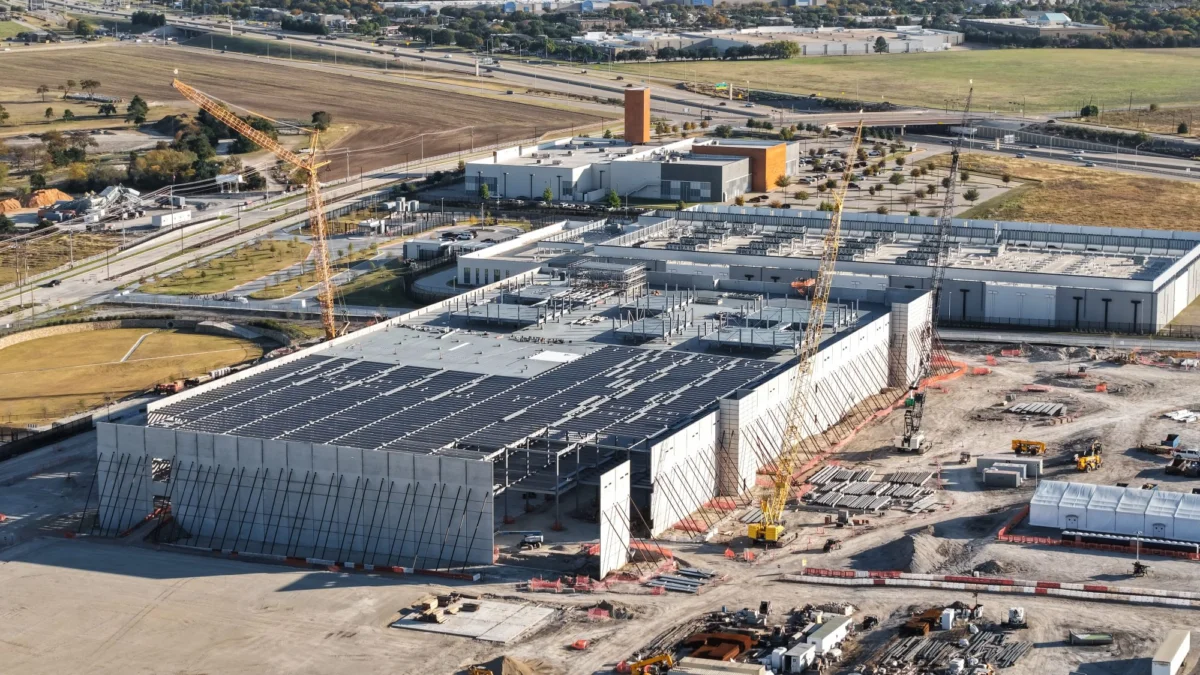
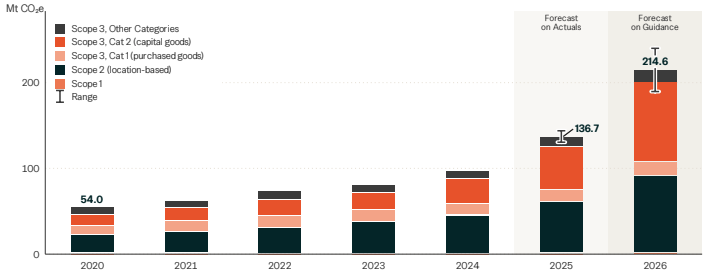
The global race to dominate artificial intelligence is no longer just a competition for market share and technological supremacy; it has evolved into a massive, energy-intensive industrial expansion that is fundamentally reshaping the corporate climate landscape. According to a groundbreaking forecast released by the Bricola Group, the carbon emissions of the world’s five largest "hyperscalers"—Alphabet, Amazon Web Services (AWS), Meta, Microsoft, and Oracle—are projected to spike by nearly 60% in the current calendar year.
This surge, driven by the unprecedented build-out of data center infrastructure, represents a critical turning point in the corporate response to climate change. As these tech giants pour over $1 trillion into capital expenditures (capex) between 2025 and 2026, the resulting environmental footprint is ballooning, casting doubt on the ambitious net-zero targets that these companies once touted as cornerstones of their corporate social responsibility.
The Magnitude of the Footprint: A National-Scale Impact
The numbers are as staggering as the physical infrastructure being built to support them. By 2026, the combined carbon footprint of the "Hyper 5" is forecast to reach 215 million metric tons of carbon dioxide equivalent (tCO2e). To put this in perspective, this figure exceeds the annual national emissions footprint of a significant majority of the world’s countries. Even after accounting for renewable energy certificates (RECs) and other carbon-offsetting instruments—which effectively "mask" a portion of the raw emissions—the adjusted total remains a daunting 140 million tCO2e, a sharp increase from the 87 million tCO2e recorded in 2025.
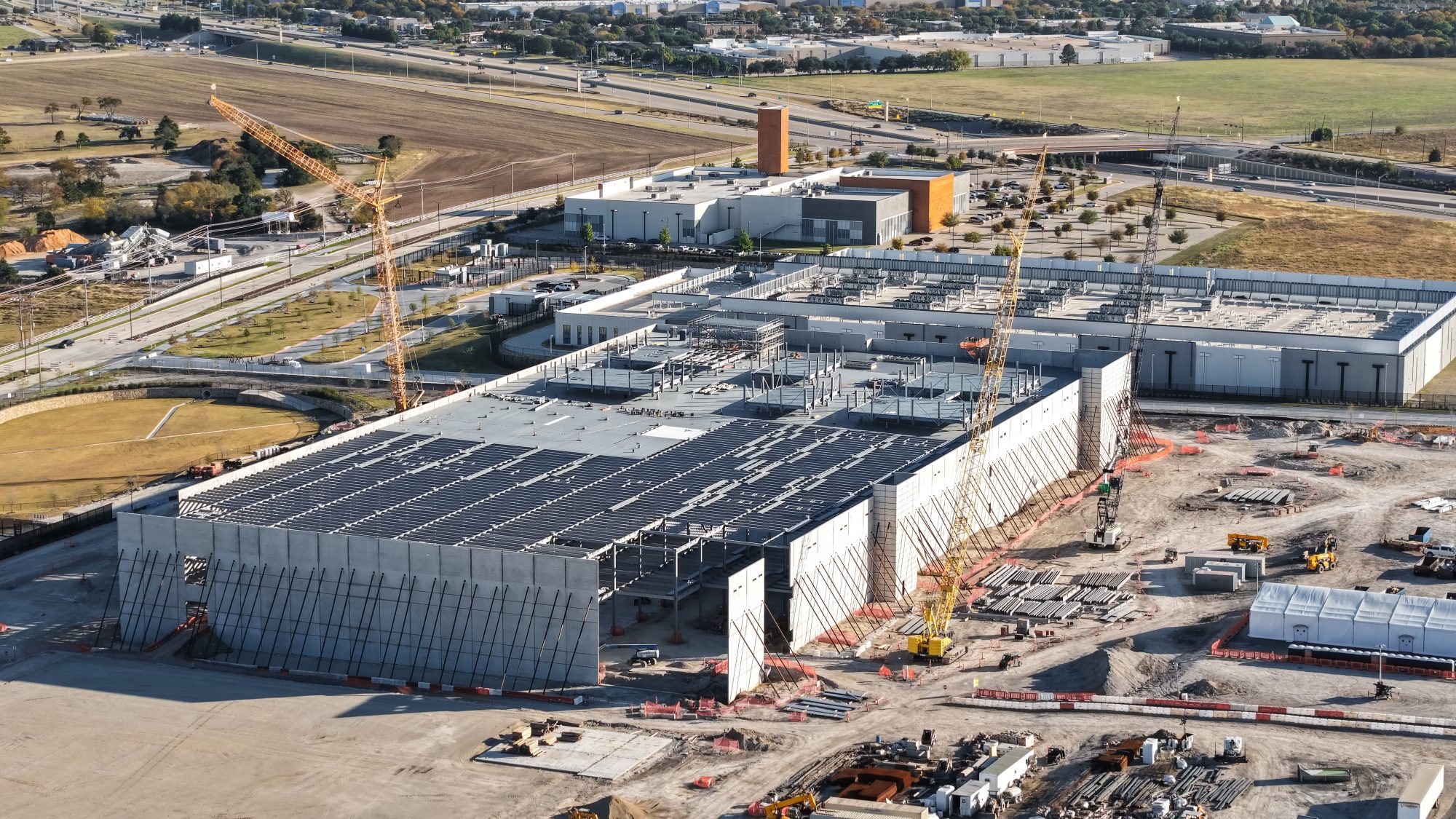
The primary driver of this environmental expansion is the physical reality of the AI era: data centers. These facilities are not merely buildings; they are massive, energy-dense industrial hubs that require constant cooling, specialized hardware, and a reliable, high-capacity power supply. The capital required to build and equip these sites is historic, with the $1 trillion expenditure figure signaling that the infrastructure-heavy phase of the AI revolution is only just beginning.
A New Method for Forecasting: Decoding the Capex Connection
For years, the environmental community has struggled with a persistent data gap. Companies typically release their annual financial results (10-K filings) months before their sustainability or ESG reports, which detail their carbon emissions. This lag—often stretching five to nine months—meant that sustainability experts, policymakers, and climate advocates were always looking in the rearview mirror.
Jimmy Gillan, a former Amazon economist and founder of the Bricola Group, sought to close this gap. By analyzing the historical correlation between corporate capital expenditure and carbon emissions, Gillan developed a predictive model that allows for real-time estimates of an organization’s climate impact as soon as financial data is published.
"My hope is to accelerate what we think is going to come out of the disclosure process so that we can identify the areas where decarbonization is most needed," Gillan explained. By leveraging the direct link between building data centers and the subsequent carbon output, the Bricola model provides an early warning system. Instead of waiting for official sustainability reports to be published, stakeholders can now forecast the environmental trajectory of the industry based on the financial guidance provided to shareholders.
Chronology: The AI Shift and the Sustainability Pivot
The recent surge in emissions is not an anomaly; it is the direct consequence of a strategic pivot that occurred in the early 2020s.
- 2020–2022: The tech giants largely maintained their emissions trajectories, often meeting or exceeding renewable energy procurement targets as their data center growth remained within predictable parameters.
- Late 2022: The public launch of generative AI models ignited a "gold rush" mentality. Microsoft and Alphabet pivoted rapidly, integrating large language models into their core products.
- 2023–2024: The demand for compute power skyrocketed. Companies began massive, unplanned expansions of data center capacity. This period marked the beginning of the "emissions leap," as noted in recent climate disclosures from Microsoft and Google, which saw their previously stable progress toward net-zero targets stalled or reversed.
- 2025–2026: The current phase is defined by capital deployment. With over $1 trillion in planned spending, the industry has transitioned from experimental deployment to a massive infrastructure build-out. The Bricola forecast captures the impact of this spending, showing the highest year-over-year emissions growth in the history of the cloud computing sector.
Supporting Data: Dissecting the Leaders
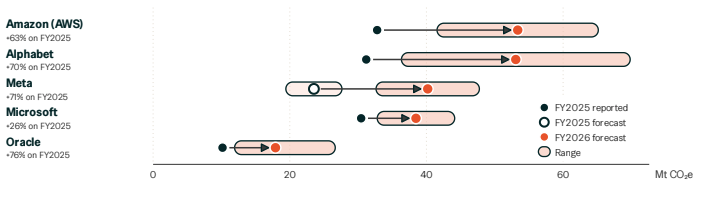
The Bricola report highlights that while all five companies are contributing to the surge, the intensity varies based on their specific growth strategies and the scale of their cloud infrastructure. AWS and Alphabet stand out as the largest emitters, with both companies projected to reach footprints of approximately 53 million tCO2e each by 2026.
The variability in these forecasts is partly due to the companies’ differing fiscal year-ends. For instance, Microsoft and Oracle have fiscal years that do not align with the calendar year, providing a clearer look at their confirmed capital expenditure. For the other three—Alphabet, Meta, and Amazon—the forecast relies on recent financial guidance. Regardless of the fiscal nuances, the trend line is uniform: all five companies are currently in a period of unprecedented expansion that is inherently carbon-intensive.
Official Responses and the "Net-Zero" Paradox
The response from the hyperscalers to these rising emissions has been a mixture of defensiveness and long-term promises. When contacted about the rising figures, representatives from these organizations often point to their investments in clean energy—such as small modular reactors (SMRs), geothermal projects, and massive power purchase agreements (PPAs).
However, critics argue that these investments are failing to keep pace with the sheer speed of compute demand. The "net-zero" goals that these companies set in 2020 were based on a specific set of growth assumptions that did not account for the generative AI explosion. As a result, the industry is currently in a state of contradiction: they are among the largest corporate buyers of renewable energy in the world, yet their absolute carbon emissions are climbing at an accelerating rate.
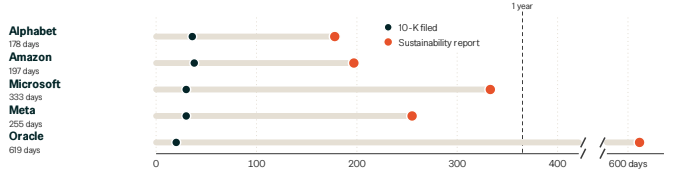
Sustainability teams within these organizations are now grappling with a difficult reality: the hardware required to power AI is fundamentally more energy-hungry than the hardware required for traditional cloud services. The efficiency gains in newer chips are being offset by the sheer volume of compute operations, leading to a net increase in energy demand that current renewable infrastructure cannot easily satisfy.
Implications: The Road Ahead
The Bricola forecast serves as a wake-up call for the entire technology sector. The implications of this growth are profound:
- Regulatory Scrutiny: As emissions from data centers become more transparent through models like Bricola’s, regulators are likely to demand more rigorous accountability. We may see the emergence of mandatory disclosure laws that force companies to report the climate impact of their capital expenditures in real-time.
- Pressure on Power Grids: The massive energy demands of these data centers are placing an unprecedented strain on local and regional power grids. This is forcing a national conversation about how much of the energy supply should be prioritized for AI versus residential and public use.
- The Decarbonization Gap: The gap between the "raw" emissions (215 million tCO2e) and the "net" emissions (140 million tCO2e) highlights the critical importance of carbon accounting. There is an increasing demand for more transparent reporting that distinguishes between actual carbon reduction and the reliance on market-based instruments like renewable energy certificates, which do not always represent a physical reduction in fossil fuel usage.
Ultimately, the findings suggest that the tech industry is at a crossroads. The promise of AI to solve complex global challenges—including climate change itself—is being weighed against the immediate, tangible environmental costs of its infrastructure. For Jimmy Gillan and his team at Bricola, the goal is simple: provide the data necessary to ensure that the AI revolution does not come at the expense of the planet. By removing the veil of delayed reporting, the industry is now being asked to reconcile its exponential growth with its environmental commitments, and the clock is ticking faster than ever before.