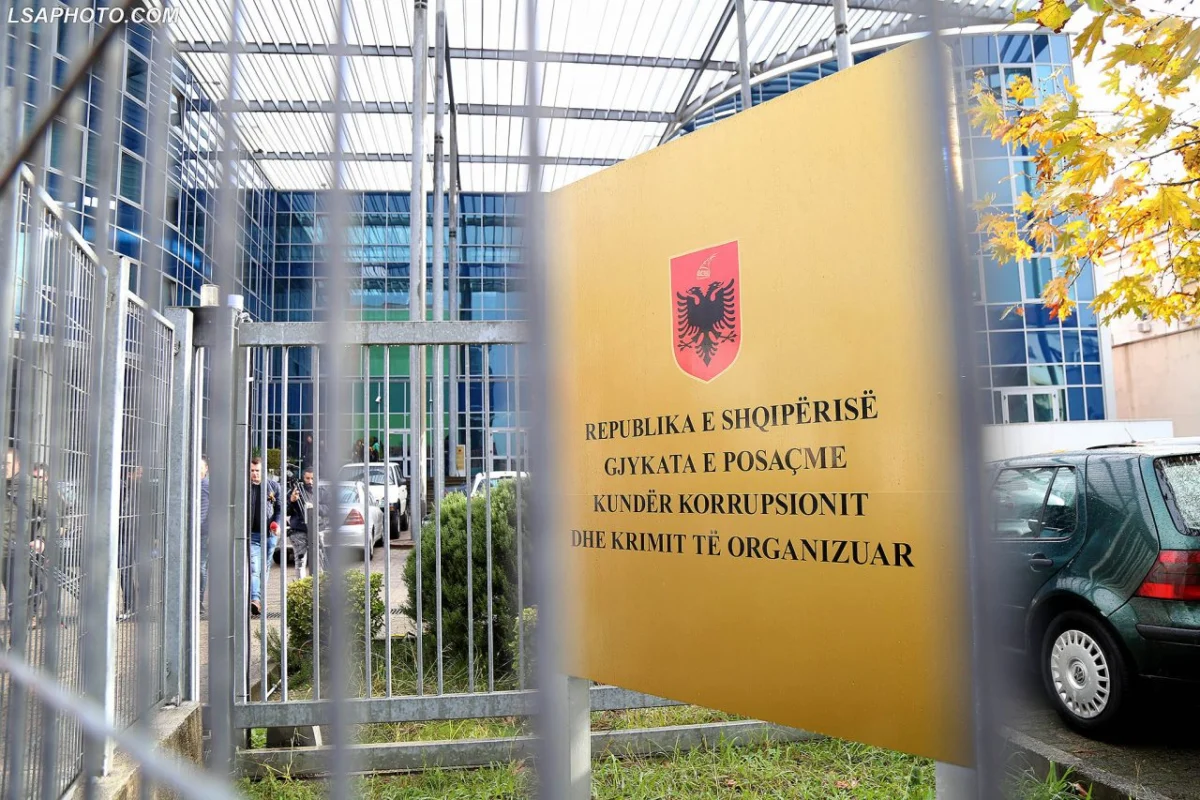
TIRANA, ALBANIA – The Special Prosecution Office Against Corruption and Organized Crime (SPAK) has announced the successful conclusion of a sprawling investigation into a sophisticated criminal network involved in the large-scale trafficking of narcotics across continents. The operation, a testament to international law enforcement collaboration, has led to the indictment of 17 individuals accused of facilitating the movement of cocaine from South America to European Union member states, and marijuana from Albania to Germany and Turkey.
This significant development marks a major victory in the ongoing battle against organized crime and drug trafficking, highlighting the persistent efforts of Albanian authorities and their international partners to disrupt illicit supply chains. The investigation, which spanned several years and involved extensive intelligence gathering and cross-border cooperation, has shed light on the complex routes and methods employed by these criminal organizations.
The Scale of the Operation: A Web of Illicit Trade
The ramifications of this investigation extend far beyond national borders. SPAK’s findings reveal a meticulously structured criminal enterprise that exploited global trade routes to ferry substantial quantities of illegal substances. The primary focus of the syndicate was the trafficking of cocaine, originating from South American countries, destined for various markets within the European Union. Simultaneously, the organization was deeply entrenched in the export of marijuana from Albania, with Germany and Turkey identified as key transit and distribution points.
The sheer volume of narcotics involved is staggering. Investigations have unearthed evidence pertaining to the trafficking of an estimated 1,722 kilograms of marijuana from Albania to Montenegro in November 2020, with the ultimate destination being Germany. In a separate but related operation, a significant seizure of 475 kilograms of cocaine occurred in the Netherlands. This cocaine was traced back to Ecuador and was intercepted at the Port of Vlissingen. Further compounding the scale of the operation, 236 kilograms of marijuana, also originating from Albania, were seized in Turkey in January 2021. These seizures represent only a fraction of the total illicit trade, underscoring the vastness of the network’s operations.
Key Figures and the Structure of the Syndicate
At the heart of this criminal organization, according to SPAK’s findings, were three principal figures identified as the leaders and financiers: Emiljan Burba, Ervis Shuli, and Rexhep Rraja. The latter’s familial connection to former socialist deputy Rahman Rraja has drawn particular attention, raising questions about potential influence and patronage within illicit networks.
Beyond these central figures, the indictment includes a comprehensive list of 17 defendants, each allegedly playing a crucial role in the syndicate’s operations. These individuals are:
- Indrit Dokle
- Përparim Rraja
- Gazmir Rraja
- Bujar Sefa (also known by aliases "Xaka" and "Lala")
- Marvin Bushati
- Jani Çavo
- Sokol Qaja
- Aldo Gjini (also known by alias "Iamandi")
- Bledar (alias Blerti) Cafi
- Zamir Aliaj (also known by alias "Çoku")
- Islam Sefa (also known by alias "Xaka")
- Hajdar Sefa (also known by aliases "Xaka" and "Lala")
- Vidjan Baroka
- Agim Nina (also known by alias "Lorenc Selmani")
The detailed list of aliases further illustrates the clandestine nature of the syndicate, highlighting their efforts to evade detection and maintain anonymity within their criminal enterprise.
The Digital Footprint: Encrypted Communications as a Key to Unraveling the Network
A crucial element in the successful dismantling of this syndicate has been the intelligence gleaned from encrypted communication platforms. SPAK investigators were able to obtain crucial evidence through the use of the encrypted application "Sky ECC." This technology, often favored by criminal organizations for its perceived security, ironically became a key tool for law enforcement to penetrate their communications and gather irrefutable proof of their illicit activities. The intercepted messages provided a detailed roadmap of the syndicate’s operations, including the planning, execution, and financial transactions associated with drug trafficking.
A Chronology of Seizures and International Cooperation
The investigation’s success is built upon a series of coordinated seizures and a robust network of international partnerships. The timeline of these events paints a clear picture of the syndicate’s reach and the efforts to intercept their operations:
- November 2020: A substantial quantity of 1,722 kilograms of marijuana, smuggled from Albania, was intercepted en route to Montenegro. This shipment was part of a larger operation intended for distribution in Germany.
- During the same period: In a separate but connected operation, Dutch authorities seized 475 kilograms of cocaine. This consignment had been transported from Ecuador to the Port of Vlissingen in the Netherlands, indicating the intercontinental scope of the trafficking routes.
- January 2021: Turkish law enforcement successfully intercepted 236 kilograms of marijuana, which had been trafficked from Albania. This seizure further reinforces the syndicate’s involvement in the export of cannabis from Albanian territory.
The success of these interdictions and the broader investigation would have been impossible without the seamless collaboration of multiple national and international agencies. SPAK has underscored its close working relationship with the justice authorities of Germany, France, the Netherlands, Belgium, Montenegro, Turkey, and Ecuador. Furthermore, crucial support and coordination were provided by Eurojust, the European Union’s judicial cooperation agency, and Europol, the European Union’s law enforcement agency. This multi-jurisdictional approach was essential in tracking the movement of drugs, identifying key players, and ultimately bringing them to justice.
The Road Ahead: Continued Investigations and Asset Recovery
While the indictment of 17 individuals represents a significant blow to this criminal network, SPAK has emphasized that the investigation is not entirely concluded. The prosecution has announced that the investigation has been bifurcated to allow for the identification of additional collaborators and to pursue further investigations into the financial assets of those involved.
This strategic separation of the investigation is crucial for several reasons. Firstly, it allows for a more focused pursuit of any remaining members or associates of the syndicate who may still be operating or attempting to evade capture. Secondly, it enables a thorough examination of the financial structures underpinning the criminal enterprise. The illicit profits generated from drug trafficking are often laundered through complex financial schemes, and identifying and confiscating these assets is vital to dismantling the economic power of organized crime.
The implications of this case extend beyond immediate legal proceedings. It serves as a powerful deterrent to other criminal organizations contemplating similar operations. It also reinforces the commitment of Albania and its international partners to creating a hostile environment for drug trafficking and organized crime. The successful prosecution of these individuals will send a clear message that borders and jurisdictions are not insurmountable obstacles for justice.
The ongoing efforts to identify further collaborators and to pursue asset recovery will be critical in ensuring that the full impact of this criminal network is addressed. This comprehensive approach, encompassing both criminal prosecution and financial disruption, is essential for long-term success in combating transnational organized crime. The dismantling of this large-scale drug trafficking syndicate is a testament to the dedication and effectiveness of international law enforcement cooperation in safeguarding public safety and combating the insidious reach of illicit drug trade.