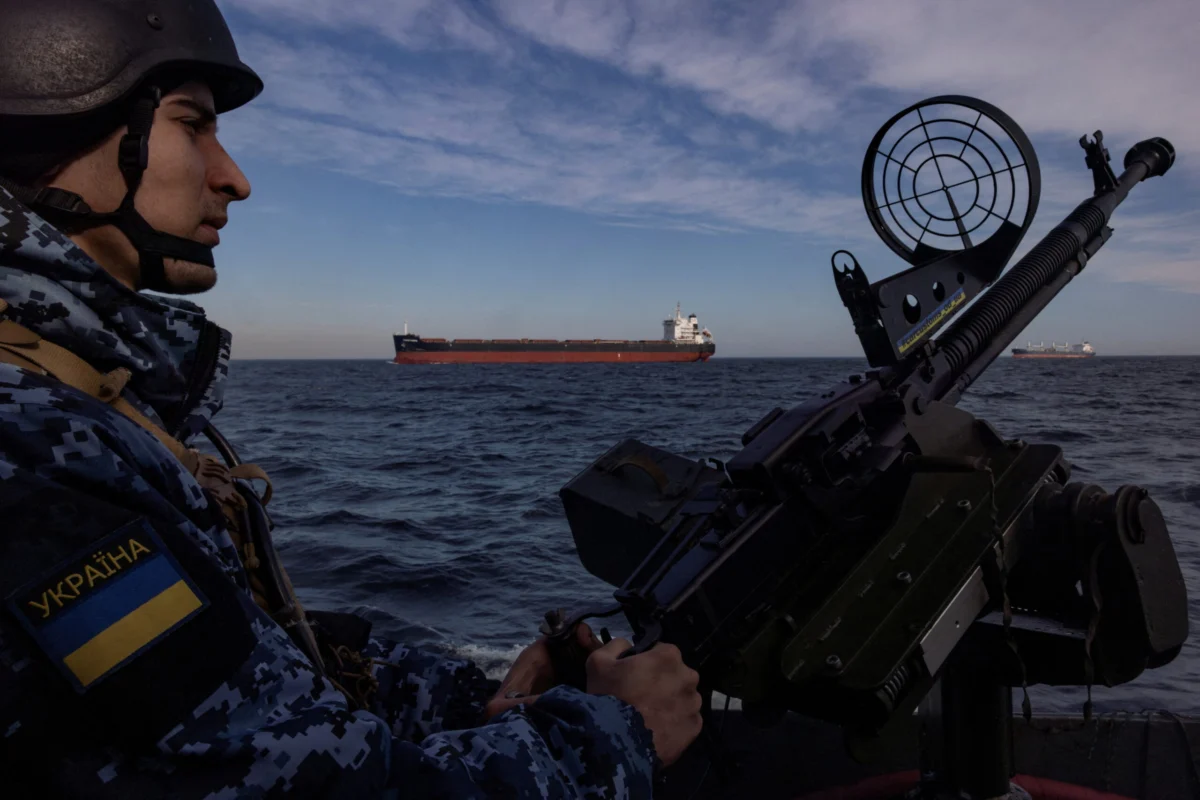
The Black Sea has devolved into one of the most volatile maritime theaters of the 21st century. As Russia continues to rebuff international efforts to broker a maritime ceasefire, the region finds itself caught in a cycle of deepening conflict, characterized by the targeting of civilian merchant shipping and the militarization of once-neutral waters. Despite Ukraine’s remarkable ability to challenge Russian naval dominance through innovative, asymmetric warfare, the strategic environment remains fragile. Without a unified and robust response from Black Sea littoral states and their transatlantic allies, the risk of a broader, uncontrolled escalation continues to mount.
The Rejection of Diplomacy: A "Piecemeal" Approach
The diplomatic landscape regarding the Black Sea remains barren. Russia has consistently dismissed international attempts to establish a maritime truce, categorizing proposals from Turkey and the United Nations as "half-measures" or "piecemeal arrangements" that fail to address the core of the ongoing war. By rejecting these limited ceasefires, Moscow has signaled that it views the Black Sea not as a space for potential de-escalation, but as a critical domain for maintaining strategic pressure on Kyiv.
This hardline stance has been accompanied by a tangible increase in Russian hostility. The Kremlin’s strategy appears twofold: to cripple Ukraine’s economic capacity by targeting its maritime infrastructure and to intimidate regional actors by encroaching upon the territorial integrity of NATO members.
Chronology of Escalation: A Pattern of Aggression
The scale of the devastation wrought upon the maritime sector is staggering. Since the onset of the full-scale invasion, the Ukrainian Ministry for Recovery, Infrastructure and Transport has documented the destruction or partial damage of 274 civilian vessels and over 1,173 port facilities. This is not merely a record of material loss; it is a human catastrophe that has accelerated throughout late 2026.
- September 17, 2026: A Russian drone strike hit a Tanzania-flagged vessel en route to a Ukrainian port. The attack resulted in the death of the captain and injuries to three crew members.
- October 3, 2026: A Liberian-flagged cargo vessel docked in an Odesa-region port was struck by a Russian missile. The attack killed a motorman and wounded three others, underscoring the extreme danger faced by civilian mariners.
- Recent Incident: In a brazen act of violence in neutral waters, two Russian drones targeted a Turkish-flagged vessel transporting grain. The attack killed the captain and a crew member, drawing international condemnation and highlighting the indiscriminate nature of Russia’s naval campaign.
Beyond the immediate theater of the war, Russia has engaged in horizontal escalation. Frequent airspace violations and the presence of drone fragments in Romania and Moldova have become the new normal. Romanian officials have reported over 100 such incursions, with explosive-laden maritime drones being neutralized in close proximity to the Neptun Deep offshore gas project. Similarly, Moldova has seen its airspace violated with alarming frequency, recording 44 incidents in 2026 alone—a significant increase from the 17 recorded in all of 2025.
Supporting Data: The Shift in Naval Warfare
The narrative of the Black Sea war is defined by the unexpected efficacy of Ukraine’s "sea denial" strategy. Lacking a traditional blue-water navy, Kyiv has pioneered a new model of warfare that relies on AI-enabled, uncrewed surface vessels (USVs) and remote sensing.
This technological pivot has fundamentally altered the balance of power. The Russian Black Sea Fleet, once the dominant force in the region, has been forced to disperse, retreat from forward bases, and operate under the constant threat of asymmetric strikes. A landmark moment occurred on September 12, 2026, when a Ukrainian Sargan 3000 USV engaged and destroyed a Russian uncrewed boat—the world’s first recorded naval drone duel.

However, data suggests that innovation alone is not a substitute for conventional air defense. Ukraine’s operational successes are frequently hampered by a lack of air cover. Russian aircraft, operating from safe distances, continue to saturate the maritime corridors with ballistic missiles, glide bombs, and loitering munitions. The inability to neutralize these threats from the sky remains the single greatest vulnerability in Ukraine’s defensive architecture.
Official Responses and Strategic Disconnect
The international community’s response has been marked by a fragmented approach. While the European Union has proposed the establishment of a "Black Sea Maritime Security Hub," the project remains in its infancy, trapped in bureaucratic competition between Bulgaria and Romania over its location and funding.
Meanwhile, the trilateral Mine Countermeasures Task Group Black Sea (MCM), led by Turkey, Romania, and Bulgaria, represents a step toward regional security. While its mandate was expanded in July to include the protection of critical undersea infrastructure, its impact is limited. The task group operates for only two months a year and, crucially, excludes Ukraine—the actor with the most significant combat experience and the highest stake in the outcome. Furthermore, as a non-NATO mission, it fails to provide the robust security guarantees or the political signaling necessary to deter further Russian aggression.
Turkey remains the most complex player in this theater. While Ankara has supported Ukraine and sought to facilitate diplomatic channels, it remains committed to a policy of regional ownership, resisting deeper NATO integration in the Black Sea to maintain its delicate balancing act with Moscow. This divergence in threat perception—between NATO’s eastern flank, Turkey, and non-aligned regional partners—creates "coordination gaps" that Russia has proven adept at exploiting.
Implications: The Need for Cohesive Deterrence
The situation in the Black Sea has moved beyond a local conflict; it is a test case for the protection of global supply chains and the integrity of international maritime law. The implications of continued inaction are severe:
- Economic Instability: The constant threat to merchant shipping forces higher insurance premiums and deters global shipping companies from operating in the region, effectively strangling the Ukrainian economy.
- Infrastructure Risk: The vulnerability of undersea infrastructure, including data cables and energy pipelines, poses a long-term threat to the energy security of the entire Balkan and Central European region.
- Regional Security Erosion: The normalization of airspace violations and the failure to hold Russia accountable for the targeting of civilian vessels erodes the "rules-based order" that has governed maritime navigation since the end of the Cold War.
A Path Forward: From Strength to Stability
To reverse the current trajectory, the Black Sea must be treated as a priority for the transatlantic alliance, rather than a regional concern.
- Integrated Intelligence Sharing: Establishing a permanent, secure mechanism for the exchange of maritime domain awareness data between government agencies, private shipping operators, and NATO/EU partners is essential to counter covert sabotage.
- Enhanced Air Defense: Allies must prioritize the delivery of advanced air-to-air missile stocks and ground-based air defense interceptors to protect the vital corridors of the Black Sea.
- Operationalizing the Security Hub: The EU-backed maritime hub must move from a concept to a fully funded, operational entity that integrates intelligence from all littoral states, including non-NATO partners.
- Broadening the MCM Mandate: The Mine Countermeasures Task Group should be expanded to include greater participation from Ukraine, transitioning from a seasonal exercise to a sustained presence.
- Bold Political Signaling: NATO must move toward a more unified posture in the Black Sea, ensuring that Russian incursions are met with clear, predictable consequences that go beyond diplomatic protests.
Ultimately, the goal is to shift the security environment from one of reactive defense to proactive deterrence. Whether the path forward leads to a negotiated ceasefire or a protracted struggle, the regional powers and their international partners must act from a position of collective strength. Without a coherent strategy that bridges the gap between regional autonomy and transatlantic support, the Black Sea will remain a precarious theater where the cost of hesitation is measured in lives, trade, and the erosion of regional peace.